Showing posts with label EU Emissions Trading Scheme (ETS). Show all posts

Thursday, July 04, 2013

Carbon price rises following European backloading vote

 European Parliament building
Although the bill may not become law, multinationals such as Shell, and energy secretary Ed Davey, are calling for further structural reform of the EU-ETS.
Prices of carbon on the market rose 12% following the European Parliament's vote yesterday in favour of EU Emissions Trading Scheme back-loading proposals.

The bill could determine the amount that industry in Europe will pay for its energy over the next 40 years by increasing the price of carbon allowances in the EU emissions trading scheme (EU-ETS) through a temporary withdrawal of emission permits from the market.

Today, EUAs are trading €.35 higher at €4.68, a rise of around 12%.

Edward Davey, Secretary of State for Energy & Climate Change, welcomed the vote, saying: “This is a good decision by the European Parliament and is an important step forward for climate change policy. We need a stable carbon market so we get a more certainty for investors so emissions reductions can be achieved at the lowest cost possible."

He said that the next challenge was to "focus on securing agreement to the proposals in Council in order to facilitate a deal", referring to the next stage in the passage of the bill, which will see discussions between the European Parliament, the Commission and the Council of Ministers, where most countries support the plan.

However, Poland is opposed, while Germany and Spain are undecided. It therefore remains unclear whether the bill will gain enough support to become law.

“Alongside this," Davey continued, "there should be a parallel focus on the urgent need for structural reform of the European Emissions Trading Scheme, in order to promote growth in low carbon industry in the longer term. We are calling on the European Commission to bring forward legislative proposals by the end of this year, along with 11 other EU Member States”.

The bill is intended to make it cheaper for companies to invest in clean technology such as renewable energy.

Opponents charge that it will make the price of fossil fuel-derived energy more expensive for high energy users such as the paper and steel industries.

Royal Dutch Shell and other multinationals have welcomed the vote, agreeing with Davey's call for structural reform.

Shell’s chief climate change adviser, David Hone, said that: “Backloading sends a political signal about the importance of the EU ETS, but does not address the structural problems. We urge the Commission to come forward as soon as possible with proposals for structural reforms,” he said.

What this lobby group would like to see is permanent cancellation of allowances that have been distributed too liberally, causing a glut on the market and prices to fall to a level that cannot support the amount of investment in low carbon technology required to tackle climate change.

The Renewable Energy Association's Head of Policy, Paul Thompson, while welcoming the vote, also agreed with this point: "Although the UK has already introduced its own ‘Carbon Price Floor’ designed to top up the carbon price, it is clearly preferable for carbon prices to be stable across the EU. Today’s vote goes some way to achieving this, and will reduce the risk of UK energy intensive industries being put at a competitive disadvantage. However, we remain of the view that wider scale reform of the EU ETS is needed to fix the longer term problems with the market.”

Analyst Thomson Reuters Point Carbon issued a statement saying that, should the measure become law, the price of carbon could rise to €8.80 by 2015, but cancellation of issued allowances will be required to let it rise higher.

Disagreements over policy within opponents of the move gave the swing votes to a small number of Green Party MEPs, allowing the passage of the draft law that had only been rejected by the Parliament two months previously, on the grounds of market interference.

The process leading up to the vote was subsequently highly criticised by all parties.

Bas Eickhout, a member of the Green Party, said that "Within the European People's Party it was so politicized, it was a fight between different strands in the party. For a lot of people, they had no idea what they were voting about. The longer the process went on, the more politicized it got and the more complicated it got for MEPs".

Friday, August 31, 2012

UK coal generation, emissions, up due to low carbon price

Burning coal to generate electricity in the UK increased by over a third in the first half of 2012, compared with a year earlier, as it became more profitable.

This has caused analysts at Thomson Reuters Point Carbon to forecast that the country's greenhouse gas emissions from the energy sector will hit 158.7 million tonnes in 2012, up 14% on the previous year.

Figures released yesterday by the Department of Energy and Climate Change show that coal-fired generation increased by over a third in the first half of 2012, compared with a year earlier. Coal-fired plants produced 67.2 terawatt-hours (TWh), compared to 49.56 TWh the year before.

This trend was helped by a drop of 50% in the price of carbon permits over the year, which meant that it became, and continues to be, at times, almost cheaper to burn coal than gas.

At the same time, the output of nuclear power fell by 5%, or 2.6TWh, due partly to the retirement of plants at Oldbury and Wylfa, Anglesey.

But output from renewable sources increased over this period, with wind power rising 28.3% to 7.17TWh.

The whole of the UK's energy sector emitted 139.8 million tonnes of CO2 in 2011, according to EU data, cuasing it to leap 28 million tonnes above its permitted cap in the EU Emissions Trading Scheme, meaning it will have to purchase emission credits.

The high profitability of coal means the UK is becoming more reliant on the dirtiest form of energy production, a trend that has been ongoing for the last few years.

Wednesday, June 06, 2012

The EC must urgently tackle the low price for carbon

We're burning more fossil fuels and greenhouse gas emissions are increasing. It's all down to one thing: the low price of carbon.

Here is a statistic we should not be reading at this point in history: the amount of electricity produced from coal in the UK rose by 19.3% in the first quarter of the year, compared with a year earlier.

Coal use hasn't been this high since the winter of 2007, and is attractive to generators due to the record low CO2 prices in the EU-ETS (Emissions Trading Scheme) helping to boost profits from burning coal.

It means that UK greenhouse gas emissions will continue to rise, following an increase in 2010-2011, which was the pattern throughout the EU.

What about renewable energy? Renewables supplied just 4.7% of fuel for Britain's electricity in the first quarter of 2012, compared to 3.3% a year earlier, according to new figures from the Department for Energy and Climate Change (DECC).

Renewables' position did improve, with a 46.8% rise in wind output. Other renewable sources, which include waste and biomass were also up, by 31.5%, partly due to the conversion of Tilbury power station to 100% biomass, despite Tilbury being offline in March due to a fire. This shows the importance of biomass, but since most of the timber is imported, its actual, global effect on carbon-emission reductions is unclear.

Low-carbon nuclear use fell by 11.6%, following a rise of 11.1% in 2011, with gas (which has a lower global warming potential than coal) use down a whopping 30.4%.

Needless to say, none of this is good for the UK's greenhouse gas emissions.

The same is true in Germany. The increase in the burning of coal in that country cannot wholly be attributed to the closure of nuclear plants: it’s partly due to the low price of carbon.

Overall, the amount of fuel used in the UK for generation in the first quarter of 2012 fell by 2.9% on the same period a year earlier, due to a milder winter, which will have slightly reduced emissions, but it does follow a rise of primary electricity output in 2011 of 14.6%.

The contribution of renewable energy is improving, but not fast enough. Between 2010 and 2011, according to the latest energy production figures, there was a rise of 70.5% for hydro and PV, 59.4% for wind and 24.8% for biomass and waste.

However, combined, they still only provided 4% of all fuel for electricity production in 2011, according to the provisional figures. This compares to 37% provided by coal, 35% by gas, 23% by nuclear and 1% by oil in 2011.

What all this means is that there is a long, long way to go for renewables to reach the magic 20% point.

The root of the problem: low carbon prices


If EU carbon allowance prices are low, it makes burning coal cheaper. These permits to pollute have lost 60% of their value over the last year. There is currently a glut of over 900 million of them.

Last month saw yet more calls from business leaders for action in the European Commission to boost their price. Representatives from Spanish company Acciona, Royal Dutch Shell, Unilever, Philips, Deutsche Telekom and Vodafone met European Commission President Jose Manuel Barroso to demand ambitious future targets on renewable energy and carbon emissions reduction, as well as urgent action to bolster carbon prices.

There have been many such calls since the end of last year, but so far the European Commission has done absolutely nothing.

Two days ago, a survey by PwC found that 80% of respondents were in favour of cutting the supply of permits in order to boost carbon prices from their current €7 level. Of these, two thirds called for regulators to cut supply by taking on deeper 2020 emissions targets rather than just by temporarily withdrawing some allowances from the market.

This would mean increasing the target to a 30% emissions cut below 1990 levels rather than the current one of 20%, a move supported by the UK Government.

The European Commission is taking ages to decide whether to delay the sale of allowances from the early years of the EU Emissions Trading Scheme's third phase (2013-2020) to combat the glut. Its dithering is having a dire effect on emissions.

Other options for intervention proposed by those surveyed included setting a target of 50% cut in emissions for 2030, and the creation of a central carbon bank to monitor prices and regulate supply of permits. Neither of these seem likely at the moment.

But if supply were to be cut and Europe's economy were to recover, the report finds that the price of allowances could rise to €38 by 2030, which would provide a much more powerful price signal to generators to cut the use of burning fossil fuels.

Participants in the survey also doubted that the ICAO, the membership organisation for airlines, will launch a global-and-trade market for airlines before 2015 but were more optimistic that the International Maritime Organisation will take action by that year to curb emissions from shipping. Most survey participants thought that airline carriers would, despite protests, comply with the requirements of the EU-ETS.

The Commission is expected to outline what action it will take to improve the situation before it takes a recess in August. The sooner it does so the better.

Noises from inside the Commission say that a legal decision on reform of the trading system is possible by the end of the year. It could be 2013 before the structural reforms necessary to improve the effects of the Emissions Trading Scheme are in place.

With the pace being so slow, it looks very much from the outside as if they are fiddling while Rome burns. Almost literally.

Wednesday, May 23, 2012

Energy-intensive industries to get billions in EU-ETS compensation

EC Vice President Joaquín Almunia


The European Commission has cleared Member States to pay billions to high electricity using industrial sites, such as steel and aluminium producers, to compensate for EU Emissions Trading Scheme (ETS) costs after 1 January 2013.

The sectors deemed eligible for compensation include producers of aluminium, copper, fertilisers, steel, paper, cotton, chemicals and some plastics.

It will allow the refunding of up to 85% of costs incurred by these sectors from complying with the scheme from 2013 to 2015, falling to 75% by 2019 to 2020. This will amount to billions of euros.

In Britain, George Osborne has already promised £250 million of help for UK companies to compensate them for the carbon price floor in his Autumn Statement last year. Many already perform well in meeting their carbon reduction targets and reducing, thereby, their energy bills.

The Commission reached this decision after lengthy period of consultation with member states and stakeholders. It determined that these industries would not be able to pass on the costs incurred to their customers without suffering from unfair competition from imports that are not subject to the same rules.

EC Vice President Joaquín Almunia said that the rules were being changed to prevent “carbon leakage, in other words the relocation of industrial sites outside the EU" as a result of changes to the emissions trading scheme, and to preserve competition within the internal market.

The EU has an aim of reducing greenhouse gas emissions by 20% by 2020 compared to 1990 levels. Mr. Almunia said that if companies were to relocate their facilities outside the EU then “the objective of reducing overall emissions will not be realised".

“The rules have been designed to protect the effectiveness of the EU ETS in order to promote a cost-effective decarbonisation of the economy," Almunia said, and “to minimise competition distortions in the internal market by avoiding subsidy races within the EU at a time of economic uncertainty and budgetary discipline".

The maximum aid amount that Member States can grant will be calculated according to a formula that takes into account the installation’s baseline production levels or the installation’s baseline electricity consumption levels, together with the CO2 emission factor for local electricity.

This ensures that the aid is proportionate and that it maintains the incentives for electricity efficiency and the transition from "grey" to "green" electricity. For this reason it does not fully compensate industry for the full costs of the EU Allowances.

Carbon capture and storage


Mr. Almunia also announced that the construction of carbon capture and storage plants for coal burning power stations can receive up to 15% cost subsidy without breaking state aid rules. Aid will be highest for those projects which are chosen in a genuinely competitive and transparent bidding process.

Member states are allowed to use the revenues generated from the auction of emission allowances to support the construction of highly efficient power plants, including those that are carbon capture and storage ready. This is mandated for plants over 300 MW of rated capacity.

Support is also available to upgrade dirty power plants; and hospitals are to be excluded from the costs of the EU ETS.

"All in all," he said, "these new rules reflect the general approach to state aid that it is legitimate as long as it supports areas of common interest like climate change, provided that it is necessary, efficient and well designed".

Friday, March 09, 2012

Davey to challenge Polish roadblock over European emission targets

Korolec and Davey

Ed Davey and his progressive colleagues in four other Western European governments are set to clash with their eastern European counterpart in Poland at today's vital meeting of the European Environment Council.

The U.K.'s Energy and Climate Change Secretary, attending his first such meeting in his new role, is backing a move to increase Europe's 2020 target for greenhouse gas emissions cuts from the current 20% to 25%.

This is less ambitious than his predecessor, Chris Huhne, who supported a target of 30% cuts by 2020.

Huhne had argued that this target was less expensive than many thought and that it would save money in the medium and longer term.

The Energy 2050 Roadmap


The EU is already on track to meet its binding goal of lowering CO2 emissions by 20% by 2020. Increasing it to 25% or even 30% is not considered overly onerous.

According to the Energy 2050 Roadmap published by the European Commission last year, without tougher targets the European Union risks locking in carbon-intensive generation plants for the foreseeable future.

The Roadmap seeks cuts in emissions of 95% by 2050 relative to 1990.

On the other side of the desk from Davey today will sit Polish Environment Minister Marcin Korolec.

Korolec will say that the only way Poland will sign up to an increase in the target is if it is granted free allowances for all of its 16 coal powered electricity generating plants under the Emissions Trading Scheme. Poland produces over 90 percent of its electricity using coal.

This risks undermining the whole European emissions-reduction project and is opposed by virtually all the other 26 member states.

Industry misinformation

Behind Poland's position is a campaign of industry misinformation from the Polish energy lobby including the Polish Chamber of Commerce (Krajowa Izba Gospodarcza), and the biggest Polish energy companies Tauron Polska Energia S.A. and PGE (Polska Grupa Energetyczna) S.A., that has been exposed by Polish energy campaigner Kuba Gogolewski amongst others.

For example, the Chamber of Commerce recently published a report which claimed that the costs of implementing the EU climate and energy package would cost Polish industry zł.22 billion a year from 2030; that's four times higher than estimations made by the World Bank and the European Commission (pdf).

However, as pointed out by a coalition of 22 Polish environmental groups, the report leaves out many factors, such as the external costs to Polish society of industrial energy production worth €10-19 billion a year, costs of coal subsidies (€650 million in 2010), and the €1.5 billion per year imports of coal, that emit 15 million tonnes of CO2, thereby grossly understating the baseline scenario against which the costs of the EU package are compared.

Gogolewski writes on his blog that “the dominant position of coal companies in Polish society weakens public debate, ensures that information about alternatives to coal fails to reach the general public, and thus prevents the country from developing a green economy with new jobs and opportunities".

He also points out that Poles are paying for this coal dependency with their lives: “pollution coming from coal lowers the life expectancy of the average Polish citizen by at least eight months, according to estimates by the World Health Organisation for the year 2000".

Today's meeting of environment ministers

Today's meeting is led by Danish Climate and Energy Minister Martin Lidegaard, who has called for a show of unity. “I think it will be a serious situation for Europe if we, for the second time, are not able to agree on climate policy which can send a clear signal to our industry, citizens and also to the rest of the world,” he said.

Senior Polish politicians in Brussels have questioned whether emissions from coal cause global warming at all. “What I think is worrying is if we are now seeing certain member states question the science behind [climate change], the fundamental values and objectives that have been in the treaty for a very long time and if that’s the case, its for the highest level to discuss,” a Danish presidency source said yesterday.

In Germany, despite having the highest electricity prices in Europe, energy bills are lower than in the UK, because of the emphasis on domestic energy efficiency, Greg Barker pointed out in the House of Commons yesterday, as he and Davey set out the Coalition Government's energy policy.

Besides the Roadmap, the other items on the agenda today include setting European positions on the follow-up to the Durban climate conference, and the EU negotiating position for the UN Rio+20 conference on sustainable development to be held in Brazil in June.

Ministers will also discuss the restriction or prohibition of the cultivation of genetically modified organisms in Europe, and a proposal for a new regulation on LIFE, which provides funds for climate action and the environment.

€3.2 billion of grant funding

The overall budget for the new LIFE programme would be raised to €3.2 billion, of which €800 million would be allocated to a new climate sub-programme, which will focus on reducing greenhouse gas emissions, increasing resilience to climate change, and increasing awareness, communication, and exchange of information on climate actions.

€2.4 billion will be targeted at promoting resource-efficiency, using innovative solutions for better implementation of environment policy and integration of environmental objectives in other sectors.

Regarding Rio, ministers will discuss proposals for the establishment of Sustainable Development Goals and their level of ambition.

On GMO cultivation, Britain will argue for individual member states to be able to decide their own policy on the issue.

They will also be discussing resource efficiency and low carbon growth, issuing a call for rapid progress on the implementation of the Roadmap to a resource-efficient Europe and the mainstreaming of environmental and climate related issues into the economic agenda for growth and jobs.

Monday, February 28, 2011

UK earns Euros 1bn from emissions trading as prices rise - & the Treasury won't spend it on green tech

The United Kingdom is making huge profits from its emissions trading under the ETS, but not ploughing the revenue back into green investment.

It has earned more than one billion euros from the auction of EU Allowances since its first auction in Phase II of the EU Emissions Trading Scheme (EU ETS) in November 2008, according to a report by carbon offsetting company Carbon Retirement.

Only Germany earns more from these auctions.

The revenue goes straight into the Treasury's general pool, and despite European Commission proposals that at least half of auction revenues should be used to help reduce greenhouse gases, develop renewable energies and clean technologies, and shift to low-emission forms of transport, the UK has so far refused to do so.

An attempt by the European Parliament to force EU member states to comply when passing the Aviation EU ETS directive was rejected by the EU Council of Ministers.

Revenues raised through allowance auctioning are set to rise dramatically in Phase III, with aviation joining the scheme in 2012 and additional greenhouse gases and manufacturing processes being covered from 2013.

At a carbon price of €15 per tonne, the UK stands to generate €328.5 million this year. Using Carbon Trust estimates of a price of €28 per tonne in 2013 and €39 per tonne in 2020, the UK would earn €32-64 billion over the eight years of Phase III.

Earmarking this revenue for green projects works well elsewhere in the EU. Germany currently earmarks €400 million of auction revenues annually, with €280 million set aside for national projects and €120 million for international projects. The report says other EU countries also earmark environmental taxes for various related initiatives.

Energy companies pass on the cost of carbon to their customers in the form of price rises, as their own profits soar. Carbon Retirement comments that as a result the most vulnerable members of society are being tipped into fuel poverty, and the trend is likely to continue.

“Earmarking revenues from EU Allowance auctions for subsidised community energy generation or energy efficiency in social housing would be a very sensible way of balancing out the potential adverse effect of the EU ETS on this group.”

The money could also be used to help finance the Government's proposed Green Investment Bank.

Monday, February 21, 2011

Tory MEP leader kowtows to heavy industry at cost to the environment

Martin Callanan MEP
Martin Callanan MEP is using his position as leader of the UK Conservative MEPs to water down environmental legislation in favour of heavy industry, to the expense of small businesses and others.

Last week he pushed through new emissions targets for light commercial vans in the European Parliament that were severely watered down compared to what was originally proposed because of lobbying by auto manufacturers.

70% of new light commercial vans on the market will have to reach a carbon dioxide emissions target of 175g per kilometre from 2014. This will rise to 100% of the fleet by 2017. This represents a cut of just 14% on current emissions standards for these vehicles.

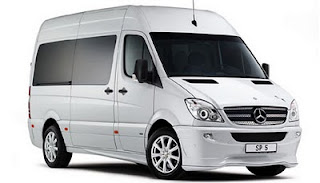
Mercedes' Sprinter vanThe cautious level of this cut was attacked in view of the fact that several models already on sale already exceed this standard - with Renault's Master van and Mercedes' Sprinter van (right) having made efficiency gains of 15% and 13% respectively.

Under the vans Regulation if manufacturers fail to reach a target of 147g of emissions per kilometre by 2020 they will be fined up to Euros 95 per vehicle per gram over the limit.

The target originally proposed was 135g per kilometre by 2020.

The European Automobile Manufacturers Association applauded the new law - they would, wouldn't they because it's what they lobbied for.

The bill was sponsored by Callanan who called it a "difficult balancing act" between the needs of the environment and car manufacturers. In fact, he threw his weight firmly on the manufacturer's side.

This is not the first time Callanan, who really doesn't like Europe anyway, has bowed to industry lobbying.

In November 2009 he attacked Liberal Democrat MEPs for "rabid environmentalism with little thought of the consequences (to jobs)" over the issue of giving free carbon emission permits to heavy industry under the European Emissions Trading Scheme after 2012.

He supported the move to give away 40% of all the permits issued, worth a total of €40 billion, to the cement, steel, aluminium and chemical sectors, who argued that making them pay for permits would cause “leakage" of CO2 emissions to countries outside Europe with no environmental benefits.

The Greens/European Free Alliance group in the European Parliament has condemned the legislation on vans. "An already weak Commission proposal on CO2 emissions limits was further weakened by the Parliament and Council, with the full implementation of the initial binding limits delayed until 2017," said German MEP Rebecca Harms, a Greens/EFA group co-president.

She said it was now too weak to stimulate innovation among manufacturers and fell short of the necessary steps to tackle climate change.

Kerstin Meyer, senior campaigner at T&E, a campaign group on transport and the environment, said the legislation was bad news for fleet owners.

"The [auto] industry used a short dip in sales to justify weakening a 10-year strategy to improve fuel efficiency, that would have saved van operators money for many years to come. When vehicle manufacturers cry wolf yet again, policymakers should take a long term view."

She said companies which use this class of vehicles should always look for the most fuel efficient models. "Because CO2 emissions and fuel efficiency are directly linked, weaker emissions standards mean vans will use more fuel. Fuel is a major cost to small businesses who depend on vans to run their operations."

Monday, October 26, 2009

Don't use the European Trading Scheme as a model for Copenhagen

The EU Emissions Trading Scheme (ETS) is important because the scheme covers half of all EU carbon emissions produced by power companies and industry.

If the Emissions Trading Scheme (ETS) is not helping to cut these, the EU as a whole will not meet its targets.

The first phase of the EU’s Emissions Trading Scheme (ETS), from 2005 to 2007 was a failure.

Huge over-allocation of permits led to a collapse in the price of carbon from €33 to €8 per tonne, meaning that the system did not reduce emissions at all.

In 2007 energy suppliers' 1.8% cut in carbon dioxide emissions was just higher than the UK's average of 1.7% down on 2006.

The residential sector and business sector both achieved better emissions cuts than the power sector in 2007, 4.6% and 2.6% respectively.

Meanwhile, there were increases in emissions from the transport sector (up 1%) and from industry (up 9.5%). [source:NewEnergyFinance/DECC]

The reason why the recession hasn't hurt big companies signd up to the ETS (according to International pro-business NGO The Climate Group) is because allocation of free permits to energy-intensive participants has helped them to ride out the recession, passing any price increases on to consumers.

Companies mentioned by The Climate Group include Centrica, Johnson & Johnson, Tesco, cement producer Lafarge, a British glass manufacturer, a German engineering firm, a global steel maker, a global aluminum firm and a financial services company. Fluctuations in energy prices and the economic downturn had more substantial effects on businesses than the price of carbon.

The only way that the ETS can work is if all of the permits to pollute are auctioned off and industry pays the price for abusing the atmosphere - which actually belongs to every single global citizen, as well as every other living organism.

Sandbag, another NGO, has used the large amount of information generated by participants in the scheme to create a Google map.

You can search it by country or year, sector, company, plant name, permits allocated, used and surrendered, and so on. London, for example, contains 44 registered emitters.

It has issued a report which highlights the harms that overallocation of permits has caused: "industry is likely to have nearly 400,000,000 tons worth of surplus permits across the period 2008-2012" they say. As a result they weren't out to reduce their emissions and instead will be old to sell their surplus for windfall profits of over Euros5 billion. There may also be an estimated surplus in the New Entrance Preserve of over 300 million permits by 2012.

All of this is because the caps were set too high and there is no way in the market to bring down the supply permits.

Sandbank concludes by saying that there could be 1.6 billion surplus permits and credits available during phase 2 of the scheme. this will permit European companies "to stand still on cutting domestic emissions further next seven years".

Sandbag recommends that the next phase of the emissions trading scheme should be immediately increased to deliver at least a 30% reduction in emissions by 2020 rising to 40% if a deal is reached at Copenhagen.

They should also take steps to effectively tighten caps in phase 2 of the scheme.

The scheme undoubtably has great potential to cut carbon emissions using the market and uncover the most cost-effective abatement opportunities.

The Low Carbon Kid says that it just needs designing so that it isn't one of the greatest rip-offs of all time (banking bonuses excluded), that's all.

And if any deal being pushed for by American industry wants to follow the current ETS model you know why. It will benefit their pockets and it won't make the slightest dent in carbon emissions.

What's the solution? Oliver Tickell has researched and developed it in his book and website Kyoto 2.

Monday, August 11, 2008

Carbon capture and storage is an end-of-pipe dream

The Government is basing its enthusiasm for new coal-burning power stations on the notion of retrofitting CCS (carbon capture and storage) in the future once the technology is developed.

But is this feasible?

"Even the most optimistic proponent of CCS would not envisage any demonstration plant to be operational much before 2015, which would put wide-scale deployment as far away as 2020 or later after lessons from the pilot have been learned and digested," says a submission from The Royal Academy of Engineering to the House of Commons Environmental Audit Committee (EAC).

In July the EAC published its examination of CCS and found it to be a pipe dream. In fact, an end-of-pipe dream. It estimates that the cost of building the first CCS plant could be anything up to £500m, on top of the £1bn cost of a new coal-fired power station. Retrofitting CCS at a station like Kingsnorth is likely to cost over £1.1bn. This is a huge figure by any standard, and would have a massive impact on energy prices.

The EAC urges: "We cannot emphasise strongly enough that the possibility of CCS should not be used as a fig leaf to give unabated coal-fired power stations an appearance of environmental acceptability." Furthermore, "Replacing old coal-fired power stations with new ones, rather than using alternative energy sources, locks Britain in to a high level of emissions for many years to come."

Hutton has said that a high carbon price under the EU-ETS will mean that CCS-retrofitting so-called 'CCS-ready' new power stations becomes economical. The EAC slams this notion on three counts:

1. Lack of knowledge of the technology: since the eventual nature of CCS technology is currently unknown, how can a plant built now be designed to have the technology retro-fitted on?

2. Carbon emissions: "The EU ETS is a mechanism designed to reduce emissions; using it as a cover for choosing high emissions technology goes against the purpose of the scheme."

3. The price per tonne of CO2 for retrofitting CCS required to make it commercially viable is unfeasibly high: estimates of this vary from the rather optimistic €40 (E.ON UK) to €90-155 per tonne (Climate Change Capital) and €70-100 per tonne (UK Energy Research Centre). How much it will really be is anybody's guess, but the Government cites an EU estimate of a forward price of carbon of €39 for 2013-2020 (EU-ETS Phase 3). The UK Energy Research Centre predicts around €30. The EAC concludes from this: "the gap between the carbon price and the cost of CCS is enormous".

The EAC concludes: "Coal should be seen as the last resort, even with the promise of CCS."

[Sources available in the EAC report on CCS].

Friday, January 25, 2008

The EU's 2020 targets for emissions and renewables

The EU has set a target of a 20% cut from 2005 levels in the continent's greenhouse gas emissions by 2020, potentially rising to 30% in the event of a global agreement.

Total EU industrial emissions in 2020 will be capped at 21% below 2005 levels. This means that 20% of all energy consumption - for electricity, heating and cooling, and transport - in the 25 states must be derived from renewable sources by that date.

In addition up to 12 carbon capture and storage (CCS) demonstration projects will be supported and gases capotured would be credited as not emitted under the EU Emissions Trading Scheme (ETS).

The ETS itself will be modified to establish a central cap on emissions rather than the current system of Member States setting emissions caps for their own economies. Furthermore:

• two new gases (nitrous oxide and perfluorocarbons) will be included
• road transport and shipping remain excluded, although the latter is likely to be included later
• agriculture and forestry are also left out because it's hard to measure their emissions
• smaller installations, emitting below 10,000 tonnes of CO2 per year, will be able to opt out from the ETS, provided they institute alternative reduction measures. 

For the UK, the Commission proposes:
• a 16% reduction in UK emissions from sectors not covered by the EU ETS by 2020 from 2005 levels
• 15% of all UK energy to be renewable by 2020
• 10% of road transport fuels to come from renewable sources, as long as they are produced sustainably.

Business Secretary John Hutton said most of the new renewable electricity would come from the fact that "the UK is already scoping a vast expansion of wind energy offshore and tidal power on the Severn". Transport Minister Ruth Kelly welcomed the proposal of sustainability criteria for biofuels.

But Greenpeace said "The EU target for biofuels is a mistake. Biomass is more efficiently used for electricity and heat production rather than to fuel high-consumption cars".

Allocation of credits

Campaigners did welcome the fact that power generators will, from 2013, have to pay for their ETS credits, rather than get windfall profits from being given them as at present, but criticised the loopholes given to high energy users - the steel, aluminium and cement industries - after fierce lobbying.

Currently, 90% of carbon emission allowances are given free to industrial installations, but by 2013 it is estimated that around 60% will be auctioned. The text adds that "full auctioning should be the rule from 2013 onwards for the power sector", which is expected to lead to a 10-15% rise in electricity prices. In other sectors, free allocations will gradually be completely phased out on an annual basis between 2013 and 2020.

However, certain energy-intensive sectors could continue to get all their allowances for free in the long term if the Commission determines that otherwise facilities would relocate to countries with less stringent climate protection laws. The EC says these sectors "are yet to be determined".

Commission President José Manuel Barroso said, "There is no point in Europe being tough if it just means production shifting to countries allowing a free-for-all on emissions. An international agreement is the best way to tackle this." 

Assuming a global climate change deal is reached, member states will continue to be able to meet part of their target by financing emission reduction projects in countries outside the EU, up to a limit of about a quarter of total reduction. CDM administrators have complained this will mean a reduction in projects.

"a very small effort

WWF observed that "The 20% target is not even in line with the latest Bali agreement - that developed countries should cut emissions by 25-40% by 2020". "Overall, it is a very small effort," said Dr Stephan Singer, head of its European Climate and Energy Unit. 
The proposals will get final adoption by April-May 2009 at the latest, following negotiations between member states and the European parliament.

Wednesday, October 31, 2007

What is sustainable about this transport policy?

The sustainability of transport in the UK comes down to one thing - can we all maintain or improve our quality of life and tackle climate change in the way we move from A to B (or, indeed, decide not to).

The Government has just laid out its ideas on this in Towards a Sustainable Transport System: Supporting Economic Growth in a Low Carbon World. This is a consultation document that will lead to a new Transport White Paper in a year's time.

It is a brave document in that it dares to question whether new major infrastructure projects are a good idea, but still pledges support for airport expansion in southeast England.

It also wants to speed up motorways and rail links between London, Birmingham and Manchester.

Its attempt to be "sustainable" rests partly on a pledge to ensure that "every extra tonne of carbon from aviation growth above 2005 levels would need to be matched by a tonne saved somewhere else - a saving over and above existing targets".

This is code for emissions trading, and means we can carry on as usual, while investing in renewable energy in developing countries, but this does nothing to reduce the overall level of GHG entering the atmosphere.

We are back with Catch-23.

Basically economic growth and sustainability are incompatible. It's like trying to get cats and mice to get on with each other.

So in short, the Low Carbon Kid says there's not much sustainable about such a transport policy.

He will write another time about how saving money by energy efficiency doesn't result in saving nearly as much energy as you'd thnk because the money saved is usually spent on other things that also use energy.

Catch-23 again.

Meanwhle, the logic from all of this leads to the conclusion that only one thing will reduce our overall energy use: personal carbon trading with a yearly reduced overall cap.

This will be because there will no possible way to use more energy. No choice. Nada.

Like the spoilt child, we should be banned from playing with our dangerous toys, and learn to do more with less.

It's the only way.

Wednesday, October 24, 2007

Government set to break promise on renewables target

Britain would only aim to generate 10-15% of its electricity from renewables by 2020, Malcolm Wicks, the Energy Minister, said last night.

Gordon Brown repeated today on Prime Minister's Questions, that the target of getting 20 per cent renewable electricity was the target for the European Union as a whole.

Wicks denied the Government had ever committed itself to the 20 per cent figure.

This is a patent lie. The promise was made by David Miliband. He said in June "the UK is committed to generating 20 per cent of its electricity from renewable sources by 2020".

And Wicks is on record in Hansard's as saying:

The Government's aspiration is by 2020 to double renewable energy's share of electricity to 20 per cent.

Wicks also said last night "At the end of the day, renewables is a means to an end. The end is bringing down carbon emissions."

Not so - a further aim is energy security. Renewables are the only energy technologies that give us a fuel source that is on UK sovereign territory and will be forever.

Brown said today within the general EU target each member state sets its own target.

(Germany is ahead of its target and so currently compensates in Europe for those like Britain who are lagging behind).

Brown said under pressure from the LibDem spokesleader, that the UK will now set its own new target and when it does he will let the House know.

The Low Carbon Kid says the Government must not betray the climate, the world and its own promises but stick to the target it promised it would keep.

In the meantime Brown underscored the need for more offshore and onshore wind farms and a feasibility study for the Severn Barrage.

Government documents prepared for Brown, leaked in The Guardian on Monday, claimed there were “severe practical difficulties” with the 20% target.

Mr Wicks said last night that renewables were not the only way to fight climate change and that the Government was “doing many other things”.

Um, like expanding airports and roads, perhaps - or bringing in digital radio which uses seven times more carbon emissions than analogue radio?

Monday, October 22, 2007

Aviation and climate change

Most of us know that flying's bad for climate change, and that we should really holiday closer to home, take the train and videoconference.


Aviation has by far the greatest climate impact of any transport mode, whether measured per passenger kilometre, per tonne kilometre, per € spent, or per hour spent. See the Transport and Environment report, 'Clearing the Air: the myth and reality of aviation and climate change'.

The opening of the St Pancras rail link to the continent on November 14 will allow you to travel in style from the centre of one city to the centre of another faster than ever, for a comparable price to flying in many cases (eg London to Berlin is more or less the same price on BA/tube/rail to/from airport). So what if it takes longer? It's sure going to be less hassle and you can take the sleeper.

But people will still fly - so should aviation be included in the EU emissions trading system (ETS)?

The ETS


The EU thinks so, and so does the British government. The EU is pressing ahead despite a major rift within the UN body responsible for the sector.

The airlines don't like it. They are kicking and screaming.

The 2007 Assembly of the International Civil Aviation Organisation (ICAO) - a body representing the airlines but also responsible, under the Kyoto Protocol, for reducing emissions from international aviation - passed a resolution earlier this month saying countries should sign separate agreements with all other countries operating in its airspace before applying emissions trading to their carrier airlines.

This was strongly backed by the United States.

To enter into separate agreements would be technically illegal under the Kyoto treaty and disables the whole point of the ETS.

Since 1997 the ICAO has failed to endorse, or issued negative statements on, every serious policy option for cutting greenhouse gas emissions from the sector.

In retaliation EU member states, and member countries of the wider European Civil Aviation Conference (ECAC) which includes Norway, Switzerland and Turkey, made a 'reservation' against the resolution.

Though ICAO guidance is not legally-binding, the EU has until now acted within its framework. This 'reservation' signals the end of that commitment.

João Vieira, of the Brussels-based group Transport and Environment, called for this body to be disbanded. "After a shameful decade of obstruction and inaction, ICAO must now be stripped of its environmental responsibilities."

But will it make any difference?


But will bringing aviation into the EU Emissions Trading Scheme (ETS) in line with current proposals have any effect on burgeoning air travel?

Not according to a report by the University of Manchester's Tyndall Centre. Its research found that even if carbon dioxide permit prices rose up to €50 per tonne it will have little impact on the price of and demand for flights - and hence will barely dent the rise in emissions.

Current predictions of the carbon credit price are in the range of €15-35. For example consultancies Ideacarbon and Econ said in September that the price for the next five years could be around €15 because of imports of credits from developing countries.

At this price the ETS isn't going to make much difference to anything, let alone airline emissions.

The Low Carbon Kid says pressure must be kept up on governments to curtail flights - and make flying as unfashionable as owning a slave.