Showing posts with label incineration. Show all posts

Wednesday, April 04, 2012

Energy-from-waste set for expansion

energy from waste
An anaerobic digestion (AD) plant in Scotland.
Waste management group Shanks has announced that it has signed a £750 million contract with the BDR Waste Partnership (Barnsley, Doncaster, Rotherham Metropolitan Borough Councils) to build a mechanical biological treatment (MBT) and anaerobic digestion (AD) plant in Rotherham in South Yorkshire, with the capacity to treat 265,000 tonnes of municipal waste per year.

The contract will be executed by 3SE, a partnership between Shanks and Scottish and Southern Energy (SSE), which holds a 25% stake in 3SE and will use half of the solid recovered material produced in the MBT for power generation.

In the UK, and globally, energy-from-waste, whether from AD, gasification or incineration, is experiencing long-awaited growth.

On Friday, the UK Government won a long-standing battle with protesters against an incineration plant in Cornwall when a court of appeal upheld Secretary of State Eric Pickles' judgement to grant planning permission for SITA UK's £117 million waste to energy facility in St Denis.

The Cornwall Energy Recovery Centre (CERC) will now go ahead and be able to treat some 240,000 tonnes of non-recyclable residual waste each year, generating around 16 MW of electricity.

The facility had been granted planning permission by Mr Pickles in May last year but this was challenged by the Cornwall Waste Forum, with the High Court in London up holding their challenge last October. Eric Pickles appealed this decision and has now won.

However, opponents have vowed to take the fight to Europe. Campaigner Ken Rickard said: "We've already started exploring various avenues. It's not the end, the fight goes on, even to Europe."

A rearguard battle is also going on to prevent the construction of an incinerator in King's Lynn, Norfolk. However construction of this does seem likely following Defra officials advising West Norfolk Council last week that its legal challenge stands no chance of succeeding.

Last November, environment secretary Caroline Spelman decided to award Norfolk County Council £91m in waste infrastructure credits to build the energy-from-waste plant at Saddlebow.

Ministers are hoping that new financial support for energy-from-waste and changes to the planning regime will speed up the construction of such plants, especially the uncontroversial AD ones.

Global trend


The global trend is for the construction of far more plants that produce energy from waste, in particular incineration, despite opponents' claims that this reduces the demand for recyclable materials and is less efficient in the long run.

New research by consultants Pike Research says that globally, the market for thermal and biological waste-to-energy technologies will reach at least $6.2 billion in 2012 and grow to $29.2 billion over the next 10 years.

They estimate that in 2011 the world generated over 2 billion tonnes of municipal solid waste, a figure that will dramatically increase over this period, making an increase in waste-to-energy processes inevitable, such that by 2022 these systems will convert more than 261 million tonnes of waste each year into an estimated 283 terawatt-hours of electricity.

Over 800 thermal waste-from-energy plants currently operate in nearly 40 countries around the world, which in 2011 treated just 11% of MSW generated, compared to the 70% that was landfilled.

Although combustion technologies continue to dominate the market, AD and advanced thermal treatment (ATT) technology deployments such as pyrolysis are expected to pick up as diminishing landfill capacity improves the economics.

Opponents of incineration point to Denmark, which burns the highest proportion of its municipal waste in Europe, 54%, most of which generates electricity, but which lags behind nine countries in its rate of recycling. They say that if it incinerated less it would recycle more.

Waste per person


The picture is reflected across Europe, where Britain came below average in a ranking of European countries of how much municipal waste they sent to landfill in 2010, which ministers believe indicates the need for more energy-from-waste plants to meet Waste Directive targets for landfill avoidance.

The average percentage of such waste sent to landfill in 2010 of all EU 27 countries was 38%, whereas the United Kingdom sent 49%, according to figures just published by Eurostat.

The European average figures were: 38% to landfill, 22% incinerated, 25% recycled and 15% composted.

The United Kingdom's figures for the same year were: 49% to landfill, 12% incinerated, 25% recycled and 14% composted.

The United Kingdom would be more likely to have met or exceeded the average figures for land filling and incineration had energy-from-waste plant proposals not been so consistently opposed by local people. There are no figures for mechanical biological treatment and anaerobic digestion, a relatively new technology.

The amount of waste generated per person varies widely in each country.

Cyprus (just the Greek half, remember) produces by far the greatest amount of waste per head at 760 kg; a great deal for a small island.

Luxembourg, Denmark and Ireland throw away between 600 and 700 kg per person, while the UK is with the Netherlands, Malta, Austria, Germany, Spain, France, Italy, and Portugal in discarding between 500 and 600 kg per person.

Finland, Belgium, Sweden, Greece, Slovenia, Hungary and Bulgaria throw out between 400 and 500 kg, while the lowest amounts were recorded in the countries with the lowest income per head: Lithuania, Romania, Slovakia, the Czech Republic, Poland, Estonia and Latvia (under 400 kg per person).

Treatment methods vary


The figures show how the different methods of waste treatment vary across different countries.

Incineration is favoured by Denmark (54% of waste treated), Sweden (49%), the Netherlands (39%), Germany (38%), Belgium (37%), Luxembourg (35%) and France (34%), whereas 10 other Member States incinerate 1% or less of waste.

Recycling was popular in Germany (45% of waste treated), Belgium (40%), Slovenia (39%), Sweden (36%), Ireland (35%) and the Netherlands (33%).

Composting forms a significant percentage of waste treatment in Austria (40%), the Netherlands (28%), Belgium (22%), Luxembourg (20%), Denmark (19%) and Spain (18%).

Recycling and composting together accounted for 50% of waste treated or more in Austria (70%), Belgium and Germany (both 62%), the Netherlands (61%) and Sweden (50%).

However, in five Member States less than 10% of waste was recycled or composted.

A study carried out for the European Commission indicates that full implementation of EU Waste Directive could save €72 billion a year.

“This is why our priority is to improve the implementation of the existing legislation across the EU by bringing landfilling down and increasing recycling,” said EU Environment Commissioner Janez Potočnik on Friday.

Progress in Wales


Separately, Wales has just posted figures on how its own waste was processed between October 2010 and March 2011, revealing that just 3,950 tonnes were incinerated for energy.

The Welsh Government prefers recycling to incineration, priding itself on its progress to a Zero Waste Wales target.

The figures reveal that 60,000 tonnes of waste were processed into new materials or products and nearly 50,000 tonnes composted. Less than 10,000 tonnes were recycled and about the same amount sent to landfill.

Environment Minister, John Griffiths, said: “Wales has the highest recycling rate of any UK country and publication of a report like this shows people what happens to their waste. Next year (2012/13) local authorities will have to recycle 52% of waste to comply with new Welsh Government statutory targets“.

Thursday, November 10, 2011

Defra takes on DECC over energy-from-waste

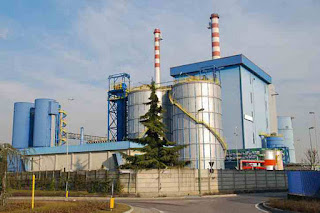
Energy-from-waste incinerator
Environment Secretary Caroline Spelman has pitched herself against Government policy on energy-from-waste (EfW) plants by withdrawing support for such a plant in Kings Lynn, Norfolk.

At the same time, DECC, in its new consultation on the Renewables Obligation, is ignoring advice from its own consultants that EfW should receive no financial support and is instead proposing plants receive half a ROC of subsidy per megawatt generated.

Mrs Spelman took the unprecedented step yesterday of withholding £169m of PFI credits from Norfolk County Council's project at Saddlebow, near King’s Lynn, saying that she wanted more information about environmental impacts, the Council's waste strategy and a greater consensus that the plan should proceed amongst the local population.

The Conservative-controlled Council has reacted with fury, accusing her of causing "chaos".

Bill Borrett, its cabinet member for environment and waste, said: "After years of carefully following the criteria laid down, this apparent late moving of the goalposts has surprised and dismayed us.

"Worse, we are concerned it may lose Norfolk people as a whole a government grant worth a staggering £169m."

In fact, a statement said they were expecting "in the region of £500 million over 25 years".

The project is already suspended pending a High Court hearing on December 5th, brought by opponents, to determine whether it should be subject to a full Judicial Review.

The winning bid for the plant's construction, out of ten initial submissions, was from a consortium of Cory and American energy-from-waste specialist Wheelabrator.

Apart from domestic waste, the proposed plant would also process commercial waste that would otherwise go to landfill.

Opposition


In her letter to the Council Mrs Spelman gives as the reason for her decision that she is not satisfied that its waste management strategy has popular support.

At the public enquiry stage, a record 2,592 responses were received, of which 2,524 (97.4%) objected to the incinerator and 27 (1%) supported it.

93 parish and town councils also responded, of which 61 (65.6%) were opposed and nine (9.7%) in favour.

Mrs Spelman's stance is supported by two local Tory MPs, Elizabeth Truss, and Henry Bellingham.

Bellingham and Kings Lynn Borough Council recently held a referendum on the topic in which 93% (65,000) voted against the proposal for economic, environmental and health reasons.

Financial support for EfW


Government waste policy is currently weighted in favour of incineration and uses PFI credits to support projects.

They have been allocated to 32 waste treatment plants (mostly, but not all, incinerators), and, although called credits, they do not have to be repaid, making them effectively grants.

The PFI credit for the proposed incinerator at King’s Lynn is worth about £40 per tonne.

A Government paper on EfW published in July notes that PFI credits worth £2.48 billion have been committed to 37 waste projects.

There are additional projects in the application process, for which it is expected a further £0.8 billion PFI credits will be awarded.

Norfolk Council also stands to benefit from landfill tax avoidance of £56 per tonne, rising by £8 per tonne for each of the next three years and an average of £110 per tonne over the incinerator's 25 year life.

Then there would be the income from a gate fee of an estimated £77/tonne and from the expected power generation from the Combined Heat and Power plant of 22MW of electricity and 20.4MW of heat, some of which will be used by a paper mill next door.

DECC rejects advice on support for EfW


DECC has received evidence from consultants Arup that EfW should receive no financial support from Renewable Obligation Certificates (ROCs), but is choosing to ignore it.

In its latest consultation on proposals for the levels of banded support under the Renewables Obligation for 2013-17, published yesterday, it says that it is rejecting this advice on the grounds of supporting renewable energy and jobs, because EfW plants have high initial capital costs.

It is proposing that the support goes from the current 1 ROC, (costing £8.7m per year from 2016/17 onwards) to 0.5 ROCs.

It also expresses hope that the level of renewable electricity generation capacity from energy from waste CHP could reach around 60-70MW by 2020, and around 100-130MW by 2030.

"This level of deployment could potentially generate in the region of 0.3-0.4TWh/y of renewable electricity by 2020 rising to around 0.6-0.8TWh/y in 2030", they say.

Critics say that such a policy locks the UK into an unsustainable route, and that such energy is not truly renewable.

By halting the Council's plans in Norfolk, it looks as though Mrs Spelman sides with these critics against DECC.

The dilemma of waste or recycle


The dilemma experienced by Norfolk is being felt in many cash-strapped councils around the country: if there is cash for EfW - why shouldn't they accept it?

410,000 tonnes of municipal rubbish is produced in Norfolk every year and the county has a recycling rate of 43%.

The incinerator would need 170,000 tonnes of waste every year for 25 years.

The Council calculates that after incineration of 170,000 tonnes, there is sufficient margin left of the 410,000 tonnes total to meet recycling targets.

But the waste hierarchy that is key to the Waste Review prioritises reduction, re-use and recycling, and it is likely that in the future ways of reducing the level of absolute rubbish will be found, making it hard to meet the national appetite for burnable waste should many of these plants be built.

Waste destroyed in an incinerator will be replaced, requiring new raw materials, manufacture, transport and packaging.

By contrast, reduction, reuse and recycling represent a win-win strategy. A number of cities in Europe have already achieved high levels (over 60%) of diversion of waste.

Moreover, Defra’s own paper on ”The Economics of Waste Policy" states that it is desirable that "waste is allocated to the various management options such that the social marginal cost of each option is equalised".

This is far from the case at the moment.

The social marginal cost includes the health and environmental cost of the plants.

Health and environmental effects


The Environmental Permitting (England and Wales) Regulations 2007 Updated October 2009 Version 2.0, lays out the monitoring and reporting criteria to operate a waste incineration facility.

It requires continuous monitoring of emissions to air but not of heavy metal, dioxin and furan emissions, which are only regulated by spot checks once or twice per year for 6-8 hours, under the Waste Incineration Directive.

Norfolk County Council has stated that "technology in today‘s modern energy from waste plants stops the formation of dioxins",

But the proposed plant does not use the latest technology which reduces dioxin production.

Opponents cite a 2008 dioxin breach from the Dundee incinerator, which they say illustrates how even a ‘modern’ energy from waste plant can still release dioxins over 100 times the legal limit.

Residents are also worried about smell, particulates (PM10 and PM2.5), and low level ozone.

The County Council has alleged that the incinerator would produce around one nine-hundredth of such emissions compared to other sources like traffic.

But this statistic is a national average, not a local observation.

Nationally, municipal EfW incinerators make a small contribution to the UK's total emissions because there aren't many of them.

And even the Environment Agency has identified bottom ash as potentially hazardous, which cannot be disposed of casually.

It seems that Caroline Spelman has found a way to make herself popular and support health and the environment.

But the prospects for energy-from-waste look entirely unclear.