Showing posts with label onshore wind. Show all posts

Wednesday, July 25, 2012

Davey buys £20m for onshore wind in exchange for £500m for gas


Subsidies for onshore wind farms will be reduced by 10%, not the 25% demanded by the Treasury, says Energy Secretary Ed Davey, but at a long-term cost to carbon emissions.

To win this agreement, the Department has had to concede that gas generation will continue "to play an important part in the energy mix well into and beyond 2030, while meeting our carbon budgets".

This "important part" is ensured with a grant of £500 million for gas field exploration. To put this in context, the dispute between the Treasury and DECC centred over a difference of around just £20 million in support for 1GW of onshore wind.

The effect on greenhouse gas emissions after 2030 is likely to be alarming. David Nussbaum, chief executive of WWF-UK, sent a letter to David Cameron yesterday, complaining of "a clear bias on the part of Mr Osborne towards investment in new gas-fired power stations" which would imperil the UK's climate targets and could raise bills for consumers.

“The proposal that emissions from gas plants built before 2015 will effectively never have to limit their emissions jeopardises our ability to meet UK carbon targets," he said. “The announcement on this, which was slipped out late on a Friday and which had the Chancellor’s fingerprints all over it, is another example of the Treasury’s malign influence on energy policy."

John Sauven, Greenpeace's executive director, also commented that: “The Treasury is fighting tooth and nail to oppose a 2030 decarbonisation target or support for future renewables targets. Mr Osborne has rebranded himself Mr Polluting Gas. It's up to Nick Clegg to stick what's left of Lib Dem principles back into this process."

£25 billion investment

However, marine energy developers will celebrate a 250% increase in their support from 2 ROCs (renewable obligation certificates) to 5 ROCs per MWh, subject to a 30MW limit per generating station.

"The case for investment in renewable energy is so strong and that is why, across government, we are backing it," said Energy Secretary Mr. Davey, making the announcement.

He said that representatives of industry and business support the subsidy cut of 10%, but not of 25%. “And that will bring forward investment between £20 and £25 billion between 2013 and 2017, and create hundreds of thousands of jobs," he promised.

"No one would want to over-subsidise an industry," he said.

He tried to reassure the wind industry by saying that there would not be a further change in the support levels or targets for carbon reductions in the autumn.

"The climate legislation says that if there has been a change in any of the generation costs for a renewable technology, whatever it is, we should have a review. So if it does change dramatically, then of course everyone agrees that we should have a review."

When pressed by James Naughtie on the Today programme this morning, Ed Davey said that meeting emission reduction targets depended on carbon capture and storage and nuclear power coming on stream by 2030, as well as major investment in renewables. He did not mention demand reduction.

"We don't have a target for the amount of energy to be generated from renewable sources at the moment," he said. Mr Davey said that there was cross-party agreement on the legally-binding targets to reduce carbon emissions. "What we're discussing is whether there should be an intermediate target for decarbonising the power sector. There is a debate to be had about that, around the Energy Bill," he said. That is expected in the Autumn.

The announcement of the results of the Banding Review consultation for the Renewables Obligation was delayed last week, following intervention from the Treasury, but was finally announced today.

The Department for Energy and Climate Change (DECC) quantified the impact on consumer bills between 2013 and 2015, as a reduction of £6 off household energy bills next year and £5 the year after.

By 2017, DECC hopes that this will deliver as much as 79 TWh of renewable electricity per annum in the UK, 11 TWh more than at present, which still not enough, just 74%, of the 108TWh of electricity needed to meet the UK’s 2020 renewable energy target.

The Renewables Obligation is the Government’s main mechanism for supporting large-scale renewables, and the review covers the final period of support, 2013-17 (2014-17 for offshore wind), before the scheme ends.

The announcement comes ahead of the Government's Global Investment Conference and series of 17 business summits taking place at the British Business Embassy at Lancaster House during the upcoming Games, which aim to secure further investment into the UK.

John Cridland, CBI Director-General, welcomed the announcement, saying it “will help to encourage investment into our energy sector, creating jobs and supporting growth". He also thought that "the Government is right that gas should play a crucial role in any future energy mix. We have argued that there is no need for a false choice between renewables, nuclear, gas, and carbon capture and storage. It’s clear from the evidence that we need a diverse supply.”

Support for onshore wind from 2013-17 will be reduced by 10% to 0.9 ROCs, guaranteed until at least 2014 but could change after then if there is a significant change in generation costs.

If there is evidence of significant reduction of generation costs in early 2013, then subsidies will again reduce in April 2014. The Government will also consider how local communities can have more of a say over, and receive greater economic benefit from, hosting onshore wind farms.

Biomass and solar

There will be a new band to support existing coal plant converting to sustainable biomass fuels. This will increase the amount of renewable energy produced at less cost to consumers.

The new enhanced co-firing band will be split into two new bands: mid-range at 0.6 ROCs/MWh, and high-range co-firing at 0.7 ROCs/MWh in 2013/14, rising to 0.9 ROCs/MWh from 2014/15.

This was welcomed by Dorothy Thompson, Chief Executive of Drax, the country's largest coal burning plant, which is in the process of conversion to be able to burn more and more biomass. She said that she is now “confident that we can transform Drax into a predominantly biomass fuelled generator".

Generators will need to burn at least 50% biomass in a unit to be eligible for support. Bioliquids are excluded from this.

There will be a consultation on lowering the support level for standard co-firing to 0.3 ROCs/MWh in 2013/14 and 2014/15, increasing to 0.5 ROCs/MWh from 2015/16.

Support for generation using 100% biomass is to be set at 1.5 ROCs/MWh, degressing to 1.4 ROCs/MWh for new accreditations and additional capacity added after 31 March 2016.

There will be no immediate reduction in support for large-scale solar, but, as with onshore wind, the level will be kept under review. Installations under 5 MW will only be eligible for feed-in tariff support.

New landfill gas generating capacity will not receive any support from 1 April 2013, but new generators using gas wholly from closed landfill sites will be eligible for support at 0.2 ROCs/MWh and electricity generated using new waste heat to power generating capacity will be eligible for 0.1 ROCs/MWh at both existing stations as well as new stations using gas from any landfill site.

The gas bill

In return for this extra 11 TW hours, DECC has given its commitment to a new dash for gas, provided that gas remains cheap.

It will have “a key role in ensuring that we have sufficient capacity both to meet everyday demand and complementing an increasing amount of relatively intermittent and inflexible generation", the DECC statement says. "We do not expect the role of gas to be restricted to providing back up to renewables, and in the longer term we see an important role for gas with CCS."

£500m of grants are being made available for large shallow water gas fields in the UK Continental Shelf, and more information on the Government's strategy will be set out in the Autumn.

The full bill impacts of current bandings and 2013-17 bandings:

Absolute contribution to average household electricity bills of RO support costs under current bands and the revised bands
£2011 prices 2013/14 2014/15 2015/16 2016/17
Current bands 44 47 49 50
Revised bands 38 42 50 53
Difference between revised and current bands -6 -5 1 3

(Using household electricity demand before the impact of other policies)

Bandings for all technologies:
Table 1 - Bandings under the Renewables Obligation
Renewable electricity technologies Current support (2012-2013) ROCs per MWh Post-consultation decisions
Level of support (ROCs per MWh)
Comment and other changes
Advanced gasification  2 2 in 2013/14 and 2014/15; 1.9 in 2015/16 and 1.8 in 2016/17
One ACT band supporting ‘standard’ and ‘advanced’ ACTs at the same ROC level
Advanced pyrolysis 
Anaerobic digestion 2 2 in 2013.14 and 2014/15; 1.9 in 2015/16 and 1.8 in 2016/17 Closure of band to new projects at or below 5 MW from 1 April 2013, subject to consultation
Biomass conversion No current band but 1.5 ROCs under current banding arrangements  1 New band. Unit by unit approach. No energy crops uplift. Change to definition of relevant fossil fuel generating station.
Biomass conversion with CHP No current band but 2 ROCs under current banding arrangements 1.5 in 2013/14 and 2014/15 New band. Unit by unit approach. No energy crops uplift. Change to the definition of relevant fossil fuel generating station. Close band to new accreditations from 1 April 2015.
Co-firing of biomass (standard) 0.5 Solid and gaseous biomass (less than 50% biomass co-fired in a unit): 0.3 (proposed) in 2013/14 and 2014/15; 0.5 from 2015/16. Unit by unit approach. ROC levels in 2013/14 and 2014/15 subject to further consultation.
Bioliquids (less than 100% biomass co-fired in a unit): 0.3 (proposed) in 2013/14 and 2014/15; 0.5 from 2015/16.
Co-firing of biomass (enhanced) No current band but 0.5 ROCs under current banding arrangements Mid-range co-firing (50-less than 85%): 0.6 New band. Unit by unit approach. Excludes bioliquids (other than energy crops). Cost control mechanism to be introduced, subject to consultation
High-range co-firing (85-less than 100%): 0.7 in 2013/14; 0.9 from 2014/15
Co-firing of biomass with CHP (standard) 1 0.5 ROC uplift in addition to prevailing ROC support available to new accredit-ations until 31 March 2015 Unit by unit approach. Close band to new accreditations from 1 April 2015.
Co-firing of biomass with CHP (enhanced) No current band but 1 ROC/MWh under current banding arrangements 0.5 ROC uplift in addition to prevailing ROC support available to new accredit-ations until 31 March 2015 New band. Unit by unit approach. Close band to new accreditations from 1 April 2015.
Co-firing of energy crops (standard) 1 0.5 ROC uplift in addition to prevailing ROC support for co-firing of biomass (standard). No uplift available for mid-range or high-range co-firing. Band to be closed, subject to consult-ation. Unit by unit approach. Changes to definition of energy crops.
Co-firing of energy crops with CHP (standard) 1.5 0.5 ROC uplift in addition to prevailing ROC support for co-firing of energy crops (standard). Band not available for mid-range or high-range co-firing. Band to be closed, subject to consultation
Unit by unit approach.
Changes to the definition of energy crops. Close band to new accreditations from 1 April 2015.
Dedicated biomass 1.5 1.5 until 31 March 2016; 1.4 from 1 April 2016 Introduction of a supplier cap, subject to consultation
Dedicated biomass with CHP 2 2 in 2013/14 and 2014/15 Changes proposed to add fossil derived bioliquids, to exclude biomass conversion and to close this band to new accreditations from 1 April 2015
Dedicated energy crops 2 2 in 2013/14 and 2014/15; 1.9 in 2015/16 and 1.8 in 2016/17 Changes to the definition of energy crops
Dedicated energy crops with CHP 2 2 in 2013/14 and 2014/15; 1.9 in 2015/16 and 1.8 in 2016/17 Changes to the definition of energy crops.
Energy from waste with CHP 1  1 Decision to retain support at current level following consultation
Geothermal 2 2 in 2013/14 and 2014/15; 1.9 in 2015/16 and 1.8 in 2016/17
Geopressure 1  1
Hydro-electricity  1  0.7 Closure of band to new projects at or below 5 MW, from 1 April 2013, subject to consultation.
Landfill gas   0.25 0 for open landfill sites New bands for closed landfill sites and Waste Heat to Power.
0.2 for closed sites
0.1 for new Waste Heat to Power band at open and closed sites.
Microgeneration 2 2 in 2013/14 and 2014/15; 1.9 in 2015/16 and 1.8 in 2016/17
Offshore wind 2 in 2013/14; 1.5 from 2014/15 onwards 2 in 2013/14 and 2014/15; 1.9 in 2015/16 and 1.8 in 2016/17
 Onshore wind 1 0.9 Closure of band to new projects at or below 5 MW, from 1 April 2013, subject to consultation
Sewage gas 0.5 0.5
Solar photovoltaic  2 Banding proposals subject to re-consultation. Closure of band to new projects at or below 5 MW, from 1 April 2013, subject to consultation.
Tidal impoundment (range) – tidal barrage (<1GW) 2 2 in 2013/14 and 2014/15; 1.9 in 2015/16 and 1.8 in 2016/17
Tidal impoundment (range) – tidal lagoon (<1GW)
Tidal stream 2 5  up to a 30 MW project cap. 2 above the cap.
Wave
Standard gasification
2 in 2013/14 and 2014/15; 1.9 in 2015/16 and 1.8 in 2016/17
One ACT band supporting ‘standard’ and ‘advanced’ ACTs at the same ROC level 
Standard pyrolysis 

Alongside publication of the banding review results, DECC has also published an assessment of how incineration of waste to produce energy and heat can be made more efficient.

DECC has not yet published its impact assessment.

Monday, June 11, 2012

Onshore wind is economic and viable: independent report for MPs counters myths

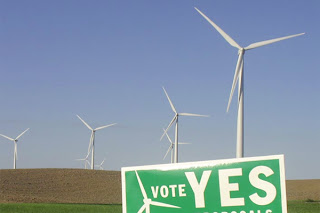
Yes to wind power

An independent report on wind farms produced for MPs has concluded that the downsides of wind farms are often exaggerated by their opponents, who have recently stepped up their lobbying of parliamentarians.

The new policy brief on ‘The case for and against onshore wind energy in the UK’ is being distributed this week to every UK Member of Parliament and will be launched at the House of Commons on 13 June. It comes from the Grantham Research Institute on Climate Change and the Environment, which is chaired by Lord Nicholas Stern, author of the 2006 Stern Review, and located at the London School of Economics.

It finds that wind turbines are not too unreliable or expensive to contribute significantly to Britain's electricity generation mix, and that it is wrong to think that gas is a useful relatively low carbon fuel.

Last week, George Osborne indicated he would like to see the subsidy for onshore wind cut by 25%, and David Cameron sealed a deal with Norway that favours the use of gas in the UK electricity generation mix. DECC’s proposals for electricity market reform also would, if implemented, lock the UK into heavy reliance on gas-powered generation until 2045. None of this is good news in the struggle against climate change.

"It is not a choice between onshore wind and fossil fuels," the LSE report concludes, however. "Once the implications of the UK’s carbon targets are recognised, the issue of onshore wind becomes a choice between this and other low-carbon energy sources. A second robust lesson is that many low-carbon technology combinations are technically feasible."

The Grantham Institute's Bob Ward, speaking to EAEM on behalf of its authors, Samuela Bassi, Alex Bowen and Sam Fankhauser, said that they looked at the claims most frequently used by anti-windfarm lobbyists. “When these claims are scrutinised", he said, "they do not stand up to analysis".

There are three myths commonly repeated in anti-windfarm rhetoric:

Myth 1: that there is a requirement for gas-powered backup to counter the unreliability of wind power. “This is plainly untrue," said Bob Ward. “Only 1% of carbon savings are wiped out, because there are many ways of managing both demand and supply due to the intermittency of the wind." The report says: "The cost penalty and grid system challenges of intermittency are often exaggerated. There are several other ways of compensating for the variability, such as bulk storage of electricity, greater interconnection, and a more diversified mix of renewable sources, as well as measures to manage demand, like smart grids and improved load management.”

Myth 2: that onshore wind is expensive. “We found that it is the cheapest of all low carbon forms of electricity generation," said Bob Ward. The report says: “A key attraction of onshore wind over other low-carbon forms of electricity generation is cost. In terms of levelised cost – an economic measure which takes into account all of the costs of a technology over its lifetime – onshore wind is currently the cheapest renewable technology in the UK. The choice between more affordable electricity (which would favour onshore wind) and local environmental protection (which may favour other low-carbon technologies) is ultimately a political one."

Myth 3: that using gas power generation is low carbon and will help us meet our climate commitments. “This is only true if we stop using gas in 2020," said Bob Ward, because at that point emissions need to drop further than relying on gas can permit. The report concludes: "It is clear that the further decarbonisation required in the 2020s cannot be achieved by heavily relaying on unabated gas power stations. Rational policy-makers need to anticipate this and avoid locking in high-carbon electricity generation.”

“The thing is," continued Bob Ward, “those who have an agenda against wind farms then seek to find proof to back it up. They twist the evidence to make it fit."

He says he finds the same misinformation cropping up again and again in anti-windfarm rhetoric. It gains credence by being repeated so often, for instance by the Global Warming Policy Foundation, the new Welsh group No To Wind and in the letters written by a hundred Tory MPs recently to George Osborne.

“Concerns about the local visual and environmental impact wind farms are legitimate," continued Mr. Ward, “and they shouldn't be situated anywhere. That is why Tim Yeo was correct to point out last weekend that we should be copying Denmark and Germany and letting communities receive the benefits to which they are entitled of having a wind farm nearby".

The report therefore recommends a number of regulatory measures “that can help to encourage onshore wind developments where they make sense and prevent them from happening where they do not.” These are:

  • A clear price for carbon that favours the relative merit of wind and other low-carbon forms of power production compared to hydrocarbon-based fuels
  • A planning system that reduces the costs and uncertainties to project developers, factors in local environmental concerns and prevents developments in important environmental areas, and ensures appropriate benefit-sharing in the local community
  • measures to ensure that the electricity system can cope with intermittent resources.

The latter include: smart transmission and distribution systems, interconnection to other energy markets, energy storage, load management and flexible demand measures, as well as appropriate combination of fossil fuel (ultimately linked with carbon capture and storage) and renewable sources to ensure balancing and the ability to meet peak demand.

Greater support for research and development into new forms of energy storage was recently called for by the Institution of Mechanical Engineers.

And a new, promising form of storage specifically aimed at windfarms recently received $15 million of backing from Bill Gates, Khosla Ventures and energy company Total. The Liquid Metal Battery uses common raw materials and is the brainchild of MIT's Donald Sadoway.

Wednesday, June 06, 2012

Industry calls for greater support for decarbonisation

wind turbines
 As George Osborne vows to cut support for onshore wind, business leaders call for the opposite.


Business leaders have called upon the government to provide a more stable, consistent and sufficiently long term set of policies to enable the transition to a low carbon economy.

In a new report by think tank IPPR, Growing pains: British industry and the low-carbon transition, which is based upon conversations with senior executives in many sectors at the forefront of this transition, the leaders also call for specific industrial strategies targeted at the different sectors.

The findings suggest there are plenty of opportunities for British companies to participate in this fast growing global business sector. According to figures to be released next week by WWF, in their annual Clean Economy, Living Planet report, in 2011, the global sales value of greentech manufacturing, from manufacturing inputs like silicon to end products like biofuels, came to €198 billion ($245.3 billion), double the figure in 2008.

Reg Plant, one of the authors of the IPPR report, put an even higher value, of £2.27tn, on the global market for wider environmental goods and services, and said it was growing by 4% a year.

“The government should work far more closely with industry," say the business leaders, in order to counteract the perception that its policies are muddled, overlapping, continually being changed, and not farsighted enough, particularly for the period after 2020. All sectors considered mid-term targets (to 2030) to be important, for providing greater clarity and consistency with current investment timeframes.

Support for onshore windpower

The Government continued to give mixed signals to industry over the weekend, with the news that George Osborne was seeking to reduce the level of Renewables Obligation support for onshore wind power, after April 2013, by five or ten per cent more than that which had been proposed by the Department For Energy and Climate Change, due to pressure from backbench Tory MPs.

Tim Yeo, Conservative leader of the Select Committee for Environment and Climate Change, led the criticism of this move by saying that it made absolutely no financial sense to do this, since "you get more carbon reduction for your money by subsidising onshore wind than you do by subsidising the more expensive offshore wind power".

One British company which would be affected by such a savage and politically motivated cut in support for onshore wind, is David Brown Gear Systems, which has been manufacturing gear sets for 150 years and is based in Huddersfield and West Bromwich. The company has found the wind sector to be a core market for the business, last year receiving a £2 million grant from the regional growth fund to invest in a state-of-the-art R&D centre for wind gearbox technologies.

Carbon price floor

Amongst other Treasury policies that business leaders say should be amended or scrapped is the carbon price floor. Currently, this is specifically designed to encourage investment in nuclear power which, they say, would skew precious investment at a less effective technology. "It is ill-designed as it reduces British competitiveness, won't cut emissions and will drive up fuel bills pushing more people into fuel poverty," said Reg Plant.

Call for more partnerships

Business leaders also call in the report for “strategic public-private partnerships at the sector level based on the model successfully pioneered by the Automotive Council", which brings together leading industry players, policymakers and expert academics. This would help to identify and tackle barriers to development such as infrastructure, skills and financing requirements.

Many leaders criticise the Carbon Reduction Commitment and called again for an industry-by-industry approach to emissions reductions, with incentives such as support for research and development.

Business leaders also think that greater collaboration with European partners on low carbon innovation is advisable, to target possible technological breakthroughs. Pooling member state resources and encouraging countries and businesses to work together is cost-effective, attractive to investors and could deliver greater returns.

The UK is already doing this in the areas of carbon capture and storage (CCS) and offshore wind but the pace of change should be speeded up, they say. One way of doing this is with the help of a new European programme modelled on the governance structure of the EU's NER 300 programme, which subsidises installations of innovative renewable energy technology and CCS, and is funded by a set-aside of 300 million allowances from the European Emissions Trading Scheme.

Transport sector

Government support is also called for to help the transport sector, which is responsible for 21% of the UK's emissions, to decarbonise. In particular, despite government efforts by the offer of a grant of up to £5000 to purchase an electric vehicle, there has been little effect on the market, partly due to the high upfront cost but also to the lack of charging infrastructure.

There is also a lack of tax harmonisation on vehicles across EU member states, leading to the fact that the same car model can be effectively taxed at different rates in different countries. But addressing this issue would pose a huge political challenge, since taxation policy is largely a matter for individual states.

Several leaders called for greater integration between the energy and transport roadmaps, which would include “explicit modelling of the consequences of the electrification of transport for the electricity and gas sectors", otherwise, if the grid was not decarbonised fast enough, more electric vehicles on the roads could increase carbon emissions.

Manufacturing sector

In the manufacturing sector, the vast majority of executives interviewed for the study were ignorant of the long-term vision set out in the various EU 2050 roadmaps. This uncertainty, say the report's authors, “could reflect the increasingly short-term perspective within which many manufacturers operate".

In principle, however, when it was explained to them, participants supported the roadmaps because they provided policy direction and milestones that businesses can work towards.

A particular incentive for the manufacturing sector would be a type of 'green deal', which would help them to invest in low carbon and energy efficient technologies. A pilot scheme for small and medium-sized manufacturers should be established as a first step.

One company involved in energy is Ceres Power, a spin-off from Imperial College which manufactures fuel cell technology for use in small-scale combined heat and power systems. Despite having identified a market of 14.5 million households in the UK and aiming for a market launch in 2014, it sees its next step as being far from straightforward. It requires a significant injection of capital to finalise product development and scale up its manufacturing, which would normally come via equity finance.

But as a result of the economic downturn this has proved difficult, so it is now investigating corporate venturing, which means partnering with a large energy utility or manufacturer. Even this is difficult and, to make things easier, it is calling for the Treasury to introduce “more tax incentives for corporate investments in SMEs, together with any capital gains and dividends from these investments".

All in all, the report paints a picture of an industry full of enthusiasm, but continually frustrated by the slow pace of change and inconsistent support from government.

Low Carbon Innovation Survey

Coincidentally, in June and July, the Department of Energy and Climate Change (DECC) is surveying firms on their levels of investment in innovations that result in reductions in greenhouse gas emissions. DECC says it is also keen to investigate drivers of and barriers to investment. This will help inform the development of future innovation support programmes.

DECC says it is keen to hold brief telephone interviews with a wide range of companies active in the low carbon sector. If you would be interested in taking part in this survey, please enter your details here. If you would like further details about the survey, please contact William Lecky in the Energy Innovation team at DECC (William.Lecky@decc.gsi.gov.uk, 0300 068 5080).

Monday, May 21, 2012

Call for wind farm developers to do more for communities

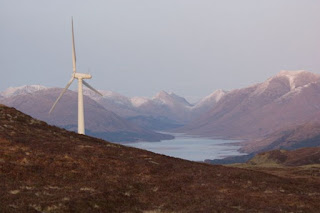
wind farm in Argyll and Bute

Helping communities to develop their own local renewable energy resources could boost the local economy and improve participation in community activities, according to a new report from the Joseph Rowntree Trust.

It says that the Government, instead of reforming planning processes to force unwanted schemes on towns and villages, should instead consider ways in which communities can benefit from low carbon energy.

The report, Wind energy and justice for disadvantaged communities, says that it is not simply about large companies giving a share of their profits to local communities when they put a wind farm in their neighbourhood.

Instead, it should be about bolstering local resilience in the face of difficult economic conditions and rising energy prices, which can have spin-off benefits in terms of improving local facilities and promoting a sense of community spirit.

The report does not consider community-owned schemes, which have their own, separate benefits. Rather, it examines how commercial, large-scale schemes can be more embedded in their locality. It calls on developers to directly invest in community resources or environmental enhancement.

There are community benefit funds from wind farms that now exceed £100,000 a year. As the size of these wind farms continues to increase so will the funds. With this, the report says, “comes the opportunity to achieve something transformational".

This “exciting vision" could, in 25 years time, leave communities with a more “sustainable, autonomous, locally embedded energy system, which retains more local employment and generates funds for other goals".

It quotes research showing that large wind farms tend to be in areas of social disadvantage, or of lower population and lower incomes. These include West Wales, Cornwall, Lincolnshire, North East England, Lothian and Scottish Highlands. By contrast, the affluent counties of southern England, often the most vocal against wind farms, have very few such facilities.

This is not surprising, since remote areas tend to be both windy and socially deprived. But it does show that there is an opportunity for wind farms to redress the economic disadvantage experienced by these areas.

The report cites communities already existing across the country with this transformational aspiration.

One example is that of Argyll and Bute, Scotland, which decided that the sum of £2000 per megawatt of installed capacity should be the minimum payment of the community benefit, with an additional £1000 per megawatt based on the actual output of the wind farm. 60% of this share of the profit is channelled to the immediate local community through a trust fund, and 40% to the wider community.

Another example is Forestry Commission Wales, which manages a lot of upland coniferous plantation land on behalf of the Welsh government, that is made available for developers. Tenders for wind farms are evaluated with considerable weight given to community and financial dimensions: 60% in total, with just 40% given to technical aspects.

Finally the report looks at an example of offshore wind near Lincolnshire on the east coast of England. Here, community benefits have been substantially shaped by the developer, Centrica. For example, they have invested in a local community centre to give it heating and hot water, and provided a visitor centre and education officer.

The report has been welcomed by RenewableUK, which points out that already in Scotland there is a national register detailing community benefits already agreed with developers to help other communities negotiate with developers.

There is also an emerging UK-wide Coastal Communities Fund, which is beginning a debate about the equitable division of profits between the government and local communities, in cases where projects are developed on land owned by the Crown.

Many companies are seeing the benefits of investing in local communities. In Scotland, Scottish and Southern Energy are increasing their standard community benefit offer to £5000 per megawatt, half of which is put into a “Scotland Sustainable Energy Fund" with the aim of supporting the development of skills, community energy schemes and environmental improvements in the wider region.

The Rowntree Report concludes by saying: “The prize is a significant one: a low-carbon energy revolution that not only addresses global obligations to future generations, but which fosters long-term resilience in the communities that live alongside the infrastructure".

Monday, April 16, 2012

Civil war breaks out in Government over green policies

Latent divisions in the coalition government have broken out into a war of words, as Tories challenge the Green Deal and wind farm plans, in a bid to influence next session's legislative programme before May 9th's Queen's Speech.

Energy minister Greg Barker appeared to signal a shift in policy over the weekend by saying that Britain already has “the wind we need” either being built, developed or in planning. “It’s about being balanced and sensible,” he said.

“We inherited a policy from the last government which was unbalanced in favour of onshore wind. There have been some installations in insensitive or unsuitable locations - too close to houses, or in an area of outstanding natural beauty,” he added.

Senior Conservatives in the Coalition are plotting how to reduce support for onshore wind power, with one eye on their electoral chances in rural areas.

They have seen Chris Huhne's resignation as an opportunity to take curb green policies. "Chris Huhne’s zealous ambition is being reined back,” one top Whitehall source is reported as saying. “There’s already enough [wind farms] being built and developed."

But a Department for Energy and Climate Change spokesperson said there was ‘no U-turn on wind farms’, adding: ‘This is not a change in policy.”

Telegraph campaign


Leading Conservatives have also launched a campaign to kill the Green Deal in the Telegraph, which seems to be running a persistent campaign against the coalition government's energy policies.

The paper reports the communities secretary, Eric Pickles, the housing minister Grant Shapps, and the employment minister Chris Grayling, calling the Green Deal a stealth “conservatory tax” on householders. They claim it will add around 10% to a typical bill for home improvements, But they fail to consider the longer term benefits of reduced energy bills.

"We don't think this should extend to a 'conservatory tax' situation. The compulsion elements are over-the-top," a Government source said.

The ministers called for the entire Green Deal to be scrapped. The Sunday Telegraph quoted them as saying: "The Green Deal was Chris Huhne's baby. He has gone now and it is the right time to kill it off. Forcing people to pay thousands of pounds for unwanted extra home insulation is the last thing hard-pressed families need at the moment. It's madness."

A new Energy Bill containing the latest policies will form part of the Queen’s Speech, and is due in a few weeks' time.

DECC fights back

Deputy prime minister Nick Clegg hit back, calling reports that householders would have to pay thousands of pounds extra to do “simple things like insulating their homes”...“ludicrous scare stories”.

Chris Huhne has also responded, saying, "Top Tories should stop posturing on green plans that help hard-hit households".

And Greg Barker has called the attacks on the Green Deal "bonkers", and pointed out that the policy was in the Coalition agreement and had been developed by the Conservatives in opposition.

Nick Clegg only last week mounted a strong public defence of the Green Deal, promising customers will never be "charged more for the home improvements than we expect them to make back in cheaper bills. Plus the charge is attached to the property, rather than the person, so if you move, you stop paying. That is maximum affordability, with savings that should more than cover costs."

The facts about the coalition's green policies


It's worth restating a few salient facts around the issues of the coalition’s climate change and energy policies:

  1. 463 MPs voted for the Climate Act, and only three against it.

  2. Other countries are following suit, with Mexico passing a Climate Act next month, and Germany and Australia also having targets to cut emissions by 80% by 2050.

  3. The clean technology sector is one of the few areas of the economy experiencing growth, and the CBI has consistently called for no further changes to energy policies to give investors confidence.

  4. The impact of green policies on energy bills is minimal: according to Ofgem, the cost of nuclear decommissioning is about £266 per year for a UK household, whereas support for solar power adds £2 per year, or about 0.15% of the UK average dual fuel bill.


On the Green Deal:

  1. The standard assessment procedure (SAP), used to calculate how much households will save from the Green deal measures, is as accurate as possible, as it is based on a survey of thousands of homes and is being constantly updated to take account of the latest research and experience of energy saving measures.

  2. The cost of the measures will be calculated to be less than the savings achieved by the measures applied, known as the 'golden rule', and will be financed by applying a pre-agreed charge to the building's electricity bill.

  3. The government says that there will still be enough cash left over for occupiers to experience reduced bills as well.

  4. The length of the repayment period can be adjusted to make the golden rule work; up to 25 years in some cases.

  5. Assessment can only be done by UKAS-accredited certification companies in much the same way as EPCs are presently done, i.e. by a competent person who has been trained and is certificated.

  6. Assessments will not be free, but usually carried out as a loss-leader by companies who are also providing the installations. It’s therefore only fair that they will be given some of the resulting work.

  7. There will be a requirement for schemes to comply with British Standard EN 45011, and for installation to be under a Publically Available Standard now under consultation (PAS 2030) which will define the skills required through National Occupational Standards (NOS).

The Green Deal will be attractive to large organisations, but the processes for subcontracting specialist installation services, in compliance with the code of conduct, still needs to be developed.

A number of local authorities are gearing up to deliver Green Deal schemes themselves, including Birmingham City Council and a cluster in the North East led by Newcastle City Council.

Councils are trusted and in a prime position to accept this responsibility. They would also be in a good position to recover the loan repayments, as they already have a property-based system in place for council tax collection.

The government is currently putting together a system of checks, guarantees and insurance schemes to try and ensure the quality of the work.

Thursday, February 23, 2012

Cameron wants to pay communities to host windfarms


The Prime Minister, David Cameron, has come out in support of onshore wind farms, and promised that reform of the planning process will give more power to local communities over developments in their area, and more financial benefits to them should they agree to a windfarm being cited in their midst.

His views are expressed in a letter to Daventry MP Chris Heaton-Harris, who earlier this month coordinated an open letter to the Prime Minister, signed by up to 106 Conservative MPs, opposing onshore windfarms.

Mr Heaton-Harris boasts on his website about working with local communities "to fight both wind-farm proposals and unwanted development being foisted upon them by central government".

In his response to this letter, Mr Cameron says that he appreciates concerns from local residents about large planning applications, and “that is why we want to make the planning process more accessible to local residents, because planning works best when communities themselves have the opportunity to influence the decisions that make a difference in their lives.

"That must include local communities having their full say on onshore wind farm planning decisions."

He says that the planning reforms currently being finalised by the Coalition Government will “put local communities in the driving seat by giving new powers to neighbourhoods to write their own plans," which “will mean that the top-down regional targets will not trump local concerns in planning decisions," as it does at present.

It's significant that his wording is "regional targets" and not "national targets", for it is national targets which determine the number of onshore wind farms.

Business rates benefits


Mr Cameron goes on to say that this process should also allow local communities to “receive more local benefits as a result of development that does go ahead".

This means ensuring they “capture the full economic benefit from hosting renewable energy projects, including retention of all of the business rates they pay".

At present, only landowners and developers see a profit, which is a function of the way the Renewables Obligation was designed, unlike in several other countries where communities have long received financial benefits from wind farms sited in their locations.

Mr Heaton-Harris will take comfort from the fact that Mr Cameron says that he shares the views of the Tory MPs who signed the letter about “the need to review support for onshore wind under the Renewables Obligation".

He notes that initially the subsidy for onshore wind is being reduced by 10% because the costs of onshore wind of falling, "which will affect projects that are being built this year". This hints that the subsidy may fall further in future.

Support for low carbon sector


David Cameron then goes on to mount a defence of the role of onshore wind energy in “a balanced UK energy mix alongside gas, nuclear, cleaner coal and other forms of renewable energy".

He says that having a portfolio of different supplies “enhances energy security and prevents the UK from becoming over-reliant on gas imports".

In words that will please the low carbon sector he adds that he is “determined" to “seize the economic opportunities in renewable energy supply chains as the global race for capital in low carbon sectors intensifies", acknowledging the benefit to British companies in forging alliances with others abroad in order successfully to play their part in what is a global market.

“Around £4 billion of new investments in UK renewable energy projects have been announced with the potential to support up to 14,000 new jobs in this country" since April 2011, the Prime Minister writes.

He concludes by saying, in response to accusations that British renewable energy policy is a dog being wagged by the tail of policymakers in Brussels, that, “in other words, there are perfectly hardheaded reasons for allowing some onshore wind energy to be part of our mix irrespective of the EU's 2020 renewable energy target signed up to by the previous government..."

However, he adds to this sentence “...but if, and only if, local people have a proper say in planning decisions".

Heaton-Harris' response

In response, Mr Heaton-Harris says that he is “actually slightly encouraged by the letter and the noises off I am hearing", implying that he knows something we don't.

He told the Daily Mail: "I’m hopeful given what he says about planning and how that is being addressed. This is the opening of a conversation."

Nevertheless, Greenpeace spokesman Joss Garman also found reassurance in the letter: “The Prime Minister is right to make a strong intervention to cut through the myths and remind a vocal minority on his back benches that wind farms are good for the economy and good for the environment.

“Wind energy can play a crucial role in reducing our dependence upon the expensive gas imports that are driving up everybody’s energy bills, whilst also cutting pollution and creating new jobs.”

Wind industry hopeful

A spokesman for Renewable UK, the trade body for onshore wind, said that they welcomed the recognition by the Prime Minister of the contribution that the wind industry makes to the economy, employing thousands and, in the future, tens of thousands of people.

He said that wind developers had just responded to the Localism Bill and were not too worried that its effects would impact to an uncomfortable degree on plans for more onshore wind farms.

He said it would depend very much on the nature of a Local Plan and Neighbourhood Plan, and the degree of incentives that were offered to communities in the form of business rates etc. "It would be a question of balancing these local incentives with the national priorities."

This in turn hinges on the wording in the final draft of the National Planning Policy Framework (NPPF), which will determine how national targets are to be achieved at the local level, and which is still being written.

The latest thinking on resolving the tension that clearly exists between the NPPF and Neighbourhood and Local Plans, comes from the government's Communities and Local Government Committee.

It says on this matter: “Cllr Porter told us that once Local Plans were written, taking into account the NPPF, 'Neighbourhood Plans should be able to fit into a Local Plan so communities will be able to determine for themselves where development that is needed goes. What they will not be able to determine is the fact that they do not need any'".

The CLGC concludes by telling the government to sort out "the relationship between the NPPF, Local Plans and Neighbourhood Plans, especially when these priorities conflict. The NPPF must clarify whether the Local Plan or the Neighbourhood Plan takes precedence. It should also define what constitutes 'strategic issues'."

Planning Minister Greg Clark told the committee he hopes the words used in the final document would be unambiguous enough to not be open to misinterpretation.

The feeling is that, for wind farms, in the same way as for new housing developments (where the Government believes that the New Homes Bonus will incentivise communities to be more receptive to development), the carrot of receiving local business rates will be a sufficiently powerful persuader.

There will still be centrally set targets for onshore renewable energy. And at least 4,500 more turbines currently in the planning process will have to go somewhere.