Tuesday, July 02, 2013

UK power "will be 85% more expensive" without energy storage

Edwin Koot, CEO of SolarPlaza
Without large-scale energy storage, the UK government won't meet its renewable energy ambitions, says Edwin Koot, CEO of SolarPlaza.
The price of power in the UK will be 85% more expensive than in Germany (Europe’s biggest energy market) by May 2015, according to data compiled by Bloomberg.

U.K. power will cost £53.06 per megawatt-hour in May 2015, compared with €33.30 in Germany, according to fair value calculations on Bloomberg as of 8:40 a.m. in London.

They attribute the stark difference to Germany’s advanced renewable energy programme, which accounts for 30% of power generation, compared to the UK’s, currently standing at 11.3%.

The 2015 picture compares with an average premium of 17% over the past five years and 80% today, according to data from Marex Spectron Group Ltd., a London broker.

While Germany is seeking to consolidate its status as Europe’s biggest producer of wind and solar power by boosting its share of renewables-sourced energy to 35% in 2015 from 22% last year, the UK is targeting 15% from 11% over the same period, and is predicted to fail to meet the 20% 2020 EU-wide target.

Statkraft AS is closing money-losing gas-fed plants in Germany, while Macquarie Group Ltd. (MQG) and Vitol SA are buying British power stations, betting on gains of as much as 19% in U.K. prices by 2016, according to Societe Generale SA.

“The U.K. has built significantly less renewables to date,” Ilesh Patel, a partner at Baringa Partners LLP, a consulting firm that counts EON SE and Electricite de France SA (EDF) among its clients, said. “Germany has been on a fast-track wind and solar plan.”

Many critics of investment in renewable energy in the UK point to the fact that Germany, which is investing heavily in renewable technologies in its push to abandon its reliance upon nuclear power, currently has higher power prices than the UK.

However, Ed Davey, Energy Secretary, has consistently said that Britain's programme of supporting renewable energy will eventually lead to lower prices.

The key to this development may be investment in energy storage.

Germany is offering incentives worth €25 million to help subsidise the installation of batteries alongside solar PV systems to store electricity for use at night time. Simon Daniel, Founder of energy storage company Moixa Technology, says this "is helping our European neighbour to realise the full potential of renewable technology".

The UK Minister for Energy and Climate Change, Gregory Barker, is to deliver the keynote speech during the upcoming Solar Future UK ’13 event on July 16 at which he is expected to enlarge on his announcement, made at the recent Intersolar conference, that Britain hopes to deploy 20 GW of PV by 2020, in relation to how this affects Britain's energy storage capacity.

At the Intersolar event, Barker said that "the UK Government is totally committed to building a world-class renewables industry” and quoted Prime Minister David Cameron as saying that he wants to "make Britain a global showcase for green innovation and energy efficiency".

At the following day's Energy Storage UK '13 conference, leading industry spokespeople and cleantech businesses from the UK’s energy storage sector will discuss how the latest energy storage systems (ESS) will advance the integration of renewable energy, such as solar PV and wind.

"Deployment potential of solar PV is greater than the UK’s grid storage capacity," comments the CEO of SolarPlaza, Edwin Koot. "Without large-scale energy storage solutions, the UK Government’s ambition to reach this figure presents a significant challenge for National Grid, which has already warned that building more than 10GW will make it difficult to manage the network in its current form."

Director of the Electricity Storage Network, Anthony Price, is warning that "if the Government does not support the use of storage as part of the solution to meet our power shortfall, we will lose this opportunity, and live to regret it.

"What is low cost now will take us down power’s one-way street. It will be difficult and costly to reverse. Our plans for the Smart Grid show we need storage and we must seize this opportunity now.”

The intermittency of solar PV and wind requires utilities to maintain additional spinning reserve from polluting power stations to pick up loads, or, in the future, use demand-side reduction techniques in the capacity market, in the event of peak demand spikes.

If the potential of intermittent renewables is to be fully realised, the National Grid will require fast-acting energy storage systems that can dispatch power and respond quickly to network imbalances, says Price.

That the power industry and policy makers are not paying sufficient attention to the challenges arising from integrating intermittent power generation into the system was felt by 60% of attendees polled at the recent POWER-GEN Europe and its co-located conference, Renewable Energy World Europe, between 4-6 June at the Messe Wien, Vienna.

Monday, July 01, 2013

£15 million for community-owned renewable energy in England

 installing PV panels

A new £15 million government fund has been launched to support community-owned renewable energy projects in England.

The Rural Community Energy Fund (RCEF), which is now open to applications, is targeted at helping rural communities pay for the cost of feasibility studies into renewable energy projects, and fund the costs associated with applying for planning permission.

But the fund stops short of paying for the actual installation of the renewable technologies. Instead, the hope is that projects will then be able to attract private finance to get projects up and running.

Crowd-funding is proving to be a popular way of attracting such finance. The most recent project to be funded this way is a community-run hydro-electric scheme on the outskirts of Edinburgh, Scotland. Harlaw Hydro raised £313,000 through a ‘community share’ offer to fund the installation.

Additionally, the Co-operative Bank’s loan fund, the Co-operative Enterprise Hub are offering support for renewable energy with their campaign for a Clean Energy Revolution in communities across the UK.

Within their £1 billion commitment to fund energy efficiency and renewables is a £100 million fund for small-scale community renewables and tackling reductions in fuel poverty.

The RCEF funding can be used to support most renewable or low carbon technologies, including: wind, solar, biomass, heat pumps, anaerobic digestion, gas Combined Heat and Power and hydro.

Energy and Climate Change Minister Greg Barker said that he hoped the funding would "help kick start hundreds of clean green energy projects in rural areas across England. Not only can local generation bring people together, boost local economies and drive forward green growth, it can help save money on energy bills too.”

Environment and Rural Affairs Minister Richard Benyon added: “As well as boosting renewable energy production, the Fund will ensure that communities have the funding they need for local projects and priorities in future.”

The RCEF offers funding in two stages: a grant of up to £20,000 for feasibility studies into renewable energy projects in local areas; and, upon successful completion of this, a loan of up to around £130,000 to help with project costs, such as seeking planning permission and relevant environmental permits.

The loan is repayable to the government once projects have been commissioned, with an additional premium of 45%. This cash is expected to be derived from the income generated by their projects. The government will reinvest it back into the fund to help support further projects.

The funding is a successor to the Local Energy Assessment Fund (LEAF) that was launched in December 2011. This has led to 236 community energy generation and management projects across England.

WRAP is, perhaps surprisingly, the delivery agency for the RCEF funding, with the application forms available on their website.

Applications will only be considered from rural communities with less than 10,000 residents and larger communities located in local authority areas defined as ‘predominantly rural’.

Applications will be reviewed on a monthly basis by the Department of Energy and Climate Change (DECC) and Defra with advice from WRAP, but there is no set deadline for submission of bids.

Sunday, June 30, 2013

Demand side response: a revolution in British energy policy

demand side response

It's highly significant that demand side response is to be included in auctions for the future British electricity capacity market, as announced by DECC last Thursday, because it marks once and for all a move away from the principle that has dominated energy policy since the national grid began: of satisfying peak demand at any price.

Capacity market auctions will commence in 2014, subject to European state aide approval, and will embrace new and existing generation capacity including combined heat and power (CHP), embedded generation, energy storage, and permanent reductions in electricity demand.

Demand side response (DSR) means that small, decentralised generators and owners of stand-by generators experiencing reduced demand, or a combination of both, will be able to gain an income by selling the energy they don't need.

The UK‟s electricity system is currently sized to meet peak demands that only occur infrequently, which leads to generating plant and transmission and distribution networks being under-utilised for much of the time.

This is expensive and wasteful.

DSR will open up a huge new market, which will grow even more as the 'smart grid' spreads, by letting energy consumers become active participants in a more local and efficient energy system.

It will embrace many different kinds of energy consumers, such as businesses, farms, hospitals, hotels, universities, local authorities and commercial buildings.

As a result of this policy such enterprises will have greater confidence to invest in their own generation plant, and will have the ability to create income for themselves on a sustainable, predictable basis.

Any facility that collects real-time consumption data and is sometimes on standby to reduce energy use, or that runs standby generation that can start up upon a signal from the electricity system, will be able to participate.

Participants will be able to bid both one and four years ahead in the auctions, giving them flexibility and confidence to invest in the future.

It's also good news for combined heat and power, since much small-scale generation is CHP, producing heat and power for local networks.

The other benefits of demand side response include:

  • addressing the threat to electricity supply caused by the imminent closure of coal-fired power stations;

  • reducing the need to build new power stations and transmission lines;

  • reducing greenhouse gas emissions by allowing power stations to operate closer to the maximum efficiency;

  • avoiding transmission losses by using electricity locally;

  • and reducing the need to keep power stations warm as a spinning contingency reserve.

If we compare the consumption pattern of electricity from the commercial and public sector to the demand profile for all sectors, we see that the peak demands for non-domestic buildings occur at around 11am on weekdays, whereas the total peak is between 4 and 6pm.

This is where the potential for spreading out supply and demand lies.

The potential for DSR to reduce peak demands depends on the flexibility of electricity capacity and the uses to which it is put.

The greatest flexibility is related to load with storage or inbuilt inertia, such as hot water, heating and air conditioning. Some loads, such as computing, exhibit limited flexibility, unless they are in data centres operating unused standby.

Assessments by Element Energy and the Montford University for Ofgem a year ago of the technical potential suggest that DSR measures could reduce winter peak demands in Britain due to non-domestic buildings from 1–4.5GW, but the eventual potential is likely to be much more.

There is work to be done to develop detailed policy implementation that will work well for smaller operators and ensure that the cost effectiveness of DSR is harnessed for the benefit of consumers and the wider UK economy.

A consultation by Ofgem on the subject finished on 28 June. It's probable that the results of the consultation will feed into the practical arrangements under which the capacity mechanism will operate.

Sensibly, there will be a transition period for demand side reduction and small-scale storage within the capacity market.

To this end, Ofgem and the National Grid have just launched a new consultation on transitional products aimed at paving the way for DSR.

The first potential product, Demand Side Balancing Reserve, offers a new opportunity for the demand side to participate in the provision of demand and supply balancing services.

The second, Supplemental Balancing Reserve, is aimed at generators and large users.

Of the first, National Grid is suggesting that it could buy a quantity of demand reduction capability at peak times on non-holiday weekdays during the winter for a set-up payment of between £5-10/kW per year, and utilisation payments for delivery ranging from £500/MWh to £15,000/MWh.

It's also consulting on a second product that would be the same but without the setup payment.

The idea is that this will promote significant growth in the provision of demand-side services ahead of DSR participation in the capacity market.

No one should underestimate the significance of this development: it marks the first time that Britain has moved away from an energy policy of having to supply peak demand whatever it is.

This policy has proved inefficient, insecure, expensive and impractical; the more so as energy and plant construction prices rise and we are constrained by the need to reduce carbon emissions.

It's a fabulous opportunity, and the more organisations and businesses wake up to its potential benefits for them, as well as to the effect on reducing prices for all energy consumers, the better it will be for the whole country.

Saturday, June 29, 2013

Strike prices for renewable energy revealed

Viridor's waste-to-energy plant in Cardiff, to be completed next year: it will receive a £90 per megawatt hour strike price.
The prices to be paid over and above the estimated market price for energy from waste, offshore and onshore wind, PV and other renewables were laid out yesterday as part of the government's electricity market reforms, designed to let renewable supply 30% of Britain's electricity by 2020.

The figures cover each year from 2014 until 2019. Some technologies will receive the same price for the whole period, while others will see the price reduce, as their costs are expected to fall.

For projects with a potential deployment capacity over 1 GW:
  • Offshore wind will receive £155/MWh, falling to £135 in 2019
  • Onshore wind will receive £100, dropping to £95 in 2019
  • Large solar PV will receive £125, falling to £110 in 2019
  • Hydro will receive £95 throughout
  • Biomass conversion will receive £105 throughout.
There are also prices for:
  • gasification and pyrolysis (£155-£135)
  • anaerobic digestion (£145-£135)
  • waste to energy (£90)
  • dedicated biomass with CHP (£120)
  • geothermal (£125-£120)
  • landfill gas (£65)
  • sewage gas (£85), and 
  • marine energy technologies (£305).

These prices are broadly comparable to the support levels available under the Renewables Obligation, with a number of adjustments to account for the benefits of Contracts-for-Difference (CfDs).

Under the Levy Control Framework there will be a cap, starting in 2015/16 at £4.3 billion in real terms, to limit the costs passed on to consumers.

The application process is now open for developers of renewable electricity projects to apply for Investment Contracts ahead of when the long-term EMR contracts (CfDs) are finalised.

DECC also confirmed that the Government will allow renewable electricity to be imported and exported from the UK to elsewhere to help meet renewable energy targets, boost energy security and investment.

Renewable energy projects on the Scottish islands will receive additional support to connect them to the mainland.

Energy Secretary Ed Davey said the strike prices would “make the UK market one of the most attractive for developers of wind, wave, tidal, solar and other renewables technologies. This will help boost home-grown sources of clean secure energy and enable us to decarbonise the power sector."

He predicted that renewables would contribute "more than 30% to our mix by the end of this decade".

The Government also revealed details of the capacity market, which will be launched next year, in which participants will include existing generators and investors in new plant. They will bid at auctions to offer to provide the total amount of electricity that the UK is expected to need for 2018-2019.

Bidders who are successful will receive a steady price from the year in which they agree to make the capacity available. In return they must deliver electricity as required, or face financial penalties.

The announcements coincided with a report from watchdog Ofgem warning that “without action" electricity margins could tighten in 2015-2016 to 2%-5% depending on demand.

Ofgem’s chief executive Andrew Wright said this “highlights the need for reform to encourage investment in generation”.

£75 million of capital for investment in innovative energy projects was also announced, with the aim of lowering the cost of deployment of offshore wind, renewable heat, carbon capture and storage.

Reactions to the strike prices have been mixed.

Gaynor Hartnell, chief executive of the UK’s Renewable Energy Association, said she was struck by what was left out. “The notable omission is dedicated biomass. We will be pushing for clarification of these as soon as possible.”

She observed that there are “hundreds of megawatts of biomass projects looking to commission under the new support regime and their contribution of clean, baseload electricity will help keep the lights on when the capacity crunch comes”.

The Solar Trade Association's Head of External Affairs, Leonie Greene, criticised the contracts for difference model for mitigating against independent renewable energy suppliers because it depends on generators securing a market 'reference' price for their power, which is then topped up by Government to meet the 'strike price'.

She said that there is then a relatively high risk for independent generators of failing to meet this price, meaning that purchasers of renewable power are likely to offer less attractive terms to independent generators in their long-term Power Purchase Agreements for their output.

“Because of the additional risk the CfD model presents to independent generators like solar power, we would expect to see the additional cost of risk factored into the strike price," she said.

Maria McCaffery, CEO of RenewableUK, representing marine and wind energy sectors, was more enthusiastic: "The levels of the strike prices are challenging but possible considering the reduced time periods that renewables will be supported for under the contract for difference system compared to the Renewable Obligation”.

She did call for more details to be set out for the sake of investors’ confidence. "The secret is consistent, long-term support and investors seeing that Government is behind renewables and low carbon generation for the long term.”

Utility firm RWE's CEO Paul Massara also called for more detail. “This, along with the overall complexity of the proposals and the need to gain EU state aid approval, means significant uncertainty remains. Only once the final detail on contract terms and conditions is clear will a full understanding of the impact these proposals will have on potential investment into the UK and on Britain’s energy consumers be possible,” he said.

The CBI's chief policy director, Katja Hall also welcomed the figures but added: “The Energy Bill’s passage has dragged on long enough — the big task now is to get it on the statute book as soon as possible.”

She added: "giving the Green Investment Bank borrowing powers will give it real teeth to support investments in low-carbon technologies”.

The Government also announced plans to support nuclear power and shale gas.

This includes £100,000 for communities situated near each exploratory (hydraulically fracked) well, and 1% of revenues from every production site.

The Treasury will pre-qualify EDF’s Hinkley Point C new nuclear power project for a Government Infrastructure Loan Guarantee, which is available to any large infrastructure project. Negotiations remain ongoing between Government and NNB Genco (a subsidiary of EDF) on the potential terms.

This support was lamented as being bad for Scotland by Lang Banks, director of WWF Scotland, who commented that: "the negative impacts of the UK Government's obsession with supporting nuclear and fossil fuels appear to outweigh the positive moves made on renewables.

“It would be a great shame indeed if Scotland's sensible ambition to create jobs and cut climate emissions through increased use of renewable energy was undermined by these measures," she continued.

"In environmental terms, plans to offer tax breaks and compensation for communities for shale gas extraction, and billions of pounds to underwrite new nuclear power is just plain foolish," she added. "Worse still, every pound wasted on polluting gas or nuclear means a pound less on encouraging energy saving and supporting more clean renewables."

Will Straw, the IPPR’s associate director, warned that shale gas "won’t do anything to keep energy bills down in the short term. We must ramp up our ambition on energy efficiency through innovative funding mechanisms like the UK guarantee scheme and the Green Investment Bank".

Caroline Lucas, Green MP for Brighton and Hove, said in Parliament yesterday that ministers should be "spending more time working out how to keep fossil fuels in the ground and less time squandering taxpayers’ money on tax breaks for shale gas that scientists say we simply cannot afford to burn if the Government are to keep to their commitment to limit global warming to below 2°".

This was a reference to a report from watchdog the Committee on Climate Change published this week which warned that the country risked missing its carbon emission reduction targets.

David Kennedy, Chief Executive of the CCC, cautioned: “There remains a very significant challenge delivering the 3% annual emissions reduction required to meet the third and fourth carbon budgets, particularly as the economy returns to growth.

"Government action is required over the next two years to develop and implement new policies. A failure to do this would raise the costs and risks associated with moving to a low-carbon economy,” he said.

Wednesday, June 12, 2013

It’s not Utopian: 100% renewable electricity is here

Two questions for you: how many countries in the world source their electricity 100% from renewable sources? And which major European nation that is well-endowed with renewable energy resources, is the worst at exploiting them?

The answers can be gleaned from the recently updated International Energy Statistics of Electricity Generation from the Energy Information Administration (EIA) of the US Department of Energy.

The sources of the statistics are many, from most countries in the world, and not necessarily directly comparable, but have been homogenised as far as possible to make them so. The figures are up to date to 2011, and in some cases 2012.

It's often said by opponents of renewable energy that too much of it is a bad thing: it results in unreliable supplies of electricity. How come, then, several countries source most of their electricity from renewable energy, and two rely on it 100%?

These two countries are Norway and Iceland. Iceland has been at it since 1980. Admittedly it's a tiny country, and is well-blessed with hydropower and geothermal, which provide 74% and 26% of the electricity respectively.

Norway, with a larger population of 5 million, has also been running almost exclusively on renewable hydroelectricity since 1980. However it also has recently added other renewables, wind and biomass (1.5%).

Another country to rely, perhaps bizarrely, on hydroelectricity is Portugal. Because of periodic droughts, the proportion of its contribution to overall electricity supply varies from year to year from between 38% and 58%. As a result, it has invested massively in wind power and now nearly one fifth the Portuguese electricity is from this source. Surprisingly solar contributed in 2012 under 1%, but biomass generated 5%.

Other countries also rely heavily on renewables. Denmark uses renewable sources for 45% of its energy: wind (30%) and biomass (15%). Spain provided its 47 million people with 31% renewable electricity in 2011. Italy, with 60 million inhabitants, now sources 17% of its electricity renewably. Germany is on 19%. France, 16%. Even the United States is higher than you-know-who at 12.7% (unfortunately, down from 1983 when it was 14.1%).

You-know-who is, of course, the UK, whose total renewable contribution is just 10%.

Britain has been developing wind energy and wave energy longer than France. Yet it has a pitiful proportion of renewables compared to other European countries.

The fault has been the unwieldy architecture of the Non-Fossil Fuel Obligation and its successor, the Renewables Obligation system, which kept small players out of the market and ensured the dominance of big companies and sluggish progress, coupled, more recently, with political dithering.

The Energy Bill offers a great chance to alter this, yet it, too, has been widely condemned as being far too complicated and under-ambitious, especially now that a decarbonisation target is not included.

The EIA figures also show that the United Kingdom ranks 10th in the world for emission of greenhouse gases, being responsible for 1.6% of global emissions from primary fossil fuel consumption for electricity generation.

Britain can, clearly, do far better, never mind all the party political wrangling over support for green technologies. If other countries can do it, so can we.

As author and commentator Paul Gipe says: "the challenge has never been technical. The problem has always been a political desire for a high percentage of renewable energy in a nation's generating mix, and the consistent implementation of policies that work".

Some form of feed-in tariff, the evidence shows from international comparisons, with targeted and consistent support for selected technologies, clearly works to the benefit of those countries implementing it.

Britain is blessed with a huge amount of wind, tidal and marine current energy. There is also a plentiful source of organic material for anaerobic digestion, and solar thermal has always been popular on a small scale. Meanwhile, there is plenty of potential for demand reduction.

Could Britain achieve 100% renewable energy?

A 2011 PriceWaterhouseCooperscenario for 100% renewable electricity recommended that Europe work together to most cost-effectively achieve the magic 100% figure, by setting up a pan-Continental high voltage direct current grid, linked to north Africa, where large solar farms could make up the difference between what countries can generate on their own and their total needs, which would, by then, have been reduced using demand management and energy efficiency.

Another scenario leading up to 2050, produced by WWF/Ecofys, foresees demand reduction, the smart grid, heat pumps, wind, solar, marine, hydro, geothermal and biomass energy as all part of a shared mix.

Zero CarbonBritain is to launch on June 17 at the Houses of Parliament a third version of its roadmap to 100% renewable electricity for the UK by 2030. Its angle includes additional land-use and lifestyle changes.

There have been several other scenarios for achieving the same target from other organisations such as Greenpeace, the European Renewable Energy Foundation and the University of Oxford.

But despite this excellent advice, British energy policy seems to be lurching in the opposite direction. The Government's current enthusiasm, demonstrated by Energy Minister Michael Fallon last week, for shale gas, is another diversion from what should be a complete decarbonisation commitment.

As Greenpeace energy campaigner Lawrence Carter said: "The Government is pandering to climate sceptic backbenchers like Peter Lilley. With everyone from Ofgem to Deutsche Bank to the Secretary of State for Energy agreeing UK shale gas won’t bring down bills, fracking could end up being a lot of pain."

The appointment of George Eustice as David Cameron's new energy and climate change advisor to the Conservative Parliamentary Advisory Board (CPAB) is also seemingly a step in the wrong direction to appease certain Tory backbenchers. He has talked of the "blight" of onshore windfarms, although he is a supporter of marine energy. At least Peter Lilley was not appointed, as was first touted: he has interests in Tethys Petroleum oil exploration company.

Nor was Lilley appointed to be chair of the Energy and Climate Change Committee following Yeo's resignation: it is Sir Robert Smith, who, (where Yeo had investments in green energy) has investments in Shell, the oil company with the worst environmental record, and Rio Tinto Zinc.

With the latest news on climate change being utterly depressing, all the stops need to come out to decarbonise our energy supply.

Denmark, Norway, Portugal, Italy, Spain and all these other European countries show that it is possible to do so. They are all out-classing Britain.

A bright future, full of jobs and export potential, with far less global upheaval caused by climate chaos awaits us, if only the political will was there.


Monday, June 10, 2013

Exposed: Fossil fuel connections of ministers who voted against the decarbonisation target

38 of the ministers who voted against the amendment to set a decarbonisation target for 2030 last week in the House of Commons have received support from, or are in some way connected to, the fossil fuel industry.

Together with other accusations of influence by lobbyists on MPs, and the alleged giving by Tim Yeo of advice to a rail freight company seeking to influence Parliament, the revelations give fresh impetus to calls for MPs and ministers not to get involved in decision-making on matters in which they have an interest.

The list, together with their connections, is published at the bottom of this article. It is noteworthy that none of the ministers with connections to the fossil fuel industry voted for the decarbonisation target.

The list comes from cross-checking the list of those who voted against the amendment with the list of ministers with such connections published in March by the World Development Movement, which itself had collated it from numerous publicly available sources.

The WDM's exercise found that one third of all 125 government ministers have such connections.

This does not account for any connections held by backbench MPs, such as Peter Lilley, who voted against the amendment. He, for example, is a non-executive director of Tethys Petroleum Ltd, as well as having been paid £22,462 in July 2011 for giving advice to Ferro Alloys Corporation Limited on the management and flotation of a power generating subsidiary.

Top ministers with fossil fuel connections include William Hague, Vince Cable, George Osborne, Michael Fallon and Greg Barker. They all have links with big finance, oil and coal companies that are driving climate change.

Foreign secretary William Hague, who used to work for Shell, helped Tullow Oil escape paying a £175m tax bill in Uganda, one of the world’s poorest countries. Mr Hague made a personal phone call to the Ugandan president on Tullow Oil’s behalf.

Vince Cable, secretary of state for business and skills, in charge of regulating companies, worked for Shell and was referred to as "contact minister for Shell" by a top Shell executive in 2012.

His business and now also energy minister, Michael Fallon, was an independent non-executive director responsible for inter-dealer broking (until 2012) of Tullett Prebon plc, specialising in Energy & Commodities.

Chancellor George Osborne accepted donations worth £38,000 from the head of CQS, a hedge fund that channels millions of pounds into climate-warming energy. Also, his father-in-law, Lord Howell, is president of the Shell and BP-funded British Institute for Energy Economics. Lord Howell was a Foreign Office minister until 2012.

Energy minister Gregory Barker, who shamefully voted against the amendment, has been the head of international investor relations for Anglo Siberian Oil and Sibneft, a Shareholder in New Star European Growth Fund plc and Henderson High Income Trust plc and corporate finance director of the Australian-owned International Pacific Securities.

The vote on the amendment would have been different if just 12 MPs had voted differently.

It would be in the interests of democracy, let alone the planet in this case, that MPs should be barred from voting on matters in which they have a financial interest.

By the way, mandatory carbon reporting introduced by the government will force fossil fuel companies to disclose their carbon footprints, but banks and other institutional investors will not have to declare the emissions arising from their loans and investments.

Yet without them, big oil, gas and coal companies like Shell, BP and Rio Tinto would not be able to raise billions from pension funds, banks and other financial investors based in the City of London and beyond.

By including these ‘financed emissions’ in mandatory carbon reporting regulations, Vince Cable could force financial institutions to disclose their full carbon impact and fully expose the degree of exposure that these institutions have to the carbon bubble.

The 'carbon bubble' is the name given to the assets held by these institutions which may become worthless if they are not allowed to be exploited by national or global level agreements to curb global warming.

It is therefore in the interests of these companies themselves to account for the impact of such investments.

The lists:

Here is the list of ministers who voted against the amendment, together with their connections to the fossil fuel industry:

Gregory Barker Anglo Siberian Oil (1998–2000) Head of International Investor Relations for Sibneft (1998) 50 Shareholder in New Star European Growth Fund PLC and Henderson High Income Trust PLC.51 Corporate Finance Director of the Australian owned International Pacific Securities
Vincent Cable Chief economist and other positions at Shell International (the world’s most carbon intensive oil company: A leaked memo addressed to Cable from Shell’s chief executive referred to him as “contact minister for Shell”) (1990-1997).
David Cameron Accepted £10,000 from Jonathan Green of hedge fund GLG Partners. GLG is a frequent investor in fossil fuels. Accepted £10,000 from Mark Foster Brown of hedge fund Altima Partners (2005), which deals in fossil fuel shares, including Cadogan Petroleum and Lonrho plc,29 which is a multi-sector company involved in building port terminals in Africa “to support the oil and gas industry"
Kenneth Clarke Director of Foreign and Colonial Investment Trust plc (until 2007)
Nick Clegg Accepted £9,000 from Neil Sherlock, head of public affairs at auditors KPMG (2006-2008)
Michael Fallon Director of Tullett Prebon Plc (independent non-executive); inter-dealer broking (until 2012)
Robert Goodwill  Shareholding in Barclays, Gazprom and Lukoil. Accepted £11,000 donation from Mountboon Investments Ltd financiers (2010)
Dominic Grieve Total shareholdings of more than £240,000 in Anglo American, Standard Chartered, Rio Tinto and Shell
Michael Gove Accepted £10,000 donation from Aidan Heavey, founder and chief executive of global gas and oil company Tullow Oil(2010)
William Hague Worked for Shell UK (1982-83). Accepted over £25,000 in non-cash donations from CQS
Stephen Hammond Director Commerzbank Securities (2000–Present) Has shareholdings in Peal Gas Ltd
Greg Hands Worked or three different firms in an eight year banking career. (1990-97)
Matthew Hancock Payment of £3,000 from UBS AG for speech (2011)74
Mark Hoban Payment of £1,300 from JP Morgan Chase for speech (2010)76
Nick Hurd Represented a British bank in Brazil (1995-1999).
Sajid Javid Directorships and other senior positions at Deutsche Bank AG, (2000-2009), JP Morgan Partners LLC (1997-2009) and Chase Manhattan Bank (1991-1994)
Jo Johnson Investment banker at Deutsche Bank (until 1997)
David Lidington Worked for BP (1983-86) and Rio Tinto (1986-87)
Mark Lancaster Management consultant at Palmer Capital a privately owned venture capital and fund management business. (resigned 2012)
David Laws Vice President JP Morgan’s Treasury Division (1987-1992) Managing Director Barclays De Zoete Wedd (1992-1994)
Maria Miller Marketing manager Texaco (1990-1994)
Francis Maude Member of Barclays’ Asia-Pacific Advisory Committee. (2005-2009). The Conservative Party’s Implementation Team which reported to Maude also received significant donations in kind from accountancy firms KPMG, PriceWaterhouseCoopers, Ernst and Young and Deloitte.
Theresa May Shareholdings held by self and spouse in Prudential Corporation plc. Accepted donation in kind from Michael Hintze who runs the hedge fund management firm CQS Asset Management. (2009)
David Mundell Accepted £5,000 from Caledonia Investments PLC investment trust. (2010)
George Osborne Accepted donations and donations in kind from Michael Hintze of CQS hedge fund worth £38,700. Leading beneficiary of donations in kind to the then shadow cabinet from audit firms KPMG (£62,500) and Deloitte (£60,000) both of which have specialist oil and gas departments. (2009) Also, his father-in-law, Lord Howell, is president of the Shell and BP-funded British Institute for Energy Economics. Lord Howell was a Foreign Office minister until 2012
Andrew Robathan Worked for BP (1991-92)
Desmond Swayne Manager of Risk Management Systems at the Royal Bank of Scotland and other senior positions (1989-1997)
Elizabeth Truss Commercial manager at Shell (1996-end date unclear)
David Willets Senior advisor to Punter Southall a leading actuaries and actuarial consultants.

This is a list of other ministers who were absent for the vote, but who also have such connections:

Alan Duncan
Oil trader and other positions at Shell (1979-1992) Consultant for Vitol.
Philip Dunne SG Warburg (1981-88) Former Managing Director of Lufkin & Jenrette a US investment bank.
Philip Hammond Director of Consort Resources Ltd later purchased by Caledonia Oil and Gas (1999-2003)
Oliver Letwin Directorships and other senior positions at Investment bank NM Rothschild (1986-2009)
John Nash Assistant Director Lazard Brothers and Co Ltd (1988-1989)
Hugh Robertson Assistant Director and management head Schroder Investment Management (1995-2001)

Finally, here is a list of ministers in the House of Lords with such connections: Lets see how they vote when the Energy Bill comes before them:

Lord Ahmad of Wimbledon
Senior positions at NatWest, Alliance Bernstein, and Sucden Financia (1991-present)
Lord Deighton Chief Operating Officer for Europe and other positions at Goldman Sachs. (1983-2005)
Lord Freud Vice-chairman and other senior positions at S G Warburg (later known as UBS Investment Bank) (1984-2003)
Lord Green of Hurstpierpoint Chairman and other senior positions HSBC (1992-2010)
Earl Howe London director of Adam & Co. plc (1987-1990)

Thursday, March 14, 2013

There are far better deals than the Green Deal

Greg Barker signing off £224 million to support the Green Deal
 Minister Greg Barker signing off £224 million of public money this week to finance the Green Deal.
For those disillusioned with the Green Deal, there is no shortage of alternatives, many of which are more attractive and less hassle.

Energy Secretary Ed Davey was keen recently to assure the public that the Green Deal will have a significant uptake and make a difference to the lamentable energy efficiency of the UK's housing stock.

There were plenty of people willing to express scepticism, especially given the off-putting cost of obtaining an initial assessment (around £100) and the 7% interest rate on the loan which makes many measures unaffordable within the context of the Golden Rule, that the savings generated must lie within the cost of the measure.

But the Green Deal is not the only show in town. Far from it.

One of the alternatives is that there are plenty of quick win, low-cost measures you can take yourself to save energy and money on bills that are not even catered for with the Green Deal.

These include simple draught-proofing of doors and windows; installing flue gas heat reclamation on non-condensing boilers (cheaper than buying a condensing boiler); or installing secondary glazing (almost as good, but not as nearly as expensive, as installing double glazing).

But you may still need cash, even if these measures will pay for themselves quickly, at least for the last two measures, and for many larger jobs.

For this, there are many loan offers for energy efficiency on the market, beginning at 0%, and all lower than the Green Deal. We will look first at offers for householders, then businesses and the public sector.

Top of the list is the offer from the Co-operative Bank. It is offering an Energy Efficient Advance with an interest rate of just 1.04% for the first two years over the Bank of England base rate, i.e. 1.54% or an AER of 2%. Up to £20,000 may be borrowed, and you can even take a payment holiday for up to 6 months. There is an approved list of measures, which includes the usual kinds of insulation and double glazing, as well as a few renewable electric and heat technologies.

Not to be outdone, the Nationwide Building Society is also offering an energy efficiency loans scheme with interest rates from 2.29%. Its Green Additional Borrowing service allows existing mortgage customers to take out loans of £5,000 to £20,000 to fund anything from heat pumps to double glazing, insulation and solar panels.

And for some time the Ecology Building Society has offered its "C-Change Retrofit mortgage" that has a discount on its standard variable rate of 4.9%, of 0.25% for every grade improvement in the building's Energy Performance Certificate (EPC) rating that is delivered through home improvements.

Then there is the Royal Bank of Scotland's new energy efficiency loan service, which will complement its already successful renewables loan scheme. Under this, its bank managers will offer energy efficiency audits to small business customers, which will recommend behavioural changes or building improvements. Financing will be offered to cover the cost. However, the cost of an initial audit may be offputting: around £1,000. But with saving possible of around £9,000 a year, based on about £20,000 of spending, RBS says, it's still worthwhile. The interest rate is unknown at present.

Some councils offer their own interest-free energy efficiency loans to householders. For example, Wirral Borough Council, which offers a loan for loft and cavity wall insulation, central heating boilers, draught-proofing and solar water heating. Wigan Council is another example.

Even better is a set of schemes in Scotland, which include not only interest-free loans of up to £2,500 but grants of £200 as well. It's worth checking your local authority website for similar deals.

There are several differences between these types of schemes and the Green Deal. 

Firstly, the loans are unsecured. Secondly, the Green Deal aims to have many checks and balances on the quality of the work, and of the contractors who carry it out. One may only employ approved assessors and installers; but with many of the other deals on offer, any contractor may carry out the work, and of course it's a case of ‘buyer beware’.

The above schemes are generally for homeowners or tenants.

But what about businesses and the public sector?

For SMEs, there is always the Carbon Trust energy-efficiency loans, which are available at 0% interest, for amounts between £5,000 and £200,000. They are often used to upgrade heating systems but can be used for insulation and other types of refurbishment and equipment. In Northern Ireland, amounts of up to £400,000 are available.

For bodies in the public sector, there is the Salix range of funds. They are different for the different provinces of the UK, but in each case are available for schools, NHS, educational institutions, public services and local authorities. They are interest-free loans, repayable over a four-year period. With many measures paying for themselves well within this period, this results in a net zero cost or even cost benefit soon to clients. So far, over 2,230 energy efficiency projects have been undertaken in England in the last two years. This has resulted in annual energy savings of £27 million from public bodies, not to mention 159,000 tonnes of annual CO2 savings.

Under Salix' Energy Efficiency Recycling Funds scheme, amounts as high of £500,000 can be loaned. This is matched by the client and fed into a ring-fenced fund, to be spent on improving energy-saving projects with a payback of less than five years. The energy savings are returned to the fund until the original project investment is repaid. After that, the client can keep the savings. The fund itself can stay in place.

There are also, for businesses, Enhanced Capital Allowances, allowing businesses to purchase energy-saving plant or machinery specified on the Energy Technology List, which is managed by the Carbon Trust. This provides businesses with a 100% first-year tax relief on their qualifying capital expenditure. So, if a business pays corporation tax of 28%, for every £1,000 spent on such equipments, the annual tax bill reduces by £56, providing a cash flow boost of £224 for every £1000 spent in the year of purchase. Of course, on top of that is the saving on energy bills.

So, for those disillusioned with the Green Deal, there is no shortage of alternatives, many of which are more attractive and less hassle.

It really is a no-brainer; everyone should be looking into these.

DECC’s own draft Impact Assessment projects says that between 2013 and 2020, six million lofts and 6.3 million cavity walls must be insulated, but the Government admits that only 700,000 lofts and 1.7 million cavity walls will be insulated under the ECO. We need as many ways to meet the target as possible, so all of these schemes are very welcome. I expect several more pay-as-you-save schemes to come on the market in the next year, now the model has been established.

Tuesday, February 19, 2013

Turning Britain's lights off (safely) would save £1.192 billion each year

The cliché most commonly used to describe a guiding principle behind UK energy policy is "keeping the lights on". I say: let's turn them off instead. Based on what other countries have done, we could save £1.192 billion every year. And that's just the start of the benefits.

The French have just passed a law on the lighting of non-residential buildings.

Beginning on July 1, it requires shops and offices in France to turn off their lights one hour after the last worker leaves a building. All shop window displays will be turned off at 1 a.m. Shop windows may only be lit from 7 a.m. or an hour before opening time.

Necessary public lighting will not be lit before sunset. Exceptions will be made during Christmas and other significant events, as well as in some tourist and cultural areas.

This is expected to save about two terawatt-hours of electricity every year, about the same as the annual consumption of 750,000 households. Based on the average UK electricity bill that would equal £842.25 million.

It will also prevent the release of about 250,000 tons of carbon dioxide into the atmosphere. The French Environment Minister, Delphine Batho, hopes that the decree will change the public’s attitude towards energy-saving practices and make France a pioneer in preventing light pollution.

It will save money for companies and for local authorities. Should the UK follow suit? Could it go even further?

Turning the lights off in streets and non-residential buildings would have many benefits. Most species of bird use the position of the stars to migrate and to navigate at night, but artificial light can lead them off-track and away from their migration routes.

In Slovenia, they have spotted a direct connection between the lighting of public buildings, which began following independence, and the disappearance of insect life. There used to be 460 species of moths in a church on a hill in Kranj (in north-western Slovenia). Since it began to be floodlit at night, this has dwindled to no more than twenty.

Light pollution is opposed by the Campaign for the Protection of Rural England, since it ruins our appreciation of the night sky. The Clean Neighbourhoods and Environment Act 2005 made light nuisance subject to the same criminal law as noise and smells. It applies to "artificial light emitted from premises so as to be prejudicial to health or a nuisance".

It does not necessarily cover the nine million or so streetlamps found in the country.

And this is as far as the law goes in the UK: legislation says nothing about energy efficiency or nature conservation.

There is a clear case for public lighting to be curtailed dramatically, providing that safety is not compromised, for three reasons:
• Economics;
• Curbing carbon emissions; and
• Nature conservation.

Slovenia has the toughest light pollution laws in the world, the Slovene Light Pollution Law. It was passed in 2007, following 12 years of campaigning, and has resulted, five years later, in its capital Ljubljana replacing half of its street lighting with new, less powerful versions, saving an estimated 40 to 60% of energy.

Its fundamental principle is: ‘No lighting is allowed to shine above the horizon’. With a population of two million, it is expected that over the first ten years, up to €10 million worth of energy will have been saved.

But with new technology it is possible to go much further than either the French or the Slovenians. Smart, wireless technology can mean that street lighting, right down to individual lamps, could be controlled independently to take care of particular circumstances.

For example, they could be adjusted to respond to weather, individual need and the timing of events such as a concert or sports match.

According to Jacob van der Pol, of NXP Semiconductors in the Netherlands, a company which makes intelligent lighting: "If there is a football match, the lights in the area can be told to come on when everyone is leaving and dimmed after they have gone. The technology allows you to adapt to circumstance."

The German city of Dörentrup has been pioneering this type of solution. By default, every night at 11pm all street lights are turned off.

Inhabitants can then request a light to be turned back on as needed, by sending a code to a special phone number, called Dial4light. Each street has its own code, that can be found either on this website, or on each lamp-post.

It has been proved to be so successful that it has been extended to 11 other cities, but it has not been without controversy and consequent refinement.

Residents originally had to register on the website before being able to use the system, but this requirement met with protests and has been withdrawn. The arrangement even covers the lighting of sports facilities and parks. The request to switch on the light results in the light staying on for 15 minutes after which it goes off automatically, but that may be renewed, and the policy is subject to evaluation.

Following complaints from residents on inhabited streets about safety, the latest tests are confined to streets which are not inhabited. The city of Hennef reckons that, if applied to the entire city, Dial4Light could save about €300,000 in electricity costs per year for street lighting.

Hennef has a population of just 46,342. Based on this, if the policy was applied in a similar way to the whole of the UK (population 62,641,000), it would save the UK £349.52 million per year.

If the UK also adopted the French law, it would save a further £842.25 million, resulting in a total of £1.192 billion each year.

This is not to mention the other benefits on wildlife, light pollution and curbing carbon emissions.

Since cost pressures are forcing many municipalities to save on the lighting of public streets and roads, this would be an excellent and simple strategy to copy in the UK.

And for building managers, installing low-energy, high-performance LED lighting, with controls allowing them to switch off at night or whenever the building is unoccupied, would save a lot of money, reduce their carbon footprint and, done properly, have no negative impact on business operation.

It's an illuminating thought.

Friday, February 08, 2013

The companies who bring us electricity should belong to us

Many people have not heard of district network operators. They operate behind the scenes, separate from the National Grid and the transmission companies, and most people would not even suspect their existence.

These 14 companies manage the switchgear, transformers, cables and everything else that plays such a vital part in keeping the lights on and the machines running around the country.

The electricity suppliers, the people to whom you pay the bills, lease the use of these regional networks, in much the same way that other telephone companies lease the telephone network from BT.

As I exposed this week in this news story, the suppliers are forced to pay whatever charge is made to them by the DNOs, and this charge ends up as part of your electricity bill, which varies from region to region, but is on average 16%.

This is effectively a natural monopoly, which allows the companies owning the networks to set their prices at whatever level they see fit.

Moreover, we have found out that 85% of these companies are foreign owned, just as is the case with many of the UK's water and sewage utility companies. This is considered to be a way of bringing investment into the country.

This may be so, but no one will invest without wishing to make a profit, and it seems that most of the profit leaves the country.

This profit totalled over £1.2bn in 2011/12. The biggest profit by far in terms of dividend as a percentage of profit was made by Western Power Distribution, serving the South West, South Wales and the Midlands, whose owners, PPL, are in America. They made a pre-tax profit of £190m.

As Richard Hall from Consumer Focus comments: "The absence of competitors, and the certainty that there will always be demand for electricity, removes many of the incentives to keep performance up, and prices down, that most ordinary businesses face".

I am not necessarily criticising Ofgem, which seems to be doing its best to get a grip on the problem, but it is only two years into a price control programme, having failed to do anything of significance for many years previously.

What this topic needs is more exposure and public discussion.

Even more worrying than the fact that it is a monopoly, is that this business sector does not seem to have escaped the tendency found elsewhere in the economy, of large, especially foreign-owned companies, using tax avoidance schemes.

The company reports, which are all available on the Ofgem website, show that while some of them pay a reasonable amount of tax, others are paying nothing like the 26% rate of corporation tax that they should be paying.

For example, Electricity North West, owned in Australia and the USA, was actually given a rebate of £15m in 2011/12, and the previous year paid just 13% tax.

Eastern Power Networks, owned in Hong Kong, last year received a rebate of £10m, and the previous year rebate of £12m, or minus 57% of pre-tax profit. Its two sister companies, London Power Networks and South Eastern Power Networks, (the three make up UK Power Networks), paid 7% and 1% respectively.

Ofgem can do nothing about this, of course, it's up to HMRC.

But ultimately it's up to the government. I've written several times before about the scandals of poor investment and big profits being made by some water companies, and argued that the best model for utilities is a social enterprise one, as practised by Welsh Water.

This "not for profit" business structure sees not only Welsh Water making record-breaking investment in infrastructure, but taking on more workers and paying each customer, who is a shareholder, a bonus of £22 each, which amounted to £150m over seven years.

Mutual companies, like the Co-operative Banking Group and John Lewis, are sustainable social enterprises, owned by members, doing better than their counterparts in the fully private sector and, what's more, continuing to recycle their profits back into other UK businesses, as well as providing better value for customers.

As I keep saying, imagine all water companies and energy companies run this way. Even banks. It wouldn’t be a case of ‘us’ and ‘them’, but just ‘us’. It gives people themselves a level of responsibility for, and involvement in, the essential services that we need.

This feeling of co-ownership would help to put an end to the criticisms that are continually levelled against most banks, water and energy companies.

It's a myth that we need foreign owned companies to run our utilities in order to provide investment. What we need is good and responsible management. An effective way of achieving this is for them to be forced to become not-for-profit social enterprises, since their primary purpose is to provide a social service.

In the case of the DNOs, Ofgem has been wise to include on its independent panel that looks at customer relations Teresa Perchard, the director of policy and advocacy at Citizens Advice, and Malcolm Rigg, director of the Policy Studies Institute. They will hopefully bring some sensible pressure to bear, but it's a bit like using a spade to shift a mountain.

What's needed is a radical shakeup. But despite the clamour, the banking industry is largely carrying on as before the 2007 crisis. Government has proved itself ineffective in forcing them to become more responsible.

In the absence of any other regulation, we must look to Ofgem to force responsibility in this sector. Ofgem must be held to public account.

Exposed: The hidden monopoly that ramps up UK electricity bills

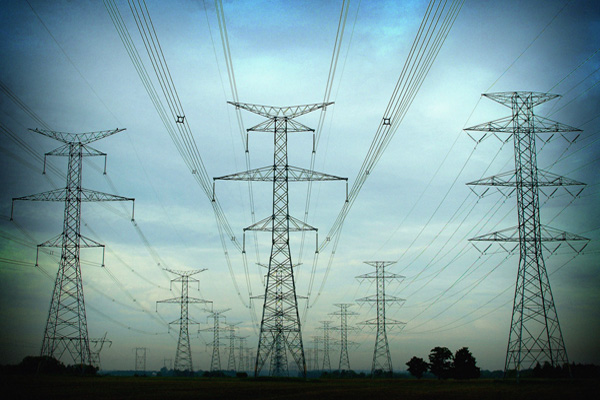
electricity pylons

UK electricity network operators are being accused of unfairly charging customers for the privilege of using the network to send electricity to consumers, and exploiting their monopoly status in order to make excessive profits.

Dale Vince, CEO of independent renewable electricity supplier Ecotricity, said: "On average these guys make an operating profit margin of almost 50%, and a pre tax profit margin of over 30% – that’s big by any standard, in any sector. And yet they are being allowed (by OFGEM) to impose price rises well above inflation – averaging 5.6% across the UK this year and as much as 11% in some areas".

Together in 2011/12, these companies made a profit of £1.2bn and gave a dividend of £1.5bn to their owners, who are mostly based abroad.

On average, 16% of consumers' electricity bills goes to the DNOs. This compares to 58% for the wholesale cost of fuel supply, and just 2% for the subsidies that go to renewable electricity.

Most people haven't heard of district network operators. But these are the eight companies that run the regional electricity networks.

Called Distribution Network Operators (DNOs), they are licensed by Ofgem, which, in 2009, began regulating the revenues DNOs can collect from network users, i.e. the electricity suppliers.

They effectively run a monopoly but their own company reports show that they only pay an average rate of tax to the Exchequer of 6% of their pre-tax profit. Almost all of these distribution companies (85% by turnover) are now owned by foreign companies. This means their profit leaves the country, as the following table shows:

Company Area Owner Country of owner
SSE Power Distribution Plc Northern Scotland SSE Scotland
Southern Electric Power Distribution Plc Southern Scotland SSE Scotland
SP Energy Networks North Wales ScottishPower, part of Iberdrola Spain
Northern Ireland Electricity Northern Ireland ESB Group (the Electricity Supply Board) N.Ireland
Electricity North West North West Owned by bankers, with HQs abroad: JP Morgan Investment Management Inc and Colonial First State Global Asset Management, part of the Commonwealth Bank of Australia Australia & USA
Northern Power Grid owns Northern Powergrid (Northeast) Limited and Northern Powergrid (Yorkshire) plc, North East A wholly owned subsidiary of MidAmerican Energy Holdings Company America
UK Power Networks South East, East and London Cheung Kong Infrastructure Holdings,40%, Power Assets Holdings, 40%, and The Li Ka Shing Foundation, 20% China
Western Power Distribution South West, South Wales and Midlands PPL, formerly known as Pennsylvania Power and Light America


Cheung Kong Infrastructure is controlled by Hong Kong-based tycoon Li Ka-shing.

These companies made the following profits and dividends in 2011/12:

Company Profit (£m) Dividend 

Dividend as % of profit 

SSE Power Distribution Plc 167 200 120
Southern Electric Power Distribution Plc 58 100 172
SP Energy Networks 152 95 62
Northern Ireland Electricity unknown
Electricity North West 70 62 89
Northern Power Grid 218 70 32
UK Power Networks 348 175 47
Western Power Distribution 190 804 1886.75
Total 1,203 1,508


I asked various consumer groups to comment on these revelations. Richard Hall, head of energy regulation at Consumer Focus said: "While consumers can shop around for their electricity supplier, they can’t choose which network brings it to their door.

"The absence of competitors, and the certainty that there will always be demand for electricity, removes many of the incentives to keep performance up, and prices down, that most ordinary businesses face.

"Consumers therefore rely on the regulator to put rules and incentives in place to ensure the networks deliver high quality services at a reasonable price. With energy bills doubling in the last seven years, it’s imperative that Ofgem wrings every drop of value it can out of the price controls it agrees with them."

The Consumer Association, Which?, and uSwitch. They responded that this was a new area for them, which they had not considered before, and they all felt unable to comment. uSwitch said: “It’s not an area that we have commented on previously and we don’t know enough about it to be able to add any particular insight or value”.

And yet the implications are potentially huge with vast sums involved. These companies are spending, and making, billions of pounds, away from the public eye, although under the regulation of Ofgem.

A spokesperson for the Department for Energy and Climate Change (DECC) commented: “Ofgem’s new framework for regulating network companies’ investment activities (“RIIO”) introduces outputs for the network companies to deliver and they will get incentives or penalties according to how well they deliver them. One of these incentives the Broad Measure of Customer Satisfaction stakeholder engagement incentive, is to encourage network companies to address key social issues such as fuel poverty and consumer vulnerability”.

Customer satisfaction is overseen by an independent panel, chaired by Ofgem. The last time this panel met, in summer last year, it was made up of:
  • Philip Cullum, Partner Consumer and Demand Insight, Ofgem (Chair)
  • Colin Browne (Communications Consultant)
  • Mary Fagan (Group Communications and Corporate Affairs Director at ITV)
  • Teresa Perchard (Director of Policy and Advocacy, Citizens Advice)
  • Malcolm Rigg (Director of the Policy Studies Institute), and
  • Andrew Whyte (Communications Consultant).
These individuals said they were "favourably impressed by the number of references to activities providing additional assistance to vulnerable consumers". However, "some DNOs had failed to meet minimum requirements", they said, mentioning no names.

All of the DNOs’ submissions, detailing their community work, are available from the above link.

RIIO, regulator Ofgem's transmission price control system, stands for Revenue = Incentives+Innovation+Outputs. It is supposed to place much more emphasis on incentives to invest in upgrading the network and customer satisfaction.

The current round of improvements to the network which Ofgem has asked for will add an average of 5.6% two bills, though the amount varies significantly region to region. This averages out at about £4.30 per customer per year.

Ofgem is also in the third year of its Distribution Price Control Review 5 DPCR5, which runs from April 2010 to March 2015. A new eight-year agreement will be set after this, and other companies will be entitled to bid to control the networks, though this is considered unlikely.

Ofgem says that when the new contracts come in, then those who do not perform will be penalised, while any that outperform will be made to pass on any savings to their customers.

One of the incentives is to encourage customer satisfaction, where a reward of up to 0.2% of "allowed revenue" is given to those companies which achieve a certain level, as judged by the independent panel. However, this is yet to happen.

An Ofgem spokesperson said that "the price controls are needed as these networks are natural monopolies and therefore there is no realistic way of introducing competition across the whole sector".

It insists that since "Britain’s networks are undergoing a significant upgrade and through Ofgem’s price controls this investment is being secured at a fair cost to consumers.

"To further ensure value for consumers, during the current price control Ofgem set the toughest rate of return ever set for a regulated company (4.7% vanilla Weighted Average Cost of Capital)," they said.

As far as Ofgem is concerned, this state of affairs attracts outside investment into the country. "In 2011, the investment in Britain’s electricity network was twice the amount that was awarded in dividends," they said.

Ofgem is monitoring the situation. "We are currently in a position to consider the financial information relating to the first two years of this five year price control. It is important to note that DNOs’ spending will vary over the five years."

They said that the last time the DNOs put in their bids, in December, Ofgem shaved off £5bn of their costs, a significant amount, saying that they could implement their work programmes for less money.

"In addition," they said, "at the end of the control any underspends or savings will be shared with customers. Overall, we anticipate that at the end of the current price control returns for the DNOs will be within our anticipated range but come down from current levels, while consumers will have benefited significantly from improvements in quality of service."

David Smith, the chief executive of the Energy Networks Association (ENA), the trade body that represents the networks, insisted that his members gave value for money: “The networks deliver the vital services that keep our lights on, our homes warm and our industry and business in operation. It is a service that society depends upon and the reliability of the networks in the UK is unique at 99.9996%."

He acknowledged that they were "natural regional monopolies" but said, "There is no other logical efficient way to deliver this kind of infrastructure," and made the case that "a substantial proportion of profits are being ploughed back into critical investment to deliver a smarter, lower carbon energy system," which needed updating since much of it was installed a long time ago.

“It is estimated that jobs in the network companies will increase one and a half times over the next 20 years," he said.

“Focusing on pre-tax profit margins is inappropriate and misleading as the DNOs spend many hundreds of millions of pounds in capital expenditure each year which does not appear on the profit statement. The cash flows received by the companies are much less.”