Showing posts with label David Cameron. Show all posts

Monday, August 17, 2015

15 anti-green policies announced since the Tories came to power

UK energy secretary Amber Rudd with Prime Minister David Cameron
UK energy secretary Amber Rudd (left) with Prime Minister David Cameron.

Since the Conservative party took complete control of the United Kingdom’s parliament three months ago they have revealed their true colours on energy policy and outraged many environmentalists. The party under David Cameron, who five years ago promised “the greenest government ever”, is now firmly headed in the opposite direction.

The basic trend seems to be a preference for large scale projects, offshore as opposed to onshore wind, wholesale and widely unpopular support for fracking, the oil industry and nuclear power. The biggest losers are energy efficiency in the home, onshore wind and solar power.

This is in complete contrast to the wishes of the British public, as identified by consistent polling, which is against fracking and for renewable energy.

In March 2015, in the government’s own survey, nearly four-fifths of the public (78 per cent) said they supported the use of renewable energy to provide the UK’s electricity, fuel and heat. This was broken down into offshore wind (73 per cent), biomass (63 per cent), onshore wind (65 per cent), wave and tidal (74 per cent) and solar (81 per cent). On fracking, only 24 per cent have said they support it and only 39 per cent support nuclear energy.

But the U-turn in policy is consistent with the Conservative tendency to listen to lobbyists from the nuclear and oil industries and to vocal campaigners from within rural conservative MPs’ constituencies who dislike wind turbines. At no point within the previous government did Chancellor George Osborne entertain lobbyists from the renewable energy industries.

British energy policy has long suffered from a lack of consistency, frequently lamented by the industry, which says it needs predictability in order to plan investment. Delays and about turns characterised the last years of the Labour government up to 2009 and much of the five years of the Coalition period when power was shared by the Conservatives with the greener LiberalDemocrats.

Here’s a list of the 15 anti-green policies announced since the Tories came to power:
  1. it has scrapped Renewables Obligation subsidies for new onshore wind farms and larger solar farms from next year
  2. it has launched a tax raid on renewable operators by extending the Climate Change Levy, intended to be a tax on fossil-fuel generators to include renewables, which will result in a substantial amount of lost income for clean energy companies. For example, Levy Exemption Certificates account for just over six per cent of onshore wind generators’ revenues
  3. it has tightened planning rules for the onshore wind energy sector and hinted that onshore wind farms will not be eligible to participate in any auction for price support contracts
  4. it has postponed to an unspecified date the next contract for difference (CfD) auctions for large renewables projects, leading to speculation it will not be undertaken this autumn as planned
  5. it has scrapped a policy that by 2016 every new home should be zero carbon, which has been in place for eight years and which the industry has been preparing for on the (debatable) grounds of affordability
  6. it has axed the domestic energy efficiency programme, the Green Deal, following disappointing take-up rates due to the fact that the interest rate at the start for borrowing finance was set way too high, at eight per cent (in Germany a similar, successful, scheme has an interest of late of just over two per cent)
  7. it is ending subsidies for small solar farms from next April under a consultation that will affect those with a capacity below 5MW accessing the Renewables Obligation (RO)
  8. it is cutting support for smaller renewable energy installations, ending a pre-accreditation process under which solar PV and wind projects above 50kW and all hydro and anaerobic digestion (AD) projects may confirm the level of support they can secure through the scheme once they have planning permission and a grid connection. This will particularly affect corporate and community renewables projects
  9. it is to sell off up to 70 per cent of the Green Investment Bank, launched in 2012 with £3.8 billion of public sector money and designed to profit from investment in new green infrastructure. The move was attacked by Tory Ben Goldsmith, chairman of the Conservative Environment Network, which numbers prominent Tory supporters and MPs among its members, who called it “one of the Coalition government’s few great, green achievements”
  10. it has reduced the incentive to buy a low-emissions car, charging the dirtiest and the cleanest the same rate of vehicle excise duty from 2017 in an effort to raise more tax revenue
  11. it is announcing plans to fast-track planning applications for fracking when local people and local authority planning departments decide against a scheme, even in sites of special scientific interest and national parks. Recently Lancashire Council rejected two planning applications from shale gas developer Cuadrilla
  12. it has scrapped a target set by the coalition government to keep increasing the proportion of revenue from environmental taxes
  13. it has removed the guaranteed level of Renewable Obligation subsidy for coal or other fossil fuelled-power stations if they wish to convert to burning biomass fuels
  14. there has been no funding for solid wall insulation since 26th March 2015
  15. it is to continue with support for nuclear power with an announcement expected this week on Hinkley Point C.

Friday, July 05, 2013

British Prime Minister opens world's largest wind farm

Prime Minister David Cameron at the London Array launch
David Cameron called the London Array  "a big win for is renewable energy" because it shows that we can "have renewable energy projects at scale... right here in Britain".
Yesterday saw the launch by Prime Minister David Cameron of the world’s largest offshore wind power plant, the London Array, located in the Thames estuary, approximately 20 kilometres off the Kent and Essex coast.

Owned, developed and built by a consortium consisting of Dong Energy, E.ON and Masdar (Abu Dhabi’s state backed renewable energy company), it has a total capacity of 630 megawatts (MW) and will generate enough power to supply 500,000 British households with clean electricity.

It is estimated to reduce annual CO2 emissions by approximately 900,000 tons, equivalent to the emissions of 300,000 passenger cars. Construction involved over 75 organisations and 6,700 people.

The London Array consists of 175 wind turbines supplied by Siemens, who also made the grid connection. Dong Energy and Siemens will be responsible for the service of the wind turbines through a long-term agreement.

DECC said that companies from all over the UK had benefited, "with construction supplies ranging from cable manufacturing in Yorkshire to boats from Brightlingsea to wind towers from Scotland".

Speaking at the launch, the Prime Minister used the occasion to back wind power and overseas investment in Britain, calling it "a triple win".

“First of all it’s a huge win for Kent. This project has been built by some of the bravest seaman, some of the most talented engineers, some of the hardest workers, and it’s going to continue to bring benefits to people in Kent for many, many years to come," he said.

He added that it's certainly "a big win for is renewable energy" because it shows that we can "have renewable energy projects at scale... right here in Britain".

Thirdly, he said it proved that Britain can "do big projects", citing also "a superb Olympics", Crossrail, "the biggest construction project in Europe", London Gateway, "the biggest port construction taking place in Europe", and "here you have the biggest offshore construction anywhere in the world. I think this demonstrates Britain is a great place to invest,” he concluded.

Energy Secretary Ed Davey called it “a bulk generator of power feeding into the diverse mix on our grid. It’s attracted billions of inward investment into our economy".

He added that the reforms outlined in the Energy Bill are intended to make sure that more projects like this come about.

Other massive projects (a total of 15 GW) are already in the pipeline, such as Teesside, Gwynt y Mor off the coast of North Wales and West Of Duddon Sands off the north west coast of England.

At Gunfleet Sands, off the Essex coast, the next generation of even more powerful offshore turbines is being tested in the water for the first time anywhere in the world.

At the end of March, the 75th and final turbine was installed at Lincolnshire's windfarm off the coast of Skegness, which has the capacity to power more than 200,000 homes.

Speaking at the opening, RenewableUK’s Chief Executive, Maria McCaffery, said: “The Prime Minister’s ringing endorsement of Britain’s offshore wind industry is a real boost for the entire renewable energy sector, which is a key growth area for the British economy.

“We’re about to witness a massive expansion in the number of people we employ in the wind industry onshore and offshore, from about 12,000 now to 76,000 by the dawn of the next decade, as long as Government remains supportive – today Mr Cameron has assured us that it will”.

The UK is expecting that offshore wind farms will help it reach its legally-binding targets to cut carbon emissions, with an aim of developing 18 gigawatts by 2020.

Monday, June 10, 2013

Exposed: Fossil fuel connections of ministers who voted against the decarbonisation target

38 of the ministers who voted against the amendment to set a decarbonisation target for 2030 last week in the House of Commons have received support from, or are in some way connected to, the fossil fuel industry.

Together with other accusations of influence by lobbyists on MPs, and the alleged giving by Tim Yeo of advice to a rail freight company seeking to influence Parliament, the revelations give fresh impetus to calls for MPs and ministers not to get involved in decision-making on matters in which they have an interest.

The list, together with their connections, is published at the bottom of this article. It is noteworthy that none of the ministers with connections to the fossil fuel industry voted for the decarbonisation target.

The list comes from cross-checking the list of those who voted against the amendment with the list of ministers with such connections published in March by the World Development Movement, which itself had collated it from numerous publicly available sources.

The WDM's exercise found that one third of all 125 government ministers have such connections.

This does not account for any connections held by backbench MPs, such as Peter Lilley, who voted against the amendment. He, for example, is a non-executive director of Tethys Petroleum Ltd, as well as having been paid £22,462 in July 2011 for giving advice to Ferro Alloys Corporation Limited on the management and flotation of a power generating subsidiary.

Top ministers with fossil fuel connections include William Hague, Vince Cable, George Osborne, Michael Fallon and Greg Barker. They all have links with big finance, oil and coal companies that are driving climate change.

Foreign secretary William Hague, who used to work for Shell, helped Tullow Oil escape paying a £175m tax bill in Uganda, one of the world’s poorest countries. Mr Hague made a personal phone call to the Ugandan president on Tullow Oil’s behalf.

Vince Cable, secretary of state for business and skills, in charge of regulating companies, worked for Shell and was referred to as "contact minister for Shell" by a top Shell executive in 2012.

His business and now also energy minister, Michael Fallon, was an independent non-executive director responsible for inter-dealer broking (until 2012) of Tullett Prebon plc, specialising in Energy & Commodities.

Chancellor George Osborne accepted donations worth £38,000 from the head of CQS, a hedge fund that channels millions of pounds into climate-warming energy. Also, his father-in-law, Lord Howell, is president of the Shell and BP-funded British Institute for Energy Economics. Lord Howell was a Foreign Office minister until 2012.

Energy minister Gregory Barker, who shamefully voted against the amendment, has been the head of international investor relations for Anglo Siberian Oil and Sibneft, a Shareholder in New Star European Growth Fund plc and Henderson High Income Trust plc and corporate finance director of the Australian-owned International Pacific Securities.

The vote on the amendment would have been different if just 12 MPs had voted differently.

It would be in the interests of democracy, let alone the planet in this case, that MPs should be barred from voting on matters in which they have a financial interest.

By the way, mandatory carbon reporting introduced by the government will force fossil fuel companies to disclose their carbon footprints, but banks and other institutional investors will not have to declare the emissions arising from their loans and investments.

Yet without them, big oil, gas and coal companies like Shell, BP and Rio Tinto would not be able to raise billions from pension funds, banks and other financial investors based in the City of London and beyond.

By including these ‘financed emissions’ in mandatory carbon reporting regulations, Vince Cable could force financial institutions to disclose their full carbon impact and fully expose the degree of exposure that these institutions have to the carbon bubble.

The 'carbon bubble' is the name given to the assets held by these institutions which may become worthless if they are not allowed to be exploited by national or global level agreements to curb global warming.

It is therefore in the interests of these companies themselves to account for the impact of such investments.

The lists:

Here is the list of ministers who voted against the amendment, together with their connections to the fossil fuel industry:

Gregory Barker Anglo Siberian Oil (1998–2000) Head of International Investor Relations for Sibneft (1998) 50 Shareholder in New Star European Growth Fund PLC and Henderson High Income Trust PLC.51 Corporate Finance Director of the Australian owned International Pacific Securities
Vincent Cable Chief economist and other positions at Shell International (the world’s most carbon intensive oil company: A leaked memo addressed to Cable from Shell’s chief executive referred to him as “contact minister for Shell”) (1990-1997).
David Cameron Accepted £10,000 from Jonathan Green of hedge fund GLG Partners. GLG is a frequent investor in fossil fuels. Accepted £10,000 from Mark Foster Brown of hedge fund Altima Partners (2005), which deals in fossil fuel shares, including Cadogan Petroleum and Lonrho plc,29 which is a multi-sector company involved in building port terminals in Africa “to support the oil and gas industry"
Kenneth Clarke Director of Foreign and Colonial Investment Trust plc (until 2007)
Nick Clegg Accepted £9,000 from Neil Sherlock, head of public affairs at auditors KPMG (2006-2008)
Michael Fallon Director of Tullett Prebon Plc (independent non-executive); inter-dealer broking (until 2012)
Robert Goodwill  Shareholding in Barclays, Gazprom and Lukoil. Accepted £11,000 donation from Mountboon Investments Ltd financiers (2010)
Dominic Grieve Total shareholdings of more than £240,000 in Anglo American, Standard Chartered, Rio Tinto and Shell
Michael Gove Accepted £10,000 donation from Aidan Heavey, founder and chief executive of global gas and oil company Tullow Oil(2010)
William Hague Worked for Shell UK (1982-83). Accepted over £25,000 in non-cash donations from CQS
Stephen Hammond Director Commerzbank Securities (2000–Present) Has shareholdings in Peal Gas Ltd
Greg Hands Worked or three different firms in an eight year banking career. (1990-97)
Matthew Hancock Payment of £3,000 from UBS AG for speech (2011)74
Mark Hoban Payment of £1,300 from JP Morgan Chase for speech (2010)76
Nick Hurd Represented a British bank in Brazil (1995-1999).
Sajid Javid Directorships and other senior positions at Deutsche Bank AG, (2000-2009), JP Morgan Partners LLC (1997-2009) and Chase Manhattan Bank (1991-1994)
Jo Johnson Investment banker at Deutsche Bank (until 1997)
David Lidington Worked for BP (1983-86) and Rio Tinto (1986-87)
Mark Lancaster Management consultant at Palmer Capital a privately owned venture capital and fund management business. (resigned 2012)
David Laws Vice President JP Morgan’s Treasury Division (1987-1992) Managing Director Barclays De Zoete Wedd (1992-1994)
Maria Miller Marketing manager Texaco (1990-1994)
Francis Maude Member of Barclays’ Asia-Pacific Advisory Committee. (2005-2009). The Conservative Party’s Implementation Team which reported to Maude also received significant donations in kind from accountancy firms KPMG, PriceWaterhouseCoopers, Ernst and Young and Deloitte.
Theresa May Shareholdings held by self and spouse in Prudential Corporation plc. Accepted donation in kind from Michael Hintze who runs the hedge fund management firm CQS Asset Management. (2009)
David Mundell Accepted £5,000 from Caledonia Investments PLC investment trust. (2010)
George Osborne Accepted donations and donations in kind from Michael Hintze of CQS hedge fund worth £38,700. Leading beneficiary of donations in kind to the then shadow cabinet from audit firms KPMG (£62,500) and Deloitte (£60,000) both of which have specialist oil and gas departments. (2009) Also, his father-in-law, Lord Howell, is president of the Shell and BP-funded British Institute for Energy Economics. Lord Howell was a Foreign Office minister until 2012
Andrew Robathan Worked for BP (1991-92)
Desmond Swayne Manager of Risk Management Systems at the Royal Bank of Scotland and other senior positions (1989-1997)
Elizabeth Truss Commercial manager at Shell (1996-end date unclear)
David Willets Senior advisor to Punter Southall a leading actuaries and actuarial consultants.

This is a list of other ministers who were absent for the vote, but who also have such connections:

Alan Duncan
Oil trader and other positions at Shell (1979-1992) Consultant for Vitol.
Philip Dunne SG Warburg (1981-88) Former Managing Director of Lufkin & Jenrette a US investment bank.
Philip Hammond Director of Consort Resources Ltd later purchased by Caledonia Oil and Gas (1999-2003)
Oliver Letwin Directorships and other senior positions at Investment bank NM Rothschild (1986-2009)
John Nash Assistant Director Lazard Brothers and Co Ltd (1988-1989)
Hugh Robertson Assistant Director and management head Schroder Investment Management (1995-2001)

Finally, here is a list of ministers in the House of Lords with such connections: Lets see how they vote when the Energy Bill comes before them:

Lord Ahmad of Wimbledon
Senior positions at NatWest, Alliance Bernstein, and Sucden Financia (1991-present)
Lord Deighton Chief Operating Officer for Europe and other positions at Goldman Sachs. (1983-2005)
Lord Freud Vice-chairman and other senior positions at S G Warburg (later known as UBS Investment Bank) (1984-2003)
Lord Green of Hurstpierpoint Chairman and other senior positions HSBC (1992-2010)
Earl Howe London director of Adam & Co. plc (1987-1990)

Friday, January 18, 2013

It's Europe that has made our land more green and pleasant

Do you think that the UK's membership of the European Union is a Good Thing or a Bad Thing? If a referendum were held on the UK's membership, how do you think you would vote?

These are the questions that David Cameron is addressing in his speech on Europe, and that are asked in public polling surveys on this most touchy of subjects.

According to one recent survey, which asked just these questions, over 56% would "probably or definitely" answer that they would vote to leave, and 45% think that Britain's membership is a Bad Thing. Only 28% believe it is Good for the country.

But the answer you get depends on the question you ask.

Suppose a pollster asked you this question:

Are you grateful that we have clean beaches?

Or how about:

Is legislation to keep our water and air clean from industrial pollution a good thing?

What about:

Do you think it is a good idea to set targets for manufacturers to make their products consume less energy?

I am willing to bet that well over three quarters of the population would answer yes to all of these questions.

Then the polling company might ask the question:

Are you aware that all of the above are controlled by laws emanating from Europe that have been accepted by the British government?

I am willing to bet that well over three quarters of the population would answer no to that question.

In this debate on Europe we hear a lot from the business lobby about red tape from Europe holding back growth.

As if, were we tomorrow to cast off from the continental landmass, like a hot air balloon we would rise majestically into a sky of profit having jettisoned the ballast of legal compliance.

It is never mentioned exactly which laws are supposed to be jettisoned.

Even the coalition government's own campaign to cut red tape, in which the Department for Environment, Farming and Rural Affairs has played an enthusiastic role, has actually found little besides ancient and redundant legislation that it can bury without affecting health and ecosystems in a way that would cause public outrage.

It is precisely our membership of the European Union that has forced business and agriculture in this country to take care of our environment and protect our health, to safeguard species and habitats from the otherwise careless activities associated with the production of goods and wealth, energy and employment.

These are successes that figure high on people's list of priorities. Breaches of, say, pollution laws, occurring on their doorsteps trigger howls of anguish and outrage.

The Bathing Water Directive protects our beaches. Directives like the Groundwater, Habitats, Industrial Emissions, Landfill, Nitrates and Integrated Pollution Prevention and Control Directive protect us, our children, families and neighbourhoods from dangerous pollution.

Do UKIP and Eurosceptic MPs in all parties wish to abolish all of these as they abandon Europe?

Do they, perhaps, want to make Britain the continent's 'dirty old man'?

Let me ask you: are these protections, instead, not something to celebrate?

We can legitimately ask that, if our national government had not been not forced by Brussels to incorporate these laws into national legislation, whether it would have done so, and indeed whether they would be enforced, and by whom?

Think of how many times Britain has been taken to court for breaches of environmental laws, for example in the case of dirty beaches.

It is because of Europe that raw sewage is no longer poured straight into the sea and our rivers and waterways.

Even now, London is under threat of prosecution from Europe for breaches of air pollution legislation.

These foreigners should not be sticking their noses into our business, you say? Who else is going to protect our environment?

If you want us to leave Europe then you have to be clear on this.

That 'the environment', meaning weather, sea currents, migrating birds and so on, does not respect international boundaries is precisely the reason why we need a continent-wide protection regime.

And it is because it has set, and is due to meet as a bloc, its targets for the reduction of greenhouse gas emissions, for growth in renewable energy, and for increases in the energy efficiency of products made within its boundaries, in its fight against the worst ravages of climate change, that Europe can speak with a louder and more authoritative voice at global climate change talks.

The Waste Electrical and Electronic Equipment Directive and the Landfill Directive encourage recycling. The ambition of the Water Framework Directive is to protect our waterways.

I am sorry, but unless you can convince me that, outside of Europe, we would introduce protection at least as good as these for the environment, and, even more importantly, enforce all of these, I will vote overwhelmingly for us to stay within the European Union.

I'm all for simplifying red tape. But let's hear it for European green tape. Without it, our environment would be even more despoiled than it is already.

Monday, July 09, 2012

John Gummer is to chair Committee on Climate Change

John Gummer, David Cameron and Zac Goldsmith

John Gummer, David Cameron and Zac Goldsmith in simpler times, when Cameron had commissioned the Quality of Life report from his two environmentalist companions.
Lord Deben (better known as John Gummer) has been selected to succeed Lord Adair Turner as chair of the Committee on Climate Change, the independent body established under the Climate Change Act to advise the Government on emissions targets.

Should we be worried?

Gummer it was who co-authored with Zac Goldsmith in 2007 the radical 'blueprint for a green revolution' as part of the Quality of Life Policy Group, that was backed by David Cameron before his election, which is partly credited for the Prime Minister announcing the intention to create “the greenest government ever”.

At the time, Mr Gummer said: "I see no contradiction between greenness and economic success. The green revolution can do for Britain what the industrial revolution did a couple of hundred years ago."

When questioned on why he owned three cars, including a seven seater 4x4, he responded that this was essential for his Suffolk constituency.

John Gummer served as Secretary of State for the Environment and Minister for Agriculture Fisheries and Food under Margaret Thatcher.

He was twice awarded the title "Parliamentarian who did most for the environment internationally" by the BBC, and Friends of the Earth has described him as "the best Environment Secretary we've ever had".

But he will have to divide his time between numerous other occupations:
  • as Chairman of the Association of Independent Financial Advisers
  • Chairman of Forewind Ltd
  • Chairman of Sancroft International Ltd
  • Chairman of Valpak Ltd
  • Chairman of Veolia UK
  • Non-executive Director of Castle Trust Capital Ltd
  • Non-executive Director of the Catholic Herald
  • Non-executive Director of Veolia Voda
  • a Trustee of the Blue Marine Foundation
  • Trustee of the British Architectural Library Trust
  • President of GLOBE International
  • the Board of Directors of the Prince Albert II of Monaco Foundation
  • and a Trustee of the Theodore Trust.

Besides being famous for once feeding his daughter a beefburger on television, to persuade people that British beef did not contain BSE, he was once called "the biggest shitbag I have ever met" by the Norwegian Minister of Environmental Affairs, Thorbjørn Berntsen, for refusing to discuss the issue of acid rain carried from the UK to Norway and killing its lakes.

And during the Parliamentary expenses scandal, it emerged that he claimed expenses for mole-catching, removing jackdaw nests and gardening, on his estate in Debenham, Suffolk.

Wednesday, June 20, 2012

David Cameron fails to back the Green Growth Action Alliance


David Cameron, or Camoron as I have started spelling it, was in Mexico this week and witnessed the launch of a Green Growth Action Alliance, but failed to back it or mention the green economy in his keynote speech to the world's business and G20 leaders.

On Monday, the Prime Minister was at the G20 Business Summit (B20), which serves as a business advisory to G20 officials, where a Task Force on Green Growth attended by Mexican President Felipe Calderón urged Heads of State to adopt policies that will simultaneously help to green and grow the economy in environmentally, economically and socially sustainable ways.

Yet Camoron's speech made no mention of this.

The Green Growth Task Force is asking G20 governments to initiate negotiations to achieve a sustainable energy trade agreement, create a robust price on carbon through coordinated international policies, end fossil fuel subsidies and to direct a portion of carbon price revenues to support innovation in sustainable technologies.

The call to end subsidies for fossil fuels was the subject of a 24-hour "Twitter storm" begun by Stephen Fry and aimed at the G20 and Rio+20, on behalf of 350.org, which attracted over 100,000 tweets.

The Task Force also launched the Green Growth Action Alliance, whose honorary chairman is President Felipe Calderón. This new public-private partnership initiative of comprises 48 of the world’s largest energy companies, international financial institutions, and development finance institutions which aims to address the massive shortfall in financing the low carbon revolution globally.

Wind turbine manufacturer Vestas’ CEO Ditlev Engel explained that it will “boost public and private investment into green infrastructure. Each year, $1 trillion is needed to deliver the necessary infrastructure and to shift us onto a low carbon path.”

To attract finance, and monitored by the World Economic Forum, the Alliance will work with existing initiatives, such as the United Nations’ Sustainable Energy for All initiative, the Green Climate Fund (GCF), the International Development Finance Club (IDFC), currently chaired by Germany's promotional bank KfW, and the San Giorgio Group (a policy research collaborative initiative by the Climate Policy Initiative, the World Bank and the Organisation for Economic Cooperation and Development (OECD)), the Overseas Private Investment Corporation (OPIC), the Climate Policy Initiative and the United Nations Foundation.

Members of the Alliance include leading companies such as Accenture, Samsung, KfW Bankengruppe, Bank of America Merrill Lynch, Deutsche Bank Group, Vestas and Enel.

This is a powerful coalition. Again, Camoron made no comment.

Instead, in his speech he promoted trade as a way to lift developing countries out of poverty without a single reference to the green economy, or sustainable development, or the Rio+20 summit, or climate change or anything else apart from trade.

David Camoron just doesn't get it. He started his premiership giving hope to environmentalists and the green sector, and has been backsliding ever since.

Even his former chief scientific adviser, Sir David King, is incredulous at the missed opportunity deriving from Number 10 and the Treasury's capitulation to pressure from a narrow body of Conservative supporters.

It's not that he's in a country which doesn't understand this stuff. Mexico is so far the only nation in the world other than the UK to have a Climate Change Act, which is similar to the UK's and was passed in April. Like the UK's it requires future governments to meet regular emissions reduction targets, but its goal is ultimately to cut the nation's carbon emissions 50% by 2050, instead of the UK's 80%. Almost one quarter (24%) of electricity must be generated from renewable sources by 2024.

Camoron has not travelled south to Rio de Janeiro for the Earth Summit on Sustainable Development which opens today and is being attended instead by the Deputy Prime Minister, Nick Clegg, and Environment Secretary Caroline Spelman.

Amongst those travelling to Mexico with the Prime Minister were Hugh Richmond, Managing Director of ENER-G Natural Power, plus representatives of Diageo, Rolls Royce, Virgin Atlantic, the Confederation of British Industry (CBI), Chancellor George Osborne and Trade & Investment Minister Lord Green.


Friday, June 08, 2012

Deal with Norway guarantees future UK gas and oil dependency

Øyvind Eriksen, executive chairman of Aker
Solutions, Norwegian Prime Minister Jens Stoltenberg and David Cameron
discussing the deal in a side street in Oslo, Norway.
Øyvind Eriksen, executive chairman of Aker Solutions, Norwegian Prime Minister Jens Stoltenberg and David Cameron discussing the deal in a side street in Oslo, Norway.

The Norwegian and British Prime Ministers yesterday agreed several landmark energy partnerships between the two countries designed to secure long-term energy supplies.

The deals will further increase UK dependence on gas and oil for decades to come, including committing it to tapping reserves in the Arctic that are opposed by environmentalists. They will also support the development of offshore wind and, it is hoped, carbon capture and storage. Finally, they continue to support a grid interconnector between the two countries, allowing the UK to import geothermal power.

The deals were sealed at a breakfast meeting in Oslo with Prime Ministers David Cameron and Jens Stoltenberg that was attended by ten leading energy companies from both countries: Fred Olsen, Gassco, Aker Solutions, National Grid, NorthConnect, Shell, Statoil, Statnett, Statkraft and Centrica.

Billions of pounds of new investment are expected to result, with the potential to create thousands of new jobs. The agreements include the creation of:
  • 300 jobs from Statoil's £12 billion investment over the lifetime of oilfields in the UK's Mariner-Bressay North Sea
  • 1300 jobs in the oil services industry created by Norwegian firm Aker Solutions in Chiswick
  • continued cooperation on gas supply and exploration between Centrica and Statoil, sealed in a new Memorandum of Understanding
  • a promise to develop the 9GW Dogger Bank offshore wind farm off the East coast of Yorkshire by the Forewind Consortium
  • a deal to provide more Norwegian gas to Shell from Gassco
  • continued progress on installing two subsea electricity interconnectors to provide geothermal electricity between the UK and Norway.
Prime Minister David Cameron said of the Norway-UK Energy Partnership for Sustainable Growth: "The jobs and investments announced today highlight how vital the strong relationship between Norway and the United Kingdom is for our energy security and economic growth. We look forward to strengthening our partnership further, driving investment into a diverse, sustainable energy mix that delivers affordable long term supplies for consumers."

Norway is already an important supplier of oil and gas to the UK, providing over a quarter of the UK's primary energy demands: 42% of imported gas and 62% of imported oil in 2011. Charles Hendry, Energy Minister, added that: “The investments and jobs announced today by British and Norwegian companies are a clear signal of the benefits of this partnership.”

The agreement says that oil exploration on the Norwegian and the UK continental shelves “will continue to provide substantial energy supplies for the coming decades". Included in this is the ability to use new technology to improve recovery from mature fields and from the Arctic.

Carbon capture and storage

The statement continues: "The UK is currently developing a gas generation strategy, setting out the role for gas-fired power in delivering a secure and affordable route to a low-carbon economy. CCS will enable gas to provide substantial electricity consistent with our climate change agenda."

Norway is leading the world in this technology; it has been burying carbon dioxide there since 1996. Last month, Norway's Prime Minister, Jens Stoltenberg, opened the next stage of the world's largest prototype carbon capture and storage plant at an oil refinery and gas power plant at Mongstad, that is financed by the Norwegian government to the tune of $1bn.

The United Kingdom, however, like the rest of Europe, is lagging behind Norway and other countries such as America, Canada and Australia, all famous for the size of their carbon footprints in implementing CCS. The main reason is the low price fetched for a tonne of carbon released into the atmosphere under the European Emissions Trading Scheme, roughly one tenth of the cost of burying it back in the ground.

David Cameron hopes that we can learn a thing or two about CCS from the Norwegians to improve the prospects of the fledgling CCS projects here in the UK.

However, with the proposed emission limits of 450gCO2/kWh for Emissions Performance Certificates for new gas-fired power stations in the new Energy White Paper, it is hard to see that there will be any regulatory incentive to capture carbon from these power stations.

Arctic oil and gas


Because of the agreement, Britain will have no shortage of oil and gas in the years to come. Norway is ranked 13th amongst nations with gas reserves. Major new discoveries of oil and gas have been made recently in the Norwegian Continental Shelf, in the Skrugard and Havis fields in the Barents Sea, and the Johan Sverdrup in the North Sea. Aker Solutions has recently been awarded contracts by Statoil for exploring these. The Barents in particular is a harsh, Arctic environment.

But exploration in the Arctic faces severe opposition from environmentalists. Greenpeace calls it “a catastrophe waiting to happen" and is mounting a big campaign, fronted by Jarvis Cocker, who recently visited the Arctic Circle and was reportedly moved to tears at the region's majestic landscape.

David Cameron did not have time to do any sightseeing. In the joint statement is the claim that coming Electricity Market Reform will create a "framework for investment in the UK" worth "over £200bn in energy project opportunities. Similarly," it continues, “Norwegian policies are creating new commercial opportunities for companies, particularly in the High North," a reference to the Barents Sea discoveries. "The Norwegian-Swedish Green Certificate Scheme also offers incentives for British investors in renewable energy," it adds.

This scheme was launched on 1 January 2012 and is a market-based system to support the expansion of electricity production from renewable energy sources and peat. Since then 12,573 green certificates have been issued in Norway in relation to 26 plants.

In Norway, Statoil, which is 67% owned by the Norwegian government, is facing stiff opposition from the public, church leaders and 28 Norwegian organisations including WWF Norway and Greenpeace Norway, for having chosen to get involved with tar sands.

Wind farms


As for the renewable energy projects, the largest of these is the Dogger Bank one, which comprises up to four offshore wind farm projects, 156km off the coast of Teesside, which could provide over 10% of the UK's energy needs

The windfarms will be connected by onshore high voltage direct current (HVDC) underground cabling and up to four direct current (DC) to alternating current (AC) converter stations. A local consultation is currently underway.

The Forewind consortium managing the project is comprised of the Norwegian companies Statkraft and Statoil, German company RWE npower renewables, and Scottish company SSE.

Finally, the Norwegian-UK agreement says that "The UK and Norway will work together to build on outcomes of the Rio+20 Conference, including further development of the Energy+ Initiative to increase clean energy access for developing countries."

The next step is a conference to discuss the achievements and future priorities of the UK-Norway energy partnership, to be held at London’s Royal Geographical Society in September.

Thursday, February 23, 2012

Cameron wants to pay communities to host windfarms


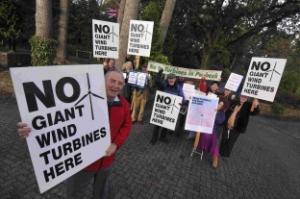
The Prime Minister, David Cameron, has come out in support of onshore wind farms, and promised that reform of the planning process will give more power to local communities over developments in their area, and more financial benefits to them should they agree to a windfarm being cited in their midst.

His views are expressed in a letter to Daventry MP Chris Heaton-Harris, who earlier this month coordinated an open letter to the Prime Minister, signed by up to 106 Conservative MPs, opposing onshore windfarms.

Mr Heaton-Harris boasts on his website about working with local communities "to fight both wind-farm proposals and unwanted development being foisted upon them by central government".

In his response to this letter, Mr Cameron says that he appreciates concerns from local residents about large planning applications, and “that is why we want to make the planning process more accessible to local residents, because planning works best when communities themselves have the opportunity to influence the decisions that make a difference in their lives.

"That must include local communities having their full say on onshore wind farm planning decisions."

He says that the planning reforms currently being finalised by the Coalition Government will “put local communities in the driving seat by giving new powers to neighbourhoods to write their own plans," which “will mean that the top-down regional targets will not trump local concerns in planning decisions," as it does at present.

It's significant that his wording is "regional targets" and not "national targets", for it is national targets which determine the number of onshore wind farms.

Business rates benefits


Mr Cameron goes on to say that this process should also allow local communities to “receive more local benefits as a result of development that does go ahead".

This means ensuring they “capture the full economic benefit from hosting renewable energy projects, including retention of all of the business rates they pay".

At present, only landowners and developers see a profit, which is a function of the way the Renewables Obligation was designed, unlike in several other countries where communities have long received financial benefits from wind farms sited in their locations.

Mr Heaton-Harris will take comfort from the fact that Mr Cameron says that he shares the views of the Tory MPs who signed the letter about “the need to review support for onshore wind under the Renewables Obligation".

He notes that initially the subsidy for onshore wind is being reduced by 10% because the costs of onshore wind of falling, "which will affect projects that are being built this year". This hints that the subsidy may fall further in future.

Support for low carbon sector


David Cameron then goes on to mount a defence of the role of onshore wind energy in “a balanced UK energy mix alongside gas, nuclear, cleaner coal and other forms of renewable energy".

He says that having a portfolio of different supplies “enhances energy security and prevents the UK from becoming over-reliant on gas imports".

In words that will please the low carbon sector he adds that he is “determined" to “seize the economic opportunities in renewable energy supply chains as the global race for capital in low carbon sectors intensifies", acknowledging the benefit to British companies in forging alliances with others abroad in order successfully to play their part in what is a global market.

“Around £4 billion of new investments in UK renewable energy projects have been announced with the potential to support up to 14,000 new jobs in this country" since April 2011, the Prime Minister writes.

He concludes by saying, in response to accusations that British renewable energy policy is a dog being wagged by the tail of policymakers in Brussels, that, “in other words, there are perfectly hardheaded reasons for allowing some onshore wind energy to be part of our mix irrespective of the EU's 2020 renewable energy target signed up to by the previous government..."

However, he adds to this sentence “...but if, and only if, local people have a proper say in planning decisions".

Heaton-Harris' response

In response, Mr Heaton-Harris says that he is “actually slightly encouraged by the letter and the noises off I am hearing", implying that he knows something we don't.

He told the Daily Mail: "I’m hopeful given what he says about planning and how that is being addressed. This is the opening of a conversation."

Nevertheless, Greenpeace spokesman Joss Garman also found reassurance in the letter: “The Prime Minister is right to make a strong intervention to cut through the myths and remind a vocal minority on his back benches that wind farms are good for the economy and good for the environment.

“Wind energy can play a crucial role in reducing our dependence upon the expensive gas imports that are driving up everybody’s energy bills, whilst also cutting pollution and creating new jobs.”

Wind industry hopeful

A spokesman for Renewable UK, the trade body for onshore wind, said that they welcomed the recognition by the Prime Minister of the contribution that the wind industry makes to the economy, employing thousands and, in the future, tens of thousands of people.

He said that wind developers had just responded to the Localism Bill and were not too worried that its effects would impact to an uncomfortable degree on plans for more onshore wind farms.

He said it would depend very much on the nature of a Local Plan and Neighbourhood Plan, and the degree of incentives that were offered to communities in the form of business rates etc. "It would be a question of balancing these local incentives with the national priorities."

This in turn hinges on the wording in the final draft of the National Planning Policy Framework (NPPF), which will determine how national targets are to be achieved at the local level, and which is still being written.

The latest thinking on resolving the tension that clearly exists between the NPPF and Neighbourhood and Local Plans, comes from the government's Communities and Local Government Committee.

It says on this matter: “Cllr Porter told us that once Local Plans were written, taking into account the NPPF, 'Neighbourhood Plans should be able to fit into a Local Plan so communities will be able to determine for themselves where development that is needed goes. What they will not be able to determine is the fact that they do not need any'".

The CLGC concludes by telling the government to sort out "the relationship between the NPPF, Local Plans and Neighbourhood Plans, especially when these priorities conflict. The NPPF must clarify whether the Local Plan or the Neighbourhood Plan takes precedence. It should also define what constitutes 'strategic issues'."

Planning Minister Greg Clark told the committee he hopes the words used in the final document would be unambiguous enough to not be open to misinterpretation.

The feeling is that, for wind farms, in the same way as for new housing developments (where the Government believes that the New Homes Bonus will incentivise communities to be more receptive to development), the carrot of receiving local business rates will be a sufficiently powerful persuader.

There will still be centrally set targets for onshore renewable energy. And at least 4,500 more turbines currently in the planning process will have to go somewhere.

Saturday, October 08, 2011

David Cameron, you must go to Durban this December & end subsidies for fossil fuels

David Cameron has his head in the clouds

This week David Cameron appeared to play down his party's commitment to tackling climate change by not even mentioning the topic in his keynote speech to the Tory Party conference.

It is unlikely that the shift in rhetorical emphasis will impact on the many commitments and measures in the legislative pipeline, but it may have an impact in two important areas: on investment decisions and on the vital UNFCCC Durban Climate Summit which is fast approaching.

The need for international action has never been more paramount, and it is tremendously important that Cameron is unwavering on the international stage for drastic measures to curb emissions.

The evidence for this is overwhelming. I will discuss some of it, and the single most simple policy that could be implemented to achieve the level of cuts required.

It was announced this week that global carbon dioxide emissions have increased by a staggering 45% since 1990, according to the Emissions Database for Global Atmospheric Research (EDGAR) and other sources.

This puts the world in the region of the high emissions scenarios discussed in the last IPCC report (see below).

At the same time, the International Energy Agency (IEA) and Organization for Economic Co-operation and Development (OECD) said on Tuesday that subsidies for fossil fuel consumption are actually rising - they totalled $409 billion in 2010, compared to $312 billion in 2009, with oil products having the largest share at $193 billion in 2010 with natural gas getting $91 billion.

Iran and Saudi Arabia were the countries with the biggest subsidies.

The IEA's Chief Economist Fatih Birol said that "without further reform, spending on fossil fuel consumption subsidies is set to reach $660 billion in 2020, or 0.7 percent of global gross domestic product".

Yet leaders of the Group of 20 (G20) countries committed in Pittsburgh in 2009 to phase out these subsidies.

OECD Secretary General Angel Gurria said doing so is an obvious way to save money. "As they (nations) look for policy responses to the worst economic crisis of our lifetimes, phasing out subsidies is an obvious way to help governments meet their economic, environmental and social goals".

It would also cut global energy demand by 4% and considerably reduce carbon emissions growth, the IEA said.

If David Cameron can't find it easy to support a call to phase out the subsidies, and do so himself, then he should tell us why.

(By the way, if you think renewables get too much in the way of subsidies, research published this week in the States shows that nuclear subsidies there at least accounted for more than one percent of the federal budget over the first 15 years of each subsidies’ life; oil and gas subsidies made up half a percent of the total budget, but renewables have amounted to only about a tenth of a percent.)

Using market measures alone is not working as a way of limiting emissions. The 3.5 million EU carbon emissions permits which the UK sold on the market last Thursday went for a price of 10.38 euros each.

This is the lowest price since it started auctions in November 2008, and will not encourage anything like the level of investment needed in greenhouse gas emission abatement technology.

It does strengthen the case for the introduction of a robust carbon price floor, but it also shows other types of action are required.

In a sign of its desperation that the message is not getting through to politicians, the Tyndall Centre this week attempted once more to draw attention to a paper it had first published in a Royal Society journal in 2009, saying that the world could very possibly reach an average global temperature of 4oC higher than pre-industrial levels as early as 2060, with catastrophic consequences for all life on earth.

The paper is peer-reviewed and written by Richard Betts at the Hadley Centre of the Met Office and uses the most accurate and authoritative climate modelling systems currently available.

The Tyndall Centre is based at the University of East Anglia, now famous for the hacked emails scandal, yet exonerated of any bias in its scientific reports by three separate investigations.

(The centre is named after John Tyndall, the man who first discovered the global warming effect 150 years ago - this year marks that anniversary.)

What the paper says


The paper looks at a particular set of scenarios that were considered in the (last) Intergovernmental Panel on Climate Change (IPCC) Fourth Assessment Report (AR4), published in 2007. (The 5th is due in 2014.)

AR4's projections suggested that in the absence of mitigation high levels of warming were possible and the median of these was approximately 4?C.

The modelling used at the time did not include certain climate-warming carbon-cycle feedback features, plus more recent measurements that since became available; and the high-emissions scenario - which we now are confident we are within - was not examined with complex general circulation models (GCMs).

Betts' paper looks at this range of scenarios of future greenhouse-gas emissions without policies, including this information.

In other words, looking as best as we can at the world we live in now, in which, year after year, UNFCCC summits come and go and no legally binding agreements are reached.

The paper concludes: "Our best estimate is that a temperature rise of 4?C would be reached in the 2070s, and if carbon-cycle feedbacks are strong, then 4?C could be reached in the early 2060s."

When originally published, the journal did trigger an alarmist headline in the Daily Telegraph with graphic descriptions of how the world would change. It gave fuel to Ed Miliband's efforts to secure a legally bunding deal at Copenhagen. But it did not achieve sufficient global recognition.

I spoke to Asher Minns at the Tyndall Centre and he said he tweeted the paper in an attempt to give it more recognition.

I then spoke to its author, Richard Betts. I asked him whether he could put a figure on the probability of the world reaching this level of warming by that date, and he said "That entirely depends on the policies adopted by politicians".

I asked him about the current state of climate research, and he said that the Hadley Centre "is now working on a huge project coupled climate models with all modelling across the world being run through a commonly agreed protocol, so we know we are comparing like with like, which ones are more or less sensitive to emissions.

"It is mostly work in progress, and will be ready in next year. The deadline is July, and the papers will be accepted by March 2013 for publication in the 2014 report."

The slowness of this work is frustrating for everyone, but science cannot be hurried. I asked Richard if this frustrates him. "No, we have to get it right," he said.

DECC commissions reports from the Hadley Centre, including a paper for the Durban talks that is "more about drawing together information that is already out there into a tight context".

He said the global carbon project will release its annual update in a month, however.

Richard is typical of climate scientists in refusing to be drawn on policy or urgency, saying it is beyond his remit.

"I have no role in saying this is urgent or anything. We have no political objective whatsoever. We are just trying to find the science."

He says all they can do is lay this before politicians. It is up to them to decide how to act.

Does he think that journalists like myself convey the science well?

"In some cases the messages are too simple," he replied. "But our research can be misused either way. It depends on peoples' attitude to risk - people must be informed. But I do think that journalists should convey the science better."

If climate scientists are clear that it is up to politicians to show leadership on the basis of the science, and the science is as clear as it is, then it is incumbent on the consciences of politicians to give these humble toilers on the frontlines of understanding due weight in their deliberations, in comparison to the clamouring of vested interests or focus groups.

In simple language, Mr Cameron: go to Durban. Demonstrate leadership. Cut subsidies to fossil fuels.

Saturday, May 14, 2011

Cameron must listen to business and implement the 4th carbon budget

David Cameron must announce on Monday that he is accepting the fourth carbon budget for the period 2023-2027 published by the independent Committee for Climate Change last December.

The Cabinet is split on the affair. Even the Liberal Democrats are divided, with business secretary Vince Cable seeking a watered-down version while energy and climate minister Chris Huhne is recommending full acceptance.

Labour leader Ed Miliband has written to Cameron with the support of Huhne's shadow, Meg Hillier, challenging him to accept the budget.

If he doesn't, it will be the first time that the Government has not accepted the CCC's recommendations.

The fourth budget limits emissions over the period to 1950 MtCO2e, which will attain an emissions cut 50% below 1990 levels in 2025 and 60% by 2030.

The budget says that it "represents our assessment of a minimum UK contribution likely to be appropriate to a future global deal covering the 2020s".

In a leaked letter, Cable writes about his concerns that the level of abatement "may not be technically feasible" and is "not cost-effective", because it assumes that a future EU-ETS cap consistent with a 30% emissions reduction target by 2020 is set.

However, as I reported last month, this level is not far off in any case.

Cable would like to set a level instead of 2170 MTCO2e, but is prepared to accept a compromise, of CCC's recommendation for the non-traded sector. He claims that this can allow the Cabinet to claim that the Coalition is "The Greenest Government Ever" [sic].

In his letter, Ed Miliband says that for Cameron to do anything other than accept the CCC's recommendations would be to abandon the cross-party support that has so far characterised action on climate change.

He says it did appear "that on this crucial issue for the future of the planet which our children will one day inherit, there was broad cross-party consensus".

Not to cut emissions at a rate that "independent experts say is necessary to prevent dangerous climate change would send a terrible signal to business and to the rest of the world", he adds.

One thing is absolutely certain: the Government has been inundated with requests from business for a clear set of policies into the future, to give reassurance to investors in financing the low carbon industrial revolution that can let Britain lead the way.

Two weeks ago even the CBI told the Government that "low-carbon investment is vital for the UK", that "the pace and scale of investment is a barrier to success" and "Government must take action to set the right investment conditions".

Amongst those who have cried out for this assurance you can find John Lewis, Unilever, Shell, water and energy companies and many more.

This week Danish wind turbine manufacturer Vestas offered to set up an offshore manufacturing base in Sheerness, Kent. Vestas, but only if the UK Government delivers "stability in the market and long term political and regulatory certainty.”

Maria McCaffery, Chief Executive of RenewableUK, agrees: "We have an unprecedented situation where some of the best known companies in the world are literally queuing up to invest in the UK. The Government now needs to seal the deal on offshore: it needs to bag the first 8,000 jobs and hundreds of millions of pounds already pledged, by firmly supporting the technology.”

Even Foreign Secretary William Hague is in favour of accepting the budget. In another leaked letter sent last month to the Prime Minister, he wrote, "I agree that we should not reject the fourth carbon budget recommended by the Committee on Climate Change in order to retain public support for our climate policy at home we need to be able to point to similar effort abroad. If our domestic resolve is seen to be weakening, we will lose traction elsewhere."

This week CCC chair Lord Turner met Vince Cable in an attempt to persuade him to change tack, and to show agreement with Cable's concerns about cost effectiveness even made a concession, in saying that offshore wind targets could be changed because more onshore wind would be more cost-effective.

This is a key test of the Government's commitment to tackling climate change and to the low carbon revolution which can create so many jobs in this country.

In opposition, Cameron argued that an independent body was necessary to set and enforce emission targets, and ministers shouldn't be able to change them.

With so many voices in support, it is vital that David Cameron remains firm as a champion of this sector, the only sector that has a chance of leading the country out of the economic doldrums in which it remains stuck.