Showing posts with label micro wind power. Show all posts

Monday, November 07, 2011

Ecotricity launches ‘Ecobonds’ as Government faces FITs legal challenge

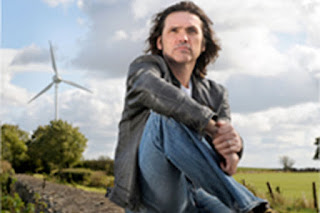
Dale Vince of Ecotricity
Ecotricity, the UK's largest renewable energy company, is launching a second issue of its popular 'Ecobonds', worth £10 million.

The move comes as Friends of the Earth issue a challenge to the Government to revise its plan to change the Feed-in Tariffs (FITs) given to owners of solar photovoltaic installations.

Ecotricity's 'Ecobond Two' will enable any UK-based individuals, companies, trusts, charities and other legal entities to invest directly in building new sources of green energy in the UK, starting with a minimum of just £500 of investment.

Its first Ecobonds, issued thirteen months ago, were heavily oversubscribed, exceeding a £10 million target by 50%, and becoming the UK's largest ever private bond issue.

They funded the construction of the UK's first 1MW Solar Park at Fen Farm in Lincolnshire, a third wind turbine to power Ford's Dagenham Diesel Centre, and a wind turbine at the G24i plant in Cardiff that makes solar panels.

Director Dale Vince expects 'Ecobond Two' to be just as popular. "Our ecobonds give people the opportunity to share in the financial benefits of green energy without the needing to stick anything on their roof," he said.

"And crucially we cut out the middlemen, the banks, and pay people the same rate of interest on ecobonds that banks would charge us if we borrowed the money from them."

The capital raised will contribute towards installing 19 wind turbines, already with planning approval, and a further 78 for which it is seeking planning approval.

"This might prove an attractive option for people who want to be green and also get an attractive rate of return, but can't - or don't want to - put solar panels on their roof, especially in light of [last] week's Feed-in Tariff (FiT) rates fiasco," said Vince.
Feed-in-Tariffs

Friends of the Earth has written to Climate Change Minister Greg Barker saying that unless the Government agrees to amend its proposals by 4pm on Friday 11 November, it will apply for a judicial review of its proposal to impose lower feed-in tariff payments on installations completed after 12 December.

It has taken legal advice that says this cut-off point, two weeks before the Government's consultation ends, is unlawful and will lead to unfinished or planned projects being abandoned.

Friends of the Earth's Policy and Campaigns Director Craig Bennett said: "The Government is breaking the law with its plans to fast-track a solar industry kill-off - as well as jeopardising thousands of jobs and countless clean energy projects across the country.

"Significant time and money has been invested planning solar schemes for homes, schools and libraries - giving them just six weeks to install is completely unacceptable, and schemes have already been scrapped.

"With soaring fossil fuel bills and mounting anger about the Big Six energy firms, the Government should be encouraging people and communities to generate their own clean electricity."

High rate of return

This is precisely the aim of Ecotricity's Ecobond Two. This will provide a fixed rate of return of 6.5% for four years for existing or new Ecotricity customers. Non-customers will receive a return of 6%.

Although lower than last year's 7.5% rate, this would be above the 4.5% - 5% rate available through Feed-in-Tariffs (FITs) for solar PV installations under the revised levels likely to be introduced after December 12.

Profits at Ecotricity have dipped in the last financial year, due to increased overheads and its acquisition of 71% of local club Forest Green Rovers FC for £695,000, according to its latest accounts for the year ended 30 April 2011.

Pre-tax profit fell to £1.7m, compared with £3.8m in 2010, although turnover grew by more than 19.8% to £44.2m.

It is a 'not for dividend' company with no outside shareholders to answer to.

Its plans include building over 1,000MW of renewable electricity generation capacity and supplying over 500,000 customers in the next ten years.

Its current base is 53 wind turbines at 17 wind parks, and 55,000 clients, up 30% on the previous year.

A spokesperson added: "Since the start of May 2011, on the generation side of the business, we've opened the UK's first large-scale solar farm in Lincolnshire and installed another wind turbine to power one of the biggest manufacturers of diesel-engines.

"In addition we now have 19 windmills ready to go with with planning permission and another 78 going through planning at various sites around the country."
Investment gap

Dale Vince recently criticised the 'Big Six' energy companies, saying, "There is a big problem in the energy market, but it's not only about how much money the big six energy companies are making - it's about what they are doing with that money."

He observed that out of the £125 they each make per customer per year, only £5 is spent on building new green energy sources.

"The reason for the lack of investment is not just weak regulation but because four of the Big Six energy companies are foreign owned and their interests are not aligned with the interest of the British public," he said.

"These multinationals take bill money from customers here in Britain and spend it in Germany or France or pay out dividends to shareholders."

He said that, by contrast, Ecotricity "invests more per capita in building new sources of green energy than any other UK electricity company".

It is the only energy supplier supported by Oxfam and the Soil Association.

Ecotricity is one of a new breed of renewable energy companies that also include Good Energy, Ebico and Ovo Energy.

Ecobond Two will be issued by Ecotricity Bonds plc, a wholly-owned subsidiary of the Ecotricity Group Limited (Ecotricity), which has guaranteed the payment obligations of Ecotricity Bonds plc for Ecobond Two.

Green bonds

The popularity of these green bonds can be seen in relation to the refusal by the Treasury to let the Green Investment Bank issue state-guaranteed green bonds to pay for the development of clean energy infrastructure.

Such a move was advocated by the cross-party Environmental Audit Committee last March.

Such bonds are already issued by institutions like the World Bank, and the idea was originally proposed in June 2010 by the former chairman of Merrill Lynch in Europe Bob Wigley, leader of the Green Investment Bank Commission.

Bu the Government has rejected the idea of letting ordinary people buy such bonds as a way of raising the much-needed finance to build low carbon Britain.

Its reasons include the fact that the National Association of Pension Funds, whose members would be major customers, said they would expect to be bribed with a higher yield because the market in the bonds would be "illiquid compared to the broader sovereign market".

Additionally, some way would need to be found to ensure that the bonds did not count as UK state debt for accounting purposes.

The Treasury was also worried that green bonds could crowd out its own funding programme.

But if Ecotricity's new bonds proved to be as popular as the first issue, this would show that there is a strong public appetite, whetted by FITs, for investment in renewable energy.
Green football

Interestingly, Ecotricity intends to make its acquisition Forest Green Rovers the UK's first green football club.

Dale Vince has become chairman of the Blue Square Premier side since purchasing the club and has started greening it by ordering its grounds to be made solar powered and the creation of an organic grass pitch.

He has also stopped players eating red meat and banned the selling of all red meat products at the grounds.

Tuesday, September 20, 2011

Floating turbines and car-rally suspension are part of the offshore windfarm future

As the UK announces new proposals for maintaining offshore windfarms in rough seas that could save up to £3bn, Japan is planning a floating windfarm off the coast of Fukushima to help replace its lost nuclear power generation.

The Carbon Trust has published a shortlist of 13 designs picked from 450 submissions of ideas that would help transfer engineers and equipment from boats to turbines in ocean swells of up to three metres.

Among them are a boat that uses a giant robotic arm to make the transfers to the turbine base, one with suspension inspired by Paris Dakar-winning rally cars that keeps it stable, and another which, like a seahorse, has a deep keel to provide balance.

Meanwhile, according to a government official, Japan is going one step further by looking at wind farm designs which, instead of being fixed to the seabed, are anchored to it and float on the surface.

Its energy agency is looking at siting some of these off the Pacific coast of Fukushima prefecture, where the nuclear reactors that went into meltdown six months ago are located.

The country is expecting to move towards a non-nuclear, renewables-powered future by not replacing nuclear power stations as they become redundant.

The Japanese energy agency has assigned up to 20 billion yen (£166 million) to the project, using cash intended to finance the rebuilding of the disaster-hit area, the official said.

The windfarm would consist of six floating 2MW wind turbines, and would be operational by 2015.

Britain's future 'round three' offshore windfarms will utilise much larger turbines - 10MW or more - and may be located up to 300km away from land and in deeper seas than at present - up to 80m - consisting of up to 2,500 turbines.

Maintaining them in harsh weather conditions will be a tough job, but it has economic consequences - increasing access time by just 4% could save up to £3bn.

Through its Offshore Wind Accelerator programme, the Carbon Trust is therefore coordinating eight UK wind farm developers - E.ON, DONG Energy, Mainstream Renewable Power, RWE Innogy, ScottishPower Renewables, SSE Renewables, Statkraft and Statoil – to sponsor a competition to find solutions.

The winning technologies are expected to increase the access time from the current average of 210 days a year to 300, and to help reduce the levelised cost of offshore wind by saving an extra 1.3Mt CO2 per year.

Climate Change Minister Greg Barker called the projects "some of the best ideas to overcome the challenges of working in deeper water.”

The new generation of turbines will also be specifically designed for use in these windier situations by having much larger and better adapted blades.

Each successful applicant to the competition will get up to £100,000 to support the design and development of their concept, as well as technical support from the eight developers in the Offshore Wind Accelerator.

The Trust says that the shortlisted designers include a university student as well as established offshore wind maintenance vessel operators, and come from the UK, Norway, Germany, Netherlands, Canada and Australia.

The systems, together with the shortlisted winners, include:

• Transfer systems – to transfer personnel and equipment from vessel to turbine, potentially with motion-compensation:
o Autobrow, South Boats
o MOTS, Momac GmBH
o Wind Bridge, Knud Hansen
o TAS2, BMT Nigel Gee / Houlder

• Vessels – for transporting personnel and equipment from permanent bases or mother ships to turbines, incorporating a transfer system:
o Pivoting Deck Vessel, North Sea Logistics
o Nauti-Craft, Nauti-Craft
o Fjellstrand Vessel, Fjellstrand
o SES Vessel, Umoe Mandal
o SolidSea, University of Strathclyde
o TranSPAR, Extreme Ocean Innovation

• Launch and recovery systems – fitted to the permanent bases or mother ships for launching and recovering daughter craft from the sea:
o Launch & Recovery, Offshore Kinetics
o Z Port, Z Technologies
o Launch And Recovery System, Divex.

The Carbon Trust says that the global offshore wind sector is set to grow by up to 10% per year with the UK expected to capture around a 10% share of this market, estimated to be worth up to £170bn/year by 2050, making these solutions potential future export money-spinners.

Back in Japan, the six reactors at the damaged Daiichi (number two) plant where reactors went into meltdown following the March 11 earthquake and tsunami. will be taken out of operation.

In addition, it has been announced that the four damaged reactors at the Fukushima Daini plant that have been brought to a stable state of "cold shutdown", are also unlikely to ever start up again.

Sunday, March 14, 2010

The cost-effectiveness of low or zero carbon energy generation

This update is following from my previous blog and George Monbiot's attack on feed-in tarriffs and responses to it.

Reliable independent figures on cost-effectiveness of low or zero carbon energy generation based on real monitored examples are yet few, and I'm trying to collate them, because this kind of evidence is what we need to help determine policy.

Crucially, page 37 of the 2009 impact assessment of the Community Energy Saving Programme (CESP) (which places an obligation on energy suppliers and electricity generators to meet a CO2 reduction target) ranks the effectiveness of non-large-scale generation measures in kgCO2 per pound sterling spent as follows:

1 Existing community heat to CHP 88 (kg CO2 score per £ spent)
2 Electric to community CHP 39
3 Wood pellet boilers (primary) 24
4 Micro Hydro (0.7kWp, 50% LF) 16
5 Ground source heat pumps 14
6 Air source heat pump 13
7 MiniCHP (revised) 9
8 Mini-wind 5 kW, 20% LF 4
9 Solar Water Heater (4m2) 4
10 Photovoltaic panels (2.5 kWp) 3
11 Micro Wind (1 kWp, 1% LF) 0

From this it is quite glaringly obvious that for both heat and power the community scale is by far the most efficient level for interventions. Right at the bottom are the single-dwelling only solutions (I dispute the figures for wood pellet boilers since data on their carbon content is disputed) except where hydro is available (not many places).

The Electricity and Gas (Carbon Emissions Reduction) Order 2008 (CERT) looked into the cost and carbon reduction effectiveness of various measures. The document Explanatory Memorandum To The Electricity And Gas (Carbon Emissions Reduction) Order 2008 contains a further Evidence Base.

In this community CHP with woodchips comes out at nine times more cost-effective in ££ per tonne of carbon saved than solar water heating and about the same as ground source heat pumps.

The figures are (- with suppliers’ cost to save one tonne C02 (£/tC02) for the Priority Group):
1 Community heating with wood chip 3
2 Ground source heat pumps 42
3 Wood chip CHP 49
4 Wood pellet boilers (primary) 58
5 Micro Hydro (0.7kWp, 50% LF) 60
6 Log burning stoves 110
7 Mini-wind 5 kW, 20% LF 125
8 Wood pellet stoves (secondary) 126
9 mCHP 176
10 Photovoltaic panels (2.5 kWp) 218
11 Solar Water Heater (4m2) 346
12 Micro Wind (1 kWp, 10% LF) 685
13 Community ground source heat pumps 697

The above underscores that renewable energies are frequently site-dependent and sensitive to economies of scale, because you have to cost the whole system.

Only 2% of UK homes can have a small wind turbine. This Energy Saving Trust report suggests the best sites and how to pick them.

Solar electricity


In my previous blog I link to actual surveys of real PV installations and the figures show that they do not generate sufficient power in the UK when we need it for the reason that there is not enough sunshine in the winter - unless you have a huge array, which is currently very expensive.

If PVs could become as cheap as a low-e coated window unit, with spray-on or printed nano-scale circuitry or similar it might be worthwhile. This is a technological advance not a deployment advance. They would also need to capture a greater range of frequencies of light.

I would suggest that the standard for measuring and marketing the rated output of a panel or a system is changed to make it more realistic and easier for buyers to understand. As discussed in the blog above, the test conditions are way different from European field conditions and led to unreal expectations, or to potential obfuscation by the industry/ unscrupulous installation companies.

Conclusion


All of this suggests that while renewable heat can work on a community level, only CHP can universally provide electricity, whatever the power source, and then not that much in relation to demand since there is a limit to the available waste, waste heat and biomass.

Therefore we have to conclude that for renewable electricity generation larger scale wind and marine power are what is required at a massive scale. Of these, only wind is currently cost-effective and that is why it is being aggressively pursued offshore and onshore.

Tuesday, September 22, 2009

Windsave goes bust revealing the truth about micro wind power

The residential arm of Scottish micro wind generation company Windsave, which supplied roof-mounted wind turbines to former energy minister Brian Wilson, has gone into liquidation.

Hands up those who aren't surprised - even that it took so long.

In 2003 this Scottish company began promoting roof mounted domestic turbines using Photoshopped montages. Despite cries from practitioners in the field -- including this blogger - that the performance figures it was quoting didn’t make any sense - and in fact broke the laws of physics - Brian Wilson, the then UK energy minister, and another Scot, became convinced.

A PR exercise was mounted with his help that succeeded amongst other things in persuading DIY chain B&Q to retail them. In June 2006 their Plug’n’Save system won the title of “Best New Product” at the European Business Awards for the Environment. Hundreds of optimistic householders parted with their cash.

At the beginning of 2009 B&Q finally admitted that they didn’t work and withdrew them from sale in response to many disgruntled owners' angry complaints. They had been told they would be able to generate a good proportion of their electricity and recoup their costs in a few years. Some were lucky to generate a miserable few kilowatt-hours over the entire year.

Real data


The results of a substantial monitoring exercise of real micro-wind turbines in situ both on urban rooftops and free standing in rural areas was published in July 2009 by the Energy Saving Trust and confirmed what the technical experts and those unfortunate householders already knew: that wind speeds in urban areas coupled with the turbulence caused by nearby buildings mean that the speed of 5m/s required for contemporary turbines to operate efficiently is never reached in an urban situation.

To put it bluntly: domestic scale wind turbines only work in the countryside.

And there they work very well: the results of the field monitoring show that “a properly sited and positioned 6kW rated free standing pole mounted turbine with a similar annual performance would be expected to generate approximately 18,000 kWh per annum.” In today’s English money that is £2,340. It represents a very quick payback.

The success of a wind turbine is measured by its load factor and the higher the number the better. The performance of free standing turbines in the survey frequently exceeded the manufacturers’ quoted annual load factors of 17%; the average was 19%, and the best were 30%. By abysmal contrast, “No urban or suburban building mounted sites generated more than 200kWh or £26 per annum, corresponding to load factors of 3% or less.”

No wonder those B&Q customers were upset.

Where micro wind works


Turbines need an uninterrupted wind flow and the higher above the ground the more wind there is. This is why they are commonly mounted on 10m or 25m poles and in exposed places. The same survey by the Energy Saving Trust estimates that in the UK 1.9% of homes are situated in conditions like this and can make use of wind power. That is 455,650 households.

If they all installed 6kW wind turbines than the annual generation from them would be in the order of 3,459GWh. This is the amount of electricity used by twice that number of homes - approximately 870,000, or nearly 1% of the UK is electricity requirements and over 3% of its domestic demand. So they would need to be grid connected - and they could generate an income from their sales. This would then decrease the payback period, especially if feed-in tariffs are available. Without them, the payback period is something like six or seven years under these conditions.

In other words, it’s worth doing in these places and nowhere else. The annual average wind speed needs to be greater than 5 m/s and is preferably measured with an anemometer for 12 months before designing the system, but desktop evaluation can be made first to see if it’s worthwhile doing this by looking at figures from the Met Office. But because local conditions can vary enormously - for example due to thermal updraughts, local topography or sea breezes - there is nothing like real on-site measurement.

Windsave's directors are blaming the planning laws for the fact that they have gone bust. No, gentlemen, it's the laws of physics, something an energy minister ought to be aware of.