Showing posts with label anaerobic digestion. Show all posts

Wednesday, April 04, 2012

Energy-from-waste set for expansion

energy from waste
An anaerobic digestion (AD) plant in Scotland.
Waste management group Shanks has announced that it has signed a £750 million contract with the BDR Waste Partnership (Barnsley, Doncaster, Rotherham Metropolitan Borough Councils) to build a mechanical biological treatment (MBT) and anaerobic digestion (AD) plant in Rotherham in South Yorkshire, with the capacity to treat 265,000 tonnes of municipal waste per year.

The contract will be executed by 3SE, a partnership between Shanks and Scottish and Southern Energy (SSE), which holds a 25% stake in 3SE and will use half of the solid recovered material produced in the MBT for power generation.

In the UK, and globally, energy-from-waste, whether from AD, gasification or incineration, is experiencing long-awaited growth.

On Friday, the UK Government won a long-standing battle with protesters against an incineration plant in Cornwall when a court of appeal upheld Secretary of State Eric Pickles' judgement to grant planning permission for SITA UK's £117 million waste to energy facility in St Denis.

The Cornwall Energy Recovery Centre (CERC) will now go ahead and be able to treat some 240,000 tonnes of non-recyclable residual waste each year, generating around 16 MW of electricity.

The facility had been granted planning permission by Mr Pickles in May last year but this was challenged by the Cornwall Waste Forum, with the High Court in London up holding their challenge last October. Eric Pickles appealed this decision and has now won.

However, opponents have vowed to take the fight to Europe. Campaigner Ken Rickard said: "We've already started exploring various avenues. It's not the end, the fight goes on, even to Europe."

A rearguard battle is also going on to prevent the construction of an incinerator in King's Lynn, Norfolk. However construction of this does seem likely following Defra officials advising West Norfolk Council last week that its legal challenge stands no chance of succeeding.

Last November, environment secretary Caroline Spelman decided to award Norfolk County Council £91m in waste infrastructure credits to build the energy-from-waste plant at Saddlebow.

Ministers are hoping that new financial support for energy-from-waste and changes to the planning regime will speed up the construction of such plants, especially the uncontroversial AD ones.

Global trend


The global trend is for the construction of far more plants that produce energy from waste, in particular incineration, despite opponents' claims that this reduces the demand for recyclable materials and is less efficient in the long run.

New research by consultants Pike Research says that globally, the market for thermal and biological waste-to-energy technologies will reach at least $6.2 billion in 2012 and grow to $29.2 billion over the next 10 years.

They estimate that in 2011 the world generated over 2 billion tonnes of municipal solid waste, a figure that will dramatically increase over this period, making an increase in waste-to-energy processes inevitable, such that by 2022 these systems will convert more than 261 million tonnes of waste each year into an estimated 283 terawatt-hours of electricity.

Over 800 thermal waste-from-energy plants currently operate in nearly 40 countries around the world, which in 2011 treated just 11% of MSW generated, compared to the 70% that was landfilled.

Although combustion technologies continue to dominate the market, AD and advanced thermal treatment (ATT) technology deployments such as pyrolysis are expected to pick up as diminishing landfill capacity improves the economics.

Opponents of incineration point to Denmark, which burns the highest proportion of its municipal waste in Europe, 54%, most of which generates electricity, but which lags behind nine countries in its rate of recycling. They say that if it incinerated less it would recycle more.

Waste per person


The picture is reflected across Europe, where Britain came below average in a ranking of European countries of how much municipal waste they sent to landfill in 2010, which ministers believe indicates the need for more energy-from-waste plants to meet Waste Directive targets for landfill avoidance.

The average percentage of such waste sent to landfill in 2010 of all EU 27 countries was 38%, whereas the United Kingdom sent 49%, according to figures just published by Eurostat.

The European average figures were: 38% to landfill, 22% incinerated, 25% recycled and 15% composted.

The United Kingdom's figures for the same year were: 49% to landfill, 12% incinerated, 25% recycled and 14% composted.

The United Kingdom would be more likely to have met or exceeded the average figures for land filling and incineration had energy-from-waste plant proposals not been so consistently opposed by local people. There are no figures for mechanical biological treatment and anaerobic digestion, a relatively new technology.

The amount of waste generated per person varies widely in each country.

Cyprus (just the Greek half, remember) produces by far the greatest amount of waste per head at 760 kg; a great deal for a small island.

Luxembourg, Denmark and Ireland throw away between 600 and 700 kg per person, while the UK is with the Netherlands, Malta, Austria, Germany, Spain, France, Italy, and Portugal in discarding between 500 and 600 kg per person.

Finland, Belgium, Sweden, Greece, Slovenia, Hungary and Bulgaria throw out between 400 and 500 kg, while the lowest amounts were recorded in the countries with the lowest income per head: Lithuania, Romania, Slovakia, the Czech Republic, Poland, Estonia and Latvia (under 400 kg per person).

Treatment methods vary


The figures show how the different methods of waste treatment vary across different countries.

Incineration is favoured by Denmark (54% of waste treated), Sweden (49%), the Netherlands (39%), Germany (38%), Belgium (37%), Luxembourg (35%) and France (34%), whereas 10 other Member States incinerate 1% or less of waste.

Recycling was popular in Germany (45% of waste treated), Belgium (40%), Slovenia (39%), Sweden (36%), Ireland (35%) and the Netherlands (33%).

Composting forms a significant percentage of waste treatment in Austria (40%), the Netherlands (28%), Belgium (22%), Luxembourg (20%), Denmark (19%) and Spain (18%).

Recycling and composting together accounted for 50% of waste treated or more in Austria (70%), Belgium and Germany (both 62%), the Netherlands (61%) and Sweden (50%).

However, in five Member States less than 10% of waste was recycled or composted.

A study carried out for the European Commission indicates that full implementation of EU Waste Directive could save €72 billion a year.

“This is why our priority is to improve the implementation of the existing legislation across the EU by bringing landfilling down and increasing recycling,” said EU Environment Commissioner Janez Potočnik on Friday.

Progress in Wales


Separately, Wales has just posted figures on how its own waste was processed between October 2010 and March 2011, revealing that just 3,950 tonnes were incinerated for energy.

The Welsh Government prefers recycling to incineration, priding itself on its progress to a Zero Waste Wales target.

The figures reveal that 60,000 tonnes of waste were processed into new materials or products and nearly 50,000 tonnes composted. Less than 10,000 tonnes were recycled and about the same amount sent to landfill.

Environment Minister, John Griffiths, said: “Wales has the highest recycling rate of any UK country and publication of a report like this shows people what happens to their waste. Next year (2012/13) local authorities will have to recycle 52% of waste to comply with new Welsh Government statutory targets“.

Friday, March 30, 2012

Government leaves domestic biogas and microbes CCS out of its heat strategy


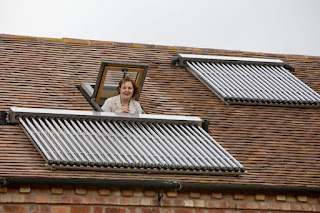
solar water heating

The Government has launched a consultation on its strategy for decarbonising heat which omits domestic biogas and the method favoured by Richard Branson for carbon capture.

This is the second consultation on the topic of heat in three years; the last one resulted in the Renewable Heat Incentive and the Green Deal. This one attempts to envisage how the market will be transformed as a result, and as part of the goal of supplying 15% of UK energy from renewables by 2020.

Launching the consultation, Energy and Climate Change Secretary Edward Davey spoke of the need to cut emissions from the way we generate heat and said that many towns, cities and communities across the UK are already switching from fossil fuels to low carbon forms of heating like biomass, heat pumps and solar thermal.

“I want to give the opportunity to others to follow the pioneers," he said, “so that in time, our buildings are no longer dependent on burning fossil fuels for heat but using affordable and reliable alternatives to help create a flourishing, competitive low carbon manufacturing industry."

Alongside the consultation DECC published a series of electronic maps which show the heat demand from buildings across England, aimed at developers so they might identify areas in most need of low carbon heating projects and local authorities.

Demand reduction


The document envisages different solutions for different locations and geographies, as households, businesses and local authorities choose the approach that will work best for their circumstances.

It proceeds logically through an examination of measures to reduce the wastage of heat and hence demand, through to an examination of means to supply the remaining demand.

In particular there is emphasis on the potential for expansion in the heat pumps market and the solar thermal market. In 2010, the UK heat pump market alone was worth nearly £50m, and the solar thermal market grew 24% to £25m.

Heat networks

There is also hope expressed that more heat networks will be installed by, for example, integrating them with local authority plans for urban growth and regeneration.

The document notes that such networks can be the most effective way of supplying low carbon heat to buildings, offering the benefit of flexibility, since a number of different heat sources, such as biomass and gas boilers, combined heat and power (CHP) plants and heat from energy-from-waste plants, can supply the same network.

However, they have a high upfront cost due to the need to install the pipework, and to their dependence on municipal vision. Hence, although widespread in Europe, there are a few examples in this country, exceptions being Nottingham, Sheffield, Birmingham, Aberdeen, Southampton and a new project in Newcastle which is to be supplied from geothermal heat.

The Newcastle borehole will eventually reach 1821m and tap into water at a temperature of 80 deg. C, which will be used to heat a new science park.

Nottingham's one of the largest district heating networks in the UK, with a 65km network serving over 4,600 homes and 100 businesses and public sector properties; roughly 3.5% of the city’s entire heat consumption.

Measures for industry

The consultation also examines the decarbonisation of process heat for industry to create a separate strategy. "By focusing on biomass, biogas and electrification, as well as innovative technologies like Carbon Capture and Storage, we have the opportunity to achieve a competitive advantage, winning contracts abroad in a new and thriving global market," it says.

It recognises six major subdivisions of industry which will need their own specialised attention. These are: Coke and refined petroleum, food and drink, pulp and paper, basic metals, non-metallics and chemicals.

It sees particular opportunities for combined heat and power, which is ironic considering that George Osborne removed support from the technology in his budget two weeks ago.

Biogas

Responding to the Heat Strategy, Energy Networks Association (ENA) Chief Executive, David Smith, expressed disappointment that “domestic use of bio-gas has not been considered. As the Strategy points out, currently 81% of the UK uses gas for its heat and hot water.

"To ignore a potential fuel source which can use existing domestic heat infrastructure seems bizarre to say the least.

“With the proposal that gas for domestic heat be phased in only a decade or so the Strategy has also failed to consider the cost implications for the public."

The ENA is undertaking a major study on domestic heat out to 2050 that will be published in early May.

The Strategy does refer to biomethane injection into the gas grid for the industrial sector. It notes that the Renewable Heat Incentive (RHI) currently only gives support for biogas from anaerobic digestion, sewage gas and syngas for heating equipment with a capacity of less than 200kWh.

It says that the Government will consult on removing this limit or setting a higher limit in September.

Hot air

The RHI is currently limited to supporting installations which generate hot water or steam through a boiler or engine, as these can be metered relatively easily.

The Government is also considering the inclusion of equipment which can heat air directly, thereby potentially expanding the type and number of industrial uses of bioenergy which the RHI supports.

Electrification and carbon storage

The strategy also notes the potential for carbon capture and storage at a small, industrial scale. But it does not seem to be aware of the latest technologies such as the use of microbes, as supported by Richard Branson's Virgin Atlantic.

In the short term it expects industry to concentrate on energy efficiency, switching to low temperature processes and sustainable biomass, using CHP and fuel switching.

After 2020 is looking for even greater efficiency of thermal processes using heat recovery or reuse between high and low temperature processes, greater use of biogas and sustainable biomass, and further electrification of lower temperature processes, for example through direct electric steam generation as the grid itself is the carbonised.

In the longer term wider deployment of carbon capture and storage is anticipated to capture the remaining inherent process emissions. Further fuel switching to electricity and biomass for the remaining high-temperature processes is also expected.

Roger Webb, director of the Heating and Hot Water Industry Council (HHIC), thought this could be a problem. "From the strategy it seems there is a big push on electricity rather than fossil fuels - so the main question is how quickly can we move forward to low carbon electricity?"

DECC expects to receive responses by May 24, expand its evidence base and produce a range of policy proposals around the beginning of next year.

Monday, March 12, 2012

Government ready to abandon nuclear newbuild, says protest group

The government is prepared to abandon its nuclear programme if there is sufficient opposition from the public, and has in place an alternative strategy which involves a stop-gap implementation of combined heat and power plants, Stop New Nuclear's spokesperson Camilla Berens told me today.

She claimed that Chris Huhne told her this last year, when he was energy secretary, at a meeting arranged by the organisation.

"He said the strategy was that to start with most of these CHP plants would be fuelled by conventional gas, which would be replaced over time by an increasing amount of zero carbon gas from anaerobic digestion," she said.

This would fill the energy gap until a sufficient amount of renewable electricity come online from other sources: offshore wind and marine.

She said that, "a decentralised approach with a broad mix of renewable and energy-efficient technologies can help reduce any future stresses brought about by foreign energy providers.

"Arguably, if the gas-fed CHP route is taken, it’s possible the Europe might be hit by a repeat of the kind of disruption caused by Russia’s dispute with the Ukraine in 2009. But the nuclear sector faces similar uncertainty.

"The world’s leading uranium producer is Kazakhstan – a nation that offers no greater reassurance of future energy security than its Russian neighbour. Meanwhile, the long-distance transportation of uranium from mines in Canada and Australia also presents risks in terms of accidents and terrorism," said Camilla.

A further alternative strategy, which again uses the Government's own figures, has been proposed in a report published earlier this month called A Corruption of Governance?, by the Association for the Conservation of Energy and pressure group Unlock Democracy.

This document also accuses the government of a pro-nuclear stitch-up, .

Sunday, September 11, 2011

Renewable energy now yields irresistible returns on investment for all businesses

Whatever kind of business you are running, you would be crazy not to take a serious look at using renewable energy - not just to satisfy your own power needs but as a sound financial investment. But you need to get the best, expert advice and think strategically.

The return on a sensible investment in renewable technology would average 11-12%, with the potential for returns of over 20%, according to a report from Carbon Trust Advisory released this week.

With much of the rest of the economy in the doldrums, and energy prices set to rise considerably, where else are you going to get a return like this?

The financial landscape is improving due to Government initiatives such as the Feed-in-Tariffs (FiT) for generating renewable electricity and the similar Renewable Heat Incentive (RHI) - which covers technologies such as solar water heating, heat pumps and biomass boilers.

This is due to kick in at the end of this month for businesses (a similar scheme for homes will follow next summer).

The big names are already leading the way. ASDA, IKEA, John Lewis and Marks & Spencer have all set a target of moving to 100% renewable energy. IKEA now obtains 80% of its total energy use from renewables and has invested in a mix of ground source heat pumps, biomass, solar panels and wind power.

In the US. Google has invested heavily in solar plants, with a 1.65 megawatt photovoltaic power array installed in 2007. But it has learnt that you can't just buy a renewable energy plant and then forget about it.

At the beginning, it failed to put in monitoring and maintenance facilities for each array that would clean the panels regularly and tell it when failures had occurred. A couple of years later it took a look and discovered in this survey that at any one time, the plant may be only generating 70%, and sometimes as little as half, of its potential.

Factors such as accidents, power and frequency matching, shading, potential annual degradation of cells by .5% to 9.5% a year can all affect a photovoltaic system's output.

Similar technical complications arise from all energy technologies, and few can simply be plugged in, switched on and forgotten about in the way that we rely upon the grid.

While The Carbon Trust is right to push the fact that "anaerobic digestion (AD), wind power, biomass heating systems and ground source heat pumps are some of the most attractive and practical renewable energy technologies for UK businesses", businesses need expert help, not just in choosing the right technology for their location but in designing an entire energy management approach that finds the most cost-effective interventions they can make for their particular circumstance.

Investing in demand reduction, energy efficiency, or voltage optimisation, for example, might create just as profitable returns and improvements to the bottom line.

The Carbon Trust can also advise whether a company should purchase or directly generate its own renewable energy, whether to do so on or offsite, where to find the expertise and the implications for an organisation’s supply chain.

UK’s largest renewable gas project


The Carbon Trust suggests that AD (selling the biomethane produced to the gas network) and biomass boilers, typically will offer the highest average internal rate of return.

Biomethane from anaerobic digestion is going to be in hot demand - it may comprise at least 15% of the domestic gas supply by 2020, according to a study by British Gas and the National Grid.

This week British Gas and AD plant manufacturer Bio Group led the way in this area with a joint project to build a £5m anaerobic digestion plant in Stockport to take advantage of the RHI. It will produce organic fertiliser and biomethane which, once upgraded to match the quality of natural gas, will be fed into the gas network.

The feedstock will include food waste from local hotels, restaurants and British Gas’ own offices. It will be constructed on an old landfill site in Stockport, Greater Manchester and will open in April 2012 when it will be capable of supplying 1,400 homes each year.

British Gas and Bio Group, with the Renewable Energy Association, helped to launch a scheme earlier this year called the Green Gas Certification Scheme (GGCS), that provides assurance to customers of British Gas' renewable gas tariff of the biomethane's authenticity as a renewable energy source.

Although complex, the renewable energy field is rapidly becoming easier to enter and more and more mainstream. And with energy prices set to grow by up to 37% by 2020, the opportunity to reduce bills is a strong incentive for all businesses to investigate renewable energy options.

Any business wishing to enquire about the Renewable Heat Incentive (RHI) should phone the accreditation enquiries line 0845 200 2122 between 8:30am until 5pm Monday to Thursday, and 8:30am until 4:30pm on Fridays or email RHI.Enquiry@Ofgem.gov.uk.

Saturday, July 30, 2011

The large-scale solar gold rush draws to an end

UK's largest single company solar photovoltaic installation on the HQ of the Body Shop: 3,840 modules over 6,355 sq meters
The installed capacity of photovoltaic solar power in the UK doubled in the three months to June in the rush to complete projects before the reduction in Feed-on Tariffs by Monday August 1.

The tariff will drop from 29.3p per kWh to 8.5p per kWh on Monday and solar plant developers have just the rest of this weekend to complete large projects in order to benefit from higher tariffs.

Statistics released by DECC show that there was a 56% rise to 121.6 megawatts (MW) between March and June and 18 times more capacity than a year previously.

Installed capacity for anaerobic digestion also jumped in the second quarter of this year, nearly trebling to 177 kW

But this is expected to increase rather than fall, as Feed-In Tariffs for this technology, which composts organic matter to produce fertiliser and methane that can be burnt to generate electricity, will rise from August 1, by around 2 pence per kilowatt-hour for plants up to 250kW.

The largest single solar installation to meet the deadline is on the Body Shop's head office site in Watersmead, Sussex.

It consists of 3,840 solar modules over 6,355 sq meters (roughly the size of 24 tennis courts) estimated to generate approximately 900,000 kWh of electricity a year - 25% of the site’s energy. It is about equivalent to powering the needs of 250 houses.

The Body Shop says it took just nine weeks to install, cost £2.8 million and has a payback of 7-8 years with the higher tariff rate.

Paul McGreevy, The Body Shop International Director of Values, said that “while we understand the need to prevent commercial exploitation of the Feed-In Tariffs, we are disappointed that large, self-funded scale installations like The Body Shop's, entirely in keeping with the original intention of the initiative, have now reduced considerably in size, postponed or abandoned due to the increased investment."

Hw said he hoped the government would look at the situation again and extend the current Tariff, "or at least consider different methodologies to assess the installations to make it more viable" in order to help bring down the cost of solar modules.

Two other large projects to meet the deadline are in the sunniest part of the UK: Cornwall.

Lightsource Renewable Energy and Solarcentury have helped to build a 1.4 MW solar plant near Truro on a disused tin mine, the first of many renewable projects planned at the site.

"While it's been disappointing the government has decided not to support the large-scale solar sector going forward, the solar farms developed this summer will play a critical role in the supply of green energy in the UK," said Conor McGuigan, head of planning at Lightsource.

Another 1.35 MW plant nearby, that cost around £4m, was erected in just six weeks and is expected to attract up to £1bn to the Cornwall area.

The tariff reduction has not stopped a Cornish charity from yesterday launching a £20 million fund sourced from local PV installers to help community buildings, academy schools, churches, charities and farmers generate their own renewable energy from roof-mounted PV modules.

Community Energy Plus' ‘Solar Communities 2011’ was launched at the Cornwall Renewable Energy Show.

The installations will crucially be under 50 kW, so continuing to attract the highest tariff, but unlike other ‘rent a roof schemes’ will also receive an income from any electricity not used within the building that is exported to the National Grid.

If the maximum 50kW were to be installed, this would mean that building owners could save up to £7,000 a year on bills by using all of the electricity, or receive up to £2,400 a year for exporting it all to the National Grid.

Over 300 local organisations are expected to take up the offer before the deadline of the 1st April 2012.

Cornish Social Enterprises like this one are experiencing a boom. The Royal Bank of Scotland’s new list of the top 100 fastest growing Social Enterprises in the UK contains several from the region, including ReZolve and the Cornwall Sustainable Tourism Project.

The RBS SE100 Index is produced by the Royal Bank of Scotland and Social Enterprise to build intelligence and monitor performances of social enterprises in the UK.

Thursday, June 16, 2011

Is anaerobic digestion an ideal sustainable technology?

Anaerobic digestion plant on a farm
Between three and five terawatt-hours of energy could be supplied by anaerobic digestion by 2020, according to the Government's new Anaerobic Digestion Strategy and Action Plan.

The Plan contains guidance on the cost and benefits of AD for developers and local authorities, and tactics for training and developing markets for the biogas and fertilisers produced by the technology.

″Getting rubbish and waste rot in landfill is madness when we can use it to power our homes and cars,″ said energy secretary Greg Barker. ″We are already making it financially attractive to turn waste into electricity under the Feed-in Tariffs scheme and soon there'll be similar incentives to generate heat too.

"The Anaerobic Digestion strategy and action plan will help us unlock the potential to get more energy from waste to reduce emissions in the fight against climate change.”

Rightly, the Strategy describes AD as a beautifully flexible technology - "plants can be built on many different scales, from large facilities treating sewage sludge or municipal waste, to smaller ones handling materials from a particular farm or a small community. The construction of AD facilities can be comparatively swift, and compared to some other waste management technologies can be relatively inexpensive.

"The inputs and outputs of the technology are also flexible, meaning that the plants can be designed to meet local requirements for feedstock or outputs, while remaining connected to the national electricity and/or gas grid."

It has further advantages, too, over other renewable energy technologies. "The energy is generated constantly, unlike wind, tidal and solar power, and can be stored in the grid (in the form of gas)" - methane.

Methane is one of the few renewable fuels suitable for Heavy Goods Vehicles (HGVs), and has the potential to reduce reliance on imported gas.

So it can process waste and produce heat and electricity.

And, "by providing low carbon fertilisers for agriculture, AD helps deliver a sustainable farming sector, where resources are reused on-farm to reduce GHGs and provide secure and sustainable inputs, particularly phosphate", the Strategy says.

The Anaerobic Digestion and Biogas Association (ADBA) said the plan "should help make it easier to grow the industry. Developments such as a best practice scheme for AD will ultimately help break down barriers to plant development, reduce the risk of investing in AD and deliver the industry's potential to UK plc."

However...


However, they qualified this by adding that the accompanying Waste Review "should have been bolder and called for as much organic waste to be treated through AD as possible.

"We are disappointed by the lack of recognition of the importance of source-segregating food waste, in reducing waste arising, allowing easier recycling of products from other materials such as plastics, and creating a quality fertiliser from AD which will help decarbonise food production. With 1.1% of overall UK emissions coming from artificial fertilisers, and oil prices increasing their costs and the cost of food all the time, this is a huge environmental and social issue."

And, the Action Plan does not offer the prospect of additional funding.

Instead "it promises that the Government is working to ensure that the financial incentives available for AD under the Renewables Obligation (RO), the Feed-in Tariffs (FITs) Scheme, the Renewable Heat Incentive (RHI) and the Renewable Transport Fuel Obligation (RTFO) provide the revenue support that investors need."

If AD is so good, it should be supported more than photovoltaics – and certainly should be made more attractive to developers.

Monday, June 13, 2011

The Feed-in Tariffs review fiasco

With a stroke, DECC has undermined the competitiveness of the UK solar industry in the export market.

Over 80% of respondents to the Government's review of Feed-in Tariffs opposed the deep cuts to the incentives with most calling for more modest cuts and for the retention of high levels of support for community-scale installations for schools, hospitals and offices.

Many investors are now changing their minds about supporting the industry.

The funding for Feed-in-Tariffs comes from everybody's electricity bills - estimated at an average £3 extra per bill by 2016. DECC's argument for the its U-turn on tariffs is that the £860m pot allocated for it cannot get any bigger because consumers would not tolerate the consequent higher bills, especially at a time when energy prices are rising anyway.

Its prime aim is to encourage awareness amongst the general public of the need to save energy and the importance of renewable energy rather than cost-effectively tackle climate change.


Putting solar panels on lots of homes is seen as the best way to do this. It wants to put the money from the FITs into the pockets of householders and not into the pockets of larger concerns.

It's a shame that this is an either-or alternative.

Because unfortunately, those large concerns are not just big companies but community groups and farmers, which flies in the face of the Government's localism agenda. It needs to make an exception in these cases and reinstate the higher tariff bands for PV.

But how successful is the policy at tackling the aim of reducing the country's carbon emissions? Pound for pound of investment, solar PV does not represent good value for money when seen from an environmental point of view in the UK when compared to some other technologies.

The UK does not get a lot of sunshine, except in the very south and south-west, the sun only shines some of the time, and so investment in technologies that can produce renewable and sustainable power all of the time more efficiently will therefore produce more carbon savings [see p. 40-44 of this CERT doc. for the supporting evidence that shows which domestic-level measures produce the most cost-effective savings].

This is where anaerobic digestion (AD) comes in. With a feedstock that can keep it generating every hour of the year, it is also an emerging technology that requires support to get it up and running. It may not be as sexy as PV modules, but it does the job.

The AD industry lobbied for much more support and has been devastated by the result. What it got was an increase in the FIT rates of just 1p. They are now 14p/kWh for schemes up to and including 250 kW and 13p/kWh for schemes up to and including 500 kW.

This is not nearly enough to stimulate further investment in the technology, as Lord Redesdale, chairman of the Anaerobic Digestion and Biogas Association (ADBA) has warned.

With a capital cost of around £7,745 per kWe, AD has the highest cost per MWh of any form of heating for district heating schemes - almost £250; twice the cost of a community biomass combined heat and power (CHP) plant. But put this in perspective: it is not as much as an energy-from-waste CHP plant.

And it has other benefits besides producing heat and power - such as discouraging N2O (a very potent greenhouse gas) emissions and nitrogen pollution by processing farm slurries, and the production of compost which can be sold for soil enrichment.

It is ideal for district heating. The main benefit of moving to district heating a declared Government aim - is saving carbon emissions. Here, anaerobic digestion CHP scores way higher than all other technologies, at around 5,100 kg of carbon dioxide per year compared to a conventional system. (Incidentally, air source heat pumps used for this purpose actually cost carbon compared to a conventional system.)

By the way, these figures are taken from a report commissioned by the Department of Energy and Climate Change itself two years ago on renewable heat and district heating networks.

So it is surprising to hear DECC's Greg Barker say that there is not enough evidence to support the industry's case for greater help.

Its own research shows that if you take into account the implied carbon abatement cost, anaerobic digestion actually ends up being one of the cheapest forms of renewable district heating at less than one fifth the cost of a community boiler using natural gas.

It is still not the cheapest by any means, but this is because the plant is doing more than just burning a feedstock, and because the technology is relatively new.

And the whole point of the Feed-in Tariffs and Renewable Heat Incentive is to bring down the cost over time.

The National Grid itself has said it can see a time in the not too distant future when up to 50% of the gas in the networks is renewable, much of it coming from anaerobic digestion of organic waste.

The Coalition Government is to publish a new anaerobic digestion strategy later this month. While this is not expected to include any more financial help, the more it can do to boost this potentially highly valuable technology, the better.

Monday, March 21, 2011

Anaerobic digestion - renewable heat, electricity, waste disposal and fertiliser production!

When people think of renewable energy they think mostly of wind power and photovoltaics. Any discussion of renewable electricity policy tends to refer to these and criticise them, and by implication all renewable energy, because they are unpredictable and variable and need backup.

There is an astonishing ignorance even at high government level over the potential of other kinds of renewable power generation. So I want to redress this balance with occasional posts looking at different technologies. Recent posts have referred to marine current turbines, for example.

This post is about the unsexily named anaerobic digestion. Mostly it's about small, farm-scale versions, and I hope to get around to talking about larger scale ones soon.

However, it's worth mentioning right up front that larger plants are able to produce gas for the mains and for vehicles running on gas.

A chief worry if we don't rely on nuclear power, is where will all the power come from to decarbonise transport? Well, here's one answer.

A new income stream - and more - for farmers

Clive Pugh at Bank Farm, Mellington with his anaerobic digester

A survey last December found that 80% of farmers in the UK wanted to have solar photovoltaics on their roofs within the next three years - and yet the fact is, that in terms of the carbon saving and other benefits anaerobic digestion (AD) provides better value for money than solar PV.

For example, farmer Clive Pugh (above) at Bank Farm, Mellington, near Churchstoke, Wales, put in his first AD plant 20 years ago. He now has a state-of-the-art, three chamber unit that provides all of the farm's own energy needs, and that for two homes and the farm dairy, as well as generating an income of up to £10,000 a month from supplying the National Grid - without the new FiTs subsidy, because he was an 'early adopter' and so the scheme is excluded from it.

“We initially went for an anaerobic set-up because we needed a new slurry store and it was something we had been looking into for some years,” says Mr Pugh.

“It revolves around using the slurry from our 140-cow dairy herd. In order to keep the gas production fairly constant throughout the year, we also use poultry manure, silage effluent, waste silage, discarded milk and whatever other green waste we can get hold of.”

While 10 cows are needed to produce 1kw of energy, in fertiliser value terms 1,000 gallons of separated liquid will provide around 30 units of nitrogen, 40 units of potash and 12 units of phosphate.

“The quality of our grass is certainly most noticeable these days, and our need for phosphate and potash is now nil. We also only need top-up units of nitrogen depending on the type of crops being grown,” says Mr Pugh.

How does it work?


In a typical plant, vats ferment farm slurry and crop waste (and can also process food waste) in the absence of oxygen to produce gas which can be used to generate heat and power.


The facility would normally be owned and operated by the farmer/farm business, but might sometimes be part of a co-operative venture. They often would not be approved to accept animal by-products at this scale.

The biogas produced in AD is a mixture of methane (65%) and carbon dioxide (35%) which can be used to generate heat through a boiler, or heat and power through a combined heat and power (CHP) system. In addition, following further processing, biogas is also a suitable fuel source for vehicles.

Hot water may be used on site, for example to heat polytunnels or greenhouses for market gardening. Some farms use AD to power a generator for the digester and pasteurisation. Other benefits include:

• it avoids landfilling of organic wastes;
• the biogas can be burnt as a fuel;
• there is a reduction in the use of fossil fuels, offsetting carbon dioxide emissions;
• it is a predictable and reliable source of electricity and energy, unlike wind power and PV;
• the digestate products return nutrients to the land, reducing dependence on inorganic fertilisers;
• there are economic benefits from reduced fuel and fertiliser use, as well as the subsidy;
• farms can become more self-sufficient, with socio-economic opportunities, e.g., gate fees can be charged for waste taken in and electricity, biogas, fertiliser and soil conditioner can be sold;
• odour is reduced by around 80% compared to farm slurry;
• methane (a greenhouse gas) emissions are reduced;
• a range of organic waste materials can be processed - the highest gas yields come from the co-digestion of fatty (food processing wastes), liquid wastes (animal slurries) and green wastes;
• the amount of farm slurry sprayed onto farmland - and of run-off and pollution of waterways - is reduced;
• harmful bacteria and viruses are destroyed, reducing the spread of harmful disease causing pathogens.

The energy generating potential is determined by the size of the digester and waste feedstock composition.

A typical farm installation might be up to 0.5MW. A small farm using farm waste can produce enough heat to warm the digester and meet domestic heating requirements. If electricity is generated through CHP of 10kWe capacity, enough electrical energy could be generated to supply up to 13 homes.

A brand new installation can cost anything from £150,000 for a fairly basic liquid-only unit to more than £375,000 for an all-embracing 120 kw producing version.

Better payback than PV


This high initial cost is why the technology needs support at this stage. Without support, simple economic payback is approximately 20 years.

Factoring in savings made in waste disposal, according to the Carbon Trust, mean that payback times for installations tend to be under 5 years.

Compare this to solar PV in much of the UK, which is 40 to 60 years without subsidy.

Larger plants


A range of AD scales exists, from single on-farm digesters through to large centralised anaerobic digesters (CAD) collecting waste from a larger surrounding area.

These CADs will usually accept animal by-product wastes for digestion. The gas produced at this scale can also be used for other purposes, for example to power vehicles or be injected into the National Grid.

AD at this scale is economically viable and requires little support. Most plants operate as co-digestion plants with slurries, in additional to wastes from the food, brewing and other industries.

This recent post contains other examples.

This website is a useful source of further information, although slightly out of date.

In Germany there are more than 3,000 on-farm anaerobic digesters - in the UK perhaps around 50.

Anaerobic digestion wins in Feed-in Tariff review

The government is recommending increased support for farm-scale anaerobic digestion (AD) at the expense of “solar farms" over 50kW, in an effort to maximise the benefit of limited resources.

This is a good thing as the technology has numerous advantages over PV - including reliability - which I'm outlining in a subsequent post this morning.

The new consultation follows the launch in February of the fast-track review into how the Feed-in Tariffs (FITs) work for solar photovoltaic (PV) over 50 kW. This followed evidence of 169 MW of large scale solar capacity in the planning system - equivalent to funding solar modules on the roofs of around 50,000 homes if tariffs are left unchanged.

The government feels that leaving this unchanged would soak up most of the subsidy that would otherwise go to smaller schemes or other technologies. Such a development was not envisaged at the start of the programme.

The consultation also recommends increasing support for farm-scale AD, as it has received disappointing uptake so far. The heat component of AD is also supported through the Renewable Heat Incentive (RHI). This means that where the biogas is burnt to produce heat and power AD is eligible both for the RHI and FITs.

It could be argued that it doesn't matter where the PV modules are as long as they are generating electricity. But the government's concern is that PV be available to ordinary people and not big business.

Greg Barker, Climate Change Minister said: “I want to make sure that we... allow even more homes to benefit from feed in tariffs... and put a stop to the threat of larger-scale solar soaking up the cash. The FITs scheme was never designed to be a profit generator for big business and financiers."

Installations larger than 50 kW will receive support as follows:

• 19p/kWh for 50kW to 150kW
• 15p/kWh for 150kW to 250kW
• 8.5p/kWh for 250kW to 5MW and stand-alone installations.

These compare with the tariffs that would otherwise apply from 1 April of:

• 32.9p/kWh for 10kw to 100kw
• 30.7/kWh for 100kw to 5MW and stand-alone installations.

These reductions are comparable to those in schemes in Germany, France and Spain, where tariffs for PV have been reduced sharply over the past year.

The new increased tariffs for AD, designed to make them more attractive, are:

• 14p/kWh for installations up to 250kW
• 13p/kWh for installations from 250kW to 500kW.

These compare with the tariffs that would otherwise apply from 1 April of 12.1p/kWh for AD up to 500kW. The tariff level set for biomethane injection into the gas grid under the RHI and also for small scale - below 200 kilowatt thermal (kWth) – combustion of the biogas produced by AD is 6.5 pence per kilowatt-hour of heat generated.

The idea is specifically to increase the energy obtained from waste through anaerobic digestion, not to promote energy crops, particularly where these might be grown instead of food crops. DECC is in discussions with Defra and others about ways to ensure this does not happen.

Subject to the outcome of the consultation and parliamentary scrutiny, the revised tariffs would be introduced from 1st August 2011.

Over 27,000 installations have been registered for the FIT scheme to date.

Saturday, February 26, 2011

Unsexy renewable energy technology is turned on... and will one day beat solar and wind in the UK

Anaerobic digestion (AD) plant at BV Dairy

It's not as sexy as solar power or controversial and high profile like wind power. But a 'new' form of renewable technology is going to take off this year – the first of a series of plants was commissioned this week – and eventually it will be better value for money, more reliable and even contribute more energy to the UK's needs.

Its developers are now urging the Government to match the level of support offered to other renewable energy technologies such as wind and solar, through Feed-in Tariffs.

What is it? Well, unpleasant as it sounds, it's anaerobic digestion (AD) and it is a multiple-win technology that is set to revolutionise waste processing and energy generation.

AD also helps to divert waste from landfill, and reduce air and water pollution. Byproducts include transport fuel and renewable sources of soil nutrients and manures. These processes will all additionally create new employment.

The Coalition Government also believes AD can help the UK meet its climate change objectives by reducing greenhouse gases from waste and producing energy - including renewable heat - without significant land use changes.

AD makes power from the methane generated by composting organic food, sewage and crop waste without oxygen being present. As these materials are in abundant and continuous supply, it is more reliable than wind and solar power.

The National Grid has said that it believes that within 20 years, half the gas in the grid could come from this source. The gas can be burnt to make electricity and used to power vehicles too.

Pioneer plant opens


One of the first anaerobic digestion projects funded through the Government’s Environmental Transformation Fund was officially opened on Thursday.

The plant, at Staples Vegetables in Boston, Lincolnshire, one of the biggest producers of vegetables in the UK, will produce 11 million kilowatt hours of electricity per year by processing 40,000 tonnes of unusable vegetables and waste.

The digestate (what's left over after the composting) from the Staples plant will replace artificial inorganic fertiliser (which creates emissions) and be better for the soil (because of the organic matter it contains), the heat will be captured for office heating, innovative heat absorption coolers will chill the processing areas, and the electricity generated will power the plant.

Vernon Read, Managing Director at Staples says there is an additional benefit: “The project is giving us control not only over future pricing of power, but also over power security.”

There are three more Government-supported AD facilities opening this spring and over 30 in the planning stage. Some examples are highlighted towards the end of this article.

The National Grid has talked of the biogas from AD eventually replacing a significant proportion of fossil fuel gas in the mains in the future.

But before this can happen markets need to be created for the fertiliser, and for the gas as a fuel in transport. Different sectors, such as the water sector, need to be encouraged to process sewage this way. This was the subject of a Defra consultation last December, whose results have not yet been published.

AD is also subsidised through Feed-in Tariffs (FITs). In order to increase uptake, there is a study into the take-up of FITs for farm-based AD plants going on now at DECC, parallel to the review of Feed-in Tariffs and "solar farms".

Climate change minister Greg Barker believes there is "a huge opportunity" for farm-based AD but had been disappointed by the take-up so far. Developers agree and hope it will become eligible for FIT subsidies soon.

Pioneering AD plants


Because it is not yet cheap to set up. Gary Jones is the owner of a plant at Langage Farm, near Plymouth in Devon. He says that the project couldn't have happened without support from the ETF. "Due to the new concept involved with anaerobic digestion in the UK, the start up costs are very prohibitive.

″Hopefully when there are a few more established sites around the UK, the authorities concerned in the build and running of the sites have a better understanding, and good technology providers can be found locally the cost will reduce and the plants will become profitable without grant funding."

Several other exciting projects are nearing completion, funded by the Environmental Transformation Fund.

United Utilities and National Grid are expanding the already existing anaerobic digestion plant at United Utilities' Davyhulme Waste Water Treatment Works in Greater Manchester. Work is almost complete on converting 250 cubic metres per hour of biogas to grid quality biomethane. Half will be used to fuel a fleet of tankers and half injected into National Grid’s gas distribution network - sufficient to provide heating and cooking needs for around 500 homes.

In Driffield, East Yorkshire, anaerobic digestion company GWE Biogas Limited is constructing a plant to convert up to 50,000 tonnes of organic waste each year sourced from local authorities, food manufacturers and supermarkets, to generate approximately 2MW of electricity for export to the grid. The long term objective is to upgrade gas to bio-methane to supply a private heat and wire network for new housing.

Like Langage Farm, BV Dairy (pictured) in Dorset, which processes around 35 million litres of milk per year, is building an anaerobic digestion plant to process liquid waste and provide renewable electricity and heat for its site.

WRAP, with support from the Carbon Trust, is delivering the Anaerobic Digestion Demonstration Programme under the Environmental Transformation Fund particularly because of its role in cutting waste in the food chain. It's also supporting a Staffordshire-based AD project through its Advantage West Midlands (AWM) Programme, with an animal rendering and food waste collection business.

There is every reason to believe the claim of the Anaerobic Digestion and Biogas Association (ADBA) in ten years' time the UK will have a mature anaerobic digestion industry.

[PS - let's see how popular this post is - with words like sexy and turned on in the heading! - I noticed my post about naked supporters of Amen Awel Tawe windfarm making a calendar is my most popular so far!]