Showing posts with label Ofgem. Show all posts

Tuesday, July 02, 2013

New prize to stimulate dynamic demand innovation

Stewart Reid, Future Networks Project Manager for SSE’s NINES project, says dynamic demand response will make wind power more effective and efficient.
A Dynamic Demand Challenge Prize has been launched to help meet the challenge of satisfying ever-increasing demands on the UK’s power grid, as highlighted by last week’s Ofgem report on tightening electricity margins.

The prize is the initiative of Nesta, the UK’s innovation foundation, and hopes to find new ways of managing demand to shift electricity consumption from peak to off-peak times, reducing carbon emissions and better responding to demands on UK energy supplies.

Solutions will depend upon the smart grid: new data-driven, demand side response-enabled products, technologies or services, that reduce carbon emissions by shifting energy use to off peak times or towards renewable generation.

Dynamic demand, or demand side response (DSR), is the exchange of information between electronic devices, responding to signals from the grid directly or indirectly.

It will be built into the capacity market, being created by the new Energy Bill, to can help shift electricity consumption away from peak hours where electricity consumption is high, or enable greater usage of excess electricity generation from renewables, as well as help maximise the use of the smart grid.

A number of trials are taking place at the moment through initiatives such as Low Carbon London, DECC/Ofgem’s Smart Grid Forum and the Low Carbon Network Fund.

Currently the UK’s biggest smart grid initiative is a £54 million scheme called the Customer-led network revolution in which 14,000 homes and businesses are finding ways to reduce both their energy spend and carbon emissions.

The project includes decentralised generation and demand reduction through efficient smart appliances and is trialling demand response through the combination of generation and flexibly operated appliances. It is supported by Low Carbon Network Fund, with partners UK Power Networks, Northern PowerGrid, British Gas, Durham University and EA Technology.

A new project called Smart Hooky is now trialling a range of new technologies to create a community–scale smart grid that will help Western Power Distribution understand how a rural community uses electricity at different times of the day in order to manage peak demands and let electricity networks accommodate more renewable energy.

The Dynamic Demand Challenge Prize will offer incentives, financial support and expert guidance for shortlisted projects, with a prize of £50,000 for the solution that demonstrates the most significant impact.

Constance Agyeman, development manager, Nesta’s Centre for Challenge Prizes, commented: “The Dynamic Demand Challenge Prize will support innovations that create a measurable shift in energy use. This is important because there is increasing demand on the UK’s electricity supplies and we therefore need to find new ways to manage this.”

Partners in the challenge include the Centre for Carbon Measurement, the Department for Business Innovation and Skills and National Grid. Neil Hughes, NG's head of technology, explains, “Balancing the grid will become more complex as more renewable generation comes onto the system and our goal is to help new service providers understand those challenges and develop technologies to meet that growing need”.

Jane Burston, head of the Centre for Carbon Measurement at the National Physical Laboratory notes, “Climate change and a secure, clean energy supply are two of the biggest challenges of our time. Demand side response is a critical step in supporting the shift in supply towards renewable generation. This will only be successful with engaging tools and technologies we want to use in our homes and offices.”

The challenge is open to entries from anyone across the European Union, but the solution must be applied within a UK context.

Northern Isles New Energy Solutions (NINES)

NINES is another important dynamic demand response solution that is being developed by SSE in Scotland. It aims to support Shetland’s sustainable energy future by developing and managing the electricity distribution network more effectively.

Measures used here include replacing old inefficient storage and water heaters with modern 'smart' storage heaters, and adding a new electric boiler to the existing district heating system, both of which help to balance the electricity network.

This is crucial, says Tim Rotheray of the Combined Heat and Power Association, because currently wind turbines generating electricity that is not needed at that point in time are paid constraint payments per megawatt not to feed their power into the grid.

To combat this waste, often seized upon by opponents of wind power as a reason to oppose wind farms, the power can instead be stored in the form of hot water using the systems being installed here, even diverting the power for a few seconds, as when there are spikes of generation during blustery weather.

NINES is also deploying new technology that will allow more small-scale renewable generators to connect to the network and introducing new commercial arrangements to encourage businesses to change the times at which they use most energy, similar to ones that will be in the new capacity market.

Finally, it is also installing a 1MW battery, part-funded by the Department for Energy and Climate Change, at Lerwick Power Station.

The project will help SSE plan for the replacement of its existing Lerwick Power Station, which is nearing the end of its useful life, with a smaller station than would otherwise be required.

This type of demand side response solution is already used in Denmark, for example in the Skagen District Heating system, which utilises electric as well as gas-fired CHP boilers.

Silver Springs

Silver Springs is a company which already has 10 years' experience in this area in north America and Asia Pacific. With a customer-focussed attitude to smart meters, it works directly with end users and communities and has recently established an office in the UK.

Their Oklahoma Smart Hours Programme is a demand response initiative to encourage customers to shift their energy use to off-peak hours that works by establishing local communications infrastructure and installing programmable communicating thermostats to control air conditioning units at times of peak demand.

The programme has helped 44,000 users save an average of $191 each, and delivered more than 67 megawatts of load reduction in 2012.

In the UK, another pioneer is The Ouse Valley Energy Services Company Ltd, formed by members of the Transition Town Lewes Energy Group, which includes decentralised generation and demand reduction and is currently investigating local electricity and heat distribution networks for villages and towns within the District.

The community-owned MOZES (Meadows Ozone Energy Services Company) is also delivering decentralised generation and demand reduction, with the aim of helping the community to become self-sufficient in energy use, and then to become an energy generating community.

All of these initiatives are exploring and developing models that fit with the new paradigm of using available low carbon energy in real time more efficiently, one of the chief challenges of moving to a low carbon future, that is being supported by the NESTA challenge.

Sunday, June 30, 2013

Demand side response: a revolution in British energy policy

demand side response

It's highly significant that demand side response is to be included in auctions for the future British electricity capacity market, as announced by DECC last Thursday, because it marks once and for all a move away from the principle that has dominated energy policy since the national grid began: of satisfying peak demand at any price.

Capacity market auctions will commence in 2014, subject to European state aide approval, and will embrace new and existing generation capacity including combined heat and power (CHP), embedded generation, energy storage, and permanent reductions in electricity demand.

Demand side response (DSR) means that small, decentralised generators and owners of stand-by generators experiencing reduced demand, or a combination of both, will be able to gain an income by selling the energy they don't need.

The UK‟s electricity system is currently sized to meet peak demands that only occur infrequently, which leads to generating plant and transmission and distribution networks being under-utilised for much of the time.

This is expensive and wasteful.

DSR will open up a huge new market, which will grow even more as the 'smart grid' spreads, by letting energy consumers become active participants in a more local and efficient energy system.

It will embrace many different kinds of energy consumers, such as businesses, farms, hospitals, hotels, universities, local authorities and commercial buildings.

As a result of this policy such enterprises will have greater confidence to invest in their own generation plant, and will have the ability to create income for themselves on a sustainable, predictable basis.

Any facility that collects real-time consumption data and is sometimes on standby to reduce energy use, or that runs standby generation that can start up upon a signal from the electricity system, will be able to participate.

Participants will be able to bid both one and four years ahead in the auctions, giving them flexibility and confidence to invest in the future.

It's also good news for combined heat and power, since much small-scale generation is CHP, producing heat and power for local networks.

The other benefits of demand side response include:

  • addressing the threat to electricity supply caused by the imminent closure of coal-fired power stations;

  • reducing the need to build new power stations and transmission lines;

  • reducing greenhouse gas emissions by allowing power stations to operate closer to the maximum efficiency;

  • avoiding transmission losses by using electricity locally;

  • and reducing the need to keep power stations warm as a spinning contingency reserve.

If we compare the consumption pattern of electricity from the commercial and public sector to the demand profile for all sectors, we see that the peak demands for non-domestic buildings occur at around 11am on weekdays, whereas the total peak is between 4 and 6pm.

This is where the potential for spreading out supply and demand lies.

The potential for DSR to reduce peak demands depends on the flexibility of electricity capacity and the uses to which it is put.

The greatest flexibility is related to load with storage or inbuilt inertia, such as hot water, heating and air conditioning. Some loads, such as computing, exhibit limited flexibility, unless they are in data centres operating unused standby.

Assessments by Element Energy and the Montford University for Ofgem a year ago of the technical potential suggest that DSR measures could reduce winter peak demands in Britain due to non-domestic buildings from 1–4.5GW, but the eventual potential is likely to be much more.

There is work to be done to develop detailed policy implementation that will work well for smaller operators and ensure that the cost effectiveness of DSR is harnessed for the benefit of consumers and the wider UK economy.

A consultation by Ofgem on the subject finished on 28 June. It's probable that the results of the consultation will feed into the practical arrangements under which the capacity mechanism will operate.

Sensibly, there will be a transition period for demand side reduction and small-scale storage within the capacity market.

To this end, Ofgem and the National Grid have just launched a new consultation on transitional products aimed at paving the way for DSR.

The first potential product, Demand Side Balancing Reserve, offers a new opportunity for the demand side to participate in the provision of demand and supply balancing services.

The second, Supplemental Balancing Reserve, is aimed at generators and large users.

Of the first, National Grid is suggesting that it could buy a quantity of demand reduction capability at peak times on non-holiday weekdays during the winter for a set-up payment of between £5-10/kW per year, and utilisation payments for delivery ranging from £500/MWh to £15,000/MWh.

It's also consulting on a second product that would be the same but without the setup payment.

The idea is that this will promote significant growth in the provision of demand-side services ahead of DSR participation in the capacity market.

No one should underestimate the significance of this development: it marks the first time that Britain has moved away from an energy policy of having to supply peak demand whatever it is.

This policy has proved inefficient, insecure, expensive and impractical; the more so as energy and plant construction prices rise and we are constrained by the need to reduce carbon emissions.

It's a fabulous opportunity, and the more organisations and businesses wake up to its potential benefits for them, as well as to the effect on reducing prices for all energy consumers, the better it will be for the whole country.

Friday, February 08, 2013

The companies who bring us electricity should belong to us

Many people have not heard of district network operators. They operate behind the scenes, separate from the National Grid and the transmission companies, and most people would not even suspect their existence.

These 14 companies manage the switchgear, transformers, cables and everything else that plays such a vital part in keeping the lights on and the machines running around the country.

The electricity suppliers, the people to whom you pay the bills, lease the use of these regional networks, in much the same way that other telephone companies lease the telephone network from BT.

As I exposed this week in this news story, the suppliers are forced to pay whatever charge is made to them by the DNOs, and this charge ends up as part of your electricity bill, which varies from region to region, but is on average 16%.

This is effectively a natural monopoly, which allows the companies owning the networks to set their prices at whatever level they see fit.

Moreover, we have found out that 85% of these companies are foreign owned, just as is the case with many of the UK's water and sewage utility companies. This is considered to be a way of bringing investment into the country.

This may be so, but no one will invest without wishing to make a profit, and it seems that most of the profit leaves the country.

This profit totalled over £1.2bn in 2011/12. The biggest profit by far in terms of dividend as a percentage of profit was made by Western Power Distribution, serving the South West, South Wales and the Midlands, whose owners, PPL, are in America. They made a pre-tax profit of £190m.

As Richard Hall from Consumer Focus comments: "The absence of competitors, and the certainty that there will always be demand for electricity, removes many of the incentives to keep performance up, and prices down, that most ordinary businesses face".

I am not necessarily criticising Ofgem, which seems to be doing its best to get a grip on the problem, but it is only two years into a price control programme, having failed to do anything of significance for many years previously.

What this topic needs is more exposure and public discussion.

Even more worrying than the fact that it is a monopoly, is that this business sector does not seem to have escaped the tendency found elsewhere in the economy, of large, especially foreign-owned companies, using tax avoidance schemes.

The company reports, which are all available on the Ofgem website, show that while some of them pay a reasonable amount of tax, others are paying nothing like the 26% rate of corporation tax that they should be paying.

For example, Electricity North West, owned in Australia and the USA, was actually given a rebate of £15m in 2011/12, and the previous year paid just 13% tax.

Eastern Power Networks, owned in Hong Kong, last year received a rebate of £10m, and the previous year rebate of £12m, or minus 57% of pre-tax profit. Its two sister companies, London Power Networks and South Eastern Power Networks, (the three make up UK Power Networks), paid 7% and 1% respectively.

Ofgem can do nothing about this, of course, it's up to HMRC.

But ultimately it's up to the government. I've written several times before about the scandals of poor investment and big profits being made by some water companies, and argued that the best model for utilities is a social enterprise one, as practised by Welsh Water.

This "not for profit" business structure sees not only Welsh Water making record-breaking investment in infrastructure, but taking on more workers and paying each customer, who is a shareholder, a bonus of £22 each, which amounted to £150m over seven years.

Mutual companies, like the Co-operative Banking Group and John Lewis, are sustainable social enterprises, owned by members, doing better than their counterparts in the fully private sector and, what's more, continuing to recycle their profits back into other UK businesses, as well as providing better value for customers.

As I keep saying, imagine all water companies and energy companies run this way. Even banks. It wouldn’t be a case of ‘us’ and ‘them’, but just ‘us’. It gives people themselves a level of responsibility for, and involvement in, the essential services that we need.

This feeling of co-ownership would help to put an end to the criticisms that are continually levelled against most banks, water and energy companies.

It's a myth that we need foreign owned companies to run our utilities in order to provide investment. What we need is good and responsible management. An effective way of achieving this is for them to be forced to become not-for-profit social enterprises, since their primary purpose is to provide a social service.

In the case of the DNOs, Ofgem has been wise to include on its independent panel that looks at customer relations Teresa Perchard, the director of policy and advocacy at Citizens Advice, and Malcolm Rigg, director of the Policy Studies Institute. They will hopefully bring some sensible pressure to bear, but it's a bit like using a spade to shift a mountain.

What's needed is a radical shakeup. But despite the clamour, the banking industry is largely carrying on as before the 2007 crisis. Government has proved itself ineffective in forcing them to become more responsible.

In the absence of any other regulation, we must look to Ofgem to force responsibility in this sector. Ofgem must be held to public account.

Exposed: The hidden monopoly that ramps up UK electricity bills

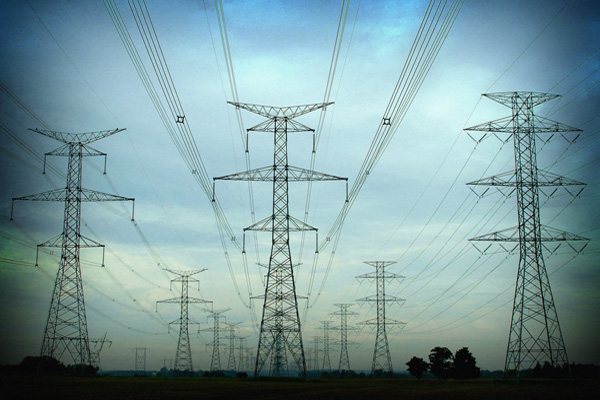
electricity pylons

UK electricity network operators are being accused of unfairly charging customers for the privilege of using the network to send electricity to consumers, and exploiting their monopoly status in order to make excessive profits.

Dale Vince, CEO of independent renewable electricity supplier Ecotricity, said: "On average these guys make an operating profit margin of almost 50%, and a pre tax profit margin of over 30% – that’s big by any standard, in any sector. And yet they are being allowed (by OFGEM) to impose price rises well above inflation – averaging 5.6% across the UK this year and as much as 11% in some areas".

Together in 2011/12, these companies made a profit of £1.2bn and gave a dividend of £1.5bn to their owners, who are mostly based abroad.

On average, 16% of consumers' electricity bills goes to the DNOs. This compares to 58% for the wholesale cost of fuel supply, and just 2% for the subsidies that go to renewable electricity.

Most people haven't heard of district network operators. But these are the eight companies that run the regional electricity networks.

Called Distribution Network Operators (DNOs), they are licensed by Ofgem, which, in 2009, began regulating the revenues DNOs can collect from network users, i.e. the electricity suppliers.

They effectively run a monopoly but their own company reports show that they only pay an average rate of tax to the Exchequer of 6% of their pre-tax profit. Almost all of these distribution companies (85% by turnover) are now owned by foreign companies. This means their profit leaves the country, as the following table shows:

Company Area Owner Country of owner
SSE Power Distribution Plc Northern Scotland SSE Scotland
Southern Electric Power Distribution Plc Southern Scotland SSE Scotland
SP Energy Networks North Wales ScottishPower, part of Iberdrola Spain
Northern Ireland Electricity Northern Ireland ESB Group (the Electricity Supply Board) N.Ireland
Electricity North West North West Owned by bankers, with HQs abroad: JP Morgan Investment Management Inc and Colonial First State Global Asset Management, part of the Commonwealth Bank of Australia Australia & USA
Northern Power Grid owns Northern Powergrid (Northeast) Limited and Northern Powergrid (Yorkshire) plc, North East A wholly owned subsidiary of MidAmerican Energy Holdings Company America
UK Power Networks South East, East and London Cheung Kong Infrastructure Holdings,40%, Power Assets Holdings, 40%, and The Li Ka Shing Foundation, 20% China
Western Power Distribution South West, South Wales and Midlands PPL, formerly known as Pennsylvania Power and Light America


Cheung Kong Infrastructure is controlled by Hong Kong-based tycoon Li Ka-shing.

These companies made the following profits and dividends in 2011/12:

Company Profit (£m) Dividend 

Dividend as % of profit 

SSE Power Distribution Plc 167 200 120
Southern Electric Power Distribution Plc 58 100 172
SP Energy Networks 152 95 62
Northern Ireland Electricity unknown
Electricity North West 70 62 89
Northern Power Grid 218 70 32
UK Power Networks 348 175 47
Western Power Distribution 190 804 1886.75
Total 1,203 1,508


I asked various consumer groups to comment on these revelations. Richard Hall, head of energy regulation at Consumer Focus said: "While consumers can shop around for their electricity supplier, they can’t choose which network brings it to their door.

"The absence of competitors, and the certainty that there will always be demand for electricity, removes many of the incentives to keep performance up, and prices down, that most ordinary businesses face.

"Consumers therefore rely on the regulator to put rules and incentives in place to ensure the networks deliver high quality services at a reasonable price. With energy bills doubling in the last seven years, it’s imperative that Ofgem wrings every drop of value it can out of the price controls it agrees with them."

The Consumer Association, Which?, and uSwitch. They responded that this was a new area for them, which they had not considered before, and they all felt unable to comment. uSwitch said: “It’s not an area that we have commented on previously and we don’t know enough about it to be able to add any particular insight or value”.

And yet the implications are potentially huge with vast sums involved. These companies are spending, and making, billions of pounds, away from the public eye, although under the regulation of Ofgem.

A spokesperson for the Department for Energy and Climate Change (DECC) commented: “Ofgem’s new framework for regulating network companies’ investment activities (“RIIO”) introduces outputs for the network companies to deliver and they will get incentives or penalties according to how well they deliver them. One of these incentives the Broad Measure of Customer Satisfaction stakeholder engagement incentive, is to encourage network companies to address key social issues such as fuel poverty and consumer vulnerability”.

Customer satisfaction is overseen by an independent panel, chaired by Ofgem. The last time this panel met, in summer last year, it was made up of:
  • Philip Cullum, Partner Consumer and Demand Insight, Ofgem (Chair)
  • Colin Browne (Communications Consultant)
  • Mary Fagan (Group Communications and Corporate Affairs Director at ITV)
  • Teresa Perchard (Director of Policy and Advocacy, Citizens Advice)
  • Malcolm Rigg (Director of the Policy Studies Institute), and
  • Andrew Whyte (Communications Consultant).
These individuals said they were "favourably impressed by the number of references to activities providing additional assistance to vulnerable consumers". However, "some DNOs had failed to meet minimum requirements", they said, mentioning no names.

All of the DNOs’ submissions, detailing their community work, are available from the above link.

RIIO, regulator Ofgem's transmission price control system, stands for Revenue = Incentives+Innovation+Outputs. It is supposed to place much more emphasis on incentives to invest in upgrading the network and customer satisfaction.

The current round of improvements to the network which Ofgem has asked for will add an average of 5.6% two bills, though the amount varies significantly region to region. This averages out at about £4.30 per customer per year.

Ofgem is also in the third year of its Distribution Price Control Review 5 DPCR5, which runs from April 2010 to March 2015. A new eight-year agreement will be set after this, and other companies will be entitled to bid to control the networks, though this is considered unlikely.

Ofgem says that when the new contracts come in, then those who do not perform will be penalised, while any that outperform will be made to pass on any savings to their customers.

One of the incentives is to encourage customer satisfaction, where a reward of up to 0.2% of "allowed revenue" is given to those companies which achieve a certain level, as judged by the independent panel. However, this is yet to happen.

An Ofgem spokesperson said that "the price controls are needed as these networks are natural monopolies and therefore there is no realistic way of introducing competition across the whole sector".

It insists that since "Britain’s networks are undergoing a significant upgrade and through Ofgem’s price controls this investment is being secured at a fair cost to consumers.

"To further ensure value for consumers, during the current price control Ofgem set the toughest rate of return ever set for a regulated company (4.7% vanilla Weighted Average Cost of Capital)," they said.

As far as Ofgem is concerned, this state of affairs attracts outside investment into the country. "In 2011, the investment in Britain’s electricity network was twice the amount that was awarded in dividends," they said.

Ofgem is monitoring the situation. "We are currently in a position to consider the financial information relating to the first two years of this five year price control. It is important to note that DNOs’ spending will vary over the five years."

They said that the last time the DNOs put in their bids, in December, Ofgem shaved off £5bn of their costs, a significant amount, saying that they could implement their work programmes for less money.

"In addition," they said, "at the end of the control any underspends or savings will be shared with customers. Overall, we anticipate that at the end of the current price control returns for the DNOs will be within our anticipated range but come down from current levels, while consumers will have benefited significantly from improvements in quality of service."

David Smith, the chief executive of the Energy Networks Association (ENA), the trade body that represents the networks, insisted that his members gave value for money: “The networks deliver the vital services that keep our lights on, our homes warm and our industry and business in operation. It is a service that society depends upon and the reliability of the networks in the UK is unique at 99.9996%."

He acknowledged that they were "natural regional monopolies" but said, "There is no other logical efficient way to deliver this kind of infrastructure," and made the case that "a substantial proportion of profits are being ploughed back into critical investment to deliver a smarter, lower carbon energy system," which needed updating since much of it was installed a long time ago.

“It is estimated that jobs in the network companies will increase one and a half times over the next 20 years," he said.

“Focusing on pre-tax profit margins is inappropriate and misleading as the DNOs spend many hundreds of millions of pounds in capital expenditure each year which does not appear on the profit statement. The cash flows received by the companies are much less.”

Thursday, November 10, 2011

Nuclear timetable slips but we don't need it to keep lights on

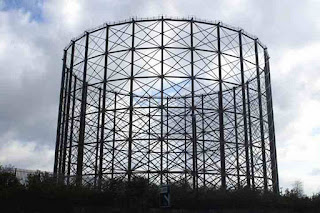
empty gas holder
The latest official estimates show that Britain will not face power cuts or gas shortages in the near future but concerns remain in the longer term.

In particular, the Government has admitted that the timetable for replacement nuclear capacity has slipped.

It is now estimating that new plant won't come online until "around 2025", following the electricity market reforms.

Only two years ago, 2020 was the official estimate.

The revelation comes in the latest Statutory Security of Supply Report (SSSR), published today by Energy Minister Charles Hendry, which has been produced jointly with Ofgem with input from National Grid.

The schedule slippage is in line with recent pull-outs by some nuclear power developers following events in Fukushima, and delays in construction of Areva's plant in Finland, the completion of which was put further back yesterday to 2014.

This Olkiluoto plant, which is of the European Pressurised Reactor type expected to be built in the UK, is now five years behind its original schedule.

Any new nuclear plant therefore could also not help the UK to meet its 2020 target for carbon emission reductions.

The Report reaffirms Ofgem's estimate last year that together the gas and electricity markets need £200 billion of investment between now and 2020 to meet the challenge of keeping the lights on while reducing emissions.

Electricity


The Report quotes National Grid projections that peak electricity demand will remain relatively stable at around 60 gigawatts (GW), although there is "a range of sensitivities around this central case".

How does this pan out? At the end of 2010, the UK as a whole had a total of 90.2 GW of electricity generating capacity of various kinds. This breaks down to:

Coal: 26%
Oil: 4%
Other Conventional Steam: 11%
Gas: 38%
Nuclear: 12%
Hydro Natural Flow: 2%
Hydro Pumped Storage: 3%
Wind: 3%
Other Renewables: 2%

About a third of generated electricity is lost in transmission, so the balance of generation capacity and supply is adequate but vulnerable to situations were a lot of capacity might be offline at once.

(It's worth putting this in context, and remembering that electricity is only 17.5% of the UK's total final consumption by fuel.)

However, the Large Combustion Plant Directive will lead to closure of around 12 GW of coal and oil-fired generation by the end of 2015 at the latest.

The Industrial Emissions Directive could also lead to further closures by 2023.

In addition, according to current timetables, up to 7.1 GW of existing nuclear generating capacity is reaching the end of its operational life and will have closed by 2020.

This means that a total of 19.1 GW of generation capacity could be lost by 2020, with further closures by 2023.

Meeting the gap


Where will the required capacity come from? The answer given in the Report is: from gas and renewables in about equal measure.

The Security of Supply Report says that in addition to the 7.3GW of renewables projects that will connect to the National Grid that are either under construction or consented, there is a further 5.7 GW of projects that have submitted planning applications.

These are predominantly offshore and onshore wind and biomass generation projects, with the majority of the capacity being over 50 MW.

That totals 13GW.

Furthermore, 4.3 GW of new gas-fired plant is already being built, and a further 8.7 GW has planning permission, also totalling 13 GW.

The total of new and consented plant is 21.5 GW. Adding the submitted renewable capacity gives a total potential of 26 GW, certainly exceeding that which is expected to be lost, without the need for new nuclear.

Gas supplies


DECC has published a risk assessment on gas security of supply, as required by the EU Regulation on Security of Gas Supply, and Chris Huhne has asked Ofgem to examine security issues "to ensure that medium to long-term gas supplies for consumers remain secure”.

The wholesale gas market in Britain has a good track record in attracting significant private investment, but Ofgem's Chief Executive, Alistair Buchanan, observes that Britain has a "growing exposure to a volatile global gas market".

"We have seen this recently where political instability in the Middle East and the impact of Fukushima have helped push up wholesale gas prices for this winter by 40%," he said.

Therefore Ofgem is considering imposing incentives on the gas industry of £20 per therm for domestic users when they fail to balance their gas supplies to and off-takes from the system, in order to improve security of supplies.

Additional measures could include forcing suppliers to store fixed amounts of gas and publish more transparently details of their holdings and supply contracts.

These proposals have been published today in a consultation and are based on modelling by Redpoint.

This shows that under current conditions the domestic market should on average only experience disruption once every 16 years, and the non-domestic market once every 122 years.

This is in line with National Grid’s Gone Green scenario that expects demand to fall beyond 2012. Net imports were 26.2% in 2008 and have declined since then.

However if new gas plant is built to meet the electricity capacity gap then this will create more demand.

However, it is estimated that up to 20% of this could be supplied from renewable sources by 2020.

Oil supply


Despite the plans to introduce more electric vehicles onto our roads, oil will continue to be the main fuel for transport.

The Security of Supply report does not envisage significant reductions in oil demand over the next 20 years.

Although the consumption of petrol in the UK is expected to fall, diesel and aviation fuel are expected to show significant growth.

The UK will therefore remain vulnerable to oil price increases, and oil will proportionately increase as a source of the country's total carbon emissions, which it will find stubbornly hard to reduce..