Showing posts with label energy policy. Show all posts

Monday, September 21, 2015

The UK’s energy policy has descended into dangerous farce

The UK Conservative Government is pursuing a dangerous path on energy, which could lead to lights going out next year.

The UK's Conservative Government is preoccupied with what it calls an "over-allocation of renewable energy subsidies". Lest you think this signifies a surplus of renewable energy in the UK, it simply means that the amount of money permitted to be spent on building renewable energy capacity by the Treasury, known as the Levy Control Framework (LCF), has been exceeded. This ideological policy is not based on any scientific or independent economic evidence but on a willingness to please a certain sector of Tory supporters.

The cuts are being made under the cloak of pretending to be keeping costs down for energy consumers. Yet other energy subsidies the Government is doling out include £26 billion to the oil and gas industry this year (this figure is from an IMF report). Coal, the most climate-unfriendly fossil fuel, will receive nearly £18 billion of this subsidy. And most of the producers are overseas.

It is also promising £40 billion of subsidies for one new nuclear power station (see below for more information).

This compares to £9.1 billion due to support renewable energy.

The latest cuts to the (domestic) renewable industry , announced at the end of last week, prevent renewable energy suppliers from "locking in" the level of subsidies they will receive for the energy they supply in the future from the moment they register as suppliers.

This might seem fair enough, except when you look at the government's other actions on energy, and you see it in the context of wider attacks on the renewable energy industry. These include plans to reduce the tariff for small scale installations (as used on schools and community buildings) from 12.47p per kilowatt hour to 1.63p per kilowatt hour from January, and the announcement at the end of last week of the refusal of planning permission for another offshore windfarm (did you think that the Tories just opposed onshore wind farms on the grounds of visual intrusion? Think again).

You'd think that the Government would want to support a successful industry. According to its own latest figures, renewables’ share of electricity generation increased from 19.6% to a record 22.3% between the first quarters of 2014 and 2015, due to increased capacity, mostly of solar PV and onshore and offshore wind.

But no. These developments are causing chaos in the industry. They have prompted 13 investors, from the  UK Sustainable Investment and Finance Association (UKSIF) to write to Chancellor George Osborne asking them to reverse these cuts. 

The Trillion Fund, a crowdsourcing funding project launched in 2011 with the aim of driving forward of $1 trillion of annual global investment into renewable energy, with 7,000 members, announced on September 10 it would no longer be making any more loans to the industry for the foreseeable future because of the uncertainty generated by the government, and its CEO, Julia Groves has quit.  

EDF Energy as also announced plans to scrap wind farms it was going to build.

Not all Tories agree with the way things are going. There are green Tories, such as Zac Goldsmith, the MP for Richmond Park and North Kingston, who is campaigning to be the Conservative candidate for Mayor of London, who said this weekend that the government should "accelerate not reduce incentives" for clean technology.

The irony is that Britain needs more energy to replace coal plants that are closing. Amongst the recent closures or announcements of closures are the 2GW Eggborough plant, in Yorkshire, which will close in March "because carbon taxes and low wholesale power prices have made it financially unsustainable"; and the 2.5GW Longannet power station in Fife, Scotland, closing because it lost a contract bid. Together, the two plants supply about 8% of the UK's electricity and employee about 520 people.

Meanwhile, the government pursues its obsession with fracking, which is unlikely to produce any new power for many years.

To any impartial outsider, its policies appear to be reckless in the extreme.

Never mind. Having less to do with generating energy supply means that the Department for Energy and Climate Change (DECC) can concentrate most of its effort on what at least two thirds of its budget is actually directed towards: finding somewhere to store high-level nuclear waste. 

Yes, last financial year it cost £3.31 billion a year to manage the nuclear waste mountain, of which £2.09 billion comes from taxpayers [source : NDA], and DECC's total annual budget last year (2014-15) was £3.4 billion. But this figure is not the same every year. In 2013/14, 95.8% of the roughly £7.9 billion DECC budget (£7.5 billion) went towards cleaning up the UK's nuclear legacy. [Source:  Cabinet Office and  DECC annual report and accounts.] 

They've only been looking for a place to store this nuclear waste for 30 years, but the problem is nobody wants it buried in their backyard. A new programme of work also announced last week involves setting up another committee – which will deliberate for another two years. That will give them something to do.

Just as well that plans for a new nuclear power station at Hinckley Point C (the first in 20 years, and which will generate even more waste) have been put back again by French company EDF – despite the fact that DECC would love it to happen.  It's also been delayed because Austria has filed a legal complaint at the European Court of Justic

Of course the exorbitant cost of these subsidies – put at a staggering £40 billion by a nuclear expert – would put up energy prices for consumers by far more than the cost of renewable energy.

The agreed strike price for electricity from Hinkley Point C, were it to be ever built, is set at £92.50/MWh, about double the current price.

EON doesn't like nuclear power either, now that the Germans have seen sense and refused to let their energy consumers for the bill for cleaning up nuclear power. Pity that the UK government won't do the same thing. But of course, looking after the nuclear industry is what DECC mostly does.

It all goes to show that perhaps energy policy shouldn't be left to politicians but, just as the setting of the bank lending rate is outsourced to the Bank of England in the UK, energy policy could be outsourced to an independent body of experts. As David Porter, a former Chief Executive of the UK’s Association of Electricity Producers and Chief Executive of Energy UK, recently pointed out, there is "an awkward mis-match between the investment horizon of a steady, long-term, capital-intensive industry and the capricious nature of politics in a five-year election cycle".

No kidding.

Sunday, June 30, 2013

Demand side response: a revolution in British energy policy

demand side response

It's highly significant that demand side response is to be included in auctions for the future British electricity capacity market, as announced by DECC last Thursday, because it marks once and for all a move away from the principle that has dominated energy policy since the national grid began: of satisfying peak demand at any price.

Capacity market auctions will commence in 2014, subject to European state aide approval, and will embrace new and existing generation capacity including combined heat and power (CHP), embedded generation, energy storage, and permanent reductions in electricity demand.

Demand side response (DSR) means that small, decentralised generators and owners of stand-by generators experiencing reduced demand, or a combination of both, will be able to gain an income by selling the energy they don't need.

The UK‟s electricity system is currently sized to meet peak demands that only occur infrequently, which leads to generating plant and transmission and distribution networks being under-utilised for much of the time.

This is expensive and wasteful.

DSR will open up a huge new market, which will grow even more as the 'smart grid' spreads, by letting energy consumers become active participants in a more local and efficient energy system.

It will embrace many different kinds of energy consumers, such as businesses, farms, hospitals, hotels, universities, local authorities and commercial buildings.

As a result of this policy such enterprises will have greater confidence to invest in their own generation plant, and will have the ability to create income for themselves on a sustainable, predictable basis.

Any facility that collects real-time consumption data and is sometimes on standby to reduce energy use, or that runs standby generation that can start up upon a signal from the electricity system, will be able to participate.

Participants will be able to bid both one and four years ahead in the auctions, giving them flexibility and confidence to invest in the future.

It's also good news for combined heat and power, since much small-scale generation is CHP, producing heat and power for local networks.

The other benefits of demand side response include:

  • addressing the threat to electricity supply caused by the imminent closure of coal-fired power stations;

  • reducing the need to build new power stations and transmission lines;

  • reducing greenhouse gas emissions by allowing power stations to operate closer to the maximum efficiency;

  • avoiding transmission losses by using electricity locally;

  • and reducing the need to keep power stations warm as a spinning contingency reserve.

If we compare the consumption pattern of electricity from the commercial and public sector to the demand profile for all sectors, we see that the peak demands for non-domestic buildings occur at around 11am on weekdays, whereas the total peak is between 4 and 6pm.

This is where the potential for spreading out supply and demand lies.

The potential for DSR to reduce peak demands depends on the flexibility of electricity capacity and the uses to which it is put.

The greatest flexibility is related to load with storage or inbuilt inertia, such as hot water, heating and air conditioning. Some loads, such as computing, exhibit limited flexibility, unless they are in data centres operating unused standby.

Assessments by Element Energy and the Montford University for Ofgem a year ago of the technical potential suggest that DSR measures could reduce winter peak demands in Britain due to non-domestic buildings from 1–4.5GW, but the eventual potential is likely to be much more.

There is work to be done to develop detailed policy implementation that will work well for smaller operators and ensure that the cost effectiveness of DSR is harnessed for the benefit of consumers and the wider UK economy.

A consultation by Ofgem on the subject finished on 28 June. It's probable that the results of the consultation will feed into the practical arrangements under which the capacity mechanism will operate.

Sensibly, there will be a transition period for demand side reduction and small-scale storage within the capacity market.

To this end, Ofgem and the National Grid have just launched a new consultation on transitional products aimed at paving the way for DSR.

The first potential product, Demand Side Balancing Reserve, offers a new opportunity for the demand side to participate in the provision of demand and supply balancing services.

The second, Supplemental Balancing Reserve, is aimed at generators and large users.

Of the first, National Grid is suggesting that it could buy a quantity of demand reduction capability at peak times on non-holiday weekdays during the winter for a set-up payment of between £5-10/kW per year, and utilisation payments for delivery ranging from £500/MWh to £15,000/MWh.

It's also consulting on a second product that would be the same but without the setup payment.

The idea is that this will promote significant growth in the provision of demand-side services ahead of DSR participation in the capacity market.

No one should underestimate the significance of this development: it marks the first time that Britain has moved away from an energy policy of having to supply peak demand whatever it is.

This policy has proved inefficient, insecure, expensive and impractical; the more so as energy and plant construction prices rise and we are constrained by the need to reduce carbon emissions.

It's a fabulous opportunity, and the more organisations and businesses wake up to its potential benefits for them, as well as to the effect on reducing prices for all energy consumers, the better it will be for the whole country.

Wednesday, June 13, 2012

Energy bosses slam Government's energy reforms

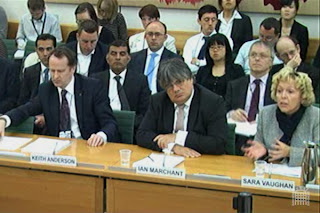
Keith Anderson of ScottishPower, Ian Marchant of SSE and E.ON's Sara Vaughan telling MPs the Government is bungling energy policy.

The bosses of the Big Six energy companies have slammed the complexity and pace of energy reforms being proposed by the Government for slowing the rate of investment in new plant which the country so desperately needs.

You thought that it was the Big Six energy bosses who, following extensive lobbying, were getting the proposals for reform they wanted in the new Energy Bill. It turns out that instead, they think that there has been too much ideological and political interference, and far too much delay.

The bosses were speaking to MPs in the Energy and Climate Change Committee during its first evidence session on the Draft Energy Bill, which contains the Government's proposals for electricity market reform and Contracts for Difference (CFDs). MPs want to know if these financial tools are effective particularly in supporting renewable energy and carbon capture and storage (CCS).

Keith Anderson, CEO of ScottishPower, told MPs that “this country used to be a fantastic place to invest in for energy because everyone had faith and trust that it was done in an evidence-based way". But this is no longer the case, and it is causing uncertainty and a hiatus in investment.

He spoke of the “massive amount of work" that was done in providing evidence during the lengthy consultation on the banding review for the Renewables Obligation last year, that came up with a lot of recommendations for the future.

“But then, since October, what we've seen is an awful lot of noise from politicians and in the media, and speculation about arguments between government departments that there will be political influence over the outcome of that consultation that it is not evidence-based, and this damages investor confidence."

Anderson called for more clarity, speed and confidence to be given by the Government. “There's a huge opportunity now for the UK to go out and grab a huge proportion of investment for renewable energy. Given the slowdown in our economy and in other countries I think right now is the time for the UK to put in place a very clear, long-term and robust framework," which should be “used to regenerate the economy".

However, he said that there is still a lot more detail required in the Bill, particularly on Contracts for Difference, and this was prolonging uncertainty amongst investors.

John McElroy, director of policy and public affairs at RWE Npower, agreed that as it stands, the Bill will not provide the confidence that investors need and requires a lot more work. "At the very least investors need to know how the capacity mechanism will work and when it will be triggered," he said.

“What we really want to see is the timetable moving forward and the government getting on with it," added Sara Vaughan, Director of Regulation and Energy Policy at E.ON. "There is already some slippage because we expected the bill to be introduced in May and it is now not going to be introduced till probably the end of the year," which will delay the secondary legislation as well “and that causes concern".

Carbon capture and storage

On CCS, Ian Marchant, CEO of SSE, said, frankly: “We do not know that this technology will work" and so developers "crucially need capital support at this stage to move beyond the demonstration phase".

He said that Government energy policy is predicated on assuming that it will work, but this is currently unknown.

Support for wind power

Anderson said finding investment for wind farms was more difficult in the UK than abroad because planning permission takes longer, land rental is more expensive and development costs are higher than elsewhere.

On the level of support for onshore wind, Marchant agreed that this should come down as costs reduce, and said that he doesn't get involved in bilateral discussions about the level of support. He said that he didn't like the way that discussions on nuclear and renewables were being conflated. “I do not believe that the returns being made on renewables are excessive" he added.

Call for more evidence

The Energy and Climate Change Committee, which today is on a fact-finding mission to the London Array and Gunfleet Sands Windfarms, has issued a call for evidence from the public on the economics of wind power, to be submitted by 27 June; there is to be a hearing on 10 July.

Tim Yeo MP, Chair of the Committee, said: “Government policy on wind power should be based on sound economics and engineering, not political pressure from a small vocal minority – whether that be green campaigners or anti-wind protestors.

“In this session we want to cut through all the hot air talked about wind power and examine whether the economics really add up. Wind farms are over forty times less polluting than gas burning power stations - per unit of energy produced - but there are concerns about the costs to consumers.”

Contracts for Difference

All the energy bosses agreed that they were in favour of Contracts for Difference because, unlike the Renewables Obligation, although it had many advantages, they will be able to support the massive increase in investment in renewable energy that is required in the coming years.

John McElroy agreed the Electricity Market Reform was too complex, and was taking too long to understand and finalise.

Sarwjit Sambhi, Director, Finance and Strategy at Centrica, owners of British Gas, said that the capacity payment was good for gas-fired generation, which was required in the medium-term.

Government “dishonest” on nuclear power

Marchant criticised the Government for trying to disguise their support for nuclear power, in doing so coming up against state aid rules, and called for “an honest and open discussion about whether the country needs it and what is the cheapest way of doing it as opposed to disguising it in a very complex set of proposals, so it actually doesn't have negative connotations."

Marchant described investment in wind power as much more manageable than in nuclear power, and preferable because it has a period of clean construction of two or three years. “Nuclear is a completely different animal. You have billions of pounds of investment and a build time of seven to ten years."

The MPs were also questioning whether there was enough provision for reducing demand for electricity in the Bill and the level of and exemptions to the proposed Emissions Performance Standard.

Thursday, May 03, 2012

Government energy policy splits laid wide open


Tim Yeo, MP

Veteran environmentalist MP Tim Yeo has called the energy minister Ed Davey and his department "weak",  and slammed tjhe Treasury,  and other departments for interfering in the UK's carbon-reduction and energy policies.

Speaking at today's UK Energy conference organised by The Economist magazine, Tim Yeo, Chair of the Commons Energy and Climate Change Select Committee, slammed the Treasury for constantly interfering with DECC's activities and policy development, confirming (which is news to no one who has been following environmental issues for 30 years) that the Treasury is not at all green.

He didn't stop there, but also laid into the Department for Communities and Local Governments, and the Department for Transport.

He labelled DECC a “weak department" for letting its policies be "crawled all over" by these three other departments and called Ed Davey a “junior partner" in any negotiations.

Referring to the carbon price floor as “the Treasury's latest wheeze" and “simply a way of getting more tax", he said that “the UK needs a carbon price signal not a carbon price floor, which is having the opposite effect to what George Osborne claims".

This is the first time there has been such open admission by an MP at a major energy conference of the existence of such high conflict between these government departments.

Yeo said that if Britain wants to be in the “premier division" internationally in 15 years' time, then energy needs to be higher up the priorities for the Government.

Despite this, he said that the required level of investment in UK energy infrastructure, of £200 billion by 2020 is “achievable", although he said there is no 'plan B' if we fail.

He said that the technology is already to hand to solve our energy crisis but that we don't yet have the right policies and price signals. He expressed alarm that firms like E.ON are pulling out of nuclear power in the UK.

While saying that the UK cannot rely on fossil fuels, whose price will rise due to rising demand, Yeo, a veteran Tory environmentalist, advocated that “we should exploit the shale gas resources we have in this country".

Yet in the same breath he said that replacing coal with gas “doesn't get us anywhere near the Committee on Climate Change 2030 decarbonisation target".

On fuel poverty, he said that it can't just be solved by changes to energy policy because it is also a Social Security issue.

Tony Cocker, Chief Executive Officer, E.ON UK, blamed a pause in investment on last year's review of the Renewables Obligation banding levels, and its (in investment terms) imminent demise in 2017.

Electricity market reform delay


Cocker, said that the UK needs the electricity market reform to happen speedily and not just be a “make do and mend" solution. "We are not asking for an extension of CERT and CESP we are pretty sure we can hit the targets" we have on fuel poverty, he added.

All the panel agreed that certainty was urgently needed on the planned reforms, especially in the light of alarming reports by the BBC last night that legislation on the topic would be postponed this summer to make room in the parliamentary timetable for reform on the House of Lords.

This was immediately denied by a Department for Energy and Climate Change spokeswoman, who said, “This is categorically untrue. We have said for some time that we intend to legislate for electricity market reform in the forthcoming session of Parliament”.

On the issue of energy pricing and investment, Cocker said of E.ON “We need the trust of our customers to create a sustainable energy system", somewhat ironically given the number of protesters outside the conference who were not permitted to enter.

He admitted that his company “needs more transparency on pricing and profits", and laid the gauntlet down by promising to put the extent of his bonus in the public domain.

The panel chairman, the BBC's Energy and Environment Analyst Roger Harrabin, earlier asked the organisers why protesters who had gathered outside the building, part of a Climate Justice day of action, were not being allowed in, and was told that the conference programme had been changed to reflect popular concerns about fuel poverty, and that they and grassroots organisations would be invited to next year's event.

Raising laughter, Mr. Harrabin summarised six months of energy policy in eight words as: “FiTs fiasco, nuclear no-show, wind whiplash and shale shivers".

Investment challenges


Speaking for the Carbon Trust, its CEO Tom Delay admitted that “sustainable solutions are difficult to invest in because they are capital intensive" and because of the uncertainty around costs.

He said that “light touch energy regulation" is deterring investment in “resilience, efficiency and an overhaul of the National Grid".

However, he advised that “it's dangerous to always focus on cost rather than investment"; it's the lifetime savings on bills that should be the chief criteria for investment decisions.

That is why the quick payback received from investing in energy efficiency makes it an “easier option" for large companies to be sustainable.

He slated UK building standards on energy efficiency for being too low, a decade or two behind those in Europe and North America.

Fuel poverty


The London School of Economics' Professor John Hill, author of last March's landmark Fuel Poverty Review, astonished the audience by explaining that under current definitions of fuel poverty, the Queen qualifies since over 10% of income is spent on fuel.

He said that a better criteria for fuel poverty is to measure the overlap between low incomes and high energy costs.

Friday, March 16, 2012

Wylfa nuclear newbuild favoured by Welsh Government; EDF abandons Heysham


Cardiff has announced that it expects to power Wales' future with a diverse range of low carbon technologies, including nuclear power, just as news emerges that EDF has cancelled plans for a new nuclear power station at Heysham, Lancashire.

The French company has annulled an agreement with the National Grid to set up any new connection to the grid from Heysham; all its plans for new stations are now focused on their sites at Sizewell and Hinkley Point.

Meanwhile, Wales expects to deploy new nuclear power at Wylfa on Anglesey as part of its transition to a low carbon economy, according to its new energy strategy, Energy Wales published yesterday.

This key policy document sees gas as the key transitional fuel because greenhouse gas emissions from it are "less than that of coal subject to the method of extraction". In the long term, it foresees the addition of carbon capture and storage to gas plants.

The document focuses almost exclusively on electricity, and to a lesser extent waste, almost neglecting the areas of heat and transport. It does share the UK Government's opinion that more electricity will be used in the future for transport and heating.

Its most controversial aspect is its support for nuclear power, the first time that the Welsh Government has been so unequivocal on this point.

Nuclear Wales

Energy Wales says the Cardiff Government supports the development of a new nuclear power station on Anglesey, which is being taken forward by Horizon Nuclear Power, a joint venture between E.ON UK and RWE npower.

The document uncritically repeats Horizon's claims that building a new nuclear power station at Wylfa B would "create around 800 permanent jobs and up to 5,000 during construction".

However, Horizon has not yet appointed the contractor to build a reactor on the site.

Both Areva and Westinghouse are in the running for this job. Westinghouse has warned that if Areva wins the contract it may call for an investigation under competition law because it would mean that Areva would secure the market monopoly, being already selected to build reactors for EDF Energy.

In addition, Westinghouse, owned by Toshiba of Japan, claims this would have a detrimental effect on jobs in Wales.

"It will have a permanent and significantly negative impact on the UK nuclear industry, jobs, manufacturing skills, supply chains and SMEs. Westinghouse have pledged to 'buy where they build' and source 70% UK content, Areva have existing supply chains in France and their UK commitment would be significantly less," says a legal document prepared on its behalf.

“There are undoubtedly risks associated with nuclear power but the risks posed by climate change are now so serious that we cannot dispense with a key proven low-carbon technology,” says the Energy Wales report.

This commitment was immediately criticised by Friends of the Earth Cymru, which said that it was the first time the Welsh Government had supported nuclear power in full.

"To believe that nuclear power can help build a prosperous Wales is misguided – renewable energy provides far more jobs than nuclear power per unit of energy generated,” said Gareth Clubb, its director.

Anglesey was the site over the weekend of a protest to mark the first anniversary of the Fukushima disaster in Japan by a group called People Against Wylfa B (Pawb).

But the energy document and support for nuclear power has won support from Plaid Cymru leadership contender Dafydd Ellis-Thomas and William Powell, the Liberal Democrat spokesman for Environment and Sustainable Development, who said the party accepted that non-renewables would continue to play an important role in Wales’ energy mix.

The international engineering and project management company AMEC has today been appointed by the Isle of Anglesey County Council as chief consultant for the Energy Island Programme, in a four-year contract with an unspecified value.

It will provide the Council with capacity and expertise in areas such as planning policy and development management, environmental impact assessment, consultation, Infrastructure Planning Commission (IPC) process and procedure as well as socio-economic regeneration aspects. The appointment recognises AMEC’s environmental, planning and engineering strengths in renewables and in the nuclear sector.

It is anticipated the programme could contribute nearly £2.5 billion to Anglesey and the North Wales economy over the next 15 years.

Renewables and energy efficiency

Energy Wales also sees a role for every other kind of renewable energy including the introduction of renewable bio-methane into the gas supply from anaerobic digestion, as well as for greater end use and conversion efficiency in space and water heating to reduce overall demand.

But little mention is made of Wales' vast resources of forestry timber for biomass generation of heat in the context of community heat and power generation.

The policy document vows to "relentlessly pursue energy efficiency so that we do more with less", but also exploit the principality's huge resources for marine and offshore wind power.

The Welsh Government is developing a Wales Infrastructure Investment Plan in which it will set out the strategic priorities for investment of what it sees as around £50 billion-worth of necessary low carbon electricity projects by 2025.

It expresses frustration that whereas some aspects of its legislature are devolved, such as planning, responsibility for large-scale energy development (above 50MW onshore and 1MW offshore) as well as the electricity transmission network that connects them, lies not with Wales but the UK Government.

It has commissioned Hyder to review current energy consenting systems, and its report is expected in the summer. Any necessary legislative changes will be fed into the Planning White Paper and subsequent Planning Bill. In the meantime it will continue to press for greater devolution of energy consenting powers.

Gerry Jewson, the chief executive of onshore wind energy firm West Coast Energy, said that the report showed that the Government "has listened to the representations of all stakeholders in Wales’ renewable future and has a real understanding of the issues" and called on "Cardiff to deliver action, not just aspiration".

He said that "specific and unambiguous commitments to targets for renewable technologies will be essential to focus the minds of planners and developers alike and catalyse the industry otherwise this good intent could be lost."

Other assets

Wales holds several major assets which are essential to the entire UK economy, such as the two LNG terminals at Milford Haven which are linked by a controversial pipeline to England.

It also holds deep sea ports which are potentially useful for establishing offshore energy infrastructure.

Although Energy Wales says that we "believe the development of the grid in Wales can and should be carried out in a way that is sensitive to its impact on our natural environment," no direct reference is made to the prospect of burying grid connection cables from onshore wind farms, a highly sensitive subject in Wales.

While the administration is opening its doors to developers to take advantage of a skilled workforce already with a tradition of the steel and coal industry, it expects developers to return the benefits of the investment to communities in Wales in the form of jobs, training and a share of the returns.

It sees a particular advantage in the fact that it can draw match funding from Brussels, such as through the European Regional Development Fund.

It points to its 'arbed' program and support the Anglesey Energy Island programme as examples of successful pilot projects, and sees that nuclear power on Anglesey as well as marine, solar, biomass, hydro and others can all play a part.

Launching ‘Energy Wales: A Low Carbon Transition’, the First Minister Carwyn Jones, said “Last year the renewable and low carbon sectors supported 29,000 jobs in Wales.

"I want to see these figures increase and see Wales securing the highest possible number of the 250,000 additional jobs predicted for the energy sector in the UK in the coming years."

Although renewable energy supplies only a little over 5% of Wales' electricity, 62% of this comes from wind and solar with a further 25% coming from thermal renewable generation and 13% from hydro generation.

Existing windfarms have a capacity of 562 MW, which will more than double next year when Gwynt y Môr offshore windfarm comes onstream to join a further 263MW from onshore developments.

On energy efficiency, Wales already has a comprehensive supply-chain, from manufacturing to installation, within its boundaries.

Insulation measures and micro-generation technologies are made in Wales by businesses including Rockwool, Knauf, Kingspan, and Sharp.

Wednesday, February 01, 2012

E.C. seeks more power over member-states' energy policy as Europe misses renewables targets

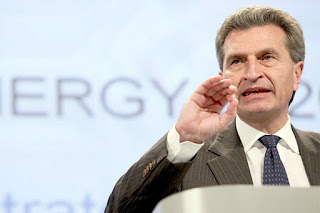
Günther Oettinger wants a pan-European energy market
Günther Oettinger believes lack of consistency and cooperation across Europe is the problem, and that more power in Brussels is the solution


European Energy Commissioner Günther Oettinger called yesterday for decisions on energy markets, security and renewable energy to be taken away from national governments and made in Brussels, as he admitted that Europe did not meet its 2010 renewable energy targets.

“These are strong arguments for giving [the EC] those powers,” Oettinger said in a speech to European policymakers. “In the next decade you would give greater value, or decide on a higher value for renewable energy in the [EU] energy mix.”

His call was supported by the President of the European Parliament, Martin Schulz, who said that European security and autonomy could only be achieved through more integration.

Under Article 194 of the Lisbon Treaty, individual EU member states have authority over their choice, use and structuring of energy resources.

In many countries this authority is jealously guarded because it is seen in terms of national security or as being politically useful during elections.

Several of them have still not transposed, or have only partly transposed, the the European Unions third energy package, intended to harmonise European markets into national. Furthermore, the energy mix of every state is qualitatively different.

Mr. Schulz acknowledged, however, that in the short term there would be no changes to Article 194. “The [energy] choice is made by member states and they are right to choose and we cannot get rid of that. But the right to choose your energy mix is a problem and we're going to have to talk about it a lot,” he said.

Renewable energy targets missed


Part of the reasoning behind the call is concern that the "20% by 2020" renewable energy policy goals will not be met.

Member states have just submitted their first reports to the European Commission outlining their progress towards meeting the targets, and most, including the U.K., missed them for 2010, as did the EU as a whole.

Only Denmark, Germany, Hungary, Ireland, Lithuania, Poland and Portugal expect to achieve their 2010 targets for renewable energy in electricity generation; and, only Austria, Finland, Germany, Malta, Netherlands, Poland, Romania, Spain and Sweden expect to achieve their targets for renewable energy in transport.

The European Commission said yesterday that it believes 2020 targets will only be achieved if member states fully implement their national renewable energy plans and more finance is available, which is not happening fast enough.

Oettinger believes lack of consistency and cooperation across Europe is the problem, and that more power in Brussels is the solution.

But Commissioner Oettinger's ambition doesn't stop there.

He also said yesterday that he wants to open talks on energy with Turkey in the current accession talks, and to enlarge Europe’s energy community to take in countries around its borders including Ukraine, Moldova, Georgia, Norway, Switzerland, Albania, Serbia, Montenegro and the Maghreb.

“Energy does not stop at the borders of the EU,” he stated.

Greater cooperation


Oettinger explained in his speech that he wants to see improved cooperation between member states and better integration of renewable energy into the single European market.

"We have to invest much more in renewable energy and we need smart, cost-effective financing. If Member States work together and produce renewable energy where it costs less, companies and consumers and the tax payer will benefit from this," he said.

To meet the renewable energy target, a doubling of annual capital investments in renewable energy is required throughout the continent, from €35bn per year to €70bn; this amounts to over one trillion euros between today and 2020.

Oettinger's Department says this will require "a substantial use of national support schemes", which "ought to be as cost-effective as possible".

A study released yesterday by the Department shows that, while different financial instruments are used in all Member States to develop renewable energy (grants, loans, feed in tariffs, certificate regimes etc.), "their management needs to be improved".

In an apparent jibe at the UK's recent policy about-turns it says: ″Retroactive changes to support schemes in particular must be avoided given the negative effect such changes have on investor confidence".

Once again it reiterates that investors need “greater coherence, clarity and certainty".

There are already three existing mechanisms which favour cooperation on energy between states:
  • "Statistical transfers" whereby one Member State with a surplus of renewable energy can "sell" it statistically to another Member State, whose renewable energy sources may be more expensive
  • "Joint projects" whereby a new renewable energy project in one Member State can be co-financed by another Member State and the production shared statistically between the two
  • "Joint support schemes" whereby two or more Member States agree to harmonise all or part of their support schemes.
The Commission says it will assess in 2014 the effective functioning of the cooperation mechanisms.

UK progress


The UK has so far not taken advantage of these cooperation mechanisms.

Its own Renewable Energy Directive Progress Report, submitted in December, shows that at the end of 2010 (the latest data available) 3.3% of its energy came from renewable sources.

Greg Barker, Minister for Climate Change, said yesterday he believed that this meant the UK is "currently on track to meet our first interim target of 4% over 2011-12".

The report adds: "we know the rate of deployment will need to be further increased to ensure we the meet the interim targets towards the end of the decade".

It is transport which is the particularly difficult area. 83% of the U.K.'s renewable fuel for transport is imported biodiesel, contributing to 3.3% of all the U.K.'s road fuels being renewable. The target is 5% by 2014.

In the latest example of action by individual states towards meeting the Directive's targets, Poland, notorious for its reliance on coal for electricity, announced yesterday that it will adopt a target of 15.5% renewables in its energy mix by 2020.

It said it is to switch support for investment in biomass, old hydropower plants and on-shore wind farms to solar energy, biogas plants, offshore wind generation and small hydropower units.

Deputy Economy Minister Mieczyslaw Kasprzak said he wanted to simplify and improve the support mechanism for renewables.

Wednesday, October 05, 2011

Renewable electricity touches 10% - and hardly affects energy prices

Wind, hydro and other renewables supplied 50% more electricity than in the same period last year, and now represent almost 10% of all electricity generated.

But there have been howls of protest from energy intensive industries, echoed by Goerge Osborne at the Tory Party Conference, that the cost of all the Government policies leading to this success is pushing up energy prices.

But the Government's own documents show this is not true.

Meanwhile, there is other good news in the latest quarterly energy figures, at least in terms of carbon emissions:
  • electricity consumption was 1½% lower than in the second quarter of 2010

  • fossil fuel dependency was at a record low of 85.7 %
  • .
  • the supply from coal in the second quarter of 2011 fell 2.3%, gas decreased by 18.3% and nuclear rose by 38.3%

  • in the second quarter of 2011 renewables accounted for 9.6% of electricity supplied, whilst nuclear supply exceeded 20% for the first time since the second quarter of 2006

  • the total electricity supplied by all generators in the second quarter of 2011 was 1.7% lower than a year earlier

  • final consumption of electricity for domestic use decreased by 3.7%.


This will all have the positive consequence of having reduced overall carbon emissions in the last year.

But prices have been rising. Average industrial gas prices, including the Climate Change Levy (CCL), were 34.1% higher in current terms in Q2 2011 compared to Q2 2010, whilst prices excluding CCL were 35.4% higher.

Average industrial electricity prices including CCL were 2.7% higher, coal prices were 11.9% higher, heavy fuel oil prices were 22.1% higher and the UK retail price for petrol was ranked sixth highest in the EU, with the UK diesel price the highest in the EU.

On the domestic front, electricity prices were 4.0% higher, domestic gas 6.2% higher and the price of heating oils a whopping 28.8% higher than Q2 2010.

Yet we can take some comfort that UK prices for medium domestic gas and electricity consumers, including tax, were the lowest and third lowest in the EU 15 respectively.

The cost of promoting low carbon energy


But is it true that a significant proportion of these price rises are due to Government policies to reduce carbon emissions?

Energy and climate change policies are funded by a mixture of levies and general taxation. Levy-funded policies (such as the renewables obligation (RO), feed-in tariffs (FITs) and warm home discount (WHD)) place the obligation of financing the policies onto energy companies which is then passed onto the consumer.

Estimates of how these levies impact the public finances were published in Budget 2011, and include for 2010-11 £0.7 billion from the Climate Change Levy and £0.6 billion from other environmental taxes, matched by a similar expenditure on these taxes.

The latest figures for the cost to the public purse for the development, construction and installation of low carbon electricity generation (latest figures) are as follows:

2009-10


The Renewables Obligation: £1.1 billion
R&D grants for renewable energy technologies: £90.1 million
R&D grants for nuclear related technologies: £35 million
Total: £1.225 billion

2011-12


R&D grants for anaerobic digestion technology: £1.3 million
Capital grants for renewable energy: £30.85 million
Feed-in tariffs: £10.7 million
Total: £42.8 million
(source: Parliamentary Answer by Charles Hendry, Minister of State for Renewable Energy, Energy and Climate Change, 15 Sept. 2011)

The Treasury of course keeps a cap on levy-funded spending by DECC.

DECC estimates that the impact of energy and climate change policies on average gas and electricity prices and bills paid by large energy intensive users compared with prices and bills in the absence of policies is a 2% rise this year rising to a 4% rise in 2020 for gas, and a 12%-20% rise this year and a 17% to 52% rise in 2020 for electricity.

This sounds like a lot. But, to put this into context, average electricity prices faced by large industrial users rose by a huge 45% in just two years between 2007 and 2009, largely as a result of volatile fossil fuel prices.

In addition, the wholesale fraction of the retail gas price faced by large energy intensive users (excluding the cost of carbon) is around 90%, and around 70% - 80% of the retail electricity price paid by these users.

Wholesale gas prices are expected to continue to rise, with forward market prices trading at 76p/therm in 2016.

The truth is that fossil fuel price volatility has been, and is expected to continue to be, a bigger driver of energy price variations than the impact of energy and climate change policies.

The proposals outlined in the Electricity Market Reform White Paper are supposed to mitigate the impacts of policies on prices and bills by reducing the costs of support for low carbon generation (compared with what the cost of the Renewable Obligation would have been in the absence of the EMR), reducing them by 2% in 2020 and 8% in 2030.

DECC makes the further point that looking at the effect on prices alone is misleading - it's the bills that count.

These will be lower in fact because of the effects of policies to encourage a reduction in consumption due to energy efficiency, which is greater than the effect on the bill from the increase cost per unit of retail gas (as a result of the Climate Change Levy).

Additionally, it is hoped that the introduction of a Carbon Price Floor (CPF) starting at £16/tCO2 in 2013 and rising to £30/tCO2 in 2020 and £70/tCO2 in 2030 will increase decarbonisation of the grid, and therefore improve price stability and increase energy security.

An updated assessment of the impact of energy and climate change policies on energy prices and bills for households and businesses and bills will be published alongside the Annual Energy Statement.

Around the same time the Government has committed to publishing details of its support for energy-intensive users.

So, if you're worried about high energy bills, the people who deserve the most blame are the fossil fuel suppliers, and there is no shortage of incentives and support to reduce the bills.

Osborne exposes Tory split on low carbon investment

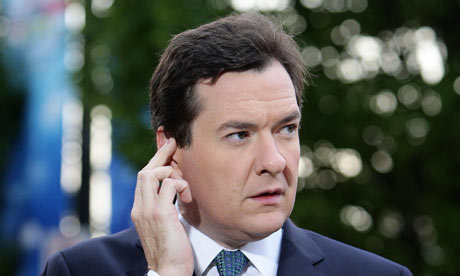
Goerge osborne at Tory Party Conference 2011
George Osborne has pledged that if he has his way in the Coalition Government, the UK will cut "carbon emissions no slower but also no faster than our fellow countries in Europe", causing dismay in the green business sector.

Yet most of his own colleagues in government disagree with him.

Speaking to the main body of the Conservative Party Conference he said "we’re not going to save the planet by putting our country out of business" and expressed his scepticism that investment in the low carbon sector could be a strong engine of recovery for the economy, arguing instead that it would thereby increase energy prices and hamper the recovery.

His reasoning is that "Britain makes up less than 2% of the world’s carbon emissions, compared to China and America’s 40%".

But this figure is wrong. In negotiations on climate emissions, the UK's responsibility is not for its current emissions alone but also for its historical emissions - as birthplace of the industrial revolution to which Osborne paid tribute in his speech and which has led to man-made global warming.

The UK's real responsibility is therefore proportionally higher than developing countries like China's current emissions: 5.11% of total global emissions up to 2005 (source: WRI, last date available).

Osborne added that "a decade of environmental laws and regulations are piling costs on the energy bills of households and companies", apparently ignoring his government's own evidence that by far the largest factor in high prices is volatility in gas and oil markets.

Events in Manchester are revealing a split in government on green policies that is more along traditional grounds than to do with differences between the Tories and their LibDem coalition partners.

At a fringe meeting about renewable energy yesterday, the Energy Minister, Charles Hendry, Conservative MP for Wealden, Sussex, said of the green revolution: "This is an incredible opportunity, and if we follow we will export jobs and import equipment."

Hendry also tried to calm worries on high energy prices by saying that the reform of the energy market, which the UK is currently planning (although it is over six months late in ratifying the EC Directive on energy market reform), will be done "at the lowest possible costs to consumers, because we never forget who pays the bills".

The Conservative Climate Minister Greg Barker also extolled DECC's policies to the audience of party faithful, talking up the Green Deal and Renewable Heat Incentive.

He called the Green Deal "world-leading" and said it will help bring down costs to consumers because "after all, the cheapest energy is the energy we don't use".

Osborne's opposition to carbon targets has been curtailed before, by David Cameron, who over-ruled him when the decision on approving the Climate Change Committee's fourth carbon budget was being made, but Osborne did manage to secure a review of the budget in 2014.

The Treasury is historically sceptical about green issues and has been criticised many times, most notably by Jonathan Porritt, former head of the Sustainable Development Commission, who has written: "The Treasury has in fact been the biggest single block on Sustainable Development in the UK, going right back to the UK’s first SD Strategy in 1994. It pursues its own agenda (regardless of who is in power), has no interest or expertise in SD, and (unless reformed) would make mincemeat of any new SD Minister."

Osborne's about-turn


But Osborne has previously expressed enormous enthusiasm for the idea of the Treasury leading the way on climate change.

Less than two years ago in this piece in the Independent Newspaper, he wrote: "I want a Conservative Treasury to lead the development of the low carbon economy and finance a green recovery."

He went on to explain in some detail how this could happen, including vowing that if government departments failed to take action to save energy, "a Conservative Treasury will simply give them less money to spend on energy bills. This isn't just good for the environment. It will save up to £300m a year. That's good for taxpayers too."

He then discussed how "a Conservative Treasury will drive green growth is by financing a green recovery" and spoke favourably about "how a Green Investment Bank can help kickstart our green recovery by providing green companies with the investment they need".

It's entirely possible that since then Osborne has been influenced by the Treasury mandarins, because in the same piece he says he will introduce "Green ISAs, a new tax-free savings product in which all the funds invested would help green our economy," an idea which was dropped under pressure from officials.

He has also been lobbied by the energy-intensive industries, such as metals and ceramics, and the CBI to reduce their costs from high energy prices.

To be fair, Osborne did argue for "investment in greener energy. And that’s why I gave the go ahead to the world’s first Green Investment Bank".

Tim Yeo, Conservative Chair of the cross-party Select Committee on Energy and Climate Change, speaking privately at the conference, also disagreed with Osborne's speech, saying, "I believe it is Britain's interests in the medium term to be a leader. Those countries will be the most competitive, not the least."

But Charles Hendry qualified his earlier enthusiasm and signified some sympathy with Osborne's view: "We should not go out on a limb," he said. "European capitals are not saying 'the Brits are doing this, so we will too'. They will rub their hands and say 'that's just making British Industry less competitive'."

However, he did say: "There is nothing in what George said today that would mean we want to pull back from a roll out of renewables."

This would be difficult, because the UK now has a legally binding commitment to rein in carbon emissions. Under the Climate Change Act 2008, there must be a reduction of at least 34% in greenhouse gas emissions by 2020 and at least 80% by 2050.

Paul Foote, the Managing Director of the Conservative Environment Network, a group within the party that argues for government policy to support private enterprise in tackling "critically important" environmental issues, said: "Osborne has betrayed a fundamental misunderstanding about how to make our recovery secure and sustainable".

DECC, a successful department which is demonstrating how LibDems and Tories can work together on a common platform, has to operate within the Treasury cap on spending and policy development.

Osborne's speech makes it clear that it has a continuing battle on its hands to fight its pitch, but it has plenty of support from within Tory ranks too.

What remains to be seen is which side David Cameron will choose to support in his next speech on the topic. Any sign of wavering on his previous commitment to be the "greenest government ever" will have clean energy investors walking away from the table to invest in other countries.

Saturday, October 01, 2011

Open letter to Ed Miliband: Don't be shy. You can do it!

Ed Miliband at the Labour Party Conference 2011
Dear Mr. Miliband

In the small amount of your speech to the Labour Party Conference that you devoted to energy, you observed that "we need investment" - with which no one would argue – and added that Labour would "build our economy not on low wages and high finance, but low carbon and high tech".

And in the following Q&A session, you said you "want my children to remember me above all for tackling climate change".

Fine words. But what exactly are the policies that might achieve this for Labour? You did not say.

Nor was there any hint from your Shadow Energy Secretary Meg Hillier in her speech, although she made a good job of lambasting the Government's record.

She reminded a fringe meeting that DECC is lampooned at Westminster for being the Treasury's poodle and listed the broken promises of the "greenest government ever":
  • "The Green Investment Bank - promised in Labour's manifesto, but hobbled under the Coalition. Delayed, and unable to borrow capital.

  • Research into bio-fuels - scrapped.

  • Zero Carbon homes - scrapped.

  • Charging points for electric cars - scrapped.

  • Low carbon businesses watching their orders disappear abroad.

  • A 'green deal' for home insulation which promises the earth, but few have even heard of."


My abiding memory of you, Miliband Junior, is from when you were Labour's Energy and Climate Change Secretary, at the COP15 Copenhagen climate summit, being interviewed by the disarming The Age of Stupid director Franny Armstrong - while standing on her head.

You were very relaxed and spoke with conviction about having ambitious goals for the climate change talks.

Around that time, you called upon anyone who cared about climate change to put pressure on the Government, because it was only when doing so that it felt it had a mandate to push for demanding more at top level negotiations such as Copenhagen.

It was a surreal moment. It was if the world – rather than Ms. Armstrong herself – had been turned upside down.

One felt that when politicians ask the people to protest - and even join them on a demonstration - it is an admission of how little power they honestly feel that they have.

It made you seem human, and indeed you were an approachable and enthusiastic Energy Secretary.

But is this what we want from prime ministers? Don't we want them actually to be superhuman - strong leaders who intuitively know what is the right thing to do, get on with it, and show us the way?

Instead, as you know, we live in an age of focus-group politics that gives the illusion of democracy but is still dominated by vested business interests.

So perhaps this is why you chose to attack "the dominance of the big energy companies" in your keynote speech.

Yet what, people listening asked themselves, would you do in government that is different either from what the Coalition is doing now or what you yourself did when in power?

Did you do anything to challenge what you called the Big Six "rigged market" then?

Actually, you did.

Remember 2009's Climate Camp at Kingsnorth power station, which campaigned against the threat of a new coal-burning plant which E.ON, one of the Big Six, wanted to build?

Just prior to this, you attended The Age of Stupid film premiere where actor Pete Postlethwaite ambushed you and threatened to return his OBE unless you refused permission for this plant.

One month later you announced that no new coal-fired power station would get government consent unless it can capture and bury 25% of the emissions it produces immediately – and 100% of emissions by 2025.

This, a DECC source told the Guardian, represented “a complete rewrite of UK energy policy” - one which has continued to this day, surviving a change of government.

That's an impressive achievement, because it was the right thing to do.

Why didn't you remind the conference of this in your speech. You might have said, "I've taken on an energy giant before, I can do it again".

The source of energy policies


Admittedly, your party is three years from a general election, and it doesn't need to have specific policies yet.

But if Labour wants to really break from the past, as well as break the dominance of the energy companies, you could do far worse than to get down to basics, throw away the rulebook, and take a long, hard, and fresh look at the evidence base upon which governments have built their energy and environment policies for the last ten years.

Only then will you be able to reconstruct a legitimate yet radical new policy that has credible foundations.

This evidence base, as it is now, rests to far too great an extent on the commissioned research of external consultants.

These well-paid and influential firms toil in the relative shadows of government and produce reports full of cost-estimates and scenarios that 'prove' the relative worth of different policy choices - for example alternative energy mixes - which subtly nudge officials and ministers into weighing down on one policy side rather than another.

I'm talking about firms like Redpoint and Trilemma, who have produced and are continuing to produce reports for DECC on topics like the reform of the Renewables Obligation and other renewables and nuclear power support schemes.

The actual bases for their figures are often shrouded in mystery, and quite possibly pulled out of thin air, as they try to guess what energy prices will be in five, ten, fifteen years time. Who really knows?

Yet the reports which are based on them are given the aura of great authority by subsequently becoming embedded in the superstructure of the Government's energy policy.

But who are these firms? They consist of a few self-selected individuals who have set themselves up as 'experts'.

If you look at the credentials and CVs of the firms' directors, you will see that their backgrounds are almost exclusively in either the fossil fuel industries or asset management or both.

And, for example, Redpoint's other clients include EDF Energy, Centrica, ESB, GE, Statoil, Vattenfall, and Shell. Are these names familiar? Remember the "rigged market"?

What a different set of energy policies do you think Labour might generate if it asked for figures and evidence from other types of experts? From independent academics, for example, from scientists or from 'the wisdom of crowds'?

Since, Mr. Miliband, you like campaigners, you might choose to study the research of NGOs such as WWF, Greenpeace, Forum for the Future and the Centre for Alternative Technology, who have all developed detailed scenarios for moving towards a zero carbon sustainable future, have no vested business interests, but instead memberships of hundreds of thousands of ordinary people.

The people who might vote for you.

Failing that, you might want to listen to the voice of Parliament's own Select Committee on Energy and Climate Change, which has taken evidence from hundreds of expert witnesses over the years.

In my opinion, this cross-party group has consistently come out with the sanest of policy advice, only to have it largely and politely ignored by the Lower House.

So, which 'expert evidence', Mr. Miliband, will form the basis for your policies? You pay your money, you take your choice.

By the way, Ed, you said in your speech that energy prices always seem to go up, not down.

In fact this isn't true.

The Department for Energy and Climate Change records average energy bills, and although these have risen in real terms over recent years, there was actually a fall between 2009 and 2010.

And who was Secretary of State for Energy and Climate Change then?

Step forward, Ed Miliband. Don't be shy.

Either you have a short memory, or you are far too modest ever to stand a chance of being Prime Minister.

You need to do more to remind people of your successes, and have the courage of your convictions.

Monday, October 12, 2009

The Tories' mad energy policy

With the relief that EON decided not to build its coal-fired power station at Kingsnorth last week, it is with dismay that we also heard the Tories policy which is to initiate the building of 5 GW coal power stations as soon as they take office.

Labour may not be much good, but the Tories would be a disaster for energy policy. Railroading big business interests through planning to an even greater extent than Labour, under the pretext of environmentalism.

There's perhaps one good policy and that is the right for every community hosting wind farms to keep for 6 years the business rates generated.

It is the fact that local communities have felt ripped off by big developers not caring about their interests that has held back wind farms in this country.

But a real revolution would be for community owned wind farms to be massively supported as they have been in Denmark for many years, as a result of which there has not been the level of public antipathy towards wind farms that there has been here.

It is the stop-start nature of British energy policy under the NFFO policy that has created this antipathy because only the big developers could stay the field and community developers were squeezed out.

The other Tory policies are to give every household in the country £6,500 to upgrade the energy efficiency of homes; and publication of the planning guidance needed for new nuclear power stations.

The first is limited: some homes will cost more to upgrade than others, and the financial support should be in the form of loans that are paid back on the property from the energy savings created.

Housing authorities also need support to do a mass roll out of renovations of particular districts and streets at the same time which is more cost effective.

It is my argument that we can do without nuclear power because it is not cost efficient and the timescale is too great. The figures produced by the nuclear industry cannot be trusted. Taxpayers will end up supporting the industry to an extent that we can afford even less now than we could before.

"Clean coal" relies on carbon sequestration which is an unproven technology that will be incredibly expensive to implement.

EON gave as their reason for not going ahead with Kingsnorth a reduction in electricity demand. If electricity demand is further reduced by a mass roll-out of energy efficiency making everybody's bills cheaper (hooray!), then why would we need to build all these power stations anyway?

The catch 23 of electric cars


Ah - is it so that we can have an electric cars? But that's robbing Peter to pay Paul! - it's a more efficient use of fossil fuels to burn them directly in a car than it is to burn it in a power station and use the electricity to drive a car.

Why? The output from a coal-fired power station fitted with carbon sequestration is around 10% less in efficiency than one without - so you will only get 20-25% of the original energy in the fossil fuel from such a power station at the plug in your wall.

By the time you have factored in the conversion factors inside the engine of the car converting that electrical energy back into motor energy, you will be lucky to get 10%. Whereas around 50% off the energy in petrol or diesel goes straight into transmission.

The only way of implementing electric cars that makes any sense is if they are fuelled from renewable electricity generated locally to the charging point to minimise transmission losses. That means building more solar, tidal and wind.

Wednesday, November 28, 2007

The dire threat to the European renewables industry

I don't often quote other peoples' blogs, but this is vital, as it's about the heart of the battle for control of UK and European energy policy.

A few of days ago I was talking about feed-in tarriffs. Defra press office's little joke at BERR's expense was the tip of the iceberg of a bitter dispute at the heart of UK energy policy development.

This battle sees support for new nuclear build, gas and carbon capture pitted against support for renewables, in which a feed-in law should have a rightful place.

As we're going to miss our renewables targets, the UK (BERR) is pushing in Europe for a grossly inefficient use of voluntary credit purchases to make up its renewables shortfall.

It works, according to Miguel Mendonca, a policy officer for the World Future Council and author of Earthscan title 'Feed-in Tariffs: Accelerating the Deployment of Renewable Energy' (May 2007), like this:

The Government will be resurrecting civil nuclear power — just as seven of the UK's 16 nuclear power plants are currently off-line for repairs and maintenance.

Support will also be given to carbon capture and gas infrastructure.

(NB: British unions are well represented in the conventional energy industry, with coal and nuclear carrying significant union membership. The UK renewables industry has no union.)

A harmonised set of certificates of origin (guarantees of origin, or GOs) will be designed; for each kWh of green electricity produced, the producer can ask a competent national body to issue a green certificate.

This can be traded and will be counted towards the national target in the country into which the certificate is sold.

The country from which the certificate originates will not be able to count it under its own national target achievement plan.

The opposition to feed-in is entrenched in the conventional energy industry.

They (Eurelectric et al) have mobilised a fresh campaign against feed-in.

The UK's energy companies are mostly owned by German and French utilities (such as E-ON, RWE and EDF) — who all oppose feed-in, but some welcome the opportunity for large profits from wind farms.

They vigorously defend a domestic system which blocks out everyone except the biggest investors, themselves — the reverse of what a feed-in system achieves — and lobby in Europe for a system which will undermine everyone else's renewables systems.

The only winner can be the conventional energy industry.

Miguel concludes: "It seems clear that the renewables industry here is still far from safe, with national governments and energy giants working behind the scenes to keep the industry in check, or worse."

Until the new draft Directive emerges in January, we won't know the fate of renewables here.

> Read Miguel's full article here