Showing posts with label George Osborne. Show all posts

Monday, June 10, 2013

Exposed: Fossil fuel connections of ministers who voted against the decarbonisation target

38 of the ministers who voted against the amendment to set a decarbonisation target for 2030 last week in the House of Commons have received support from, or are in some way connected to, the fossil fuel industry.

Together with other accusations of influence by lobbyists on MPs, and the alleged giving by Tim Yeo of advice to a rail freight company seeking to influence Parliament, the revelations give fresh impetus to calls for MPs and ministers not to get involved in decision-making on matters in which they have an interest.

The list, together with their connections, is published at the bottom of this article. It is noteworthy that none of the ministers with connections to the fossil fuel industry voted for the decarbonisation target.

The list comes from cross-checking the list of those who voted against the amendment with the list of ministers with such connections published in March by the World Development Movement, which itself had collated it from numerous publicly available sources.

The WDM's exercise found that one third of all 125 government ministers have such connections.

This does not account for any connections held by backbench MPs, such as Peter Lilley, who voted against the amendment. He, for example, is a non-executive director of Tethys Petroleum Ltd, as well as having been paid £22,462 in July 2011 for giving advice to Ferro Alloys Corporation Limited on the management and flotation of a power generating subsidiary.

Top ministers with fossil fuel connections include William Hague, Vince Cable, George Osborne, Michael Fallon and Greg Barker. They all have links with big finance, oil and coal companies that are driving climate change.

Foreign secretary William Hague, who used to work for Shell, helped Tullow Oil escape paying a £175m tax bill in Uganda, one of the world’s poorest countries. Mr Hague made a personal phone call to the Ugandan president on Tullow Oil’s behalf.

Vince Cable, secretary of state for business and skills, in charge of regulating companies, worked for Shell and was referred to as "contact minister for Shell" by a top Shell executive in 2012.

His business and now also energy minister, Michael Fallon, was an independent non-executive director responsible for inter-dealer broking (until 2012) of Tullett Prebon plc, specialising in Energy & Commodities.

Chancellor George Osborne accepted donations worth £38,000 from the head of CQS, a hedge fund that channels millions of pounds into climate-warming energy. Also, his father-in-law, Lord Howell, is president of the Shell and BP-funded British Institute for Energy Economics. Lord Howell was a Foreign Office minister until 2012.

Energy minister Gregory Barker, who shamefully voted against the amendment, has been the head of international investor relations for Anglo Siberian Oil and Sibneft, a Shareholder in New Star European Growth Fund plc and Henderson High Income Trust plc and corporate finance director of the Australian-owned International Pacific Securities.

The vote on the amendment would have been different if just 12 MPs had voted differently.

It would be in the interests of democracy, let alone the planet in this case, that MPs should be barred from voting on matters in which they have a financial interest.

By the way, mandatory carbon reporting introduced by the government will force fossil fuel companies to disclose their carbon footprints, but banks and other institutional investors will not have to declare the emissions arising from their loans and investments.

Yet without them, big oil, gas and coal companies like Shell, BP and Rio Tinto would not be able to raise billions from pension funds, banks and other financial investors based in the City of London and beyond.

By including these ‘financed emissions’ in mandatory carbon reporting regulations, Vince Cable could force financial institutions to disclose their full carbon impact and fully expose the degree of exposure that these institutions have to the carbon bubble.

The 'carbon bubble' is the name given to the assets held by these institutions which may become worthless if they are not allowed to be exploited by national or global level agreements to curb global warming.

It is therefore in the interests of these companies themselves to account for the impact of such investments.

The lists:

Here is the list of ministers who voted against the amendment, together with their connections to the fossil fuel industry:

Gregory Barker Anglo Siberian Oil (1998–2000) Head of International Investor Relations for Sibneft (1998) 50 Shareholder in New Star European Growth Fund PLC and Henderson High Income Trust PLC.51 Corporate Finance Director of the Australian owned International Pacific Securities
Vincent Cable Chief economist and other positions at Shell International (the world’s most carbon intensive oil company: A leaked memo addressed to Cable from Shell’s chief executive referred to him as “contact minister for Shell”) (1990-1997).
David Cameron Accepted £10,000 from Jonathan Green of hedge fund GLG Partners. GLG is a frequent investor in fossil fuels. Accepted £10,000 from Mark Foster Brown of hedge fund Altima Partners (2005), which deals in fossil fuel shares, including Cadogan Petroleum and Lonrho plc,29 which is a multi-sector company involved in building port terminals in Africa “to support the oil and gas industry"
Kenneth Clarke Director of Foreign and Colonial Investment Trust plc (until 2007)
Nick Clegg Accepted £9,000 from Neil Sherlock, head of public affairs at auditors KPMG (2006-2008)
Michael Fallon Director of Tullett Prebon Plc (independent non-executive); inter-dealer broking (until 2012)
Robert Goodwill  Shareholding in Barclays, Gazprom and Lukoil. Accepted £11,000 donation from Mountboon Investments Ltd financiers (2010)
Dominic Grieve Total shareholdings of more than £240,000 in Anglo American, Standard Chartered, Rio Tinto and Shell
Michael Gove Accepted £10,000 donation from Aidan Heavey, founder and chief executive of global gas and oil company Tullow Oil(2010)
William Hague Worked for Shell UK (1982-83). Accepted over £25,000 in non-cash donations from CQS
Stephen Hammond Director Commerzbank Securities (2000–Present) Has shareholdings in Peal Gas Ltd
Greg Hands Worked or three different firms in an eight year banking career. (1990-97)
Matthew Hancock Payment of £3,000 from UBS AG for speech (2011)74
Mark Hoban Payment of £1,300 from JP Morgan Chase for speech (2010)76
Nick Hurd Represented a British bank in Brazil (1995-1999).
Sajid Javid Directorships and other senior positions at Deutsche Bank AG, (2000-2009), JP Morgan Partners LLC (1997-2009) and Chase Manhattan Bank (1991-1994)
Jo Johnson Investment banker at Deutsche Bank (until 1997)
David Lidington Worked for BP (1983-86) and Rio Tinto (1986-87)
Mark Lancaster Management consultant at Palmer Capital a privately owned venture capital and fund management business. (resigned 2012)
David Laws Vice President JP Morgan’s Treasury Division (1987-1992) Managing Director Barclays De Zoete Wedd (1992-1994)
Maria Miller Marketing manager Texaco (1990-1994)
Francis Maude Member of Barclays’ Asia-Pacific Advisory Committee. (2005-2009). The Conservative Party’s Implementation Team which reported to Maude also received significant donations in kind from accountancy firms KPMG, PriceWaterhouseCoopers, Ernst and Young and Deloitte.
Theresa May Shareholdings held by self and spouse in Prudential Corporation plc. Accepted donation in kind from Michael Hintze who runs the hedge fund management firm CQS Asset Management. (2009)
David Mundell Accepted £5,000 from Caledonia Investments PLC investment trust. (2010)
George Osborne Accepted donations and donations in kind from Michael Hintze of CQS hedge fund worth £38,700. Leading beneficiary of donations in kind to the then shadow cabinet from audit firms KPMG (£62,500) and Deloitte (£60,000) both of which have specialist oil and gas departments. (2009) Also, his father-in-law, Lord Howell, is president of the Shell and BP-funded British Institute for Energy Economics. Lord Howell was a Foreign Office minister until 2012
Andrew Robathan Worked for BP (1991-92)
Desmond Swayne Manager of Risk Management Systems at the Royal Bank of Scotland and other senior positions (1989-1997)
Elizabeth Truss Commercial manager at Shell (1996-end date unclear)
David Willets Senior advisor to Punter Southall a leading actuaries and actuarial consultants.

This is a list of other ministers who were absent for the vote, but who also have such connections:

Alan Duncan
Oil trader and other positions at Shell (1979-1992) Consultant for Vitol.
Philip Dunne SG Warburg (1981-88) Former Managing Director of Lufkin & Jenrette a US investment bank.
Philip Hammond Director of Consort Resources Ltd later purchased by Caledonia Oil and Gas (1999-2003)
Oliver Letwin Directorships and other senior positions at Investment bank NM Rothschild (1986-2009)
John Nash Assistant Director Lazard Brothers and Co Ltd (1988-1989)
Hugh Robertson Assistant Director and management head Schroder Investment Management (1995-2001)

Finally, here is a list of ministers in the House of Lords with such connections: Lets see how they vote when the Energy Bill comes before them:

Lord Ahmad of Wimbledon
Senior positions at NatWest, Alliance Bernstein, and Sucden Financia (1991-present)
Lord Deighton Chief Operating Officer for Europe and other positions at Goldman Sachs. (1983-2005)
Lord Freud Vice-chairman and other senior positions at S G Warburg (later known as UBS Investment Bank) (1984-2003)
Lord Green of Hurstpierpoint Chairman and other senior positions HSBC (1992-2010)
Earl Howe London director of Adam & Co. plc (1987-1990)

Friday, November 23, 2012

This Energy Bill is all about tax revenues from North Sea gas


The Energy Bill compromise is about revenues to the Treasury to help pay off the budget deficit before the next election.

The position on renewables in Britain stands in stark contrast to that north of the border.

The Scottish Government is hoping for independence after 2014. 90% of Britain's oil and gas is in Scottish territory. The Institute of Fiscal Studies is arguing that revenues after the possible independence would be split between the two nations proportionately on the basis of population.

But oil and gas production dropped 18% last year. It will continue this inexorable decline in years to come.

The Scots know this. That's why they are aiming for 100% renewable electricity by the end of this decade. They reckon they will even have more to spare. Perhaps to sell to England and Wales. At this rate, England and Wales are going to need it.

Perversely, George Osborne, David Cameron and the rest of the Conservatives are determined to hitch the UK's wagon to Qatar, from which most of our gas flows: there was a moment two weeks ago when almost 100% of Britain's gas fired power stations were running on gas imported from that Arab country.

But why would they do that?

Many authorities have commented on the volatility of gas prices. They are only likely to rise, affecting each and every one of us and the economy as a whole.

The Committee on Climate Change, in its report, Household energy bills – impacts of meeting carbon budgets, said "Of the total £455 increase [in typical household energy bills between 2004 and 2010] (i.e. 75%, compared to general price inflation of 16% over the same period), by far the largest contributor was the increase in the wholesale price of gas, which added around £290 to bills.”

And Ofgem agrees. In Why are energy prices rising?, we read: “Higher gas prices have been the main driver of increasing energy bills over the last eight years”.

But, forget this. Forget, even, Qatar. This decision is directly related to what the Exchequer receives from North Sea gas extraction.

A dash for gas means a market for Scottish-English gas as well. High gas prices mean higher revenues for the Treasury.

I have prepared this chart of Government revenues from UK oil and gas production, available from figures published here.

North Sea Gas and oil Revenue

Most of this revenue comes from the Ring Fence Corporation Tax, rated at 30% and separate from other corporation tax, which was introduced under New Labour. This prevents taxable profits from oil and gas extraction in the UK and UKCS being reduced by losses from other activities or by excessive interest payments.

It explains why George Osborne gave away £500 million towards further gas and oil offshore exploration in September. As he said at the time, it's because he will get it back in spades from revenue to come: “It will give companies the incentive to get the most out of older fields, creating jobs and delivering more revenue for taxpayers.“

The revealing thing is what happens if you plot oil and gas revenues against total tax revenues.

Then we find, that in the crunch tax year, 2008-2009, oil and gas revenues were at their highest as a proportion of all tax revenue: 2.56%.

As the recession hit, it fell again. The following two years it was at 1.37% and 1.67%, but it has begun to rise again to 2.04% in the current financial year. There have only been three years in the last 20 when it is gone above 2%.

Here are the full figures:

Year% of revenue from oil and gasTotal revenue (£bn)
00/011.24359.3
01/021.47369.1
02/031.37375
03/041.08397
04/051.21427.1
05/062.05456.8
06/071.84486
07/081.45516
08/092.56508
09/101.37477.8
10/111.67528.9
11/122.04550.6
12/131.7569
13/141.34599
14/151.19633
15/160.92664
16/170.85704


Treasury predictions for the next four years show this percentage to fall dramatically, but this is only because there are wildly optimistic expectations for tax revenue to increase in this period, to £70.4 billion in 2016/17, compared to £55 billion in this financial year.

Now consider this: renewable energy does not provide such an income. In fact it’s a cost, because of the subsidies.

Conclusion: the Energy Bill compromise is not about what happens after 2020. That couldn’t be further from Osborne’s mind. It's about revenues to the Treasury to help pay off the budget deficit before then.

To put it bluntly, it's about who wins the next election, since it will most likely be determined by how well Osborne has managed the economy.

Monday, October 08, 2012

Davey goes for gas as €9.5 billion price rise forecast for 2013

Ed Davey at Gastech
 Ed Davey at Gastech today.

Rising gas and power prices will cost European industrial energy buyers an additional €9.5 billion in 2013 according to new forecasts.

The news comes on the day that major corporations including BT and Microsoft are urging George Osborne and the Conservative Party to do more to support renewable energy, and Ed Davey told the GasTech conference about his commitment to gas.

€4.2 billion of these forecast price increases will be due to hikes in gas prices, and €5.3 billion to growth in the price of electricity, market consultants EnergyQuote JHA, will say at their biannual energy price forecasting conference which begins on Wednesday.

UK consumers will see an increase of between 5% and 7%. This is not the highest in Europe by any means: the Dutch will find prices 12.5% higher and Germany Austria and Belgium businesses will face increases of over 10%.

Britain is in the process of approving a number of new gas-fired power stations, which would leave the nation at the mercy of such future price increases. Ed Davey, Energy Secretary, has said that up to twenty could be built over the next two decades.

He told the Gastech Conference & Exhibition this morning that gas will be important even through to the 2040s, and said the sector needed £110 billion of investment in power generation and transportation to 2020.

He said a new generation of gas-fired power stations must be built ready for carbon capture and storage. “CCS matters not only for the continued use of gas in the long-term in the UK; it is also vital for cutting emissions globally. And as we prove the commercial viability of CCS, we have the chance to create in that process an exciting export opportunity for companies that become early leaders in this technology.”

He also said that he is waiting for evidence on the viability of shale gas in the UK before making a decision about it.

He was followed by BG Group's CEO, Sir Frank Chapman, who said: "We must prove that gas is the 'destination fuel' of the low carbon economy".

A new 880 MW combined cycle gas turbine (CCGT) power plant, which will be built by engineering consortium Alstom Duro Felguera and Carrington Power, secured financial support for its development in Manchester last week.

That the gas industry is in buoyant mood is evident at its industry conference, which is happening this week at ExCeL London.

Tomorrow, the conference is being attended by Russian Energy Minister Alexander Novak, giving his first press conference in the UK since he was appointed to the role in May this year. He will be anxious to promote the advantages of Russian gas.

He is being accompanied on his visit to this country by Alexey Kalinin, who, as Rosatom’s Head of International Business, represents another Russian energy sector, nuclear power, that is anxious to sell into Britain.

He will be speaking about Rosatom’s willingness to develop a new nuclear skills base in the UK, to an audience at a Centre for Policy Studies Fringe Meeting during the Conservative Party Conference, that will include John Hayes MP, the new Minister for Energy & Climate Change.

Whether Britain builds a new generation of gas-fired power stations, new nuclear plants, or invests further in home-grown renewable energy, will determine not just the price of energy in the future, but UK energy security and whether the country will meet its 2050 carbon emission targets.

Major companies lobby Osborne


Over 50 companies, investors and industry bodies, including EDF, BT, Microsoft, Marks & Spencer's and PepsiCo, are signatories to a letter sent to George Osborne, David Cameron and other senior Tories today, warning that sending out mixed signals on energy policy risks undermining investment in renewable energy.

They back the setting of a 2030 target for decarbonising the electricity sector, which is urged by the Committee on Climate Change, because reliance on gas beyond 2030 would be incompatible with meeting legally binding emissions targets set under the 2008 Climate Change Act.

“It is essential for government to provide investors with the long-term confidence they need to transform our electricity market and make investments capable of driving wider economic growth,” the letter says, going on to warn that the Government's commitment to green power is being “undermined by recent statements calling for unabated gas in the power sector beyond 2030”.

"Failure to act at sufficient scale and pace will undermine our prosperity and cause us to miss out on the huge commercial opportunities associated with the global shift to a low carbon, resource efficient economy," it says.

The letter is organised by the Aldersgate Group.

Decarbonisation target


The Financial Times is reporting today that utility company SSE also supports a 2030 carbon intensity target, because it “could provide much-needed certainty for low-carbon investors, showing developers that the government is committed to decarbonisation in the long term”.

Both Labour and the Liberal Democrats are in favour of a 2030 decarbonisation target of 50g CO2/kWh, which will be set in the context of the Energy Bill that will be laid in final draft before Parliament towards the end of the year.

Ed Davey's recent thinking is that there should be such a target, but within it there should be some flexibility. He reportedly wants to see a target range for different sectors.

This is a model also being considered for an amendment to the Bill by Friends of the Earth.

This would stipulate a general 50g CO2/kWh by 2030 target, but allow for flexibility within the context of an overall 2050 carbon target. The fixed target would be invoked in primary legislation, but secondary legislation could support different targets for, say, transport.

This would take the burden of responsibility away from resting solely upon the energy sector.

The environmental lobby body is cautious however. Donna Hume, FoE's energy campaigner, has warned that adopting a decarbonisation "range" instead of a specific target could result in the UK failing to deliver the necessary emissions cuts.

"A decarbonisation target would provide greater clarity on the direction of travel for many renewable energy businesses after 2020," she said. "It would also ensure it was a more democratic and transparent process."

Friday, September 14, 2012

Government should set a 2030 decarbonisation target

Osborne's Liberal Democrat deputy, Danny Alexander
George Osborne's Liberal Democrat deputy, Danny Alexander will call for a target and criticise his boss's attitude to low carbon tech at the Lib-Dem party conference.

The role of gas-fired generation and the setting of a 2030 decarbonisation target for the electricity market has become the focus of a bitter battle between Lib Dems and George Osborne.

Yesterday, Edward Davey, Secretary of State for Energy and Climate Change, responded to a letter from the Committee on Climate Change, signed by its new Chairman, Lord Deben, criticising the recent Government statement that gas would continue to play an important role in the energy mix beyond 2030, not restricted to providing backup to renewables".

The letter added that this position could be illegal under the Climate Change Act 2008, and “weakens the signal provided by carbon budgets to investors" in clean tech.

It also recommends the setting of a clear carbon emission objective for electricity market reform, of around 50g of CO2 per kilowatt-hour by 2030.

Earlier this year George Osborne ruled out such a measure, expressing concern that such a target would undermine investor confidence in the gas industry, which he wants to build up.

In short, the argument between Osborne and DECC is about whether investment should be predominantly directed into renewables or gas. Gas, being cheaper, is favoured by Osborne.

But it is also an argument between the Lib Dems and Conservatives. Osborne's Liberal Democrat deputy, Danny Alexander, has signalled that he will call for a 2030 decarbonisation goal to be implemented when he speaks at the party's conference in two weeks.

He will also use his speech to attack the Conservatives for not acknowledging the economic benefits of investing in low carbon tech.

In reply to the CCC letter, Mr Davey, who this week adopted responsibility for renewables policy that was previously the ex-energy minister Charles Hendry's brief, issued a statement.

This said that a target is "under consideration" but argued that the Government's "existing plans are consistent with significant decarbonisation of the power sector".

Davey is known to believe that a limit on carbon emissions from the sector could be achieved using a statutory instrument instead of being included in the Energy Bill.

Osborne is currently sanguine about DECC's consultation on a carbon emissions limit for 2030, because he doesn't think it would make a material difference in practice.

But Davey's ace in his hand remains the carbon budgets that have been agreed by Parliament, which could trump Treasury policy provided that it is played with a strong suit.

Davey's response to the Committee's letter emphasises this, that the statutory carbon budgets that are set by the Committee, and agreed by Parliament, underscore all policy and planned market reforms.

“We have always said [our reforms] will include gas fired plant," the statement says, “which is quick to build and flexible." But "after 2030 we expect that gas will increasingly be used only as back up, or fitted with Carbon Capture and Storage technology.

"Alongside up-scaling of renewables, nuclear new build, and eventually with carbon capture and storage, gas has an important role to play in the transition to a low carbon grid."

But how much gas generation could be installed and still permit the UK realistically to meet its carbon budgets?

“Our numbers show that we can accommodate around 30 to 45GW of unabated gas over the next twenty years and still hit our carbon targets, but any further fossil fuels will need CCS, which is not yet commercially viable," Davey said on Wednesday.

This means over a dozen new gas-fired power plants in the next 15 years.

While the Committee's letter was greeted with approval by the clean tech sector, this response by Davey has been met with scepticism.

Utility company SSE tweeted that, contrary to the Treasury view, a "2030 decarbonisation target in EMR would provide much-needed certainty for low-carbon investors and developers".

Climate and energy campaigner for Greenpeace, Joss Garman, calculated that “where you have as much as 45GW of unabated gas in 2030 (and if you assume demand by then of around 420TWh), this would require that all those gas stations are only operating for 15% of the time if we are to keep on track with carbon targets. It also requires all of the UK’s coal stations are shut down or operating with fully functioning Carbon Capture and Storage (CCS)."

"The UK is already over-reliant on gas, which was the main driver behind recent energy bill rises," said Keith Allott, head of climate change at WWF.

The cross-party energy select committee, led by Tim Yeo, has also reiterated calls for a 2030 decarbonisation goal.

“Our gas generation strategy work is about providing certainty to investors to ensure sufficient investment comes forward, whilst also living within our legally binding carbon budgets,” concluded Ed Davey's statement.

To Garman and the other objectors, this seems like trying to have your cake and eat it.

Wednesday, July 25, 2012

Davey buys £20m for onshore wind in exchange for £500m for gas


Subsidies for onshore wind farms will be reduced by 10%, not the 25% demanded by the Treasury, says Energy Secretary Ed Davey, but at a long-term cost to carbon emissions.

To win this agreement, the Department has had to concede that gas generation will continue "to play an important part in the energy mix well into and beyond 2030, while meeting our carbon budgets".

This "important part" is ensured with a grant of £500 million for gas field exploration. To put this in context, the dispute between the Treasury and DECC centred over a difference of around just £20 million in support for 1GW of onshore wind.

The effect on greenhouse gas emissions after 2030 is likely to be alarming. David Nussbaum, chief executive of WWF-UK, sent a letter to David Cameron yesterday, complaining of "a clear bias on the part of Mr Osborne towards investment in new gas-fired power stations" which would imperil the UK's climate targets and could raise bills for consumers.

“The proposal that emissions from gas plants built before 2015 will effectively never have to limit their emissions jeopardises our ability to meet UK carbon targets," he said. “The announcement on this, which was slipped out late on a Friday and which had the Chancellor’s fingerprints all over it, is another example of the Treasury’s malign influence on energy policy."

John Sauven, Greenpeace's executive director, also commented that: “The Treasury is fighting tooth and nail to oppose a 2030 decarbonisation target or support for future renewables targets. Mr Osborne has rebranded himself Mr Polluting Gas. It's up to Nick Clegg to stick what's left of Lib Dem principles back into this process."

£25 billion investment

However, marine energy developers will celebrate a 250% increase in their support from 2 ROCs (renewable obligation certificates) to 5 ROCs per MWh, subject to a 30MW limit per generating station.

"The case for investment in renewable energy is so strong and that is why, across government, we are backing it," said Energy Secretary Mr. Davey, making the announcement.

He said that representatives of industry and business support the subsidy cut of 10%, but not of 25%. “And that will bring forward investment between £20 and £25 billion between 2013 and 2017, and create hundreds of thousands of jobs," he promised.

"No one would want to over-subsidise an industry," he said.

He tried to reassure the wind industry by saying that there would not be a further change in the support levels or targets for carbon reductions in the autumn.

"The climate legislation says that if there has been a change in any of the generation costs for a renewable technology, whatever it is, we should have a review. So if it does change dramatically, then of course everyone agrees that we should have a review."

When pressed by James Naughtie on the Today programme this morning, Ed Davey said that meeting emission reduction targets depended on carbon capture and storage and nuclear power coming on stream by 2030, as well as major investment in renewables. He did not mention demand reduction.

"We don't have a target for the amount of energy to be generated from renewable sources at the moment," he said. Mr Davey said that there was cross-party agreement on the legally-binding targets to reduce carbon emissions. "What we're discussing is whether there should be an intermediate target for decarbonising the power sector. There is a debate to be had about that, around the Energy Bill," he said. That is expected in the Autumn.

The announcement of the results of the Banding Review consultation for the Renewables Obligation was delayed last week, following intervention from the Treasury, but was finally announced today.

The Department for Energy and Climate Change (DECC) quantified the impact on consumer bills between 2013 and 2015, as a reduction of £6 off household energy bills next year and £5 the year after.

By 2017, DECC hopes that this will deliver as much as 79 TWh of renewable electricity per annum in the UK, 11 TWh more than at present, which still not enough, just 74%, of the 108TWh of electricity needed to meet the UK’s 2020 renewable energy target.

The Renewables Obligation is the Government’s main mechanism for supporting large-scale renewables, and the review covers the final period of support, 2013-17 (2014-17 for offshore wind), before the scheme ends.

The announcement comes ahead of the Government's Global Investment Conference and series of 17 business summits taking place at the British Business Embassy at Lancaster House during the upcoming Games, which aim to secure further investment into the UK.

John Cridland, CBI Director-General, welcomed the announcement, saying it “will help to encourage investment into our energy sector, creating jobs and supporting growth". He also thought that "the Government is right that gas should play a crucial role in any future energy mix. We have argued that there is no need for a false choice between renewables, nuclear, gas, and carbon capture and storage. It’s clear from the evidence that we need a diverse supply.”

Support for onshore wind from 2013-17 will be reduced by 10% to 0.9 ROCs, guaranteed until at least 2014 but could change after then if there is a significant change in generation costs.

If there is evidence of significant reduction of generation costs in early 2013, then subsidies will again reduce in April 2014. The Government will also consider how local communities can have more of a say over, and receive greater economic benefit from, hosting onshore wind farms.

Biomass and solar

There will be a new band to support existing coal plant converting to sustainable biomass fuels. This will increase the amount of renewable energy produced at less cost to consumers.

The new enhanced co-firing band will be split into two new bands: mid-range at 0.6 ROCs/MWh, and high-range co-firing at 0.7 ROCs/MWh in 2013/14, rising to 0.9 ROCs/MWh from 2014/15.

This was welcomed by Dorothy Thompson, Chief Executive of Drax, the country's largest coal burning plant, which is in the process of conversion to be able to burn more and more biomass. She said that she is now “confident that we can transform Drax into a predominantly biomass fuelled generator".

Generators will need to burn at least 50% biomass in a unit to be eligible for support. Bioliquids are excluded from this.

There will be a consultation on lowering the support level for standard co-firing to 0.3 ROCs/MWh in 2013/14 and 2014/15, increasing to 0.5 ROCs/MWh from 2015/16.

Support for generation using 100% biomass is to be set at 1.5 ROCs/MWh, degressing to 1.4 ROCs/MWh for new accreditations and additional capacity added after 31 March 2016.

There will be no immediate reduction in support for large-scale solar, but, as with onshore wind, the level will be kept under review. Installations under 5 MW will only be eligible for feed-in tariff support.

New landfill gas generating capacity will not receive any support from 1 April 2013, but new generators using gas wholly from closed landfill sites will be eligible for support at 0.2 ROCs/MWh and electricity generated using new waste heat to power generating capacity will be eligible for 0.1 ROCs/MWh at both existing stations as well as new stations using gas from any landfill site.

The gas bill

In return for this extra 11 TW hours, DECC has given its commitment to a new dash for gas, provided that gas remains cheap.

It will have “a key role in ensuring that we have sufficient capacity both to meet everyday demand and complementing an increasing amount of relatively intermittent and inflexible generation", the DECC statement says. "We do not expect the role of gas to be restricted to providing back up to renewables, and in the longer term we see an important role for gas with CCS."

£500m of grants are being made available for large shallow water gas fields in the UK Continental Shelf, and more information on the Government's strategy will be set out in the Autumn.

The full bill impacts of current bandings and 2013-17 bandings:

Absolute contribution to average household electricity bills of RO support costs under current bands and the revised bands
£2011 prices 2013/14 2014/15 2015/16 2016/17
Current bands 44 47 49 50
Revised bands 38 42 50 53
Difference between revised and current bands -6 -5 1 3

(Using household electricity demand before the impact of other policies)

Bandings for all technologies:
Table 1 - Bandings under the Renewables Obligation
Renewable electricity technologies Current support (2012-2013) ROCs per MWh Post-consultation decisions
Level of support (ROCs per MWh)
Comment and other changes
Advanced gasification  2 2 in 2013/14 and 2014/15; 1.9 in 2015/16 and 1.8 in 2016/17
One ACT band supporting ‘standard’ and ‘advanced’ ACTs at the same ROC level
Advanced pyrolysis 
Anaerobic digestion 2 2 in 2013.14 and 2014/15; 1.9 in 2015/16 and 1.8 in 2016/17 Closure of band to new projects at or below 5 MW from 1 April 2013, subject to consultation
Biomass conversion No current band but 1.5 ROCs under current banding arrangements  1 New band. Unit by unit approach. No energy crops uplift. Change to definition of relevant fossil fuel generating station.
Biomass conversion with CHP No current band but 2 ROCs under current banding arrangements 1.5 in 2013/14 and 2014/15 New band. Unit by unit approach. No energy crops uplift. Change to the definition of relevant fossil fuel generating station. Close band to new accreditations from 1 April 2015.
Co-firing of biomass (standard) 0.5 Solid and gaseous biomass (less than 50% biomass co-fired in a unit): 0.3 (proposed) in 2013/14 and 2014/15; 0.5 from 2015/16. Unit by unit approach. ROC levels in 2013/14 and 2014/15 subject to further consultation.
Bioliquids (less than 100% biomass co-fired in a unit): 0.3 (proposed) in 2013/14 and 2014/15; 0.5 from 2015/16.
Co-firing of biomass (enhanced) No current band but 0.5 ROCs under current banding arrangements Mid-range co-firing (50-less than 85%): 0.6 New band. Unit by unit approach. Excludes bioliquids (other than energy crops). Cost control mechanism to be introduced, subject to consultation
High-range co-firing (85-less than 100%): 0.7 in 2013/14; 0.9 from 2014/15
Co-firing of biomass with CHP (standard) 1 0.5 ROC uplift in addition to prevailing ROC support available to new accredit-ations until 31 March 2015 Unit by unit approach. Close band to new accreditations from 1 April 2015.
Co-firing of biomass with CHP (enhanced) No current band but 1 ROC/MWh under current banding arrangements 0.5 ROC uplift in addition to prevailing ROC support available to new accredit-ations until 31 March 2015 New band. Unit by unit approach. Close band to new accreditations from 1 April 2015.
Co-firing of energy crops (standard) 1 0.5 ROC uplift in addition to prevailing ROC support for co-firing of biomass (standard). No uplift available for mid-range or high-range co-firing. Band to be closed, subject to consult-ation. Unit by unit approach. Changes to definition of energy crops.
Co-firing of energy crops with CHP (standard) 1.5 0.5 ROC uplift in addition to prevailing ROC support for co-firing of energy crops (standard). Band not available for mid-range or high-range co-firing. Band to be closed, subject to consultation
Unit by unit approach.
Changes to the definition of energy crops. Close band to new accreditations from 1 April 2015.
Dedicated biomass 1.5 1.5 until 31 March 2016; 1.4 from 1 April 2016 Introduction of a supplier cap, subject to consultation
Dedicated biomass with CHP 2 2 in 2013/14 and 2014/15 Changes proposed to add fossil derived bioliquids, to exclude biomass conversion and to close this band to new accreditations from 1 April 2015
Dedicated energy crops 2 2 in 2013/14 and 2014/15; 1.9 in 2015/16 and 1.8 in 2016/17 Changes to the definition of energy crops
Dedicated energy crops with CHP 2 2 in 2013/14 and 2014/15; 1.9 in 2015/16 and 1.8 in 2016/17 Changes to the definition of energy crops.
Energy from waste with CHP 1  1 Decision to retain support at current level following consultation
Geothermal 2 2 in 2013/14 and 2014/15; 1.9 in 2015/16 and 1.8 in 2016/17
Geopressure 1  1
Hydro-electricity  1  0.7 Closure of band to new projects at or below 5 MW, from 1 April 2013, subject to consultation.
Landfill gas   0.25 0 for open landfill sites New bands for closed landfill sites and Waste Heat to Power.
0.2 for closed sites
0.1 for new Waste Heat to Power band at open and closed sites.
Microgeneration 2 2 in 2013/14 and 2014/15; 1.9 in 2015/16 and 1.8 in 2016/17
Offshore wind 2 in 2013/14; 1.5 from 2014/15 onwards 2 in 2013/14 and 2014/15; 1.9 in 2015/16 and 1.8 in 2016/17
 Onshore wind 1 0.9 Closure of band to new projects at or below 5 MW, from 1 April 2013, subject to consultation
Sewage gas 0.5 0.5
Solar photovoltaic  2 Banding proposals subject to re-consultation. Closure of band to new projects at or below 5 MW, from 1 April 2013, subject to consultation.
Tidal impoundment (range) – tidal barrage (<1GW) 2 2 in 2013/14 and 2014/15; 1.9 in 2015/16 and 1.8 in 2016/17
Tidal impoundment (range) – tidal lagoon (<1GW)
Tidal stream 2 5  up to a 30 MW project cap. 2 above the cap.
Wave
Standard gasification 1 
2 in 2013/14 and 2014/15; 1.9 in 2015/16 and 1.8 in 2016/17
One ACT band supporting ‘standard’ and ‘advanced’ ACTs at the same ROC level 
Standard pyrolysis 

Alongside publication of the banding review results, DECC has also published an assessment of how incineration of waste to produce energy and heat can be made more efficient.

DECC has not yet published its impact assessment.

Thursday, May 03, 2012

Government energy policy splits laid wide open


Tim Yeo, MP

Veteran environmentalist MP Tim Yeo has called the energy minister Ed Davey and his department "weak",  and slammed tjhe Treasury,  and other departments for interfering in the UK's carbon-reduction and energy policies.

Speaking at today's UK Energy conference organised by The Economist magazine, Tim Yeo, Chair of the Commons Energy and Climate Change Select Committee, slammed the Treasury for constantly interfering with DECC's activities and policy development, confirming (which is news to no one who has been following environmental issues for 30 years) that the Treasury is not at all green.

He didn't stop there, but also laid into the Department for Communities and Local Governments, and the Department for Transport.

He labelled DECC a “weak department" for letting its policies be "crawled all over" by these three other departments and called Ed Davey a “junior partner" in any negotiations.

Referring to the carbon price floor as “the Treasury's latest wheeze" and “simply a way of getting more tax", he said that “the UK needs a carbon price signal not a carbon price floor, which is having the opposite effect to what George Osborne claims".

This is the first time there has been such open admission by an MP at a major energy conference of the existence of such high conflict between these government departments.

Yeo said that if Britain wants to be in the “premier division" internationally in 15 years' time, then energy needs to be higher up the priorities for the Government.

Despite this, he said that the required level of investment in UK energy infrastructure, of £200 billion by 2020 is “achievable", although he said there is no 'plan B' if we fail.

He said that the technology is already to hand to solve our energy crisis but that we don't yet have the right policies and price signals. He expressed alarm that firms like E.ON are pulling out of nuclear power in the UK.

While saying that the UK cannot rely on fossil fuels, whose price will rise due to rising demand, Yeo, a veteran Tory environmentalist, advocated that “we should exploit the shale gas resources we have in this country".

Yet in the same breath he said that replacing coal with gas “doesn't get us anywhere near the Committee on Climate Change 2030 decarbonisation target".

On fuel poverty, he said that it can't just be solved by changes to energy policy because it is also a Social Security issue.

Tony Cocker, Chief Executive Officer, E.ON UK, blamed a pause in investment on last year's review of the Renewables Obligation banding levels, and its (in investment terms) imminent demise in 2017.

Electricity market reform delay


Cocker, said that the UK needs the electricity market reform to happen speedily and not just be a “make do and mend" solution. "We are not asking for an extension of CERT and CESP we are pretty sure we can hit the targets" we have on fuel poverty, he added.

All the panel agreed that certainty was urgently needed on the planned reforms, especially in the light of alarming reports by the BBC last night that legislation on the topic would be postponed this summer to make room in the parliamentary timetable for reform on the House of Lords.

This was immediately denied by a Department for Energy and Climate Change spokeswoman, who said, “This is categorically untrue. We have said for some time that we intend to legislate for electricity market reform in the forthcoming session of Parliament”.

On the issue of energy pricing and investment, Cocker said of E.ON “We need the trust of our customers to create a sustainable energy system", somewhat ironically given the number of protesters outside the conference who were not permitted to enter.

He admitted that his company “needs more transparency on pricing and profits", and laid the gauntlet down by promising to put the extent of his bonus in the public domain.

The panel chairman, the BBC's Energy and Environment Analyst Roger Harrabin, earlier asked the organisers why protesters who had gathered outside the building, part of a Climate Justice day of action, were not being allowed in, and was told that the conference programme had been changed to reflect popular concerns about fuel poverty, and that they and grassroots organisations would be invited to next year's event.

Raising laughter, Mr. Harrabin summarised six months of energy policy in eight words as: “FiTs fiasco, nuclear no-show, wind whiplash and shale shivers".

Investment challenges


Speaking for the Carbon Trust, its CEO Tom Delay admitted that “sustainable solutions are difficult to invest in because they are capital intensive" and because of the uncertainty around costs.

He said that “light touch energy regulation" is deterring investment in “resilience, efficiency and an overhaul of the National Grid".

However, he advised that “it's dangerous to always focus on cost rather than investment"; it's the lifetime savings on bills that should be the chief criteria for investment decisions.

That is why the quick payback received from investing in energy efficiency makes it an “easier option" for large companies to be sustainable.

He slated UK building standards on energy efficiency for being too low, a decade or two behind those in Europe and North America.

Fuel poverty


The London School of Economics' Professor John Hill, author of last March's landmark Fuel Poverty Review, astonished the audience by explaining that under current definitions of fuel poverty, the Queen qualifies since over 10% of income is spent on fuel.

He said that a better criteria for fuel poverty is to measure the overlap between low incomes and high energy costs.

Thursday, March 22, 2012

Osborne's carbon-fuelled budget sets the scene for a gas-fired future

George Osborne
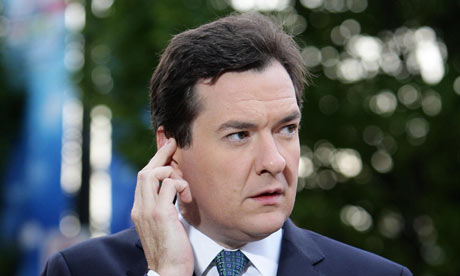
Would you trust this man to lower carbon emissions?
Budget 2012 will be remembered in the future as the trigger for a new era of gas-fired generation and oil exploration.
  • "A bad day for the environment" (John Sauven, executive director of Greenpeace).
  • “I am concerned about the focus that the Budget took on fossil fuels" (Mark Kenber, CEO of The Climate Group).
  • "Despite small green shoots of recovery, investor confidence, instability and uncertainty remain" (Michael Lunn, Environmental Industries Commission’s Director of Policy and Public Affairs).
  • "Sticks two fingers up at David Cameron's promise to build a clean future – and gives a massive thumbs down to new jobs and cutting our reliance on expensive gas and oil" (Andy Atkins, executive director of Friends of the Earth).
  • "We had hoped for greater clarity around future energy and emissions policies to enable better business and investment planning." (Melanie Leech, Director General of the Food and Drink Federation).
  • "We urgently need a long term, consistent policy framework to provide businesses with the confidence to invest in low carbon and energy efficient improvements" (Martin Baxter, Executive Director of Policy, Institute of Environmental Management and Assessment, who believes the Budget does not deliver this).
This fair sprinkling of reactions paints the broad brush picture. Read on for the Low Carbon Kid's comprehensive summary of the sector highlights of Mr. Osborne's third budget.

Carbon Reduction Commitment (CRC)

The Chancellor announced a review of the Carbon Reduction Commitment (CRC). Mr. Osborne said it is "cumbersome, bureaucratic and imposes unnecessary cost on business", and that if ways of improving it "cannot be found, I will bring forward proposals this autumn to replace the revenues with an alternative environmental tax".

The CRC has few friends. The CBI, the Engineering Employers' Federation (EEF) and others felt he should have gone the whole way and announced its immediate dissolution. “The Government is wasting time by announcing yet another consultation," said the CBI's Director-General John Cridland.

Gareth Stace, head of environment and climate policy at the EEF, welcomed the news, saying "no amount of tinkering with this doomed tax on British business will ever make it work and therefore the government should scrap the scheme".

But the CRC is not completely isolated. KPMG's lead CRC advisor, Ben Wielgus, cautioned that "the introduction of a tax alone would be unlikely to deliver on all aspects of the CRC: namely the reputational drivers and focus on energy usage that are core to the scheme at present".

"Any reporting requirements would create an administrative burden on business and would need to be carefully designed to ensure that any replacement actually reduces administrative costs compared to the CRC," he added.

Michael Lunn of the Environmental Industries Commission was even more sceptical: "Having previously diverted funds raised from the CRC Scheme from green initiatives into general taxation, the Chancellor has now announced that it must be simplified, or scrapped. This sends a very unhelpful message to those companies working their internal budgets and committing funds to comply with a regulation that may become redundant in just a few months’ time," he said.

"Constant policy changes are detrimental to business and growth in the green economy, and we need to put in place a long-term, predictable and ambitious environmental policy framework right across the UK economy."

Martin Baxter, Executive Director of Policy, Institute of Environmental Management and Assessment (IEMA), said he was "disappointed that the government has not taken a longer term approach, as this would provide business with more certainty for investment and effective action on climate change″.


He said he was looking forward to an announcement on mandatory GHG reporting for business, "which will provide benefits for both the UK economy and the environment, by delivering cost and carbon savings”.

The Chancellor said that allowances sold with respect to 2012–13 emissions will be set at £12 per tonne of carbon dioxide, half as much again as the current carbon market price.

Carbon price floor

The Carbon Price Floor is designed to ensure that greenhouse gas emitters pay a price for their emissions, and will be set at £9.55 per tonne of carbon dioxide from 2014–15.

The EEF estimates this will lead to a 6-7% increase in industrial electricity prices and “locks the UK into higher energy taxes than our competitors, regardless of the European carbon price".

Its Gareth Stace said this "contradicts the government’s stance that the UK will go no faster than our partners in Europe.”

Greenpeace slammed it as a "stealth tax" which the Chancellor regards as an opportunity to raise revenue. "To drive investment in the clean technologies that would cut carbon and bring down bills he should instead have said the revenues would be ring-fenced to support ending our addiction to dirty fossil fuels,” said Dr Doug Parr, policy director for Greenpeace.

The CBI called the new level a “33% rise" that would "hit UK energy-intensive businesses hard, and underlines the need for a more coherent strategy to unlock low-carbon industrial growth".

“In the meantime, we urgently need support to those companies most at risk from the increase,” said John Cridland, which the Chancellor already has announced he is doing with £100 million over the Spending Review period.

Combined Heat and Power

"Combined Heat and Power plants will not be liable to carbon price support rates on fuels used for heat," said the Chancellor, in a move which only partially reinstates the tax break on CHP he removed last year.

This was criticised by Graham Meeks, director of the Combined Heat and Power Association, who said that the break "was what allowed these plants to compete in the power market. He has not restored this, and that's very negative".

The positive effect of not applying carbon price support charges to fuels used for Combined Heat and Power (CHP) is offset by the decision to remove the associated Climate Change Levy (CCL) exemption certificates, he said.

Climate Change Levy

Plants must generate at least 2MW of electricity before they become liable for the carbon price support rates of the Climate Change Levy (CCL).

CCL rates themselves will increase in line with inflation from 1 April 2013.

As announced in 2011's Budget, Climate Change Agreements (CCAs) will be extended to 2023, and as the Chancellor said in his Autumn Statement 2011, the Climate Change Levy discount on electricity for CCA participants available from 1 April 2013 will be increased to 90% to support energy-intensive industries.

The removal of exemption certificates to the Levy will bring in £110m in 2013-14, rising to £165m in 2016-17. This will go some way to paying for the carbon price floor and support for combined heat and power, which is estimated to cost £45m in 2013-14, rising to £145m in 2016-17.

Oil and gas

The Chancellor made significant announcements to support expansion of fossil fuels, especially gas, in a move that, together with Ed Davey's announcement of support for gas-fired generation earlier this week, is more than likely to stimulate a new building programme of gas-fired plants.

“Gas is cheap, has much less carbon than coal and will be the largest single source of our electricity in the coming years,” he said, adding that there will be a new strategy for gas generation published by DECC in the Autumn.

The statement was welcomed by Energy Networks Association (ENA), which represents the transmission and distribution network operators for gas and electricity in the UK and Ireland.

It claimed credit in a press release for advising him to do so, in what it called "our" Redpoint report, published a year ago, a claim which throws doubt on the impartiality of this key consultation document.

Mr. Osborne announced a programme of support to make it more economical to exploit small oil fields; action to open new fields to the West of Shetland; and promised primary legislation to permit measures to support investment in brown-fields.

The package was decried by environmentalists and welcomed by the industry, with Richard Forrest, partner in the oil & gas practice of global management consultancy A.T. Kearney, saying it "will entice oil and gas players who have investment options in many basins around the world".

Kearney felt that the introduction of a new £3 billion field allowance for particularly deep fields with sizeable reserves targeted at the West of Shetland "will help drive innovation and capability in the UK oil and gas service sector and have the knock-on effect of supporting competitiveness beyond the UK."

But Charlie Kronick, senior energy advisor for Greenpeace, said: “George Osborne hasn’t learned any of the lessons after the disaster in the Gulf of Mexico. Any oil spill in the west of Scotland would wreak untold devastation on some of the UK’s most fragile habitat and the local economy."

Mark Kenber, CEO of The Climate Group, said this move ridiculed David Cameron's pledge to create the “greenest government ever”. "To drive forward clean technologies we need a government that is willing to invest in low-carbon technologies while displaying strong and inspiring leadership," he said.

To secure billions of pounds of additional investment in the UK Continental Shelf, the Government will introduce a contractual approach to offer long term certainty on decommissioning old rigs.

Kronick said this would mean that "UK taxpayers will continue to pick up the tab for cleaning up the oil companies’ mess," observing that the UK’s tax regime for the oil industry is already among the lowest in the world.

Renewable energy

In a speech notable for few mentions of renewables other than referring to support measures already in the Government's workstream and the updated national infrastructure plan, the Chancellor did affirm that “renewable energy will play a crucial part in Britain’s energy mix – but I will always be alert to the costs we are asking families and businesses to bear.

"Environmentally sustainable has to be fiscally sustainable too.”

Gaynor Hartnell, head of the Renewable Energy Association, welcomed the “noticeably more positive tone” than in the Autumn Statement on renewables, but observed that the government’s own advisers had found that ″volatile gas prices, not renewable energy costs, were responsible for recent soaring electricity bills″.

Enhanced capital allowances

Expenditure on solar panels will be designated as special rate expenditure for capital allowances purposes from next month under the Finance Bill 2012.

While plant eligible for Feed-in Tariff support is ineligible for tax-free enhanced capital allowances, other designated energy-saving and water-efficient technologies do qualify, and the ECA list of eligible technologies will be updated during this summer.

The Government is also extending the 100 per cent FYA (first-year allowance) for businesses purchasing low emissions cars until 31 March 2015, a move welcomed by Mark Kenber, CEO of The Climate Group.

"The Climate Group’s EV20 Plugged-In Fleets report which was published in February 2012 highlighted that electric vehicles (EVs) can be commercially viable in business fleets," he said.

Less cash for DECC and Defra

The Department for Energy and Climate Change will see its Programme and Administration budget cut in real terms after 2012-13; currently it is £1.1 billion, which will rise to £1.4 billion for the next two years before falling to just £1 billion in the last year of this Parliament.

Defra's Programme and Administration budget will also fall, from £2 billion now to £1.8 billion by 2016-17, which will be around an 6% cut with inflation taken into account.

DECC's capital budget will almost double, however, from £1.4 billion to £2.7 billion by 2016-17, reflecting the need to support investment in more energy infrastructure, and a trend that has been ongoing for several years.

This support was broadly welcomed, but the ESA's Matthew Farrow said the waste industry "would have liked to see specific ‘green infrastructure allowances’ to incentivise investment in the sector, as the loss of industrial building allowances has made some potential waste management investment less economically viable".

By contrast, Defra's capital budget will fall in real terms, remaining at £0.4 billion.

Transport

The Chancellor announced plans and support for more roads, rail investment and even potential enlargement of Gatwick Airport.

Greenpeace said this "flies in the face of the Coalition agreement that specifically ruled it out".

Amongst the announcements on rail was support for Network Rail to invest a further £130 million to improve transport links between cities in the North of England which will enable the number of fast trains to double.

Vehicle excise duty (VED) rates will increase in line with the Retail Price Index from April 2012 but VED rates for heavy goods vehicles will be frozen.

For fleets and company cars there are changes to the capital allowance regime for business cars to strengthen the incentive to purchase more fuel-efficient cars.

Environment

Alongside the revolutionary Red Tape Challenge changes to environmental legislation announced by Defra this week, Mr. Osborne said the Government is to set up a Major Infrastructure and Environment Unit that will at an early stage look at the impact of nationally significant infrastructure projects on potential Habitats Directive issues.

The appointment of Dieter Helm as Chair of the new UK Natural Capital Committee was announced by the Chancellor. This body provides advice on the state of English Natural Capital to the Economic Affairs Cabinet Committee (chaired by the Chancellor of the Exchequer).

To coincide with this, the Global Legislators Organisation (GLOBE) released a new Rio+20 draft of its original Natural Capital Action Plan which helped shape the creation of the UK Natural Capital Committee last year by the Government, and which will form part of the central agenda of the Rio+20 meetings and World Legislators Summit meeting this June that GLOBE is helping organise with the UN.

Landfill tax

The standard rate of landfill tax will increase by £8 per tonne to £72 per tonne from 1 April 2013. The lower rate of landfill tax will remain frozen at £2.50 per tonne in 2013–14.

The value of the landfill communities fund for 2012–13 will remain unchanged at £78.1 million. As a result, the cap on contributions by landfill operators will be reduced to 5.6%.

Packaging recycling targets

These will increase annually by 3% for aluminium, 5% for plastic and 1% for steel from 2013 to 2017. Glass recycling targets will be split by end use.

Matthew Farrow, the Environmental Services Association’s Director of Policy said this was right. “The higher targets and five year timescale will give confidence to investors in recycling and reprocessing facilities."

He added, "We also support the splitting of glass PRNs by end use, to reflect the environmental benefits of glass recyclate going to remelt".

Aggregates levy

The Government is delaying the planned increase in the aggregates levy rate from £2.00 to £2.10 per tonne until 1 April 2013 to avoid putting additional pressure on the aggregates industry in Northern Ireland.

That's it. The Chancellor barely mentioned or ignored the Contract for Difference Feed-in Tariff, the Renewable Heat Incentive, the Green Deal, Electricity Market Reform policies, UK Green Investments (UKGI), changes to the Renewables Obligation, or the Energy Efficiency Deployment Office.

But perhaps that is just as well.

Wednesday, February 22, 2012

CBI calls on Chancellor's Budget to support nuclear power

John Cridland
CBI director, John Cridland speaking at a recent conference sponsored by French nuclear company EDF, which stands most to benefit from the tax breaks

Ahead of next month's budget, business representatives are calling on the Chancellor to reduce taxes on carbon-emitting industries, support nuclear power and to merge the Carbon Reduction Commitment (CRC) and Climate Change Levy (CCL).

The CBI's director, John Cridland, has written to Number 11 with a shopping list of items he would like to see George Osborne announce in his Budget on March 21.

Support for nuclear power

Near the top is a request for capital allowances to be applicable to investment in infrastructure for which is currently not eligible; foremost among the list of examples is the building of nuclear power structures, as well as waste treatment structures and airport terminals.

It says that giving tax relief to the building of new nuclear power stations would reduce their cost by up to £30 million.

Prior to April 2008, nuclear power qualified for 4% annual capital allowances tax relief; this was abolished as part of a range of measures to protect public finances.

The CBI says the lack of any tax relief at all makes it around 20% more expensive to invest in a structure or building that does not qualify for capital allowances, compared to a plant that does receive standard capital allowances.

This means that there is not a level playing field internationally, and that the UK is therefore discouraging investments in some types of energy compared to similar projects overseas.

It says its proposals would cost the taxpayer an average of up to £200m per year if assets are depreciated over 25 years.

Its letter gives the example of a new nuclear power station costing £2 billion, which includes 30% of spending that is non-qualifying under the current capital allowances regime.

Applying the CBI's proposals would reduce the cost of the previously non-qualifying part of the project by 10%, or 7%, depending on the depreciation rate (4% or 2.5%).

This would in turn reduce the overall cost of the project by 3% or 2% respectively (£30 million or £20 million), which, it says, either makes new nuclear power stations more likely to be built, or reduces costs to the end user, or both.

The letter says this approach would “complement the extra funding for infrastructure provided in the Autumn Statement" and private sector infrastructure investment.

It also wants to see more regulatory roadblocks removed and reform of Private Finance Initiative agreements to make them more attractive.

Were the Chancellor to consider changing the rules to support nuclear power, this would raise accusations from his Liberal Democrat Coalition partners that he was providing government support for the industry, to which they are staunchly opposed.

It would be French company EDF which would be most likely to benefit from such tax relief, since it is the one most advanced in its plans, to build a new nuclear opwer station at Hinckley Point, Somerset.

CBI also wants a change carbon reporting laws

The CBI is also calling for reform of the Climate Change Levy (CCL) and the Carbon Reduction Commitment (CRC).

It says that that while it supports the original objective behind the CRC to secure emissions reductions and promote energy efficiency, since the Chancellor chose to convert it to a straightforward carbon tax instead of recycling the revenue back to energy efficient companies, it is no longer an “effective and proportionate mix of the financial, reputational and reporting drivers required" to promote energy efficiency.

Instead, it proposes reforming the Climate Change Levy (CCL) as well as Mandatory Carbon Reporting (on which Defra consulted last year) to differentiate the rates of the CCL, which would allow the Treasury to protect this CRC revenue stream by removing unnecessary administration burdens on business.

At the same time, it urges protection for energy-intensive businesses so they are not unfairly penalised.

It says that introducing MCR would ensure that reducing emissions gets board level attention and would allow the companies which succeed most in reducing emissions to gain the most reputational advantage in the public eye.

It believes that business has dismissed the current CRC performance league table as part of a mere tax and the issue is not being considered at board level.

However, carbon reporting does retain credibility amongst companies, investors and NGOs. Emissions reporting under an MCR framework would therefore stand a better chance of getting results.


...And opposes carbon taxes


The CBI wouldn't be the CBI if it wasn't against taxes. So, in the same letter, it is calling for several policies on taxation which will ensure that carbon emissions do not fall.

It wants to see Air Passenger Duty (APD) to continue to be pegged to the rate of inflation for the foreseeable future, calling for the government to balance “the value of air travel's contribution to the Exchequer with the potential impact of further immediate rises on the UK as a place to trade and invest".

The duty would therefore rise in line with inflation by 5% this April. Currently it is slated to rise by 8%. This reduction would cost the taxpayer £145 million a year.

The CBI also reiterates its "robust opposition" to a Europe-wide carbon tax as proposed in the draft reforms to the Energy Taxation Directive (ETD), on the basis that tax is a national competency and imposing it would go against the principle of subsidiarity.

It points out that individual member states of the European Union are already working towards binding targets in 2020, and several existing European directives support this work.

Imposing the ETD would “reduce the ability of member states to choose the measures most appropriate to their circumstances to reach 2020 targets".

The current proposals for the directive are to split the minimum tax rate into two parts: one would be based on CO2 emissions of the energy product and be fixed at €20 per tonne of CO2.

The other would be based on the actual energy that a product generates and the minimum tax rate would be fixed at €9.6/GJ for motor fuels, and €0.15/GJ for heating fuels and be applied to all fuels used for transport and heating.

Consistent with this attitude, the CBI also calls for no further opportunistic tax raids on Britain's oil and gas industry.

It says this is important because the sector represents 7% of all business investment in the country, equivalent to around £8 billion last year.

It also calls for greater certainty over tax relief available for decommissioning old fields.

Green Deal


Finally, the CBI welcomes the £200 million allocated by the Treasury in the Autumn Statement to attract early adopters to the Green Deal.

It calls for an incentive scheme similar to the boiler “scrappage" scheme in 2010, where a voucher worth £400 was given to those who replaced their old boiler with something more efficient.

This succeeded because it was consumer friendly and simple. Another proposed option is a discount for early adopters such as “sign up now and get the 1st 6 months free".

The country will have to wait until 21 March to see how closely George Osborne listens to the voice of business.

Wednesday, October 05, 2011

Osborne exposes Tory split on low carbon investment

Goerge osborne at Tory Party Conference 2011
George Osborne has pledged that if he has his way in the Coalition Government, the UK will cut "carbon emissions no slower but also no faster than our fellow countries in Europe", causing dismay in the green business sector.

Yet most of his own colleagues in government disagree with him.

Speaking to the main body of the Conservative Party Conference he said "we’re not going to save the planet by putting our country out of business" and expressed his scepticism that investment in the low carbon sector could be a strong engine of recovery for the economy, arguing instead that it would thereby increase energy prices and hamper the recovery.

His reasoning is that "Britain makes up less than 2% of the world’s carbon emissions, compared to China and America’s 40%".

But this figure is wrong. In negotiations on climate emissions, the UK's responsibility is not for its current emissions alone but also for its historical emissions - as birthplace of the industrial revolution to which Osborne paid tribute in his speech and which has led to man-made global warming.

The UK's real responsibility is therefore proportionally higher than developing countries like China's current emissions: 5.11% of total global emissions up to 2005 (source: WRI, last date available).

Osborne added that "a decade of environmental laws and regulations are piling costs on the energy bills of households and companies", apparently ignoring his government's own evidence that by far the largest factor in high prices is volatility in gas and oil markets.

Events in Manchester are revealing a split in government on green policies that is more along traditional grounds than to do with differences between the Tories and their LibDem coalition partners.

At a fringe meeting about renewable energy yesterday, the Energy Minister, Charles Hendry, Conservative MP for Wealden, Sussex, said of the green revolution: "This is an incredible opportunity, and if we follow we will export jobs and import equipment."

Hendry also tried to calm worries on high energy prices by saying that the reform of the energy market, which the UK is currently planning (although it is over six months late in ratifying the EC Directive on energy market reform), will be done "at the lowest possible costs to consumers, because we never forget who pays the bills".

The Conservative Climate Minister Greg Barker also extolled DECC's policies to the audience of party faithful, talking up the Green Deal and Renewable Heat Incentive.

He called the Green Deal "world-leading" and said it will help bring down costs to consumers because "after all, the cheapest energy is the energy we don't use".

Osborne's opposition to carbon targets has been curtailed before, by David Cameron, who over-ruled him when the decision on approving the Climate Change Committee's fourth carbon budget was being made, but Osborne did manage to secure a review of the budget in 2014.

The Treasury is historically sceptical about green issues and has been criticised many times, most notably by Jonathan Porritt, former head of the Sustainable Development Commission, who has written: "The Treasury has in fact been the biggest single block on Sustainable Development in the UK, going right back to the UK’s first SD Strategy in 1994. It pursues its own agenda (regardless of who is in power), has no interest or expertise in SD, and (unless reformed) would make mincemeat of any new SD Minister."

Osborne's about-turn


But Osborne has previously expressed enormous enthusiasm for the idea of the Treasury leading the way on climate change.

Less than two years ago in this piece in the Independent Newspaper, he wrote: "I want a Conservative Treasury to lead the development of the low carbon economy and finance a green recovery."

He went on to explain in some detail how this could happen, including vowing that if government departments failed to take action to save energy, "a Conservative Treasury will simply give them less money to spend on energy bills. This isn't just good for the environment. It will save up to £300m a year. That's good for taxpayers too."

He then discussed how "a Conservative Treasury will drive green growth is by financing a green recovery" and spoke favourably about "how a Green Investment Bank can help kickstart our green recovery by providing green companies with the investment they need".

It's entirely possible that since then Osborne has been influenced by the Treasury mandarins, because in the same piece he says he will introduce "Green ISAs, a new tax-free savings product in which all the funds invested would help green our economy," an idea which was dropped under pressure from officials.

He has also been lobbied by the energy-intensive industries, such as metals and ceramics, and the CBI to reduce their costs from high energy prices.

To be fair, Osborne did argue for "investment in greener energy. And that’s why I gave the go ahead to the world’s first Green Investment Bank".

Tim Yeo, Conservative Chair of the cross-party Select Committee on Energy and Climate Change, speaking privately at the conference, also disagreed with Osborne's speech, saying, "I believe it is Britain's interests in the medium term to be a leader. Those countries will be the most competitive, not the least."

But Charles Hendry qualified his earlier enthusiasm and signified some sympathy with Osborne's view: "We should not go out on a limb," he said. "European capitals are not saying 'the Brits are doing this, so we will too'. They will rub their hands and say 'that's just making British Industry less competitive'."

However, he did say: "There is nothing in what George said today that would mean we want to pull back from a roll out of renewables."

This would be difficult, because the UK now has a legally binding commitment to rein in carbon emissions. Under the Climate Change Act 2008, there must be a reduction of at least 34% in greenhouse gas emissions by 2020 and at least 80% by 2050.

Paul Foote, the Managing Director of the Conservative Environment Network, a group within the party that argues for government policy to support private enterprise in tackling "critically important" environmental issues, said: "Osborne has betrayed a fundamental misunderstanding about how to make our recovery secure and sustainable".

DECC, a successful department which is demonstrating how LibDems and Tories can work together on a common platform, has to operate within the Treasury cap on spending and policy development.

Osborne's speech makes it clear that it has a continuing battle on its hands to fight its pitch, but it has plenty of support from within Tory ranks too.

What remains to be seen is which side David Cameron will choose to support in his next speech on the topic. Any sign of wavering on his previous commitment to be the "greenest government ever" will have clean energy investors walking away from the table to invest in other countries.