Showing posts with label Treasury. Show all posts

Friday, September 14, 2012

Government should set a 2030 decarbonisation target

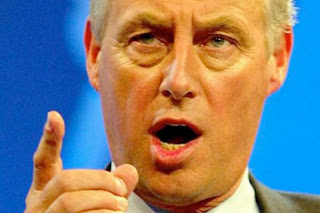
Osborne's Liberal Democrat deputy, Danny Alexander
George Osborne's Liberal Democrat deputy, Danny Alexander will call for a target and criticise his boss's attitude to low carbon tech at the Lib-Dem party conference.

The role of gas-fired generation and the setting of a 2030 decarbonisation target for the electricity market has become the focus of a bitter battle between Lib Dems and George Osborne.

Yesterday, Edward Davey, Secretary of State for Energy and Climate Change, responded to a letter from the Committee on Climate Change, signed by its new Chairman, Lord Deben, criticising the recent Government statement that gas would continue to play an important role in the energy mix beyond 2030, not restricted to providing backup to renewables".

The letter added that this position could be illegal under the Climate Change Act 2008, and “weakens the signal provided by carbon budgets to investors" in clean tech.

It also recommends the setting of a clear carbon emission objective for electricity market reform, of around 50g of CO2 per kilowatt-hour by 2030.

Earlier this year George Osborne ruled out such a measure, expressing concern that such a target would undermine investor confidence in the gas industry, which he wants to build up.

In short, the argument between Osborne and DECC is about whether investment should be predominantly directed into renewables or gas. Gas, being cheaper, is favoured by Osborne.

But it is also an argument between the Lib Dems and Conservatives. Osborne's Liberal Democrat deputy, Danny Alexander, has signalled that he will call for a 2030 decarbonisation goal to be implemented when he speaks at the party's conference in two weeks.

He will also use his speech to attack the Conservatives for not acknowledging the economic benefits of investing in low carbon tech.

In reply to the CCC letter, Mr Davey, who this week adopted responsibility for renewables policy that was previously the ex-energy minister Charles Hendry's brief, issued a statement.

This said that a target is "under consideration" but argued that the Government's "existing plans are consistent with significant decarbonisation of the power sector".

Davey is known to believe that a limit on carbon emissions from the sector could be achieved using a statutory instrument instead of being included in the Energy Bill.

Osborne is currently sanguine about DECC's consultation on a carbon emissions limit for 2030, because he doesn't think it would make a material difference in practice.

But Davey's ace in his hand remains the carbon budgets that have been agreed by Parliament, which could trump Treasury policy provided that it is played with a strong suit.

Davey's response to the Committee's letter emphasises this, that the statutory carbon budgets that are set by the Committee, and agreed by Parliament, underscore all policy and planned market reforms.

“We have always said [our reforms] will include gas fired plant," the statement says, “which is quick to build and flexible." But "after 2030 we expect that gas will increasingly be used only as back up, or fitted with Carbon Capture and Storage technology.

"Alongside up-scaling of renewables, nuclear new build, and eventually with carbon capture and storage, gas has an important role to play in the transition to a low carbon grid."

But how much gas generation could be installed and still permit the UK realistically to meet its carbon budgets?

“Our numbers show that we can accommodate around 30 to 45GW of unabated gas over the next twenty years and still hit our carbon targets, but any further fossil fuels will need CCS, which is not yet commercially viable," Davey said on Wednesday.

This means over a dozen new gas-fired power plants in the next 15 years.

While the Committee's letter was greeted with approval by the clean tech sector, this response by Davey has been met with scepticism.

Utility company SSE tweeted that, contrary to the Treasury view, a "2030 decarbonisation target in EMR would provide much-needed certainty for low-carbon investors and developers".

Climate and energy campaigner for Greenpeace, Joss Garman, calculated that “where you have as much as 45GW of unabated gas in 2030 (and if you assume demand by then of around 420TWh), this would require that all those gas stations are only operating for 15% of the time if we are to keep on track with carbon targets. It also requires all of the UK’s coal stations are shut down or operating with fully functioning Carbon Capture and Storage (CCS)."

"The UK is already over-reliant on gas, which was the main driver behind recent energy bill rises," said Keith Allott, head of climate change at WWF.

The cross-party energy select committee, led by Tim Yeo, has also reiterated calls for a 2030 decarbonisation goal.

“Our gas generation strategy work is about providing certainty to investors to ensure sufficient investment comes forward, whilst also living within our legally binding carbon budgets,” concluded Ed Davey's statement.

To Garman and the other objectors, this seems like trying to have your cake and eat it.

Wednesday, July 25, 2012

Davey buys £20m for onshore wind in exchange for £500m for gas


Subsidies for onshore wind farms will be reduced by 10%, not the 25% demanded by the Treasury, says Energy Secretary Ed Davey, but at a long-term cost to carbon emissions.

To win this agreement, the Department has had to concede that gas generation will continue "to play an important part in the energy mix well into and beyond 2030, while meeting our carbon budgets".

This "important part" is ensured with a grant of £500 million for gas field exploration. To put this in context, the dispute between the Treasury and DECC centred over a difference of around just £20 million in support for 1GW of onshore wind.

The effect on greenhouse gas emissions after 2030 is likely to be alarming. David Nussbaum, chief executive of WWF-UK, sent a letter to David Cameron yesterday, complaining of "a clear bias on the part of Mr Osborne towards investment in new gas-fired power stations" which would imperil the UK's climate targets and could raise bills for consumers.

“The proposal that emissions from gas plants built before 2015 will effectively never have to limit their emissions jeopardises our ability to meet UK carbon targets," he said. “The announcement on this, which was slipped out late on a Friday and which had the Chancellor’s fingerprints all over it, is another example of the Treasury’s malign influence on energy policy."

John Sauven, Greenpeace's executive director, also commented that: “The Treasury is fighting tooth and nail to oppose a 2030 decarbonisation target or support for future renewables targets. Mr Osborne has rebranded himself Mr Polluting Gas. It's up to Nick Clegg to stick what's left of Lib Dem principles back into this process."

£25 billion investment

However, marine energy developers will celebrate a 250% increase in their support from 2 ROCs (renewable obligation certificates) to 5 ROCs per MWh, subject to a 30MW limit per generating station.

"The case for investment in renewable energy is so strong and that is why, across government, we are backing it," said Energy Secretary Mr. Davey, making the announcement.

He said that representatives of industry and business support the subsidy cut of 10%, but not of 25%. “And that will bring forward investment between £20 and £25 billion between 2013 and 2017, and create hundreds of thousands of jobs," he promised.

"No one would want to over-subsidise an industry," he said.

He tried to reassure the wind industry by saying that there would not be a further change in the support levels or targets for carbon reductions in the autumn.

"The climate legislation says that if there has been a change in any of the generation costs for a renewable technology, whatever it is, we should have a review. So if it does change dramatically, then of course everyone agrees that we should have a review."

When pressed by James Naughtie on the Today programme this morning, Ed Davey said that meeting emission reduction targets depended on carbon capture and storage and nuclear power coming on stream by 2030, as well as major investment in renewables. He did not mention demand reduction.

"We don't have a target for the amount of energy to be generated from renewable sources at the moment," he said. Mr Davey said that there was cross-party agreement on the legally-binding targets to reduce carbon emissions. "What we're discussing is whether there should be an intermediate target for decarbonising the power sector. There is a debate to be had about that, around the Energy Bill," he said. That is expected in the Autumn.

The announcement of the results of the Banding Review consultation for the Renewables Obligation was delayed last week, following intervention from the Treasury, but was finally announced today.

The Department for Energy and Climate Change (DECC) quantified the impact on consumer bills between 2013 and 2015, as a reduction of £6 off household energy bills next year and £5 the year after.

By 2017, DECC hopes that this will deliver as much as 79 TWh of renewable electricity per annum in the UK, 11 TWh more than at present, which still not enough, just 74%, of the 108TWh of electricity needed to meet the UK’s 2020 renewable energy target.

The Renewables Obligation is the Government’s main mechanism for supporting large-scale renewables, and the review covers the final period of support, 2013-17 (2014-17 for offshore wind), before the scheme ends.

The announcement comes ahead of the Government's Global Investment Conference and series of 17 business summits taking place at the British Business Embassy at Lancaster House during the upcoming Games, which aim to secure further investment into the UK.

John Cridland, CBI Director-General, welcomed the announcement, saying it “will help to encourage investment into our energy sector, creating jobs and supporting growth". He also thought that "the Government is right that gas should play a crucial role in any future energy mix. We have argued that there is no need for a false choice between renewables, nuclear, gas, and carbon capture and storage. It’s clear from the evidence that we need a diverse supply.”

Support for onshore wind from 2013-17 will be reduced by 10% to 0.9 ROCs, guaranteed until at least 2014 but could change after then if there is a significant change in generation costs.

If there is evidence of significant reduction of generation costs in early 2013, then subsidies will again reduce in April 2014. The Government will also consider how local communities can have more of a say over, and receive greater economic benefit from, hosting onshore wind farms.

Biomass and solar

There will be a new band to support existing coal plant converting to sustainable biomass fuels. This will increase the amount of renewable energy produced at less cost to consumers.

The new enhanced co-firing band will be split into two new bands: mid-range at 0.6 ROCs/MWh, and high-range co-firing at 0.7 ROCs/MWh in 2013/14, rising to 0.9 ROCs/MWh from 2014/15.

This was welcomed by Dorothy Thompson, Chief Executive of Drax, the country's largest coal burning plant, which is in the process of conversion to be able to burn more and more biomass. She said that she is now “confident that we can transform Drax into a predominantly biomass fuelled generator".

Generators will need to burn at least 50% biomass in a unit to be eligible for support. Bioliquids are excluded from this.

There will be a consultation on lowering the support level for standard co-firing to 0.3 ROCs/MWh in 2013/14 and 2014/15, increasing to 0.5 ROCs/MWh from 2015/16.

Support for generation using 100% biomass is to be set at 1.5 ROCs/MWh, degressing to 1.4 ROCs/MWh for new accreditations and additional capacity added after 31 March 2016.

There will be no immediate reduction in support for large-scale solar, but, as with onshore wind, the level will be kept under review. Installations under 5 MW will only be eligible for feed-in tariff support.

New landfill gas generating capacity will not receive any support from 1 April 2013, but new generators using gas wholly from closed landfill sites will be eligible for support at 0.2 ROCs/MWh and electricity generated using new waste heat to power generating capacity will be eligible for 0.1 ROCs/MWh at both existing stations as well as new stations using gas from any landfill site.

The gas bill

In return for this extra 11 TW hours, DECC has given its commitment to a new dash for gas, provided that gas remains cheap.

It will have “a key role in ensuring that we have sufficient capacity both to meet everyday demand and complementing an increasing amount of relatively intermittent and inflexible generation", the DECC statement says. "We do not expect the role of gas to be restricted to providing back up to renewables, and in the longer term we see an important role for gas with CCS."

£500m of grants are being made available for large shallow water gas fields in the UK Continental Shelf, and more information on the Government's strategy will be set out in the Autumn.

The full bill impacts of current bandings and 2013-17 bandings:

Absolute contribution to average household electricity bills of RO support costs under current bands and the revised bands
£2011 prices 2013/14 2014/15 2015/16 2016/17
Current bands 44 47 49 50
Revised bands 38 42 50 53
Difference between revised and current bands -6 -5 1 3

(Using household electricity demand before the impact of other policies)

Bandings for all technologies:
Table 1 - Bandings under the Renewables Obligation
Renewable electricity technologies Current support (2012-2013) ROCs per MWh Post-consultation decisions
Level of support (ROCs per MWh)
Comment and other changes
Advanced gasification  2 2 in 2013/14 and 2014/15; 1.9 in 2015/16 and 1.8 in 2016/17
One ACT band supporting ‘standard’ and ‘advanced’ ACTs at the same ROC level
Advanced pyrolysis 
Anaerobic digestion 2 2 in 2013.14 and 2014/15; 1.9 in 2015/16 and 1.8 in 2016/17 Closure of band to new projects at or below 5 MW from 1 April 2013, subject to consultation
Biomass conversion No current band but 1.5 ROCs under current banding arrangements  1 New band. Unit by unit approach. No energy crops uplift. Change to definition of relevant fossil fuel generating station.
Biomass conversion with CHP No current band but 2 ROCs under current banding arrangements 1.5 in 2013/14 and 2014/15 New band. Unit by unit approach. No energy crops uplift. Change to the definition of relevant fossil fuel generating station. Close band to new accreditations from 1 April 2015.
Co-firing of biomass (standard) 0.5 Solid and gaseous biomass (less than 50% biomass co-fired in a unit): 0.3 (proposed) in 2013/14 and 2014/15; 0.5 from 2015/16. Unit by unit approach. ROC levels in 2013/14 and 2014/15 subject to further consultation.
Bioliquids (less than 100% biomass co-fired in a unit): 0.3 (proposed) in 2013/14 and 2014/15; 0.5 from 2015/16.
Co-firing of biomass (enhanced) No current band but 0.5 ROCs under current banding arrangements Mid-range co-firing (50-less than 85%): 0.6 New band. Unit by unit approach. Excludes bioliquids (other than energy crops). Cost control mechanism to be introduced, subject to consultation
High-range co-firing (85-less than 100%): 0.7 in 2013/14; 0.9 from 2014/15
Co-firing of biomass with CHP (standard) 1 0.5 ROC uplift in addition to prevailing ROC support available to new accredit-ations until 31 March 2015 Unit by unit approach. Close band to new accreditations from 1 April 2015.
Co-firing of biomass with CHP (enhanced) No current band but 1 ROC/MWh under current banding arrangements 0.5 ROC uplift in addition to prevailing ROC support available to new accredit-ations until 31 March 2015 New band. Unit by unit approach. Close band to new accreditations from 1 April 2015.
Co-firing of energy crops (standard) 1 0.5 ROC uplift in addition to prevailing ROC support for co-firing of biomass (standard). No uplift available for mid-range or high-range co-firing. Band to be closed, subject to consult-ation. Unit by unit approach. Changes to definition of energy crops.
Co-firing of energy crops with CHP (standard) 1.5 0.5 ROC uplift in addition to prevailing ROC support for co-firing of energy crops (standard). Band not available for mid-range or high-range co-firing. Band to be closed, subject to consultation
Unit by unit approach.
Changes to the definition of energy crops. Close band to new accreditations from 1 April 2015.
Dedicated biomass 1.5 1.5 until 31 March 2016; 1.4 from 1 April 2016 Introduction of a supplier cap, subject to consultation
Dedicated biomass with CHP 2 2 in 2013/14 and 2014/15 Changes proposed to add fossil derived bioliquids, to exclude biomass conversion and to close this band to new accreditations from 1 April 2015
Dedicated energy crops 2 2 in 2013/14 and 2014/15; 1.9 in 2015/16 and 1.8 in 2016/17 Changes to the definition of energy crops
Dedicated energy crops with CHP 2 2 in 2013/14 and 2014/15; 1.9 in 2015/16 and 1.8 in 2016/17 Changes to the definition of energy crops.
Energy from waste with CHP 1  1 Decision to retain support at current level following consultation
Geothermal 2 2 in 2013/14 and 2014/15; 1.9 in 2015/16 and 1.8 in 2016/17
Geopressure 1  1
Hydro-electricity  1  0.7 Closure of band to new projects at or below 5 MW, from 1 April 2013, subject to consultation.
Landfill gas   0.25 0 for open landfill sites New bands for closed landfill sites and Waste Heat to Power.
0.2 for closed sites
0.1 for new Waste Heat to Power band at open and closed sites.
Microgeneration 2 2 in 2013/14 and 2014/15; 1.9 in 2015/16 and 1.8 in 2016/17
Offshore wind 2 in 2013/14; 1.5 from 2014/15 onwards 2 in 2013/14 and 2014/15; 1.9 in 2015/16 and 1.8 in 2016/17
 Onshore wind 1 0.9 Closure of band to new projects at or below 5 MW, from 1 April 2013, subject to consultation
Sewage gas 0.5 0.5
Solar photovoltaic  2 Banding proposals subject to re-consultation. Closure of band to new projects at or below 5 MW, from 1 April 2013, subject to consultation.
Tidal impoundment (range) – tidal barrage (<1GW) 2 2 in 2013/14 and 2014/15; 1.9 in 2015/16 and 1.8 in 2016/17
Tidal impoundment (range) – tidal lagoon (<1GW)
Tidal stream 2 5  up to a 30 MW project cap. 2 above the cap.
Wave
Standard gasification 1 
2 in 2013/14 and 2014/15; 1.9 in 2015/16 and 1.8 in 2016/17
One ACT band supporting ‘standard’ and ‘advanced’ ACTs at the same ROC level 
Standard pyrolysis 

Alongside publication of the banding review results, DECC has also published an assessment of how incineration of waste to produce energy and heat can be made more efficient.

DECC has not yet published its impact assessment.

Monday, July 23, 2012

MPs slam Treasury, send draft Energy Bill back for redrafting

Chloe Smith, Treasury Minister
Cowboy antics: This woman (Chloe Smith, Treasury Minister) with her boss, George Osborne is delaying and damaging investment in low carbon generation. They should both get out of the way of the experts.

Government policy needs to do more to reduce the demand for energy, say MPs examining the draft Energy Bill, as well as find better ways of subsidising low carbon energy.

They also say that, as it stands, the Bill will reduce competition in the market and raise costs. Furthermore, vacillation in Government is causing delays in the much-needed investment in new energy infrastructure.

The “demand-side needs to be given a much higher priority in the Bill," not least because it is likely to deliver much more cost effective solutions than building ever greater levels of generating capacity," says the Select Committee on Energy and Climate Change, which is scrutinising the Bill.

The MPs want the Bill to be redrafted in order to capture much more than the 35% of possible energy saving already in the draft, as identified by last week's report on energy efficiency, commissioned by the Department for Energy and Climate Change (DECC).

They condemn the Treasury for failing to provide a witness to their enquiries or even answer their questions in writing, which has “seriously undermined" their ability to do their job. The MPs were told by numerous witnesses that Treasury policy, and in particular the levy control framework, under which the Treasury holds the purse strings of DECC, is having a direct impact on decisions about investing in new energy infrastructure.

Tim Yeo MP, Chair of the Committee, said: "Electricity market reform is essential, but the new contracts proposed by the Government will not work for the benefit of consumers in their present form." He said the Government needs to get back to the drawing board over the summer "to make sure that the Bill is fit for purpose in the autumn and is not subject to any further delays".

Commenting on the report, John Cridland, CBI Director-General, said:
“The Committee rightly highlights the importance of agreeing the design of the contracts for difference, and this must be done by the autumn. But companies are also eager to get on with investing now, and the decision on the renewables obligation support rates cannot wait any longer.”

The Bill’s key measures


The draft Bill contains four key measures: a Feed-in Tariff for low-carbon energy, a Carbon Price Floor, an Emissions Performance Standard and a Capacity Mechanism. The Carbon Price Floor has already been legislated for through the Finance Act 2011, so the Bill focuses on the remaining three measures.

The MPs say that Feed-in Tariffs with a Contract for Difference (CfD) are far too complicated in their presently proposed form. These are a contrivance at the heart of the Energy Bill designed to make it more attractive for investors to put money into low carbon generation, because it is more expensive to construct but cheaper over the long-term.

There are three problems associated with the model, they say. Firstly there is “genuine uncertainty" whether they are legally enforceable.

Secondly, Treasury insistence on capping DECC's spending will increase the risk to developers, possibly causing funding streams to dry up. Drily, the MPs send a message to the Treasury, that in the absence of any word from them, they assume that the statement in the Bill that the UK's statutory climate obligations have priority over the levy cap, means that the Treasury would allow further spending than the cap permits, in order to meet the country's climate change targets. They therefore invite an explanation from the Treasury about how the working of the levy will be modified to make this possible.

The third problem with the model is that by removing an obligation on the part of utilities to purchase renewable energy, this could actually lead to fewer players in the market, and “greater levels of vertical integration", reinforcing the power of the Big Six, which is the opposite of what the Bill is supposed to do. In fact, they say, the Bill should do more to support the entry of smaller players into the market and their continued existence.

They want to see a single counterparty to contracts that is underwritten by the Government, with a contract and design that is legally enforceable, because this is the best way to reduce the cost of capital. At present, what is proposed is a "multiparty payment model" whereby liabilities are borne collectively by all energy suppliers.

They also want to change the registration process for allocating CfDs in order to reduce risk, and extend the eligibility threshold for small-scale Feed-in Tariffs to at least 10MW, again to permit smaller scale generators and community-owned schemes to take part, and call for a fixed Feed-in Tariff to support community renewable energy schemes "up to at least 10MW and potentially up to 50MW in size".

Regarding nuclear power, they want to see more transparency for the process for agreeing a strike price to avoid the perception that decisions are being made “behind closed doors". They want to see a committee of independent experts appointed to oversee this negotiation process.

They don't believe that auctions of strike prices are a great way to deliver a cheaper outcome, because they can actually deter participation by smaller generators due to the uncertainty and expense of taking part. Instead, they propose that the Government should set out a planned reduction pathway for strike prices. This would guarantee a reduction in the level of subsidy paid by consumers over time.

They also want Government to provide clarity on the strike price level beyond 2017 as soon as possible, to help secure investment for emerging technologies like wave and tidal power.

Whilst admitting that the Government is right to prioritise security of supply as a policy condition, they say that ironically the possibility of a capacity mechanism appears to be freezing the prospect of new investment. Therefore, the Government must urgently give more clarity about how the capacity mechanism will work, and give more consideration to the consequences of feeding a large quantity of intermittent generation into the National Grid.

Further modelling is also required to reduce the likelihood of policies leading to a new dash-for-gas, they say. This should include the modelling of demand-side reduction strategies and energy storage, which themselves may need some form of support in order to gain traction in the marketplace

They slam the Emissions Performance Standard as “at best pointless" and, at worst, by grandfathering the initial level until 2045 undermining our ability to meet long-term carbon targets.

They want to see MPs scrutinise any decision taken to exempt generation plant from Emissions Performance Standards, which is permissible in the draft Bill for reasons of maintaining security of supply.

Nor do they think the National Grid should be the body that delivers Electricity Market Reform because it would lead to unnecessary extra costs to consumers and represents a potential conflict of interest.

The Energy Bill is a framework Bill, and will need secondary legislation in order to effect the required changes. Because time is slipping away, the MPs suggest that draft secondary legislation, including a model Contract for Difference, is prepared in time for the House of Commons' formal consideration of the Bill.

Tim Yeo concluded his comments on the Bill by saying that if it “does not set a target to largely decarbonise the electricity sector by 2030, then the UK may miss one of the biggest opportunities it has to create a low-carbon economy in the most cost effective way."

Thursday, May 03, 2012

Government energy policy splits laid wide open


Tim Yeo, MP

Veteran environmentalist MP Tim Yeo has called the energy minister Ed Davey and his department "weak",  and slammed tjhe Treasury,  and other departments for interfering in the UK's carbon-reduction and energy policies.

Speaking at today's UK Energy conference organised by The Economist magazine, Tim Yeo, Chair of the Commons Energy and Climate Change Select Committee, slammed the Treasury for constantly interfering with DECC's activities and policy development, confirming (which is news to no one who has been following environmental issues for 30 years) that the Treasury is not at all green.

He didn't stop there, but also laid into the Department for Communities and Local Governments, and the Department for Transport.

He labelled DECC a “weak department" for letting its policies be "crawled all over" by these three other departments and called Ed Davey a “junior partner" in any negotiations.

Referring to the carbon price floor as “the Treasury's latest wheeze" and “simply a way of getting more tax", he said that “the UK needs a carbon price signal not a carbon price floor, which is having the opposite effect to what George Osborne claims".

This is the first time there has been such open admission by an MP at a major energy conference of the existence of such high conflict between these government departments.

Yeo said that if Britain wants to be in the “premier division" internationally in 15 years' time, then energy needs to be higher up the priorities for the Government.

Despite this, he said that the required level of investment in UK energy infrastructure, of £200 billion by 2020 is “achievable", although he said there is no 'plan B' if we fail.

He said that the technology is already to hand to solve our energy crisis but that we don't yet have the right policies and price signals. He expressed alarm that firms like E.ON are pulling out of nuclear power in the UK.

While saying that the UK cannot rely on fossil fuels, whose price will rise due to rising demand, Yeo, a veteran Tory environmentalist, advocated that “we should exploit the shale gas resources we have in this country".

Yet in the same breath he said that replacing coal with gas “doesn't get us anywhere near the Committee on Climate Change 2030 decarbonisation target".

On fuel poverty, he said that it can't just be solved by changes to energy policy because it is also a Social Security issue.

Tony Cocker, Chief Executive Officer, E.ON UK, blamed a pause in investment on last year's review of the Renewables Obligation banding levels, and its (in investment terms) imminent demise in 2017.

Electricity market reform delay


Cocker, said that the UK needs the electricity market reform to happen speedily and not just be a “make do and mend" solution. "We are not asking for an extension of CERT and CESP we are pretty sure we can hit the targets" we have on fuel poverty, he added.

All the panel agreed that certainty was urgently needed on the planned reforms, especially in the light of alarming reports by the BBC last night that legislation on the topic would be postponed this summer to make room in the parliamentary timetable for reform on the House of Lords.

This was immediately denied by a Department for Energy and Climate Change spokeswoman, who said, “This is categorically untrue. We have said for some time that we intend to legislate for electricity market reform in the forthcoming session of Parliament”.

On the issue of energy pricing and investment, Cocker said of E.ON “We need the trust of our customers to create a sustainable energy system", somewhat ironically given the number of protesters outside the conference who were not permitted to enter.

He admitted that his company “needs more transparency on pricing and profits", and laid the gauntlet down by promising to put the extent of his bonus in the public domain.

The panel chairman, the BBC's Energy and Environment Analyst Roger Harrabin, earlier asked the organisers why protesters who had gathered outside the building, part of a Climate Justice day of action, were not being allowed in, and was told that the conference programme had been changed to reflect popular concerns about fuel poverty, and that they and grassroots organisations would be invited to next year's event.

Raising laughter, Mr. Harrabin summarised six months of energy policy in eight words as: “FiTs fiasco, nuclear no-show, wind whiplash and shale shivers".

Investment challenges


Speaking for the Carbon Trust, its CEO Tom Delay admitted that “sustainable solutions are difficult to invest in because they are capital intensive" and because of the uncertainty around costs.

He said that “light touch energy regulation" is deterring investment in “resilience, efficiency and an overhaul of the National Grid".

However, he advised that “it's dangerous to always focus on cost rather than investment"; it's the lifetime savings on bills that should be the chief criteria for investment decisions.

That is why the quick payback received from investing in energy efficiency makes it an “easier option" for large companies to be sustainable.

He slated UK building standards on energy efficiency for being too low, a decade or two behind those in Europe and North America.

Fuel poverty


The London School of Economics' Professor John Hill, author of last March's landmark Fuel Poverty Review, astonished the audience by explaining that under current definitions of fuel poverty, the Queen qualifies since over 10% of income is spent on fuel.

He said that a better criteria for fuel poverty is to measure the overlap between low incomes and high energy costs.

Monday, September 05, 2011

Proposed changes to Climate Change Agreements could increase carbon emissions

Firms which are eligible for Climate Change Agreements (CCAs) should find it easier to comply and some will save money under new Government proposals. However, the Government has not presented any estimates of the impact it will have on emissions.

The changes are intended to simplify the structure of the CCAs, making them easier to operate, and, the Government says, maintain their effectiveness in cutting carbon emissions.

But in the absence of any calculations on emissions, the fact that the Treasury will be better off as a result makes me suspicious that this is the real reason for the changes - and they don't care about the impact on emissions.

Read on to see what the changes are and how the Government benefits...

Current arrangements


CCAs apply to all energy intensive firms or sites that have to pay the Climate Change Levy, and cover a wide range of sectors, from steel, chemicals and cement, to agricultural businesses, such as intensive pig and poultry rearing.

Sites that are smaller than the size thresholds of the Pollution Prevention and Control (PPC) Regulations, but which would otherwise would qualify, are also eligible for a CCA.

This is rated at 47p per kWh for electricity, 16.4p per kWh for mains gas and 1.05p per kg for LPG. But 65% discounts (reduced from 80% last April) are available for signatories of a CCA. Part of the revenue from the CCL is used to fund energy efficiency initiatives, including The Carbon Trust (which is having its budget cut by 40%).

The current Climate Change Agreements are due to expire in March 2013. However, the Government announced in the 2011 Budget that CCAs will be extended to 2023 and that the Climate Change Levy discount on electricity will be increased from 65% to 80% from April 2013.

Under the current arrangements, if a sector meets its target for reducing carbon emissions, then the whole sector becomes eligible for a discount on the Climate Change Levy. If individual sites fail, the whole sector fails.

This approach has been criticised by the Environmental Audit Committee both on economic grounds (poor value for money for the taxpayer) and because it is unfair.

The proposals


So the Government is now proposing that all sites will instead be required to meet their targets on an individual basis. However, the downside is that this will mean an increase in cost to industry of £0.3m.

Furthermore, sites will have to report on their energy consumption every year, instead of every two years as now - resulting in another £0.2m cost increase. This will affect 2,384 participants.

However, Greg Barker claims in his foreword to the consultation document that overall the measures will cut the costs to business by £2.4 - £3.4m during the life of the scheme.

Savings will be made by removing the need to duplicate trading and verification with the EU Emissions Trading Scheme, by aligning reporting periods with the EU ETS, and by modifying certain other rules.

Most savings will result from industry no longer incurring costs in trading allowances at the end of their target period.

Treasury wins


The Treasury will also see a benefit. Savings will come to the administration of the scheme from amalgamating the current 54 sectors into 49 sectors and preventing further sectors from joining CCAs.

These sectors will, however, then lack the stimulus to save energy that the scheme provides, and miss out on the discounts on the CCL that would result from meeting their targets - which the Treasury will, of course, keep.

The Treasury will also benefit from the fact that the get-out clause for those missing their targets is no longer carbon trading - nor will firms be any more able to appeal for their targets to be amended in cases where legislative changes resulted in an increase of energy use or carbon emissions.

Instead, the proposed Buy-out Mechanism means that firms will pay the Treasury a fixed amount for each tonne of carbon dioxide a site underachieves against its target. Further fees wlll also be payable as penalties for other misdemeanours.

In addition, some 24 sectors will find their costs will increase because they will have to spend more time negotiating in what's called a 'bottom-up' way with others in their sector in order to meet their target. their costs could be up to an extra £165,000 per negotiation.

The changes would come in at the beginning of 2013. The first new certification period will commence on 1 April 2013 with the subsequent ones on 1 June 2015, 1 June 2017, 1 June 2019 and 1 June 2021.

The effect on carbon emissions


The Government is arguing that the changes will mean that participants will have less challenging emission reduction targets to meet, but that more targets will be met than at present, leading to overall higher savings and less reliance on purchasing allowances in order to meet targets.

This is because the cost of compliance will no longer be able to be spread between organisations within a sector, as has been done in the past.

Currently, the cost of complying with targets for those sectors that had missed them is very small, as the typical UK ETS allowance price has fluctuated between 50 pence to £4 per tonne of CO2.

By switching from using allowances, to make up the difference between a site's performance and its target, to a buy-out mechanism with a pre-determined price, DECC believes this is likely to lead to a greater willingness to accept challenging targets.

However, the Government has not actually calculated the effect on emissions that switching to the new system will have.

The Impact Assessment accompanying the consultation document admits that it "is unclear whether emissions and the incidence of non-compliance will be higher or lower after these administrative changes have taken place. But as they are likely to have positive and negative impacts to the level of target setting and compliance, they are assumed to be negligible."

The level of energy-intensive energy use of a site at which site becomes eligible for discounts is to reduced from the current 90% or more of the total energy use of the site to 70%. The Government claims that this will result in a small increase in energy efficiency.

But the removal of the need to independently verify claims of exceeding the target could result in some false claims.

Before the consultation is over on 28 October, it is vital we have a better idea whether these proposed changes will mean fewer, or more, carbon emissions.

Friday, July 29, 2011

The Government must end this crazy split over financing the low carbon revolution - or it will fail

DECC has just released figures showing that renewable sources generated just 6.8% of UK electricity in 2010, an increase of only 0.3% on the previous year.

The amount of installed electrical generating capacity from renewable sources did rise by 15% in 2010, mainly as a result of a 42% increase in offshore wind capacity, a 16% increase in onshore wind capacity and a 9% increase in the capacity of sites fuelled by biomass and wastes.

Despite low wind speeds during 2010 generation from wind increased by 9.6%, due to this increased capacity; however the lowest rainfall since 2003 reduced hydro generation by 31.5%. Generation from all forms of biomass was 12.4% higher.

But the good news masks a deep problem.

Under the targets set by the Renewable Energy Directive, the UK must, by 2020, supply 15% of final energy consumption – calculated on a net calorific basis, and with a cap on fuel used for air transport – from renewable sources.

In 2010, however, just 3.3% of final energy consumption was from renewable sources; this is up from 3.0% in 2009, and 2.4% in 2008.
UK will miss its renewable energy targets at this rate
At this rate of increase we will not even achieve half of the target by 2020 (see graph).

Although the UK is beginning to accelerate the installation of renewables, big questions remain over the reliability and steadfastness of government policy in this area.

DECC is currently fast-tracking yet another consultation on solar Feed-in Tariffs to deal with an overlooked consequence of its last widely-criticised fast-track consultation.

It didn't notice at the time that under sections 15 and 16 of the ‘Feed-in Tariffs (Specified Maximum Capacity and Functions) Order 2010’ document, developers are currently able to install a system over the microgeneration amount (50kW) before the August 1 deadline – thereby receiving the higher FiT rate – and then install an extended capacity within 12 months, which would also benefit from the higher rate.

The closing date for responses this time is 31 August.

Coming on top of the reduction of up to 70% in Feed-in Tariffs for large solar installations completed after 1st August, this is causing dismay to those who had been relying on the extension mechanism and despair amongst the solar PV industry generally.

The dark hand of the Treasury is detected here.

As a result of the Spending Review, the Treasury has control over DECC’s spending. But DECC creates many of the policies.

This schizophrenic chaos is the result of the drastic measures which George Osborne's Treasury is employing to bring down the budget deficit.

It is threatening the UK's progress to move towards a low-carbon economy and meet its international obligations, as well as creating an increased risk of electricity supply failures for industry and domestic consumers.

Many of the recent electricity market reform White Paper's proposals, that are intended to stimulate new investment in low carbon generation and maintain security of electricity supply, are dependent on subsidies and financial incentives determined by Government.

These include carbon taxes, a new Feed-in Tariffs system for nuclear and large-scale renewable energy generation, and capacity payments to finance reserve plant which is held back to generate at times of peak demand.

Sudden changes in existing incentive schemes which reduce payments has the effect of undermining confidence in the whole electricity market reform project, even if some of these are ultimately financed through energy bills, not general taxation.

The Treasury's own proposal, the Carbon Price Floor system, is estimated to be going to provide a £1 billion windfall for nuclear power developers and renewable energy development up to 2020.

This will be financed by the climate change levy and fuel duty being levied on all fossil fuels used in the UK to generate electricity.

The proceeds of the Levy were originally intended to be returned to the participants in the scheme who performed the best for them to invest in further energy and fuel-bill saving and carbon-reducing measures.

Now it will go to increase supply rather than reduce demand. This was another policy shift announced by Osborne which was received with much dismay at the time.

The fuel duty will be raised by extending the Levy to the fossil fuels used to generate electricity. In another badly-thought out policy move, this includes those fuels burnt in CHP stations "regardless of their rating through the CHP Quality Assurance (CHPQA) programme", which is a kick in the backside to highly efficient gas-powered CHP.

Any person who supplies gas, solid fuels or LPG will need to register with HMRC for CCL and account for the levy.

It's good if green taxes are directly channeled into further reductions in carbon emissions. But energy efficiency should be prioritised, and those making an effort to reduce emissions should be directly rewarded.

DECC itself should be permitted to control these mechanisms, not the Treasury, especially when they are not directly related to the cutting the original budget deficit but instead are channeling funds from new increases on everyone's electricity bills.

This arrangement, where one Department is responsible for developing and implementing policy, but another, with very different priorities and objectives, has control over the level of cost to the public, is over-complicated, open to abuse in relation to its policy intentions, and does not inspire confidence.

Tuesday, May 31, 2011

Why does this government spend less on the environment than culture, media and sport?

Here are some interesting facts about government spending.

The Department for Energy and Climate Change (DECC) is just about the smallest government department of all.

Its annual budget is £2.52 billion, but it has to spend 48% - £1.2bn - of that on nuclear decommissioning and nuclear waste management.

Therefore the amount of DECC's budget which it is able to spend on policy is a mere £1.32bn a year.

To put this in perspective, benefit spending in Great Britain is over 100 times more at £147.7 billion.

With 1% of the benefits budget, DECC's minister, Chris Huhne, is trying to save the planet and keep the lights on.

At the same time, DECC is hamstrung by the Treasury's Levy cap, which says that its approval is needed where policies could set a "potentially expensive precedent", amongst several other conditions.

The Department of the Environment Farming and Rural Affairs, DEFRA, is also one of the government's lowest spenders at just under £3 billion annually.

This means it receives less than consultancy Capita, the Government's favourite, single largest outsourcing firm (it received £3.3bn of contracts over the first five months of the Coalition Government alone).

Together, DECC and DEFRA's combined budget is less than that of the Department for Culture, Media and Sport's £6.97 billion.

Think about that: to this government, culture, media and sport is worth more than energy, environment and climate change.

Together, these departments are therefore pitching above their weight against the contrary inclinations of their main adversaries: the Treasury officials, with a budget of over £40 billion; and BIS, which has £26.25 billion to spend every year.

(Let's recall that the Treasury's last Budget was labeled the "blackest in living memory" by George Monbiot, and 79% of BusinessGreen website users agreed.)

In last year's Spending Review, Defra eagerly volunteered to deliver savings of £661m by 2015.

The budget for its arm's-length bodies was slashed by over 30% and led to the merging of WRAP and Envirowise with a 37.5% reduced budget and just 11 remaining ALBs.

WRAP and (DECC's arm's-length-body) the Carbon Trust are to have all their direct funding cut from April next year and have to bid competitively for contracts to do their work.

Is this the greenest government ever?

Tuesday, March 22, 2011

Pale green budget tomorrow will cancel CCS levy and forbid Green Investment Bank from borrowing

George Osborne's first budget tomorrow will say that the Green Investment Bank will not be allowed to raise its own finance for some time.

And the levy on electricity bills which had been proposed to raise finance for carbon capture and storage (CCS) plants is to be dropped.

The levy was touted in last autumn's Spending Review as a means of raising billions of pounds for flagship CCS projects. In the review, Osborne said £1 billion was set aside for at least one CCS pilot, with a further three projects to be financed either by the levy or by public money.

But the levy is no longer on the cards following lobbying from industry. This argued that effectively there will already be four carbon taxes, which is complicated enough, and the levy would be a fifth - just too much. The four taxes are:

  • the Climate Change Levy (CCL) - since 2001, taxing fossil fuel energy supply to those businesses without a climate change agreement (CCA) with DECC (which gives 80% - reducing to 65% from next month - reduction on this tax)

  • the CRC Energy Efficiency Scheme - beginning in 2012, which will raise £1 billion a year by 2014-15 from businesses who consumed over 6,000 MWh in 2008

  • the EU Emissions Trading Scheme (affecting generators and the metals, mineral, and pulp and paper industries) - now, most permits are given away free, but the proportion will reduce significantly in 2013

  • the new carbon price support mechanism (CPSM), designed to tax fossil fuels used in electricity generation (by removing CCL exemptions from 2013) to make generators' investment in CCS, renewable and nuclear generation more favourable.

The carbon price support mechanism, currently the subject of a consultation, is also to be further described in tomorrow's budget.

City accountancy firm PricewaterhouseCoopers was amongst those arguing against the CCS levy. Its partner Mark Schofield has written: “The introduction of a floor price would be a significant change for many companies with high emissions, particularly if the Government decides to set this higher than the EU ETS traded permit price. It is likely that the Government will set a lower price initially, rising over time, but they can’t be too generous.

“One of the main criticisms from the industry is that the carbon floor price will add another layer of policy complexity to an already overcrowded energy supply chain policy mix. It may be difficult for potential investors in low carbon generation to distil from these overlapping policy measures a reliable carbon price signal to guide investment decisions, and for users of energy to understand the overall policy objective.”

This raises questions over how or whether the three further CCS projects will be built. Scottish and Southern Energy, Powerfuel Power Limited, Alstom UK and Ayrshire Power are amongst the companies competing to build them.

The prospect of being able to capture carbon from fossil fuel burning power stations has become key to many policies about tackling climate change while keeping business as usual. This is despite the fact that there is no large-scale commercial demonstration that the technology works anywhere in the world.

The EU will be part subsidising the projects. CCS supporters are hoping that the floor price for carbon will be set high enough to raise sufficient funding for CCS. But then so will renewable energy generators and nuclear newbuild supporters.

The Treasury itself says (in the CPSM consultation document) that around £110 billion in new generation and grid connections alone is required by 2020. The same amount again will be required for further upgrades.

The Green Investment Bank


Where will this investment come from? Great hopes have been pinned on the Green Investment Bank.

Osborne is expected to pledge tomorrow that £3 billion will be given to kickstart the Bank. He will say that he believes this will be enough to raise £18 billion of investment into green projects by 2014-15, with the rest coming from the private sector.

This is still a fraction of what is required, which has raised criticism of the Treasury for blocking Energy Secretary Chris Huhne's demand that the new Bank be able to borrow money itself.

Osborne will say tomorrow that the Bank will be able to issue bonds once the nation's debt is falling as a poor portion of grass domestic product–anticipated after April 2015. But for many this will not be soon enough.

Huhne has been locking horns with the Treasury, demanding that it be created as a fully fledged bank. The Treasury's line has been that allowing small investors to take part in the bank's investments would be too complicated, and any borrowing liabilities would be on the government balance sheet, thereby making the deficit appear worse.

“This throws into doubt Britain’s chances of building a low carbon economy and means we will now lose jobs and industries to places like China, Germany and Silicon Valley in California,” said John Sauven, Greenpeace executive director.

The bank is expected to be funded by sales of assets, such as the government one third share in Urenco, the company which enriches uranium for nuclear power stations.

Thursday, December 23, 2010

Permit to pollute sales should benefit households, not taxman

The new proposal from the Treasury to tax companies that introduce fossil fuels into the UK economy, which is at the heart of the current consultation on UK energy policy, has come under attack – by a group proposing that fuel supplier sales are controlled – but by a permit scheme that benefits the public, not the Treasury.

Under the Treasury's proposals, a single pensioner's fuel bill could rise by between 16% and 35% in 2020. Critics say that to compensate people for such bill increases, the cash should instead go to households.

The criticism comes from a group advocating Cap and Share, a policy measure which the Irish Government was giving consideration to trialling before that country's fiscal crisis. They call Cap and Share "a simple solution to climate change that is easy and relatively cheap to implement and puts cash in the hands of every citizen".

Just as with the Treasury's new proposal, Cap and Share argues that it's easier to cut down on the fossil fuels entering the economy than for each citizen to cut their individual use, and they think the 255 companies responsible should therefore pay for the right to pollute.

If they can be made to buy permits, as under the EU Emissions Trading Scheme, and the government issues only sufficient permits to match the country’s target CO2 emissions, reducing them year on year, this provides the cap.

The 'Share' part of 'Cap and Share' entails that all households would each receive an equal share of the permits which they may then sell to the fossil fuel companies. This would put cash in their pockets to compensate them for higher energy prices.

In other words the proceeds of the Fossil Fuel Levy - at a projected average £30/tCO2 - would come to households, not the Treasury.

Richard Douthwaite (author of The Growth Illu$ion: How Economic Growth Has Enriched the Few, Impoverished the Many and Endangered the Planet) says that Cap and Share is based on the Commons principle, and assumes that everyone has an equal share in the atmosphere.

As the Carbon Trust knows from experience, the most popular and successful climate-friendly policies are those which also save or give businesses and householders money.

By contrast, explains Cap and Share spokesperson Brian Davey, the EU Emissions Trading Scheme has seen allowances to pollute - carbon credits - given away to the big greenhouse gas-emitting companies, which they have been able to sell on and generate profits for themselves. In the case of the energy companies, they have also posted huge profits.

Davey and Douthwaite believe that on the other hand, if this benefit were split between every adult in the country, it would be both fair and popular.

Davey said, "With the perception that most climate change legislation is punitive and restricting freedom fuelling wider public scepticism of climate change, such a move by the Government could help swing public opinion back to favour the green economy."

Davey argues that the Treasury's proposal has not been thought through in its relationship to the EU ETS. "It is being made due to the failure of the ETS to provide sufficient stable incentives for the development of renewables. It's not just the low price of carbon but its volatility and unpredictability.

"However the criticism of the EU-ETS is muted and fudged. The result is that the proposal is to impose the scheme in addition to the ETS, but the interaction effects on an unreformed ETS are likely to be counterproductive.

"It is admitted in the Treasury document that the new scheme would likely lead to a fall in the demand for ETS permits and thus a fall in the ETS price but the implications of this are glossed over (in paragraph 5.24)," he continued. "Put bluntly, wWithout tackling the ETS, a rise in the UK carbon price may be matched by an offsetting fall in the European carbon price. What is needed is a revisit of the whole EU-ETS, which has been a complete disaster".

Carbon tax to hit electricity generators

A second effective 'carbon tax' is to be levied - in addition to the Carbon Reduction Commitment for large electricity users - this time targeting all companies that import fossil fuels into the economy.

The proposal, together with various ideas as to the level of the tax, comes in two linked consultations being conducted by the Treasury and DECC in a search for policies that will stimulate the investment necessary to meet the targets set by the Climate Change Committee (CCC) and others for de-carbonising the economy and reducing overall greenhouse gas emissions.

The specific CCC target is a reduction in carbon-intensity of power generation to below 100gCO2/kWh by 2030. In 2009 this figure was around 490gCO2/kWh.

Ofgem has estimated that to achieve such a drastic reduction in nineteen years implies the investment of around £200bn in new generation, electricity networks and gas infrastructure.

Only reform of the electricity market can deliver this, DECC says. The consultation argues that such reform must include support for the price of carbon - the creation of a floor price - to provide long-term certainty for investors around the additional cost of running polluting plant.

This is an admission of the failure of the EU-ETS (Emissions Trading Scheme) to deliver this support so far. Currently the price of carbon is remaining stubbornly below 15 Euros, and needs to be at least double this to stimulate investment. It is also volatile and unpredictable.

Supporting the price of carbon

The proposals state that from 1 April 2013 a 'carbon price support mechanism' will be introduced by applying the climate change levy (CCL) to all fossil fuels used in electricity generation and taxing their use and, in the case of oil, removing rebates.

According to HM Revenue and Customs, there are 255 of these companies, which break down as follows:

Energy product No. of registered suppliers
Electricity: 117
Gas: 71
Solid fuels: 36
LPG: 31

The Treasury says that the exact rates for the tax will take account of the commodities’ average carbon content and will be known as the ‘CCL carbon price support rates’. The consultations discuss different levels - from £20/tCO2 to £50/tCO2, with the preferred rate being £30/tCO2.

According to the Treasury's own reckoning, the only scenario that leads to the required carbon-intensity of power generation by 2030 is a carbon price support starting at £3/tCO2 on top of the prevailing EU ETS price in 2013, rising to target a combined carbon price (support plus EU ETS) of £40/tCO2 in 2020 and £70/tCO2 in 2030.

However this scenario also results in the highest rise in domestic energy bills. A single pensioner's bill would rise by 35% in 2020, compared to 16% if the starting support price was £1/tCO2, rising to £30/tCO2 in 2020. Adopting that scenario, however, leads to a carbon-intensity drop to only about 120gmCO2/kWh.

Other policies

DECC, in a linked consultation about the best policy context for the tax, offers four scenarios, of which it prefers a combined set of policy tools that include contracts for difference and carbon price support plus Emissions Performance Standards and a capacity mechanism. One reason for this is that "the [cash] flows from government to generators would be lower than without carbon price support."

An Emissions Performance Standard (EPS) would limit how much carbon the most carbon intensive power stations - coal - can emit, and encourage carbon capture and storage.

Long-term contracts for feed-in tariffs, a revised Renewables Obligation, much more low-carbon generation, and demand-management strategies also figure in the consultation as collectively being necessary to secure the targets.

Capacity payments would be introduced to encourage security of supply through the construction of flexible reserve plants, a policy which acknowledges the intermittent and inflexible nature of much low-carbon generation.

"The key factor in the effectiveness of the policy is the reaction of potential investors, and whether the mechanism is “bankable” for the purposes of raising finance for new low-carbon generation investments," says DECC.

Wednesday, November 19, 2008

Ramp it up - investment in low carbon technology

The last issue of the New Scientist contains a one page ad from the Carbon Trust offering £3m to £6m funding for partners in oil-from-algae technology.

The Low Carbon Kid wrote about this concept 17 months ago. He highlighted it because many of the problems present with the traditional oilseeds such as palm & soy, and with ethanol feedstock such as corn and molasses/sugarcane are not present with algae.

In a more recent blog he also suggested the government should take a stake in t he development of promising new low carbon technologies that could then be sold off to benefit the taxpayer when they reach maturity.

The Carbon Trust itself says algae-based biofuels could replace over 70 billion litres of fossil derived fuels used worldwide annually - a market value of over £15 billion.

So why is it being so modest?

We need urgent, fast action. It should invest hundreds of millions.

Instead of a third runway at Heathrow, more roads, or coal-burning power stations, low carbon technology needs to be developed and implemented on a huge scale asap.

Why? The observed impacts of climate change suggest that the climate is more sensitive than we had thought. We may already be past the atmospheric concentration which will ultimately deliver 2°C of temperature rise.

We are preparing for a medium-sized climate problem, based on out-of-date IPCC predictions. The 80% cut by 2050 that's now UK policy may not be enough because of the feedback loops triggered by sea-ice loss, albedo flip, a warmer Arctic, a disintegrating Greenland ice sheet, melting permafrost with huge methane emissions, with their concurrent massively increased greenhouse gas emissions and accelerated global warming.

In Parliament on 18th November (yesterday), in a debate on the Lords amendments to the Energy Bill, Government committed to obtain 14% of heating from renewable heat.

Great. This has been the subject of several previously unsuccessful bills. But progress is far too slow. We'll have to wait till next year, O'Brien (energy minister) said, before we know how they're going to achieve this target... which corresponds to 7% of overall energy use - with feed-in tariffs or an Obligation? And they haven't a clue yet how the feed-in tarriffs will work.

All too slow.

Part of the problem is the Treasury. Today it indicated that it would not ringfence the proceeds from the auctioning of carbon credits under the European Emissions Trading scheme to spend on low-carbon technology.

This is madness. The Treasury is always a brake on helping the environment. If the PM told it to reverse policy prioritise the health of our life-support system - the planet - we'd get where we need to be much faster.

Ramp it up - investment in low carbon technology

The last issue of the New Scientist contains a one page ad from the Carbon Trust offering £3m to £6m funding for partners in oil-from-algae technology.

The Low Carbon Kid wrote about this concept 17 months ago. He highlighted it because many of the problems present with the traditional oilseeds such as palm & soy, and with ethanol feedstock such as corn and molasses/sugarcane are not present with algae.

In a more recent blog he also suggested the government should take a stake in t he development of promising new low carbon technologies that could then be sold off to benefit the taxpayer when they reach maturity.

The Carbon Trust itself says algae-based biofuels could replace over 70 billion litres of fossil derived fuels used worldwide annually - a market value of over £15 billion.

So why is it being so modest?

We need urgent, fast action. It should invest hundreds of millions.

Instead of a third runway at Heathrow, more roads, or coal-burning power stations, low carbon technology needs to be developed and implemented on a huge scale asap.

Why? The observed impacts of climate change suggest that the climate is more sensitive than we had thought. We may already be past the atmospheric concentration which will ultimately deliver 2°C of temperature rise.

We are preparing for a medium-sized climate problem, based on out-of-date IPCC predictions. The 80% cut by 2050 that's now UK policy may not be enough because of the feedback loops triggered by sea-ice loss, albedo flip, a warmer Arctic, a disintegrating Greenland ice sheet, melting permafrost with huge methane emissions, with their concurrent massively increased greenhouse gas emissions and accelerated global warming.

In Parliament on 18th November (yesterday), in a debate on the Lords amendments to the Energy Bill, Government committed to obtain 14% of heating from renewable heat.

Great. This has been the subject of several previously unsuccessful bills. But progress is far too slow. We'll have to wait till next year, O'Brien (energy minister) said, before we know how they're going to achieve this target... which corresponds to 7% of overall energy use - with feed-in tariffs or an Obligation? And they haven't a clue yet how the feed-in tarriffs will work.

All too slow.

Part of the problem is the Treasury. Today it indicated that it would not ringfence the proceeds from the auctioning of carbon credits under the European Emissions Trading scheme to spend on low-carbon technology.

This is madness. The Treasury is always a brake on helping the environment. If the PM told it to reverse policy prioritise the health of our life-support system - the planet - we'd get where we need to be much faster.

Tuesday, October 23, 2007

Don't let the Government water down renewables targets!

Today's story in the Guardian that the Treasury and Department Formerly Known as the DTI (BERR) are seeking to persuade Gordon Brown to scupper the European renewable energ targets is a brilliant piece of journalism.

We already know (from witnesses from the renewables/efficiency industry who have sat on the relevant committees and consultations such as Jeremy Leggett and Andrew Warren) that for the lifetime of this government the Treasury under Brown has blocked many attempts to back renewables.

We know that the government thinks nuclear power new build is a one-solution-fits-all option for addressing climate change.

We know the reason is that it believes that the nuclear costs won't be borne by the taxpayer but business.

Instead BERR believes that reaching Germany's current position of 9% renewable electricity by 2010 would cost the taxpayer £4bn.

We know that the off-balance sheet Treasury debt caused by PFI is in the tens of billions area (they won't reveal exactly how much).

In this context it seems to these antediluvian mandarins that despite the length of time it will take nuclear to get up and running and the urgency of the climate change crisis, it's better to wattewr down targets than attack the problem on all fronts.

This is a monumental act of cowardice. What is needed is strong leadership like that shown in Germnany, the world leader in renewables.

German industry is reaping the benefit of its R&D investment in wind and solar with bursting order books abroad.

Britain has missed the boat so many times.

We need a massive push to force the Climate Change Bill, EU targets and Energy Bill to enshrine positive long-sighted policies that will benefit Britain for the next hundred or more years.

Not policies that will saddle us with guilt, regret and a legacy of nuclear waste for thousands of years.

The Low Carbon Kid urges Greenpeace to take the government to court again for its smoke-and-mirrors second nuclear consultation.

The sad thing is the Tories also back nuclear power. Only the LibDems would go for the ambitious targets. But they have no power.