Wednesday, March 23, 2011

Osborne's pale green budget offers crumbs to the green sector

Chancellor George Osborne's first budget was billed as a “budget for growth", but the green shoots of recovery could have been stimulated to rise much faster. It offers crumbs to the green sector while doing nothing to tax pollution or wean the UK off oil.

Budget 2011 contains limited measures for funding investment in green technology, and for meeting the skills and enterprise gap perceived in not just the green sector but other sectors necessary to help Britain compete in a global economy.

These general measures include 21 new enterprise zones, new export credits, a technology and innovation centre, nine new university centres, doubling the number of university technical colleges to 24, an increase in work experience schemes and apprenticeships, as well as £100m of investment in new science facilities, income tax relief on enterprise investment schemes rising from 20% to 30%, and an increase in small companies' research and development tax credit to 200% in April and 225% in 2012.

On to the specific environmental measures.

Planning reform


In planning, there will be a new presumption in favour of sustainable development, so that the default answer to development is ‘yes’ to planning applications, although what this means in practice is yet to be defined.

Planning decisions will be localised about the use of previously developed land, removing nationally imposed targets while retaining existing controls on greenbelt land.

Surplus military land will be auctioned off for housing. This means that 20,000 new low carbon homes should be built by 2015, the budget says.

Mr Osborne announced a 12 month limit on considering planning applications, including appeals, as part otherwise yet-to-be-specified measures to “streamline the planning applications and related consents regimes removing bureaucracy from the system and speeding it up”. It's unsure what this means for local accountability.

Green Investment Bank


The Green Investment Bank is to operate from 2012-13. The UK devoted just £12.6bn towards green investment in 2009-10 according to an independent report from the Public Interest Research Centre (PIRC), released yesterday.

This is half the minimum of £20bn that must be invested in each of the next ten years, according to the Treasury, and is less than 1% of UK GDP - or less than what Britain spends on furniture each year.

This is why it is welcome that the Chancellor George Osborne announced £3 billion rather than the £1 billion previously announced to set up the Bank, with £2 billion to be funded from the sale of assets, which includes £775 million net proceeds already received from the sale of High Speed I.

Mr Osborne said that the Bank would “support low-carbon investment where the returns are too long-term or too risky for the market”.

However, he resisted calls that the bank be allowed to borrow and lend with immediate effect, saying instead that it will have to wait until 2016 to do so.

Andrew Raingold, executive director of the Aldersgate Group, was amongst critics of this, saying: "We welcome the additional finance for the Green Investment Bank but it must have the power to borrow from day one. This would put the bank at the heart of Chancellor's plan for growth and not wait until the UK is overtaken in key green industries by competitors."

Mr Osborne did argue that the £3 billion will allow a further £15bn to be raised privately for investment in green infrastructure by 2014-15.

Carbon price floor


Besides the GIB, the Government is to introduce a carbon price floor for electricity generation from 1 April 2013.

This will start at around £16 per tonne of carbon dioxide and follow a linear path to £30 per tonne in 2020 to drive investment in the low-carbon power sector. The Treasury says that the carbon price support rates for 2013-14 will be equivalent to £4.94 per tonne of carbon dioxide.

It means that signatories to the Emissions Trading Scheme (ETS) will make up the difference between the actual price of carbon permits under the ETS and the agreed floor price. It expects to raise £740 million in the first year, rising to £1.07bn in the second year and £1.4 billion in the third year.

Friends of the Earth complained that the floor price is too low to make much difference (it is currently only £1.30 less than that) and will provide a "windfall for existing nuclear power".

Meanwhile, income from the Climate Change Levy is projected to increase from £0.7 billion now to £2 billion in 2015-16.

Other environmental taxes


Reform to the Climate Change Agreements, which rewards businesses for energy efficiency, will cost the Treasury £140 million in 2013-16. These tax discounts will stay at 80% not reduce to 65% in 2013 as previously proposed, and the scheme will continue till 2023.

Adjustments to company car tax rates from 2013-14 are expected to bring in to the Treasury over the following three years an additional £390 million. A slight change to the Climate Change Levy exemptions in Northern Ireland will bring in an additional £15 million in the same period.

Negatively for the environment, the Aggregates Levy, which is intended to cut landfill from construction, is having its rate increase postponed this year, at a total cost to the Treasury of £90 million, but it will continue until 2021.

Similarly, the proposed increase in air passenger duty is to be deferred and this will cost the Treasury £145 million. However, wealthy owners of private jets will have to pay fuel duty for the first time.

The fuel duty escalator is also being cancelled, as long as oil prices remain high, and fuel duty is to be cut by 1p. Friends of the Earth wondered what this means for David Cameron's recent promise to "wean the UK off oil". Interestingly, the Treasury is predicting that oil prices will come down from today's highs of £69.3 per barrel to £66.2 in 2015-16.

As previously announced, there will be an increase in the standard rate of landfill tax by £8 per tonne to £56 per tonne on April 1 2011 and to £64 per tonne on 1 April 2012 but the lower rate of landfill tax will be frozen at £2.50 per tonne in 2012-13. The value of the Landfill Communities Fund will rise in line with inflation in 2011-12 to £78.1 million.

The proportion of the landfill tax liability paid by landfill operators into it will remain the same. Future decisions on the value of the fund will take into account the success of environmental bodies in reducing the level of unspent funds that they hold.

Despite previous promises to tax pollution more, there were no new initiatives here.

Carbon capture and storage


As predicted yesterday, carbon capture and storage is to get £1bn but there will be no special levy to support this technology, and any additional support will be funded from general spending.

Although Osbourne says that the government remains committed to providing public funding for four Carbon Capture and Storage (CCS) demonstration plants, there are concerns over whether the necessary development of this technology, seen as being crucial to reducing carbon emissions from existing and new fossil fuel plants, will go ahead on schedule.

Water shortages


To address the issue of water shortages, The Government is to consult shortly on making reforms to the existing WaterSure scheme, the approach to company social tariffs and options for additional government spending to provide further support for water affordability.

The Budget 2011 documents are available on the Treasury website.

Can we leap the skills hurdles for the low carbon economy?

In order to create the low carbon, environmentally sound economy that is touted a way of getting the country out of the recession, tens of thousands of jobs are going to be needed in the environmental sectors of the economy.

But a skills gap in these sectors is well documented, with one in three firms being hampered by a shortage of skilled staff, from those needed to install new technology to scientists and engineers, according to a report by the Commission on Environmental Markets and Economic Performance.

The Environmental Audit Committee recommended two years ago that the Skills Funding Agency support training in this area and called for a leader to help "deliver green skills across all sectors".

This is slowly happening, with a number of academies opening specialising in part of this huge and varied area.

In a report issued earlier this month, Greening the Economy, the Aldersgate Group called on the government to "build on [this] national skills strategy to ensure that its support for skills and training matches the focus and ambition of its strategies for promoting investment in green innovation and infrastructure" and compared the situation here unfavourably with France’s mobilisation plan for green jobs.

In terms of manufacturing, the UK is unlikely to be cost competitive with emerging economies in many sectors and so must ensure that instead it builds on its vast experience and skills for higher value-added manufacturing activities and services.

It can cost such tradespeople upwards of £6000 to get suitable qualifications. If they want to go on to be a registered installer they have to register under the Microgeneration Certification Scheme which can cost many thousand pounds more.

Not surprisingly, many wonder if it's worth the hassle and cost in terms of the increase in income they can expect to receive.

In other words, is there a cost barrier to entering the low carbon economy?

Well, in one sector of this economy there is good news. A survey carried out by The ENDS Report in collaboration with the Chartered Institution of Water & Environmental Management (CIWEM) and the Society for the Environment (SocEnv) has revealed that gaining professional qualifications can lead to a direct increase in your salary.

The online survey, published in the March edition of the ENDS Report, of over 2,200 environmental practitioners revealed that half are Chartered Environmentalists (CEnv). Among those working in the water sector, half are CIWEM qualified.

Similarly, of those describing their main professional activity as 'engineering’, over 50% are Chartered Engineer (CEng) qualified.

SocEnv says that "as well as raising their status, gaining professional qualifications has also led to monetary reward for around 20% of respondents...as a direct result of gaining additional professional qualifications".

Among those able to recall a percentage rise, almost half had enjoyed one of 10% or more. The median increase was 6% and half of rises were in the 5-10% range. One in seven enjoyed an increase of 20% or more, after gaining additional professional qualifications.

And despite many organisations facing tighter budgets, the level of employer support for professional development remains generally high.

Two-thirds of respondents said their organisation offered financial assistance for professional development and most have taken advantage of it; almost three in five said they had undertaken formal training in the past year.

Acting Chief Executive of SocEnv, Kerry Geldart, said “this particular finding from the ENDS survey reflects the importance employers and individuals place on professional registration, particularly in times of austerity, giving individuals a competitive edge in the market place.”

Rosemary Butler, Director or Membership & Professional Development at CIWEM agrees. "This is an extremely valuable piece of research," she said, "and bears out our findings that more and more applicants for CIWEM membership also seek the CEnv qualification to add real and tangible value to their career progression."

The Energy Saving Trust (in its 'Economics and Impact Model: Data and Assumptions', 2010) cite a multiplier of at least 1.93 for every £1 invested by local authorities in industries related to renewable energy, in terms of the benefit to the local economy. They say that farsighted councils can support local electricians and plumbers to access training courses that will qualify them to install renewable generators.

Hopefully, further research will bear out this success story in other sectors of the green economy. It means that, if true, there will not only be benefits for society as a whole, but individuals partaking in the green sector and those around them will benefit financially as well.

Tuesday, March 22, 2011

The shocking truths about nuclear waste

It's not just that nuclear power is scary. It's very expensive and we don't know what to do with the waste. This post substantiates this claim.

The cost of dealing with existing nuclear waste


I was completely shocked when I discovered that over 60% of the Department for Energy and Climate Change budget is spent on decommissioning existing nuclear sites.

It's almost unbelievable. They don't tell you in their budget of course. I had to dig it out, and here are the links.

The decommissioning of existing nuclear power stations is currently managed by the Nuclear Decommissioning Authority. Its 2010-11 budget is £2.8bn, of which £1.69 billion comes from the taxpayer via DECC. DECC's overall budget in this year is £2.9bn.

This leaves just £1.2 billion for DECC to do everything else. Just think about that for a moment. It's a cost that can't be cut because it would be too dangerous to do so. Therefore the only thing that could be done when DECC had to cut its budget in the Spending Review was to cut everything else.

The last estimate for the cost of dealing with the waste and decommissioning of the U.K.'s 19 reactors, by the National Audit Office in January 2008 was £73 billion over the next hundred years. This was 18% above initial estimates, and the costs of even near-term actions are still rising when they should have stabilised.

This factors out to a cost of £1000 for each and every household in the UK for 100 years. What could we do with that money? Payoff our mortgages? Save that public library or hospital?

And what happens after the hundred years is up?

The cost of dealing with the radioactive waste from new nuclear power stations


The government has argued that new nuclear build should not be subsidised by the taxpayer and that companies should come up with a plan to manage the waste they create. They are currently allocating £1 billion per reactor.

But if I divide 19 into the 73 billion figure above I get nearly £4bn, not £1bn.

Now we all know that costs always rise never fall. We know from experience this particularly applies to the nuclear industry (see Paul Brown and Greenpeace's excellent voodoo economics report). Who is going to pick up the bill when these private companies say they can't afford to deal with the waste?

Let's take an analogy: successive Tory and Labour governments told us that PFI schemes were quick way to get infrastructure built at low cost to the taxpayer. We are now finding out that in fact it is the taxpayer that is being required to pick up much higher bills than they would have done in the first place for a longer period of time from many PFI schemes.

In some contracts, council tax payers will be paying for things that have already ceased to be a service.

And there is the problem of finding out what legal entity is liable for these future costs. Many PFI schemes have been sold on so many times in just a few years it has in some cases become hard to find who is now responsible. And what happens when companies go into receivership?

Yet nuclear waste will be around for hundreds of years. How much more difficult will it be? Who exactly will the contracts be with? You can imagine very easily what is most likely to happen... Taxpayers will pick up the bill.

But we are talking as if there is a solution to nuclear waste already, and there isn't.

What should we do with existing nuclear waste?


CoRWM, the independent Committee on Radioactive Waste Management, said in 2006 nuclear waste should be kept forever in a specially built safe storage facility deep underground.

But while the government pointed to this as the solution to waste from any new plants, CoRWM said it only meant this solution to apply to waste from Britain's old military nuclear programme dating back to the 1950s, so called legacy waste (see below for the link).

The government has asked for communities to volunteer to have nuclear waste stored in its location in return for a sweetener and bribes. So far, only one has come forward, the already nuclear-industry dependent area around Copeland, Cumbria, for which the government has been made to set up a “community fund” in return for allowing the continued operation and expansion of a low-level waste repository, where lightly contaminated material such as clothing is stored.

Experiments and discussions are still ongoing to determine whether and how high-level nuclear waste could be stored underground. The Office of Government Commerce has this year reviewed the Government management of the Managing Radioactive Waste Safely (MRWS) geological disposal programme, but the report has not yet been published.

The truth is we don't yet know what to do with existing nuclear waste.

Should we trust the government and industry on dealing with nuclear waste?


The Nuclear Liabilities Financing Assurance Board (NLFAB), which is stuffed with industry insiders, has one page on the DECC website, where its membership, remit and minutes of its meetings are published. It has discussed having a separate web presence and meeting NGOs but the current status of this work is not clear, since its minutes are only publish every six months and are extremely opaque giving almost no information.

This lack of information extends to the main DECC nuclear waste website and the MRWS website, most of which hasn't been updated since 2009.

This kind of secrecy does not inspire any confidence at all.

Do the experts believe we should have nuclear newbuild?


CoRWM does not believe that there should be any new nuclear build, because we don't know what to do with the existing waste. It can't actually come out and say so publicly, because that will be overstepping its remit.

But if you read between the lines of this document you can see its members struggling with themselves over how to phrase their intention in a politically acceptable manner.

Page 2 says "CoRWM’s intention to provide advice on the maintenance of public confidence in the management of new build wastes could be construed as support for new build. Such an interpretation would not be correct".

Its position statement on existing nuclear waste disposal - that it can be buried underground provided that a suitable site is found - "might be seized upon as providing a green light for new build. That is far from the case."

I think these experts, who have spent 10 years looking into the problem, are making their position quite clear. There should be no new nuclear power stations because we don't know what to do with the waste.

The Health and Safety Executive is currently evaluating proposals for new nuclear power stations submitted by energy companies. No doubt these will be sent back to the drawing board following the Fukushima incident.

The timetable for nuclear newbuild


The government was hoping that new nuclear build could start around 2014. The average length of time to construct a new nuclear power station is eight years. This means they won't be up and running until at least 2022.

Yet new wind farms take three years to build. Most renewable energy takes far less than 8 years.

Why are we wasting money and time on nuclear power when the money could be going into renewable energy, which is a lot safer and leaves no lasting toxic legacy?

There are many arguing that renewable energy is not up to the job. It's intermittent and unpredictable. But these criticisms only apply to wind power and photovoltaics.

There are many other technologies which I am describing in other blog posts, which, while not necessarily being market ready, certainly are just as market ready as carbon capture and storage, which is unproven at a commercial scale, and which the government is certainly relying upon to maintain business as usual while tackling climate change.

If the amount of investment that will be invested in new nuclear build was invested instead in taking these technologies forward, there is no doubt in my mind that Britain could be a world leader in, to pick just a few examples:

All renewable energy is solar power. It has been around for much longer than nuclear power. In 1878, the first solar parabolic dish was used to make ice. But even now this solar thermal market ready technology is largely unknown yet it has huge potential.

The 21st-century should be the solar age. Why waste money on nuclear?

Pale green budget tomorrow will cancel CCS levy and forbid Green Investment Bank from borrowing

George Osborne's first budget tomorrow will say that the Green Investment Bank will not be allowed to raise its own finance for some time.

And the levy on electricity bills which had been proposed to raise finance for carbon capture and storage (CCS) plants is to be dropped.

The levy was touted in last autumn's Spending Review as a means of raising billions of pounds for flagship CCS projects. In the review, Osborne said £1 billion was set aside for at least one CCS pilot, with a further three projects to be financed either by the levy or by public money.

But the levy is no longer on the cards following lobbying from industry. This argued that effectively there will already be four carbon taxes, which is complicated enough, and the levy would be a fifth - just too much. The four taxes are:

  • the Climate Change Levy (CCL) - since 2001, taxing fossil fuel energy supply to those businesses without a climate change agreement (CCA) with DECC (which gives 80% - reducing to 65% from next month - reduction on this tax)

  • the CRC Energy Efficiency Scheme - beginning in 2012, which will raise £1 billion a year by 2014-15 from businesses who consumed over 6,000 MWh in 2008

  • the EU Emissions Trading Scheme (affecting generators and the metals, mineral, and pulp and paper industries) - now, most permits are given away free, but the proportion will reduce significantly in 2013

  • the new carbon price support mechanism (CPSM), designed to tax fossil fuels used in electricity generation (by removing CCL exemptions from 2013) to make generators' investment in CCS, renewable and nuclear generation more favourable.

The carbon price support mechanism, currently the subject of a consultation, is also to be further described in tomorrow's budget.

City accountancy firm PricewaterhouseCoopers was amongst those arguing against the CCS levy. Its partner Mark Schofield has written: “The introduction of a floor price would be a significant change for many companies with high emissions, particularly if the Government decides to set this higher than the EU ETS traded permit price. It is likely that the Government will set a lower price initially, rising over time, but they can’t be too generous.

“One of the main criticisms from the industry is that the carbon floor price will add another layer of policy complexity to an already overcrowded energy supply chain policy mix. It may be difficult for potential investors in low carbon generation to distil from these overlapping policy measures a reliable carbon price signal to guide investment decisions, and for users of energy to understand the overall policy objective.”

This raises questions over how or whether the three further CCS projects will be built. Scottish and Southern Energy, Powerfuel Power Limited, Alstom UK and Ayrshire Power are amongst the companies competing to build them.

The prospect of being able to capture carbon from fossil fuel burning power stations has become key to many policies about tackling climate change while keeping business as usual. This is despite the fact that there is no large-scale commercial demonstration that the technology works anywhere in the world.

The EU will be part subsidising the projects. CCS supporters are hoping that the floor price for carbon will be set high enough to raise sufficient funding for CCS. But then so will renewable energy generators and nuclear newbuild supporters.

The Treasury itself says (in the CPSM consultation document) that around £110 billion in new generation and grid connections alone is required by 2020. The same amount again will be required for further upgrades.

The Green Investment Bank


Where will this investment come from? Great hopes have been pinned on the Green Investment Bank.

Osborne is expected to pledge tomorrow that £3 billion will be given to kickstart the Bank. He will say that he believes this will be enough to raise £18 billion of investment into green projects by 2014-15, with the rest coming from the private sector.

This is still a fraction of what is required, which has raised criticism of the Treasury for blocking Energy Secretary Chris Huhne's demand that the new Bank be able to borrow money itself.

Osborne will say tomorrow that the Bank will be able to issue bonds once the nation's debt is falling as a poor portion of grass domestic product–anticipated after April 2015. But for many this will not be soon enough.

Huhne has been locking horns with the Treasury, demanding that it be created as a fully fledged bank. The Treasury's line has been that allowing small investors to take part in the bank's investments would be too complicated, and any borrowing liabilities would be on the government balance sheet, thereby making the deficit appear worse.

“This throws into doubt Britain’s chances of building a low carbon economy and means we will now lose jobs and industries to places like China, Germany and Silicon Valley in California,” said John Sauven, Greenpeace executive director.

The bank is expected to be funded by sales of assets, such as the government one third share in Urenco, the company which enriches uranium for nuclear power stations.

Monday, March 21, 2011

Anaerobic digestion - renewable heat, electricity, waste disposal and fertiliser production!

When people think of renewable energy they think mostly of wind power and photovoltaics. Any discussion of renewable electricity policy tends to refer to these and criticise them, and by implication all renewable energy, because they are unpredictable and variable and need backup.

There is an astonishing ignorance even at high government level over the potential of other kinds of renewable power generation. So I want to redress this balance with occasional posts looking at different technologies. Recent posts have referred to marine current turbines, for example.

This post is about the unsexily named anaerobic digestion. Mostly it's about small, farm-scale versions, and I hope to get around to talking about larger scale ones soon.

However, it's worth mentioning right up front that larger plants are able to produce gas for the mains and for vehicles running on gas.

A chief worry if we don't rely on nuclear power, is where will all the power come from to decarbonise transport? Well, here's one answer.

A new income stream - and more - for farmers

Clive Pugh at Bank Farm, Mellington with his anaerobic digester

A survey last December found that 80% of farmers in the UK wanted to have solar photovoltaics on their roofs within the next three years - and yet the fact is, that in terms of the carbon saving and other benefits anaerobic digestion (AD) provides better value for money than solar PV.

For example, farmer Clive Pugh (above) at Bank Farm, Mellington, near Churchstoke, Wales, put in his first AD plant 20 years ago. He now has a state-of-the-art, three chamber unit that provides all of the farm's own energy needs, and that for two homes and the farm dairy, as well as generating an income of up to £10,000 a month from supplying the National Grid - without the new FiTs subsidy, because he was an 'early adopter' and so the scheme is excluded from it.

“We initially went for an anaerobic set-up because we needed a new slurry store and it was something we had been looking into for some years,” says Mr Pugh.

“It revolves around using the slurry from our 140-cow dairy herd. In order to keep the gas production fairly constant throughout the year, we also use poultry manure, silage effluent, waste silage, discarded milk and whatever other green waste we can get hold of.”

While 10 cows are needed to produce 1kw of energy, in fertiliser value terms 1,000 gallons of separated liquid will provide around 30 units of nitrogen, 40 units of potash and 12 units of phosphate.

“The quality of our grass is certainly most noticeable these days, and our need for phosphate and potash is now nil. We also only need top-up units of nitrogen depending on the type of crops being grown,” says Mr Pugh.

How does it work?


In a typical plant, vats ferment farm slurry and crop waste (and can also process food waste) in the absence of oxygen to produce gas which can be used to generate heat and power.


The facility would normally be owned and operated by the farmer/farm business, but might sometimes be part of a co-operative venture. They often would not be approved to accept animal by-products at this scale.

The biogas produced in AD is a mixture of methane (65%) and carbon dioxide (35%) which can be used to generate heat through a boiler, or heat and power through a combined heat and power (CHP) system. In addition, following further processing, biogas is also a suitable fuel source for vehicles.

Hot water may be used on site, for example to heat polytunnels or greenhouses for market gardening. Some farms use AD to power a generator for the digester and pasteurisation. Other benefits include:

• it avoids landfilling of organic wastes;
• the biogas can be burnt as a fuel;
• there is a reduction in the use of fossil fuels, offsetting carbon dioxide emissions;
• it is a predictable and reliable source of electricity and energy, unlike wind power and PV;
• the digestate products return nutrients to the land, reducing dependence on inorganic fertilisers;
• there are economic benefits from reduced fuel and fertiliser use, as well as the subsidy;
• farms can become more self-sufficient, with socio-economic opportunities, e.g., gate fees can be charged for waste taken in and electricity, biogas, fertiliser and soil conditioner can be sold;
• odour is reduced by around 80% compared to farm slurry;
• methane (a greenhouse gas) emissions are reduced;
• a range of organic waste materials can be processed - the highest gas yields come from the co-digestion of fatty (food processing wastes), liquid wastes (animal slurries) and green wastes;
• the amount of farm slurry sprayed onto farmland - and of run-off and pollution of waterways - is reduced;
• harmful bacteria and viruses are destroyed, reducing the spread of harmful disease causing pathogens.

The energy generating potential is determined by the size of the digester and waste feedstock composition.

A typical farm installation might be up to 0.5MW. A small farm using farm waste can produce enough heat to warm the digester and meet domestic heating requirements. If electricity is generated through CHP of 10kWe capacity, enough electrical energy could be generated to supply up to 13 homes.

A brand new installation can cost anything from £150,000 for a fairly basic liquid-only unit to more than £375,000 for an all-embracing 120 kw producing version.

Better payback than PV


This high initial cost is why the technology needs support at this stage. Without support, simple economic payback is approximately 20 years.

Factoring in savings made in waste disposal, according to the Carbon Trust, mean that payback times for installations tend to be under 5 years.

Compare this to solar PV in much of the UK, which is 40 to 60 years without subsidy.

Larger plants


A range of AD scales exists, from single on-farm digesters through to large centralised anaerobic digesters (CAD) collecting waste from a larger surrounding area.

These CADs will usually accept animal by-product wastes for digestion. The gas produced at this scale can also be used for other purposes, for example to power vehicles or be injected into the National Grid.

AD at this scale is economically viable and requires little support. Most plants operate as co-digestion plants with slurries, in additional to wastes from the food, brewing and other industries.

This recent post contains other examples.

This website is a useful source of further information, although slightly out of date.

In Germany there are more than 3,000 on-farm anaerobic digesters - in the UK perhaps around 50.

Anaerobic digestion wins in Feed-in Tariff review

The government is recommending increased support for farm-scale anaerobic digestion (AD) at the expense of “solar farms" over 50kW, in an effort to maximise the benefit of limited resources.

This is a good thing as the technology has numerous advantages over PV - including reliability - which I'm outlining in a subsequent post this morning.

The new consultation follows the launch in February of the fast-track review into how the Feed-in Tariffs (FITs) work for solar photovoltaic (PV) over 50 kW. This followed evidence of 169 MW of large scale solar capacity in the planning system - equivalent to funding solar modules on the roofs of around 50,000 homes if tariffs are left unchanged.

The government feels that leaving this unchanged would soak up most of the subsidy that would otherwise go to smaller schemes or other technologies. Such a development was not envisaged at the start of the programme.

The consultation also recommends increasing support for farm-scale AD, as it has received disappointing uptake so far. The heat component of AD is also supported through the Renewable Heat Incentive (RHI). This means that where the biogas is burnt to produce heat and power AD is eligible both for the RHI and FITs.

It could be argued that it doesn't matter where the PV modules are as long as they are generating electricity. But the government's concern is that PV be available to ordinary people and not big business.

Greg Barker, Climate Change Minister said: “I want to make sure that we... allow even more homes to benefit from feed in tariffs... and put a stop to the threat of larger-scale solar soaking up the cash. The FITs scheme was never designed to be a profit generator for big business and financiers."

Installations larger than 50 kW will receive support as follows:

• 19p/kWh for 50kW to 150kW
• 15p/kWh for 150kW to 250kW
• 8.5p/kWh for 250kW to 5MW and stand-alone installations.

These compare with the tariffs that would otherwise apply from 1 April of:

• 32.9p/kWh for 10kw to 100kw
• 30.7/kWh for 100kw to 5MW and stand-alone installations.

These reductions are comparable to those in schemes in Germany, France and Spain, where tariffs for PV have been reduced sharply over the past year.

The new increased tariffs for AD, designed to make them more attractive, are:

• 14p/kWh for installations up to 250kW
• 13p/kWh for installations from 250kW to 500kW.

These compare with the tariffs that would otherwise apply from 1 April of 12.1p/kWh for AD up to 500kW. The tariff level set for biomethane injection into the gas grid under the RHI and also for small scale - below 200 kilowatt thermal (kWth) – combustion of the biogas produced by AD is 6.5 pence per kilowatt-hour of heat generated.

The idea is specifically to increase the energy obtained from waste through anaerobic digestion, not to promote energy crops, particularly where these might be grown instead of food crops. DECC is in discussions with Defra and others about ways to ensure this does not happen.

Subject to the outcome of the consultation and parliamentary scrutiny, the revised tariffs would be introduced from 1st August 2011.

Over 27,000 installations have been registered for the FIT scheme to date.

Thursday, March 17, 2011

Scotland sets sail for a sea-powered future

Marine current turbine
The world's largest marine current turbine 'farm' is to be installed off the West Coast of Scotland, the Scottish government has announced.

The news comes on the same day that a survey of Scottish business leaders by the Carbon Trust shows they unanimously (94%) believe that green growth is an opportunity for their businesses.

ScottishPower Renewables' £40 million 10MW tidal array development will harness the power of the Sound of Islay and generate enough electricity for over 5,000 homes - over double those on Islay. Amongst other things, the electricity produced will power eight whisky distilleries!

Scottish Cabinet Secretary for Finance and Sustainable Growth John Swinney, who determined the application, said, "With around a quarter of Europe's potential tidal energy resource and a tenth of the wave capacity, Scotland's seas have unrivalled potential to generate green energy, create new, low carbon jobs, and bring billions of pounds of investment to Scotland.

"This development - the largest tidal array in the world - does just that and will be a milestone in the global development of tidal energy."

He said that ScottishPower Renewables will work with the Islay Energy Trust to maximise social and economic opportunities, for instance using local marine contractors during installation or creating new local jobs in the onshore construction phase.

Marine consultation


The Scottish government is also conducting a consultation on its National Marine Plan is a major component of the Marine (Scotland) Act.

The document contains a Marine Atlas for Scotland which shows locations of different opportunities around the Scottish coast support the Plan.

Publishing the consultation draft Cabinet Secretary for Rural Affairs and the Environment, Richard Lochhead said: "The significance of the Marine Plan is immense. It will cover reserved as well as devolved issues and contain targets for the next five, 10 and 40 years in key areas such as renewable energy, fishing, aquaculture, conservation, recreation and tourism, ports and harbours and shipping."

Marine current turbines


Marine current turbines yield predictable supplies of renewable electricity, unlike solar or wind power. They depend on marine currents which are particularly strong in certain areas around the UK coast.

Unlike tidal barrages or lagoons, they are also modular - you can install one, two, or 100 at a time - and therefore cheaper to install than a barrage, and are less environmentally damaging to wildlife.

UK tidal energy company, Marine Current Turbines, has already installed one 1.2MW SeaGen in Northern Ireland’s Strangford Lough in April 2008. In 2013 it hopes to install a second Scottish tidal farm in Kyle Rhea, a strait of water between the Isle of Skye and the mainland.

Scottish businesses prepare for low carbon economy


The Carbon Trust survey revealed that 77% of Scottish business leaders expect a bigger percentage of jobs to be in the green economy in 5 years’ time, with it helping to grow the UK’s export market.

There is general agreement that new technology is going to drive green growth (75%) and about a third (36%) of businesses are already investing in the research and development of green products and services.

But of those surveyed, the highest proportion - 22% - believe that Germany is the best prepared nation to benefit from green growth, with the UK coming second with 19% citing the UK.

The curse of uranium mining

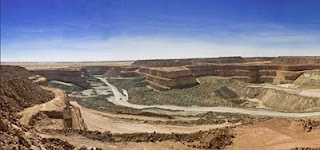
Uranium mine in Niger
“The people here don’t know about radioactivity, but there are still many people who do not drink the water in Arlit...They say they are sick when they drink it,” says Almoustapha Alhacen, who lives in a town built for nuclear mine workers in northern Niger, a parched desert area.
global supply lines for uranium

This is a glimpse of life at the other end of the uranium fuel supply route (right: where uranium originates and goes) for a plant like Fukushima.

Can nuclear-power ever be sustainable? Not unless it cleans up its act. It is just as criminally irresponsible in sourcing its raw materials as the fossil fuel industry. Read on...

Hell on earth


In a harsh environment in sub-Saharan Niger, French nuclear company AREVA has created a hell on earth amongst its indigenous population.

Here you would find great clouds of dust, caused by detonations and drilling in the mines, which cloud the air at the end of the day. Mountains of radioactive industrial waste and sludge sit in huge piles, exposed to the open air.

And the shifting of millions of tonnes of earth and rock have contaminated the groundwater source, which is quickly disappearing due to industrial overuse.

AREVA's majority shareholder is the French government. In 2009 Niger produced nearly 7% of the world’s uranium and is one of the four largest suppliers of uranium to the European Union. Northern Niger holds the world’s third-largest uranium deposit.

Foreign investors from China, Australia, South Africa, America, and Canada have flocked to the landlocked Saharan state recently. At least 139 research and exploitation permits have been sold in less than a year without any transparency or prior public discourse, says a local NGO.

Evidence has emerged that the permits corruptly enriched Mr. Tandja, the ousted president, and devastated the Touareg population.

Abject poverty


A landlocked-Saharan place in West Africa, Niger is a country where 60 percent of people are facing severe food shortages; it has the lowest human development index on the planet, despite the fact that Areva makes huge profits from its mining operations.

Arid desert, scarce arable land and intense poverty are hugely problematic - unemployment, minimal education, illiteracy, poor infrastructure and political instability are rife.

Mountains of tailings left from the uranium mine
AREVA established its mining efforts in northern Niger 40 years ago, creating what should have been an economic rescue for a depressed nation.

Yet, AREVA’s operations have been largely destructive, claims Greenpeace, whose experts visited the area at the beginning of last year together with experts from French independent laboratory CRIIRAD.

In 40 years of operation, a total of 270 billion litres of underground prehistoric water have been used, contaminating the water and draining the aquifer, which will take millions of years to be replaced. There have been consequent droughts and the death of farmers' cattle. No compensation has been provided.

Health and environmental findings


In collaboration with the French independent laboratory CRIIRAD and the Nigerien NGO network ROTAB Greenpeace have found the following:

• The concentration of uranium and other radioactive materials in a soil sample collected near the underground mine was found to be about 100 times higher than normal levels in the region, and higher than the international exemption limits.

• On the streets of Akokan, radiation dose rate levels were found to be up to almost 500 times higher than normal background levels. A person spending less than one hour a day at that location would be exposed to more than the maximum allowable annual dose.

• Although AREVA claims no contaminated material gets out of the mines anymore, Greenpeace found several pieces of radioactive scrap metal on the local market in Arlit, with radiation dose rate reaching up to 50 times more than the normal background levels. Locals use these materials to build their homes.

• In four of the five water samples that Greenpeace collected in the Arlit region, the uranium concentration was above the WHO recommended limit for drinking water. Historical data indicate a gradual increase in uranium concentration over the last 20 years, which can point at the influence of the mining operation.

• A radon measurement performed at the police station in Akokan showed a radon concentration in the air three to seven times higher than normal levels in the area.

• Fine (dust) fractions showed an increased radioactivity concentration reaching two or three times higher than the coarse fraction. Increased levels of uranium and decay products in small particles that easily spread as dust would point at increased risks of inhalation or ingestion.

• Death rates due to respiratory infection in the town of Arlit (16.19%) are twice that of the national average (8.54%).

AREVA, with its attempt to create a nuclear renaissance, brings to these communities the threat of losing the most basic elements necessary for life - poisoning their air, water and earth.
“We worked with our bare hands! ...The mining company never informed us about the risks... we relied on what God decided.” - Salifou Adinfo, a former driller for AREVA, Arlit, Niger, November 2009.
Women wash their clothes at a tap so generously provided by Areva
“We are already radiated. We are no more useful. We can only watch.” SOMAIR laundry worker Gigo Zaki, seen here at a tap so generously provided by AREVA.

“AREVA is coming to our country and making money, but we are the ones suffering and this must be addressed,” - Fatima Daoui.


Corruption and profits while locals are in poverty


Government spokesman Mahaman Laouali Dandah says there is ample evidence that corruption is an important part of doing business in Niger Production at COMINAK, located a few kilometres from the town of Akokan, commenced in 1978.

Unlike SOMAIR, COMINAK is an underground mine.

With a depth of 250 metres and over 250 kilometres of galleries, COMINAK is the largest underground mine in the world.

On average, the mines produce over 3,000 tonnes of uranium and net €200 million in sales each year.

A third mine, Imouraren, is planned to start production in 2013 and is projected to be the largest uranium mine in Africa and the second largest in the world, with an annual production capacity of 5,000 tonnes of uranium.

AREVA’s revenues for 2008 (most recently published) were €13.1 billion, with a profit of €589 million.

SOMAIR generated €161.7 million of that revenue by producing 1,743 metric tonnes of uranium.

COMINAK earned sales of €100.6 million for its supply of 1,289 metric tonnes of uranium concentrate.

Nuclear power sustainable? Don't make me laugh.

Wednesday, March 16, 2011

11 reasons to oppose nuclear power

I'm going to attempt to summarise the reasons why we should abandon nuclear power. I'll give a summary and then try and go into more depth.

1. The sourcing of uranium leaves a terrible legacy and can never be sustainable or carbon neutral. This is the elephant in the room that no one ever discusses.
2. Nuclear power stations can never be totally safe. Even though designers cater for every foreseeable event, it is the unforeseeable ones which have created the disasters of the last 50 years in Chernobyl, Fukushima and Three Mile Island and many other smaller ones
3. Nuclear waste remains radioactive for tens of thousands of years. It already costs in the UK £3 billion or £1000 per person per year to look after the existing legacy. How can it be safe, responsible or cost-effective to bequeath this to a distant and unknown future population?
4. It is not carbon neutral, or low carbon, but emits in its life-cycle about 30% of the carbon of gas generation, not including mining and looking after the radioactive tailings that results
5. It is highly centralised and so more vulnerable than a decentralised system
6. The nuclear industry has a reputation for secrecy and dissembling of the truth. This includes information about safety and costs which invariably rise. We need a power supply from sources we can trust.
7. We can satisfy our power needs from a mixture of existing and almost market ready renewable technologies, implementing the smart grid, low- and zero-carbon building design and refurbishment, better planning, more efficient transportation and other energy and resource efficiency.
8. New reactor designs are commercially unproven and improperly costed.
9. Uranium supplies will run out within 70 years - sooner as more plants are built. Why not invest instead in developing the renewable technologies whose fuel we will be able to use for much longer into the future?
10. Many power stations are on the coast. They will not be safe in 50 or 100 or more years' time when the sea level has risen as the Antarctic ice cap and glaciers melt.
11. Renewable energy (the source of it, i.e. the fuel) is free, and there is plenty of solar power - which fuels the wind, the waves, the tides and biomass growth - to supply the energy needs of the planet many times over. This means operating costs are in general lower as there is no fuel requirement. If only resources and subsidies currently channeled into nuclear and fossil fuels were channeled into renewable energy technologies, we could easily meet our needs this way.

Below, find some notes supporting some of the above statements. I will hopefully add to these in future posts.

Safety


None of the four Generation III designs submitted to the UK regulators for pre-licensing assessment have been proven commercially; they are design concepts without working prototypes to test their safety.

Nuclear waste


Are we expected to believe our energy companies will be around in any time over a few decades hence, for thousands of years, to pay for the full cost of management of the new radioactive waste produced?

How many companies are here now that were here 500 years ago let alone tens of thousands? None.

Existing nuclear waste is currently managed by the Nuclear Decommissioning Authority. Its 2010-11 budget is £2.8bn, of which £1.69 billion comes from the taxpayer via DECC. DECC's overall budget in this year is £2.9bn. This means that the cost of managing existing radioactive waste is a staggering 58% of the Department's total expenditure.

The cost of looking after the waste for each new power station is estimated to be about £1 billion.

Uranium mining


The World Nuclear Authority admits that in "emerging uranium producing countries" there is frequently no adequate environmental health and safety legislation, let alone monitoring.

It is considerately proposing a Charter of Ethics containing Principles of Uranium Stewardship for its members to follow. But this is a self-policing voluntary arrangement. Similarly, the International Atomic Energy Agency's Safety Guide to the Management of Radioactive Waste from the Mining and Milling of Ores are not legally binding on operators.

To produce enough uranium fuel - about 25 tonnes - to keep your average (1300 MW) reactor going for a year entails the extraction of half a million tonnes of waste rock and over 100,000 tonnes of mill tailings. These are toxic for hundreds of thousands of years.

The conversion plant will generate a further 144 tonnes of solid waste and 1343 cubic metres of liquid waste. To supply the number of power stations worldwide expected to be online in 2020 would mean generating 50 million tonnes of toxic radioactive residue every single year.

Uranium mining has often been a disaster for indigenous peoples. this includes as just one example the people in Niger around Areva's mines. The area has suffered conflict for ownership due to the huge profits involved, and the water table has dried up leaving cattle dead and farmers destitute. Radioactive contaminated goods have been found in street markets in villages.

British Energy is responsible for purchasing uranium in the UK.

Costs


Insurance: Nuclear plant operators have limited liability in the case of an accident. Any cost over £700m is covered by the taxpayer. Are taxpayers prepared to take on board the full insurance liabilities, which in the case of Chernobyl have already run to several tens of billions?

The cost of the new generation plant being constructed in Finland, which was alleged to be cost-effective and show what could be done by the new generation designs, has soared during the construction phase.

The same is true of its sister plant in Flamanville in France, now under construction.

Nuclear is not low carbon


Nuclear power produces roughly one quarter to one third of the carbon dioxide as the delivery of the same quantity of electricity from natural gas.

This is according to the Integrated Sustainability Analysis (ISA) by The University of Sydney, which concludes that the greenhouse gas (GHG) intensity of nuclear power varies within the range 130-160 g/kWh.

A second estimate (below) by Storm van Leeuwen and Smith (SLS) is higher because it reflects best practice, especially for waste treatment and disposal, and because the reality of errors and problems in the nuclear cycle typically raises the energy cost well beyond the planned level. ISA’s estimate includes all GHG emissions from the nuclear cycle.

Breakdown:
Construction: 12-35 CO2 g/kWh
Front end: 36 CO2 g/kWh
Back end: 17 CO2 g/kWh
Dismantling: 23-46 CO2 g/kWh
Total: 88-134 CO2 g/kWh

To compare: GHG emissions from gas-fired electricity generation are about 450 g/kWh.

By contrast, the U.K. Government’s 2007 Nuclear Power Consultation accepts industry estimates that, across its whole life-cycle, nuclear power emits 7 - 22 g/kWh.

Additionally, no one can convince me that the mining and the care of the huge piles of tailings at uranium mines is carbon-free. It takes a lot of – almost certainly fossil-fuelled - energy to move that amount of rock and process the ore. But the carbon cost is often not in the country where the fuel is consumed - certainly in the case of the UK. So that's why it's called ‘carbon free’.

The threat of rising sea levels


The Met Office has said that rising sea-levels, increased wave height and increased storm surge height must all be considered in the planning of the UK's future nuclear stations.

Their report was commissioned by British Energy. It concludes future power plants will need to be further inland and may need added protection.

At Sizewell in Suffolk, for example, site of Britain's most modern reactor, the prediction is for the most severe storm surges to be 1.7 metres higher in 2080 than at present. But that's only if the Greenland ice sheet doesn't melt. If it does, much of it will be underwater.

At Dungeness in Kent, the storm surge increase could be up to 0.9 metres. Already this plant, which is sited on land only two metres above sea-level, is protected by a massive wall of shingle which needs constant maintenance in the winter. Waves erode so much of it that it needs to be topped up constantly with 600 tons of shingle every day.

Renewable alternatives


Britain doesn’t need to build major new power stations to keep the lights on and maintain security, according to, for example, this report by independent consultants Pöyry.

Space and water heating counts for 83% of domestic energy use and about the same for office use. Together, offices and homes account for around 35% of UK energy use. Ie, 28% of total UK energy use.

Providing 40% of this by passive solar, solar water heating, heat pumps, domestic CHP, and woodchip/pellet boilers, would account for a significant proportion of the amount of power requirement as that required to compensate for the loss of old nuclear power stations.

It would have almost as great an impact in a shorter time scale and far cheaper but with little environmental impact than building new nuclear power stations, as well as creating more, sustainable jobs.

Tuesday, March 15, 2011

How we can do without the nuclear renaissance

 nuclear explosion at Fukushima
Japan, the only country to have experienced not one but two atomic weapon blasts which devastated two major cities, has now suffered what is probably going to become the third worst civil nuclear disaster in the world.

Many voices are lining up to say that this is the nail in the coffin for nuclear power. There have been anti-nuclear demonstrations in Germany and Greenpeace is calling for the phasing out of all existing power stations. They say nuclear power is simply too dangerous.

Those on the pro-nuclear side have in the last few days been consistently underestimating the way that events have actually unfolded. My inbox has been filled with nuclear pundits offering their prognoses which have been proved invariably wrong.

Nevertheless even some environmentalists such as Mark Lynas are arguing that we still need nuclear power and that it's worth the risk because the alternative - runaway climate change - is unavoidable without it.

Nuclear or renewable future?


Japan imports 90% of its oil and has used nuclear power to help fuel its economic success with a measure of energy independence. Up to now, the Japanese public have largely trusted the authorities.

The terrible consequences of the tsunami, the attendant economic collapse, the lack of services, electricity and food, and the terrifying prospect of an invisible enemy in the air or in the food around them has shattered this trust.

Hideki Ban, a Japanese antinuclear movement activist and leader of the Citizen's Nuclear Information Center (CNIC), commenting on the disaster, said at the weekend in an interview with an Italian newspaper "By an accident of this magnitude it is very likely (and is also our hope) that the close dependence of Japan on atomic energy will come to an end."

Yet would Japan be able to power all of its needs with renewable energy? And if it can, how long will it take to build the generation capacity? It would not do so with solar photovoltaic and wind power alone. However, it is an island and there is no shortage of marine energy or geothermal energy, whose effect could be magnified by the use of combined heat and power and heat pumps, or of food and crop waste for anaerobic digestion.

All new buildings to replace those lost could be constructed to become zero energy using the Passivhaus standard. If Japan can achieve energy security using renewables, then certainly so can the rest of the world.

And if it can't, then presumably the rest of the world cannot successfully tackle climate change either.

Mark Lynas argues that if we abandon nuclear power then in the immediate term coal will take up the slack. Without any proven (at scale) carbon capture and storage, this could well accelerate global warming.

The renewable vision


But it doesn't have to be like this. Large-scale deployment of anaerobic digestion, solar thermal power plants, marine energy and wind power linked by high-voltage supergrids can power economic revival.
 Locations of 6 solar farms that could power the entire world
The map right shows where it has been calculated that six large solar thermal plants situated in the hottest spots on the planet could power the whole world with such supergrids.

Desetec map of Europe and North Africa
The European Desertec project is one such example of a project that could revolutionise North Africa and Europe and the Middle East.

The far east could have just such a super grid.

Is it feasible? Is it affordable?

What really brought nuclear power to a halt after the Three Mile Island disaster in America was the refusal of insurance companies to foot the bill for new construction given the potential damage to them were there to be another accident.

The same reaction is extremely likely again, in many countries of the world.


All renewable energy technologies carry far less inherent risk but more up front costs. If they are more expensive in capital terms, they are less expensive in terms of their running costs, security requirements and insurance requirements.

What the fulfillment of this dream requires is the political will and about the same amount of capital as it will take to build nuclear power stations and maintain their security and insure them against disaster in the future.

The health risk


Nuclear power is inherently dangerous. The whole supply chain including mining in countries like Niger promotes environmental desolation and conflict.

Mark Lynas argues that there have only been 50 deaths as a result of the Chernobyl disaster and this is an acceptable price.

But that is not the whole picture. There has been a great increase in thyroid cancers as a result of the ingestion of caesium-137, which can remain in the environment and food chain for 30 years.
From Life magazine:a victim of the Chernobyl nuclear accident
Several of my friends around where I live have for many years received visitors from the Chernobyl area - children badly affected by radiation with terrible deformities. They come for holidays. It is awful to see them.

According to the World Health Organisation, an expert group from the US National Academy of Sciences has concluded that "there may be up to 4,000 additional cancer deaths among the three highest exposed groups over their lifetime". These groups contain 630,000 people.

Those who argue that all of this is an acceptable price to pay to tackle climate change have not seen the suffering themselves close to hand. If it was happening to them or their family, friends and neighbours they would not be so gung ho about it.

It's time to say no to the nuclear lobby. We don't trust you any more.

Monday, March 14, 2011

Fukushima accident triggers reappraisal of nuclear power

The unprecedented Fukushima nuclear power accident is the worst since Chernobyl and is causing a significant reappraisal of plans to develop nuclear power everywhere in the world.

The latest news is that a third reactor has lost its cooling system. A second explosion has injured 11 people, one of them seriously.

The authorities have so far categorised it as a level 4 event on the International Nuclear and Radiological Event Scale - an accident with local consequences, where there is a minor release of radioactive material, unlikely to result in implementation of planned countermeasures other than local food controls.

Radiation levels and secrecy


However, independent journalists from the Japan Visual Journalist Association (JVJA) and Ryuichi Hirokawa, editor-in-chief of DAYS JAPAN (magazine), went on Sunday to Futaba Town where the Fukushima Daiichi reactors are located to undertake independent monitoring.

Hirokawa said measurements taken near the high school at Futaba were higher than when he had taken measurements approximately 200 meters from unit 4 at Chernobyl shortly after that explosion.

He added, "At the front of the Futaba Town Hall, all our three radiation monitors went off scale and became inoperable (we could not take measurements). At the entrance of the hospital, stretchers were turned over, many things were scattered, a feeling that evacuation had been undertaken in a very rushed way."

Yet, a statement today by the International Atomic Energy Agency said "Radiation dose rate measurements observed at four locations around the plant's perimeter over a 16-hour period on 13 March were all normal."

These discrepancies in reports do not inspire confidence. Secrecy is a major issue in public confidence about nuclear power. In 2002 a scandal about widespread falsification of safety documentation lead to the shutting down of all of Tokyo Electric Power Company’s 17 nuclear reactors.

It will probably be some time before we find out exactly what has transpired, and there may be more explosions. However, the fact that there is now a 12 mile exclusion zone around the site gives some idea of its seriousness.

Security against earthquakes


Masashi Goto, the designer of the containment vessel at the Fukushima plant, a former employee of Toshiba, held a press conference on 13 March with the Citizens' Nuclear Information Center in which he catalogued how the industry in Japan had been warned about the vulnerability of its reactors to earthquakes and ignored the warnings.

He said that the intensity of the quake in 2008 which cracked the reactor cooling towers at the Kurihara Nuclear Power Plant, spilling wastewater and damaging the reactor core, exceeded the design capability of the vessel to withstand it by almost three times, and that the only reason why a major disaster did not happen on that occasion was pure coincidence.

Reuters reports that even faithful workers have had their trust shaken. "The company has been saying such a thing would not happen and the plant was fine even after 40 years in operation...It only raised my distrust of TEPCO." said Mikiko Amano, a 55-year-old woman who had been recently evacuated from her home close to the quake-stricken Fukushima Daiichi nuclear complex.

Four plants have been shut down since the first Fukushima explosion, closing 20% of Japan’s nuclear capacity. 34% Japan's history comes from nuclear power. Even Tokyo Electric Power has called it "a considerably serious situation."

Doubts over the reactor type


The Fukushima plant is a General Electric Mark I reactor. There are 23 of this type in the U.S. It is a Boiling Water Reactor (BWR) of which there are 192 in the world, some still under construction.

The design has been criticised by nuclear experts and even Nuclear Regulatory Commission staff for decades as being susceptible to explosion and containment failure.

As early as 1972, Dr. Stephen Hanuaer, an Atomic Energy Commission safety official, recommended that the pressure suppression system be discontinued and any further designs not be accepted for construction permits.

Shortly thereafter, three General Electric nuclear engineers publicly resigned their positions citing dangerous shortcomings in the GE design.

An NRC analysis of the potential failure of the Mark I under accident conditions concluded in a 1985 report that Mark I failure within the first few hours following core melt would appear rather likely.

In 1986, Harold Denton, then the NRC's top safety official, told an industry trade group that the "Mark I containment, especially being smaller with lower design pressure, in spite of the suppression pool, if you look at the WASH 1400 safety study, you'll find something like a 90% probability of that containment failing."

A statement issued by the Japanese Citizens' Nuclear Information Center expressed concern for the people living in the vicinity of Japan's nuclear power plants and called for a phasing out nuclear energy.

"Last December the Japanese government began a review of its nuclear energy policy," said Philip White its international liaison officer. "The review was commenced in the spirit of essentially confirming the existing policy. That approach is no longer viable. The direction of the policy review must be completely reversed."

The industry is countering that at least a major explosion of the containment vessel itself has been avoided. This is not 3 mile Island or Chernobyl, they say.

However, the accident is without precedent, and so were these others. The industry can only prepare within its economic constraints for probable accidents, and it is the improbable ones which are the most catastrophic.

Countries around the world are now commencing an evaluation of nuclear safety - India being one of the first to announce this move.

Thursday, March 10, 2011

Renewable heat incentive rewards solar water heating but will increase air pollution

Chris Huhne has finally announced much-awaited details of the Renewable Heat Incentive (RHI) scheme.

It covers such technologies as solar water heating, using wood, wood pellets and woodchips, air and ground source heat pumps, energy from waste, on-site biogas, deep geothermal and injection of biomethane into the grid.

36% of the UK’s overall energy is used for heat, creating 175 million tonnes of carbon emissions a year.

The industry had originally hoped that the scheme would start at the same time as the Feed-In Tariffs for renewable electricity a year ago, then it was expected this April, but now payments won't be be available to households until October 2012.

The scheme has become a victim of government cuts and will be smaller in size than originally thought and introduced in phases.

Importantly, because of criticism of the potential impact on fuel bills, the RHI will not be funded by an RHI levy but from general Government spending.

As a result, it will be introduced in two phases. In phase 1, more than a quarter of the first year's budget, around £15 million, is to be guaranteed up to 25,000 household installations through a premium payment scheme.

Phase 1 will focus on people living off the gas grid, who typically spend more on their heating and whose fuels, like coal, have a higher carbon content.

Participants will then provide feedback on how the scheme works to help design the second phase.

In this phase, coinciding with the introduction of the Green Deal, the scheme will expand so that by 2020 there will be an estimated 13,000 installations in industry, 110,000 in the commercial and public sector supply 25% of this sector is demand, and creating 150,000 jobs.

Carbon savings and air pollution


It is hoped that the scheme will help deliver 44 million tonnes of carbon dioxide savings by 2020, though 8 million of these are already accounted for by the European Emissions Trading Scheme. Those emissions within the emissions trading scheme will cost £35/tCO2 and those outside the scheme a further £12 per tonne.

However, there are concerns about the impact on air quality of a lot of new biomass combustion, particularly from particulates such as PM10. The final RHI proposals could lead to 28TWh of biomass burned. and assessment by Defra of the proposals shows that this could lead to up to £2.6 billion of potential lifetime social cost.

This is a staggering amount.

The Tariffs


The highest tariffs will be paid to solar thermal water heating (8.5p/kWh) small biomass schemes (7.6p/kWh or 1.9p/kWh - see below why), and biomethane (6.5p/kWh). Small ground source heat pump schemes will receive 4.3p/kWh, and large schemes 3p/kWh.

Municipal solid waste schemes including Combined Heat and Power (CHP) will receive 4.7p/kWh or 1.9p/kWh, depending on which tier they are in, and large biomass schemes 2.6p/kWh.

Solar water heating was by far the most popular renewable energy technology under the previous renewable energy subsidy schemes like Clear Skies. It works very well in the UK and can supply between 40 and 50% of domestic hot water requirements, so it is good that it receives the most support.

Because of doubts about their efficiency air source heat pumps will not be eligible at the start of the RHI. Nor will heat pumps that deliver the heat to air as opposed to water. Some will consider this unfair, but it is to do with the difficulty of metering this kind of heat.

Heat meters will need to be installed at the point of generation and, where appropriate, at the point of usage in order to claim payments.

Bioliquids also will not be eligible from the start because of the complexity of the market and their uses in transport etc. They can also have a high energy density.

RHI support will only be available if the installation in question has not received (and will not receive) any other public funding.

The tariffs will be paid for 20 years to the eligible technologies that have been installed since July 15, 2009 with payments for each kilowatt of renewable heat produced.

Payments, which will be administered by Ofgem, are to be claimed by, and paid to, the owner of the heat installation or the producer.

These payments will be fixed for the lifetime of the scheme, once a measure is installed, adjusted in line with inflation. But the levels of support available for new entrants as time goes on may decrease.

Rewards linked to energy conservation


Following criticism that there might be no requirement that the building in question has an efficient fabric, by being introduced with the Green Deal, homes must be insulated to reduce demand, as with earlier schemes, such as the Low Carbon Building Programme, because everyone knows is more cost efficient to save energy than to generate it.

There has been a worry about what happens when some smart meters enter into the market. When buildings are metered on a half hourly basis energy the incentive will be to run your equipment as much as possible because the more your meter ticks over, the more money you make.

This has to some extent been met by introducing a two-tier tariff system for biomass boilers to reduce incentive to over-generate. Upon reaching a prescribed level of heat generation, the tariff drops to a lower tier 2 tariff. For solar thermal, once the equipment is installed, the amount of heat generated is not controlled by the owner.

The RHI has been a long time coming. There are many in the industry raring to get installing, and there is a huge potential market. But most will have to wait a good while yet before they can take advantage of the scheme.

Koch Suckers

Help Greenpeace Take Down Koch Industries and Their Climate Denial Accomplices
A quick one: when it comes down to it there really aren't that many people funding climate change denialism.

Greenpeace and others keep coming down on the easy-to-mock Koch brothers, Big Oil financiers of the Tea Party and many front groups for climate change denialism, in order to win their tax breaks and contracts.

Now it appears that they are paying a PR company to manipulate Wikipedia entries to try and cover up their activities - with the aid of a cute sock puppet.

Read more about it and the comments here
.

Tuesday, March 08, 2011

The Coalition's Carbon Plan is a rehash - what should it really say?

It certainly comes across as well-meaning and earnest. There are no less than 186 measures in the Excel spreadsheet accompanying The Carbon Plan launched jointly today by the leaders of the Conservative-Liberal Democrat coalition government.

But the Plan currently – it is a draft - is little more than a summary of already existing government policies. What it indicates is that the coalition is keen to regain the initiative after criticism that it is not meeting its promise to be the “greenest government ever".

Critics will be asking why, if the government wants to get us onto public transport, are so many bus services being cut across the country?

They will say, why are the revenues from the Carbon Reduction Commitment, and the forthcoming climate change levy (CCL) on all fossil fuels used in electricity generation, instead of being ploughed directly into low carbon activities, to go to the Treasury to fill the budget deficit?

Much of the commentary in the Plan will be familiar to long-term observers of government attempts to reduce the nation's environmental impact. One must ask: if governments have failed before, what are the real impediments to progress that this one must overcome in order to succeed? How can future drafts improve on this one?

Undoubtedly the Plan's signatories, David Cameron, Nick Clegg and Chris Huhne, need to lean on the Treasury. Its mandarins have been opposing Huhne's attempts to set up the Green Investment Bank as a proper bank.

They appear to have failed in this - it will be launched next year - but they have recently succeeded in blocking a source of finance for the bank by issuing green investment bonds for the public to buy. For the Treasury, such a solution is too messy - they prefer to stick with the big investors. And yet, if we could all invest in the green industrial revolution this would certainly galvanise a much greater proportion of the population.

Planning is another obstacle to be surmounted. The Carbon Plan acknowledges this by saying, for example “The Government is committed to reducing carbon emissions from new buildings through successive changes to The Building Regulations and to enabling new non-domestic buildings to be zero carbon from 2019."

But alongside this, it needs vigorously to retrain and motivate planning departments across the country to support low carbon designs, which all too often fall foul of petty objections. Furthermore, Building Controllers need to be retrained and motivated to properly police implementation of the environmental aspects of the Building Regulations and, if necessary prosecute offenders with the same rigour as is applied to Health and Safety breaches. No one has ever yet been prosecuted for a breach of Part L.

The use of passive solar architecture for heating and cooling of buildings has huge potential. The utilization of solar gain, and standards similar to the ‘Passivhaus’ standard, can help to curb the rate of growth in demand for electricity for these purposes.

Reducing demand is far more cost-effective than building new power stations. But if we are going to build new power stations, then "renewable energy technologies are the only ones to offer a reduction of price rather than an increase in the future" [Arnulf Jäger-Waldau, PV Status Report 2008, Renewable Energy Unit, European Commission].

So, in the long-term, we are undoubtedly shielding ourselves from future pricing insecurity by investing in renewable energy. The Government evades the criticism that politicians only make short-term decisions by acknowledging this.

What it needs to do however, is look more carefully at which technologies it should back - such as the extremely reliable and almost market-ready marine current turbines and anaerobic digestion.

For example, it wants us to “move away from gas boilers to low carbon alternatives, such as heat pumps". And yet in most cases replacing a gas boiler with a heat pump would not result in carbon savings. Has it looked at the carbon balance of this?

Why is it that yet again solar thermal heating hardly gets a mention? If the Government wants to get more carbon savings for its £££s it is far better spending its money on this than photovoltaics. A study [B. Croxford and K. Scott, Can PV or Solar Thermal Systems Be Cost Effective? London, 2008.] found that the costs of reducing overall carbon dioxide emissions using a solar photovoltaic roof are £196/tonne CO2, but for solar thermal individual systems are £65/tonne CO2 and for community solar thermal five times better at £38/tonne CO2.

The Plan is right to support distributed energy, whose benefits coincide with the ideology of the new Localism: local ownership, reduced transmission losses and greater efficiency. At too small a scale, however, the economy of scale is lost because of unnecessary duplication of system components such as inverters (house-by-house, instead of street-by-street).

Renewable energy and building refurbishment at village, street or town scale therefore have a part to play in community regeneration, as communities come together to take responsibility for their own energy consumption and learn what it means.

Consumers of energy also have a lot to learn about how their pattern of use affects overall demand, and how they can reduce their energy consumption. It is hoped as well that the rollout of the ‘smart grid’ can help to manage or smooth out peak loads and reduce overall requirements for generation capacity.

We are on a huge learning climb. The road to a low carbon future will be made up of a million incremental steps that we all must take. Undoubtedly there will be some trips along the way.

The health risk in our recycled cardboard food packaging

A huge potential health risk has been unearthed by the decision of several food packagers not to use recycled cardboard for food products.

Jordans, a supplier of breakfast cereals, was the first to make the move, followed by Kellogg's and Weetabix who say they are looking for alternatives.

The worry is that mineral oils originally in newsprint migrate from the packaging into dried food and pose a potential threat to human health.

But this could just be the tip of the iceberg.

According to the International Union of Food Science and Technology and the Institute of Food Technologists, the compliance of what is called "Food contact materials" (FCMS) "with the basic requirement that human health must not be endangered is widely considered as a work in progress; the problems associated with migration were underestimated for a long time."

The food science unions say that migration from FCMs might be "quantitatively the largest source of food contamination. It is, for instance, 2-3 orders of magnitude higher than that from pesticides and at the same time less controlled (Grob et al. 2006)."

They imply that the health situation is much worse than we are led to believe, and the food industry is quiet on the matter because it does not want negative publicity.

If this is true, it is a shocking state of affairs, and might provide a clue, for example, as to why there is an epidemic of food allergies and intolerances.

It was in 2009 that the FAO/WHO Joint Expert Committee on Food Additives (JECFA) noted that foods packed in paperboard boxes from recycled fibres contain mineral oil in quantities far beyond tolerable limits.

Health concerns were echoed a year ago by the German Federal Institute for Risk Assessment (BfR). The BfR's report said the mineral oil, which derives from ink used in newspaper printing, could potentially contaminate food products into which they came in contact and pose human health risks.

It recommended that inner bags be used with foods that have high surface contact with cardboard - such as rice and couscous - to prevent substance migration.

This is how most cereals already come, so as a further precaution the German authorities asked Dr Koni Grob at the Official Food Control Authority of the Canton of Zurich to look at the issue. He has been examining the topic for much of the last decade and is the chief scientist to raise these concerns.

The effects on human health


The laboratory examined a sample of 119 products brought from German supermarkets and found that the mineral oils could pass through many of the inner bags used to keep food fresh and dry.

Only an impervious, non-hygroscopic material could prevent the oil passing through, such as foil or thick plastic.

Dr Grob said: "Roughly 30 products from these 119 were free of mineral oil. For the others they all exceeded the limit, and most exceeded it more than 10 times, and we calculated that in the long run they would probably exceed the limit 50 times on average and many will exceed it several hundred times."

The human digestive system finds it difficult to process mineral oils, which may damage the liver, cause chronic inflammation of various internal organs or cancer.

However, consumers would have to be exposed to contaminated foods over many years for their health to be at risk.

Only dry food is potentially hazardous. This includes products such as rice, lentils, pasta, muesli, oat flakes, flour and sugar as well as cereals.

The agreed safe limit for mineral oil saturated hydrocarbons, outlined in European legislation covering plastic packaging, is a concentration of 0.6mg per kilogram.

Industry reaction


Kellogg's says it is looking at alternative packaging materials, "which allows us to meet our environmental commitments but will also contain significantly lower levels of mineral oil" and alternative inner liners.

Weetabix is also looking for packaging that does not contain recycled newspaper.

The Food and Drink Federation, which represents Britain's food companies, called the Swiss study was "a good starting point for further investigations" - but does not feel this justifies discontinuing the use of recycled card.

The German government has now told its food and packaging industries to immediately reduce the risk and is looking at introducing mandatory rules.

The UK Food Standards Agency is also conducting research, but only into the amount of mineral oil present in recycled packaging, not how much migrates into the food contained within it.

It's acting head of clinical safety, Terry Donohoe said, "Should there be any evidence from our study - and we will carry out a risk assessment - we will take immediate action to protect the public."

Tackling the packaging supply chain


The CEPI, the Confederation of European Paper Industries, acknowledged the issue when the BfR report was published and called on printers to find alternative inks so that recycled newsprint can continue to be used in packaging.

European legislation requires that the components of printing inks must be listed. There is a 'list A' for those that have been toxicologically evaluated and 'list B' for those not evaluated.

The migration of list B substances must be below 0.01 mg/kg. The list delivered by the European Printing Ink Association (EuPIA) in summer 2009 comprised almost 6000 substances, most of which have not been evaluated.

Enforcement of this legislation is expected to become a delicate issue in Europe.

The producers of the recycled packaging often know little about the materials they use. They have little control over it.

Responsibility must therefore lie with legislators.

Recently the EU Commission introduced legislation insisting on production by good manufacturing practice (GMP) as required by Article 3 of Regulation 1935/2004 and requested compliance declarations and evidence.

This moves away from the concept that specific legislation will be provided for every type of FCM, Because there could be hundreds of them.

It establishes that all business operators in the manufacturing supply chain carry responsibility for the compliance of the final product.

At each production stage, the compliance work must be documented and enforcement authorities have to check whether the arguments used to conclude compliance work were valid.

The difficulty in making the process transparent, as so often with legislation at this level, is over the issue of commercial confidentiality.

The Swiss took matters into their own hands. Their FCM producers implemented this system with information campaigns and a tool box.

Now coordinated with Germany and Austria, they are beginning to collect and evaluate the documented evidence in the supply chain leading to a finished packaging material.

Monday, March 07, 2011

UK public buildings waste millions on energy

Display Energy Certificate
Last week, David Cameron, not for the first time, said that government departments and publicly-funded bodies must improve their energy efficiency in order to save public money and become greener.

Now, thanks to freedom of information requests, the Centre for Sustainable Energy has made it possible for us to see exactly how all these buildings are actually performing.

Alarmingly, some of the worst offenders are in the environment sector and some appear not to have submitted data at all: neither the Department for Energy and Climate Change (DECC) nor the Treasury are amongst the government offices included in the list of tens of thousands of buildings.

However, the Department of the Environment, Farming and Rural Affairs (DEFRA) is, and its offices at 3-8 Whitehall Place achieve a miserable G. Some of its properties are better, including one in Norfolk which manages to achieve B, but the vast majority are below average.

By law, all public buildings of over 1,000m2 must display Display Energy Certificates. These grade the performance of buildings' energy efficiency in terms of CO2 emissions from A - (below 25 tonnes of CO2 per year) the best, to G - the worst (over 150 tonnes).

Disappointingly, there are just 142 A-rated buildings out of a total of 40,147. They include Birmingham City Council, Crown Prosecution Service buildings in Bradford, Leeds and Derby, English Heritage, H M Customs & Excise building in Ipswich, Parcelforce Worldwide and a couple of Royal Mail buildings, Royal Holloway University of London, the Science Museum Swindon.

Compared to this there are 6,112 G-rated buildings. The worst offenders amongst national bodies here are, sadly, the Environment Agency (3 buildings) and Defra (9 buildings including incl. 3-8 Whitehall Place). In addition, the Royal Mail, NHS, MoD, Metropolitan Police, HSE, HPA, FCO, DWP, DoH, DfT, Department for National Savings, CPS and the Benefits Agency all feature prominently as poor performers.

Of the national government departments, there are only a few with a B as well. HMR&C comes out on top with 8 buildings (although it also has 141 G rated ones) and there are also a DSS building in Cheltenham, with 9 Job Centre Plus shops, a disability benefit centre in Bristol and a Defra building in Alnwick.

The Department of Health, which really needs to save money, achieved only F and two Gs on its London buildings while none of the 18 DSS buildings got better than C, with one exception, a B.

There are clearly plenty of opportunities to reduce the energy bills of the government estate and save carbon emissions.

When a building receives its certificate, the buildings facility manager or energy manager will receive at the same time, a report advising them on what measures they can take to improve the performance of the building. This comes complete with payback time estimates for different measures to make it easy for them.

Amongst the measures that can be taken include those at little or no cost such as installing low-energy lightbulbs and turning off equipment when not used, not to mention switching to a renewable energy electricity tariff. Advice on these and other measures are available from the government-funded Carbon Trust.