Monday, November 21, 2011

The solar PV feed-in tariff crisis is one sign of a maturing industry

solar panels on a council house in London
The furore over the change in the Feed-in Tariffs to small-scale photovoltaic (PV) electric power in the UK, with Friends of the Earth (FoE) and some companies threatening legal action, is just one part of a larger upheaval that is affecting the solar electricity industry globally.

Prices are falling, companies are going under, and a trade war between the US and China is looming.

At the same time, the number of installations and the generation capacity of PV are at a record high.

In Italy, experts are predicting that solar power will cost the same as ordinary electricity in 2014, with the rest of Europe following up to 2020.

As I have to speak on the subject at this week's Solar Flair '11 conference, I've been taking a closer look at the solar industry.

What I've found shows that, although they may be right about the government's mis-timing of the tariff change, FoE and their supporters are wrong to insist that the tariffs stay high.

To see why, we need to look at the wider context.

The state of the solar industry

Along with the whole of the renewable energy sector, which globally is seeing growth rates of up to 70% every year, PV is booming, despite the economic recession and public finance crises in many parts of the world.

But it is experiencing disruption caused by its transformation into a mature energy sector.

The latest figures show that the total installed PV capacity in the world is now 40 GW. This generates a huge 50 TWh/yr (EPIA 2011).

Last year, the EU installed over 13GW and the rest of the world installed over 17GW. For the first time ever, during 2010, Europe added more PV than wind capacity.

The new kid on the block, concentrating PV (CPV), is also doing well, with 0.02 GW connected to the grid worldwide during 2010 and early 2011.

Meanwhile, fossil fuels' annual growth is in the low digits, and nuclear's share is further shrinking.

But scratch a little deeper and you see that things could be better still.

PV is still generating less than 0.2% of total global electricity demand.

With the IEA projecting that electricity demand (18 trillion kWh) will rise by 76% to 4.7TWh by 2030, even if PV keeps up its current expansion rate it will barely keep pace with the increase in overall demand.

To make a real difference, deployment must increase at an even faster rate, which requires strong, international political will.

Falling prices

But the real good news is that the price of PV modules is falling fast.

In seventeen months the lowest price of mono-crystalline modules has been cut by 45% from €1.65/Wp to €0.91/Wp.

The more efficient multi-crystalline module price has fallen by somewhat less: 28% to €0.93/Wp.

The price of thin-film modules has fallen 32% to €1.3/Wp (prices from Solarbuzz).

And next year this downward trend is projected to continue with a further 10% price reduction.

Despite this, the cost of PV at the global average utility scale is still 3-4 times that of onshore wind & biomass.
Nevertheless, at this phenomenal rate of reduction, the forecast is that prices will be between €0.08 and 0.18/kWh in 2020 (depending on the application), matching the price of conventional grid electricity in many areas of Europe.

As the EPIA says in this year's market survey: "The price of PV modules has decreased by over 20% every time the cumulative sold volume of PV modules has doubled."

Falling revenues

This success is partly the cause of the industry's turmoil.

Although in this quarter revenues are forecast to rise by 22%, next year they are forecast to drop by 25% because of three factors: major cuts in solar incentives, a weak project financing environment, and the module price crash that is causing downstream companies to offload their stock or face significant write-downs.

So in the first three months of 2012, the market in Europe is projected to be down 72%, with the ground mounted (solar farm) segment the hardest hit and the residential sector the least affected (down 41%).

But Greece (fortunately for its financial state), Spain, and UK are still slated to provide the highest incremental market share growth opportunities.

Falling share prices

All these forecasts are hitting share prices.

German market leaders SolarWorld and Q-Cells are among the solar companies suffering, because last year they ramped up production to meet the surge in demand from Germany, UK and Italy due to the feed-in-tariffs.

SolarWorld, Germany's number two solar company by sales, has cut its projections and no longer expects 2011 revenue to reach 2010's €1.3 billion.

The situation is no different in China.

Shanghai-based JinkoSolar has forecast a 10% reduction in quarterly module shipments to 210-220 megawatt (MW), and expects revenue to be down by a similar amount at $270-$280 million.

Similarly, Daqo New Energy, Yingli Green Energy and ReneSola Ltd have also cut their shipment and profit margin forecasts.

First Solar, Suntech, Yingli, and Q-Cells (once the world's largest maker of solar cells) all have their shares down by around 25%.

American backlash

Even more dramatic shakedowns have been happening in the American solar industry, with Energy Secretary Steven Chu taking huge political flak for making a half-billion-dollar loan to California solar company Solyndra, that later went bankrupt partly because of the fall in module prices.

This and other bankruptcies and layoffs are being blamed by some on competition from China, whose solar cell prices are undercutting those of US manufacturers. (The cells are often assembled into modules by different companies.)

As a result, there are calls for an import tariff, which would lead to a crazy China-US trade war.

The industry is already divided amongst itself on the issue.

Germany's SolarWorld, which owns American factories, is pitched against a new body called CASE, or the Coalition for Affordable Solar Energy.

This is comprised of Carbon War Room, MEMC, SolarCity, SolarFirst, Sungevity, Suntech America, SunRun, Trina Solar, Verengo, Yingli Americas, Recurrent Energy, and others.

Billions of dollars are at stake, plus tens of thousands of jobs (the US solar industry, one of the world's largest, employs 100,000).

"The imposition of tariffs will be a setback to the US solar industry," is the view of Kevin Lapidus, Senior VP and General Counsel at SunEdison, part of MEMC.

My view is that this makes complete sense. It is hypocritical of anyone in the US to fight market forces, which are making solar power more affordable for everyone.
The US should quit moaning, import the cells from China as cheaply as it can, and make money on the rest of value chain - module manufacturing, installations and service.

The British solar storm

The US situation makes the UK FITs fiasco look like a storm in a teacup.

The proposed tariff fall of 50% from 42p to 21p per kWh more or less mirrors the fall in the cost of the modules themselves.

Installers are able to buy their products at discount prices now. They'll need to change their marketing tactics, and there will be less business, but sensible installers will diversify into renewable heat and energy efficiency, for which subsidies are also coming.

Indeed, not all installers oppose the cut. Sheffield-based company A Shade Greener doesn't believe its own business will be hurt.

The wrong technology

The real question is: is PV cost effective in the UK? In other words, if the government has limited cash to spend on cutting carbon emissions, which it does, is it worth spending it on PV?

The short answer is: no. And here is the evidence.
According to the last available comparative figures, from the government's Explanatory Memorandum To The Electricity And Gas (Carbon Emissions Reduction) Order 2008, the cost in pounds sterling of saving one tonne of carbon for each renewable technology in the domestic sector is as follows, in order of ascending price:

Community heating with wood chip: £3
Ground source heat pumps: £42
Wood chip CHP: £49
Wood pellet boilers (primary): £58
Micro Hydro (0.7kWp, 50% LF): £60
Log burning stoves: £110
Mini-wind 5 kW, 20% LF: £125
Wood pellet stoves (secondary): £126
mCHP: £176
Photovoltaic panels (2.5 kWp): £218
Solar Water Heater (4m2): £346
Micro Wind (1 kWp, 10% LF): £685
Community ground source heat pumps: £697

This makes PV seventy times more expensive than a district heating system using woodchips and five times dearer than ground source heat pumps.

Saving energy saves public money

And this doesn't even take account of energy efficiency measures.

Again, on the government's own admission, as the AECB recently pointed out, properly insulating buildings saves ten times more greenhouse gas emissions per pound spent than the current Feed-in Tariff (FIT) for renewable electricity - and will still offer five times the abatement per pound, even if the tariff is cut.
As the AECB's Andrew Simmonds says, energy consumers are being told to finance a vast increase in electricity generation and transmission, but if demand was cut few of these new power stations would be needed.

Put another way, properly insulating buildings offers the same carbon and energy benefit as building offshore wind turbines at around a fifth of the cost.

Looked at from this angle, the FITs policy is the gift of a sledgehammer for climate loony James Delingpole with which to attack the Government's climate and energy policy.

He is, for once, not entirely wrong to point out in these cash-strapped times, with fuel bills high anyway, the government is pushing them up still further by financing a form of power generation that doesn't even work efficiently in most of the UK because it doesn't get enough direct sunshine throughout the year.

If you need more evidence, here's another table, adapted from the same government source, detailing the number of kilograms of CO2 saved per pound spent by technology, if they are delivered as a single measure (we ought to include energy efficiency measures, because the goal is really to save carbon emissions):

Existing community heat to CHP: 88
SWI* internal to U of 0.45W/m2K: 42
SWI* external (semi-det house): 25
Wood pellet boilers (primary): 24
Fuel switching to green tariff: 24
SWI external (flat): 23
Loft insulation (prof virgin): 21
Micro Hydro (0.7kWp, 50% LF): 16
Ground source heat pumps: 14
Replacing old boiler (65% by 88.3%): 13
Air source heat pump: 13
MCHP (revised): 9
Glazing E to C rated: 8
Loft insulation (prof top-up): 7
Heating controls - upgrade with new heat system: 6
Mini-wind 5 kW, 20% LF: 4
Solar Water Heater (4m#): 4
Flat roof insulation (whole house): 3
Underfloor insulation: 3
Photovoltaic panels (2.5 kWp): 3
Community heating meters: 3
Draughtproofing (ie not with glazing): 1
Micro Wind (1 kWp, 1% LF): 0
* SWI = solid wall insulation

By the way, I don't believe the figure for draughtproofing, and the one for micro-wind would only be true in urban areas, but the rest of it looks convincing.

Again, PV is more or less at the bottom of the list for cost-effectiveness: 14 times more expensive than internal solid wall insulation.

And look at how combined heat and power (CHP) comes at the top of both lists. Why is it so backward on supporting CHP?
The government has achieved its other policy objectives for FITs: heightening awareness of renewable energy and climate change amongst the public and bringing down the price of solar through upping demand.

It is absolutely right to link the FIT in future to energy efficiency measures.

But why-oh-why has it implemented the whole set of policies back to front? The Green Deal for energy efficiency should have come first, followed by the Renewable Heat Incentive, and only then, possibly, Feed-in Tariffs for electricity.

Solar prices will continue to fall anyway, improving the payback period for those who do want to install PV modules.

My advice to the solar industry: your sector is growing up. It will soon survive without subsidy if you go where the sun is, which is where it makes sense financially anyway.

Friday, November 18, 2011

Fuel poor targeted by renewable heat trials

evacuated tube solar water heaters
Social housing tenants across the country are to receive £4m in the start of a trial that will help prepare for next year's Renewable Heat Incentive (RHI).

The exercise involves installing sustainable heating systems such as biomass boilers, solar water heating panels, heat pumps (ground source, air-to-water and water-to-water), in solid walled properties managed by 24 social housing providers across Britain.

These types of properties are harder to heat and insulate than more modern, cavity-walled dwellings and are typically inhabited by those classified as living in fuel poverty.

The social landlords comprise the first winners to be announced under the £15m Renewable Heat Premium Payment (RHPP) scheme competition, which was launched in August.

Participants will each receive up to £175,000 in the form of the following support for each technology:
Solar thermal hot water: £300
Air source heat pump: £850
Ground source or water source heat pump: £1250
Biomass boiler: £950.

Most of the winners are in the south west; a total of 558. Scotland, which is of course a much colder part of the UK, gets just over 400 schemes, the south east about 370, the east of England 310, Wales 290, with London getting the lowest number, because it has proportionately fewer solid walled properties: 32.

Air source heat pumps will receive the most support; they are very easy to install. Solar thermal comes close second, followed by ground source heat pumps and biomass boilers, which are the heating source of choice north of the border.

Air source heat pumps are controversial since some experience has shown that poor installation and management can lead to minuscule or dubious fuel or carbon savings.

One householder has complained to BRE that his MCS-approved air source heat pump achieved savings of only 200 watts over a 24 hour period, because of the number of motors it uses.

The results of the monitoring are expected to clarify this, together with the cost-effectiveness of ground source heat pumps, which is reduced if a trench has to be specially dug for the installation.

They are more cost- and carbon-effective if a hole in the ground is already available due to other construction activity.

One of the conditions for taking part in the scheme is that, once installed, participants permit the measures to be monitored to gauge their effectiveness, to better design the full roll-out of the domestic RHI that is expected next autumn.

Currently half of the UK’s carbon emissions come from the energy used to generate heating in buildings.

The Government estimates that the total of the measures under the RHPP and the RHI (domestic and non-domestic) are going to save the equivalent of the power supplied and carbon emitted by two new gas power stations up to 2020; that is, an average of 4.4 million tonnes of carbon per year.

Energy and Climate Change Minister Greg Barker commented that the scheme "directly targets many of the people who could struggle to pay their heating bills in the winter. It will encourage an increase in the number of new heating technologies in social housing and help people deal with expensive fuel costs.”

Karen Lawrence, director of delivery for the Energy Saving Trust, said she was well aware of a great appetite for green technologies among social landlords, to "help tenants heat their homes more cheaply and efficiently".

"We also know councils and housing associations have become increasingly proactive and knowledgeable in the field of sustainability – and this was reflected in the standard of the bids for funding that were received," she added.

“Both this and the householder strand of the RHPP will also be great learning opportunities," she said. "Real data on performance in people’s homes is absolutely key in successfully boosting the market for renewable heat technologies.”

No doubt the Government also hopes it will help them avoid the costly and damaging mistakes associated with the mis-setting of the feed-in tariff levels for PV.

The vouchers are being issued on a first come first served basis. The scheme is still open to applicants, who can apply here or by phoning Energy Saving Trust on 0800 512 012.

RHI for businesses and organisations


Meanwhile, the non-domestic RHI will start at the end of this month.

It was originally scheduled to commence at the end of September, but required state aid approval. This has now been granted, subject to a small change in one tariff.

Businesses and organisations will be able to install sustainable heating systems and receive a favourable tariff for each unit of heating produced, over twenty years, in the same way that the feed-in tariff works for electricity.

This is expected to provide a huge boost to the heating industry.

The new rates are as follows:

Small biomass <200 kW: 7.6p/kWh (Tier 1) or 1.9p/kWh (Tier 2)
Medium biomass <1000 kW: 4.7p/kWh (Tier 1) or 1.9p/kWh (Tier 2)
Large biomass >1000 kW: 1p/kWh
Small ground-source heat pumps <100 kW: 4.3p/kWh
Large ground-source heat pumps >100 kW: 3p/kWh
Solar thermal <200 kW: 8.5p/kWh
Biomethane and biogas <200 kW: 6.5p/kWh.

Wednesday, November 16, 2011

UK to seek legally binding deal at COP17

The Foreign Office has set out Britain's negotiating position at December's climate change talks, as the World Energy Council lists the five nations in the world most prepared to withstand climate chaos.

John Ashton, the Foreign Office's special representative for climate change, says the UK would like to see a legally binding approach come out of the COP17 UNFCCC climate summit, now only two weeks away, and that most people "would be right" to be alarmed if this "falls off the table at Durban".

This is because "a voluntary framework will not be enough to keep us within the 2oC limit of manageable climate change".

In June, Ashton met the Chinese Ambassador Liu and they agreed to maintain consultation and cooperation during the COP17 negotiations. Liu said China, the world's budgets emitter of greenhouse gases, "expected to carry out mutually beneficial cooperation with Britain in energy conservation, environmental protection and low-carbon economy".

In his article, Ashton says that "an effective [legal] regime must bind all major economies", but that this doesn't need to happen "all at once, any more than we needed to include everyone from the start to make the GATT work".

Such a deal would mean that "as soon as countries become sufficiently prosperous" they should undertake to "accept binding caps" in the form of "a second phase of Kyoto commitments for those willing to accept them".

The other major economies must unambiguously avow a "commitment to commit" by 2020.

"This would at last unblock the path to a binding regime with full participation."

This position represents the UK's response to calls from the most vulnerable countries to climate change made this week in Bangladesh for "a comprehensive and legally-binding global agreement" and "a second term of the Kyoto protocol without a gap between the first and the second", at the same time as balancing the reluctance of richer developing countries to invest in emissions reduction at the perceived expense of growth, and some developed countries' refusal to sign up to Kyoto II.

Ashton calls the Kyoto Protocol "arguably the EU's greatest diplomatic achievement" and compares the choice facing us to that between Churchill's determination to fight Hitler and Lord Halifax's attempt at appeasement before World War Two.

This choice "between what needs to be done but looks impossible, and what can be done but is clearly not enough, is as old as history", he says, but history shows us that when everyone is determined, we can prevail.

And we have to because "there really is no plan B for the climate".

The energy trilemma


Also today, the World Energy Council is calling on policymakers at COP17 to address what it calls the “energy trilemma” of energy security, social equity and environmental impact mitigation.

Launched in London by Pierre Gadonneix, Chairman of the World Energy Council and Honorary Chairman of EDF, its 3rd edition of the 2011 Assessment of Country Energy and Climate Policies, lists those countries which it thinks possess the most coherent and robust energy policies that most successfully manage the trade-off between the three dimensions of the trilemma. These are:
  1. Switzerland
  2. Sweden
  3. France
  4. Germany
  5. Canada.
Mark Robson, of consultants Oliver Wyman, which co-authored the report, explained that these and other top-ranked countries “are those that have diversified their energy resources and actively manage demand for energy through well-established energy-efficiency programmes".

Each of these countries have strengths in different areas. France scores because of its reliance on low-carbon nuclear, while Sweden has good social policies and energy efficiency, and Germany is a world leader in renewables.

Some will criticise Canada's position because of its rejection of Kyoto and its exploitation of shale gas, but this is mitigated for the WEC because it has rich energy resources and energy is affordable for its people.

Focusing exclusively on reducing greenhouse gas emissions is not sustainable for reasons of expense and social equity, the WEC says, but that, while free market solutions alone can’t deliver sustainability, correctly managed market-based solutions are cost-effective.

The report says that "only vision led and coherent energy policies, that address the 'Energy Trilemma' have a chance of gaining public acceptance and investors’ trust to deliver a sustainable energy future".

Investors require political decisiveness and stable regulatory regimes, not, as in Australia, the threat that an opposition party could gain power and roll back policies.

This year’s report has focused on three critical key issues – transport, energy efficiency and finance.

Of transport, Christoph Frei, Secretary General of WEC said the sector “represents a quarter of total CO2 emissions" now, but by 2050 "could be 80% higher".

"However, with clear policies that empower governments, the public and private sector to intervene, we could limit this increase to 15%," he says.

"The pace of climate change is largely unknown," said Joan MacNaughton, Executive Chairman of the report and Senior Vice-President, Environmental Policies & Global Advocacy at Alstom, and so our response "must be based on the worst possible outcome, and focussed on the long term".

This is another reason why energy efficiency and robust policies are significant, because they will provide cost-effective and timely ways to sustainably address the trilemma.

She praised China for the extraordinary and often under-appreciated efforts it is making to reduce emissions.

The report emphasises that "promoting energy efficiency is widely viewed as being the largest, cheapest, and fastest option for tackling key energy problems, and many solutions are available already".

The report is also optimistic that transport and mobility policies can be designed that "make a real contribution to environmental and social objectives".

But it notes that attracting financing for energy-efficiency initiatives and encouraging consumers (residential and industrial) and energy suppliers to adopt even existing solutions is one of the biggest challenges facing energy policymakers.

The WEC estimates of cost are that about only 1.4% of global GDP will need to be invested each year in energy-supply infrastructures to 2035 and the report examines a range of financing instruments that address these challenges.

Renewable energy grows


Another report released today by the Worldwatch Institute and REN21 says that renewable energy is growing faster than fossil fuel energy and nuclear.

"While fossil fuels' annual growth is in the low digits, and nuclear's share further shrinks, renewable energy sources see growth rates of up to 70% every year," it says.

"Today, renewables already supply 16% of global primary energy consumption, and 20% of worldwide electricity."

The sector's growth has been a positive constant, despite the economic recession and public finance crises in many parts of the world.

Amongst the most rapidly growing national renewable energy markets in 2010 were China (+26%), Germany (+10.4), and the United States (+5%).

For the first time, developing country investments in renewables surpassed those of the developed world.

Monday, November 14, 2011

Eco-projects for electric vehicles and smart grid launched

wireless electric vehicle charging
A smart grid for the Isle of Wight and cable-free electric car charging stations, two important rehearsals for the UK's low carbon revolution, are being launched.

Electric cars


In London, the UK's first Wireless Electric Vehicle Charging (WEVC) trial, backed by David Cameron and Boris Johnson, is expected to start in early 2012 and will involve up to 50 electric vehicles (EVs).

The technology employs Qualcomm's wireless inductive power transfer that enables high-efficiency charging across a large air gap - although it doesn't say what losses are incurrec by using this method as opposed to plugging in.

It makes charging an electric car at home or in an organisation's parking space a breeze. The driver simply parks the vehicle in the usual way and the system automatically aligns for power transfer, making parking easier and charging hassle free.

The trial will be based partially in Tech City, the East London cluster, and companies such as vehicle manufacturers are being invited to participate by registering their interest at www.qualcomm.com/wireless-ev-charging.

Prime Minister David Cameron called it “a giant leap forward for the electric car industry", saying he is "delighted that London businesses will be among the first to benefit".

"Creative, high-tech advances such as this are extremely important as we work to rebalance our economy," he added, "and the decision to trial this at Tech City shows confidence in the UK as an ideal place for innovation and investment.”

Justine Greening, the Secretary of State for Transport, commented that the trial is "a great example of how vehicle recharging could work in the future".

The project supplements the £30 million Government fund from the Technology Strategy Board and the Office for Low Emission Vehicles to kick-start installation of recharging points in eight areas across the country.

The Mayor of London, Boris Johnson, said he wants London to be “the electric car epicentre of Europe".

"We are already on this path with Transport for London delivering a citywide charging network,” he added.

Andrew Gilbert, executive vice president of European Innovation Development at Qualcomm said, “Wireless charging eradicates the EV plug-in cable and makes charging of electric vehicles simple and easy for drivers”.

A Wireless Electric Vehicle Charging steering committee, containing representatives from TfL, the Mayor’s office and central government will be set up to oversee the trial.

Incidentally, a fascinating new film, called Revenge of the Electric car, is being premiered this month, telling the tale of the fightback of electric car enthusiasts against the oil industry which tried to kill the idea.

It shows Tesla CEO Elon Musk putting his personal fortune on the line, Bob Lutz, GM's Vice Chair, staking the GM brand on the very technology it once tried to destroy, Nissan's CEO, Carlos Ghosn, backing a car almost no one believed could happen, and an ordinary enthuisiast who proves you can convert a car yourself.

Welcome to EcoIsland


Meanwhile, an entire British island is launching its bid to become self-sustaining in energy, water and waste treatment.

The Isle of Wight’s EcoIsland project is the largest single sustainability project in the UK.

On 15 November, next week, The Minister of State for the Cabinet Office, Oliver Letwin will help to kickstart the EcoIsland Partnership Community Interest Company (CIC), which will establish a Global Innovation Centre for Smart Grid technology to connect every building on the island to renewable energy generators.

Working with Global Partners IBM and Toshiba, it plans to join up both the current and future wind, tidal, geothermal and solar power generators on the island.

The Smart Grid initiative is a crucial part of the Isle of Wight’s aim to become the first truly sustainable region of the UK.

It also expects residents' fuel bills to reduce by up to 50%.

David Green, the CIC's CEO said: “The Isle of Wight community needs to act quickly to avert the possibility of black-outs from increased demands on the UK's electricity generation capacity.

"We are looking to use the Island’s natural resources to make it self sufficient in terms of energy, food, water, fuel and waste, enabling the community to take its destiny back into its own hands”.

Since February 2011 EcoIsland has raised the first tranche of the £200m private funding that is required to achieve its goals, and set up partnership agreements with Cable & Wireless; Scottish & Southern Electric (SSE), as Distribution Network Operator and energy supplier; ITM Power, providing energy storage and clean fuel production in the form of hydrogen for commercial and private vehicles, and Southern Water, which also aims to have a zero energy footprint through the development of renewable energy.

It has already spent £25m installing photovoltaic modules and 500 air-source heat pumps on 3,500 social houses and pioneered the use of a 'Greenback' discount card backed by 65 local companies, which helps its 142,000 residents save up to £400/yr.

By 2020 it wants the island to become a net exporter of energy and to have created hundreds of green tech jobs, as well as cutting the amount of waste it sends to landfill to zero and to stop exporting its waste off the island, in order to take full responsibility for all of its residents' needs.

Proof that corporate reputation matters in a world in climate crisis

The Environment Agency's Performance League Tables for the Carbon Reduction Commitment (CRC), may not be the most accurate register in the world, but it's worked in one respect: it's got the organisations whose energy efficiency performance is published in it anxious about their reputation.

Isn't that the point of the CRC? Naming, praising and shaming are highly effective ways of making people get their acts together.

The Environment Agency's website does say that all participants were given a chance to check and verify their data until 27 September. Some hadn't noticed their own mistakes until it was too late.

But others were concerned about the inadequacy of the criteria used by the EA that completely ignores energy-conscious behaviour which ought to be recognised.

For example, BT, which scored 95% on its Early Action Metric, argues that the CRC league table should also give credit for consuming better energy, not just less energy.

Its Director of Energy and Carbon, Richard Tarboton, complained to me that the telecom giant's use of wind turbines, solar arrays, and other low carbon energy sources, are not recognised in the current CRC league table.

He has issued a call for the Government and power industry to implement an accredited 'energy source label' in order to create customer demand and increase the share of renewable generation.

He even says that this would provide "an opportunity to merge CCL (Climate Change Levy) and CRC into one scheme, thereby reducing the administrative burden" for all concerned. Such a change would be revenue neutral to the HMR, Richard says.

Waste company Veolia Environment, ranked 1,299th, is also furious at its ranking.

Since the company also generates its own renewable energy from its waste plants, for example from landfill gas, which exceed what it consumes, its net emissions as defined under the CRC are actually negative.

But the CRC scheme design did not envisage there would be zero or negative emitters when calculating an Early Action Metric (EAM) score, and so Veolia Environment's early actions are not properly reflected in the Performance League Table.

In another example, Pepsico, ranked at the same level, became in January the first company in the world to use the Carbon Trust's Carbon Product Footprinting as a management tool to drive green growth across its supply chain, and this should have earnt it some Early Action Metric points.

Many companies with high rankings in the table obtained the same support from the Trust.

Furthermore, the Environment Agency gives no credit in the criteria for improvements companies have made as part of a Climate Change Agreement.

If organisations are not rewarded and recognised for their efforts, then there is less motivation for them to change their behaviour.

If they are not exposed for their lack of effort, so that the public and stakeholders can lobby them for improvements, then the same applies.

As Harry Morrison, Managing Director of Carbon Trust Certification said this week, all this fuss at least means the issue is being "forced into mainstream business thinking".

And, heaven knows, we need all the effort we can make.

The latest news around climate change and efforts to tackle it are even more alarming than last month's.

This week, the International Energy Agency warned in its World Energy Outlook that there is a high risk of the world being locked into a high carbon future which would cause cumulative carbon dioxide emissions over the next 25 years to create a long term disastrous average temperature rise of 3.5°C - far higher than the red-line level of 2°C.

It says "delaying action is a false economy, as, for every dollar of investment in cleaner technology not invested by the power sector before 2020, an additional $4.30 would need to be spent after 2020 to compensate for the increased emissions".

Everywhere, emissions are rising despite the recession.

More and more polluting coal plants are being built around the world.

In America more fossil fuels were burnt in 2010 than in 2009, while renewable electricity remained approximately constant, the Lawrence Livermore National Laboratory reported.

In the UK, too, last year, greenhouse gas emissions increased by 3.5%; more than double the 1.3% growth in the economy, according to PwC Low Carbon Economy Index.

Up to now, the Government has boasted that it has decoupled economic growth from a growth in greenhouse gas emissions.

Now it emerges that it has achieved the amazing feat of increasing emissions while stalling the economy. So it's still decoupled, but in the wrong way!

It also emerged this month that the Government expects that no new nuclear plants are likely to be built before 2025, and that the Great White Hope, carbon capture and storage, is possibly a shimmering mirage.

Both of these technologies are too expensive and technically immature to make any difference by 2020, i.e., in the all-important five year-long window of opportunity which the IEA says is all we have left.

Its World Energy Outlook 2011 makes it abundantly clear: energy efficiency and renewable energy are really the only games in town.

The UNFCCC Durban climate summit is fast approaching, amidst a stormcloud of anxiety from low-lying 'vulnerable countries', whose ministers are wailing this week about the total lack of climate finance committed to support developing countries to mitigate and adapt to climate change between the years up to 2020.

At least one ray of sunshine this week is that EU finance ministers signed off an estimated total of 4.68 billion euros in 2010 and 2011, as part of a commitment to provide 7.2 billion euros from 2010-2012 to help developing countries adapt to climate change and curb emissions, despite Europe's frightening debt crisis.

Jonathan Grant, director of PwC sustainability and climate change, said this week that the world needs nothing short of a revolution in the way it produces and uses energy.

A revolution is sparked by millions of individual efforts and a sense of overwhelming crisis.

The CRC may seem relatively small beer, and it needs improving, but it's part of the global revolution that is required to surmount this crisis.

Thursday, November 10, 2011

Defra takes on DECC over energy-from-waste

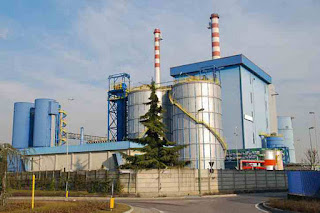
Energy-from-waste incinerator
Environment Secretary Caroline Spelman has pitched herself against Government policy on energy-from-waste (EfW) plants by withdrawing support for such a plant in Kings Lynn, Norfolk.

At the same time, DECC, in its new consultation on the Renewables Obligation, is ignoring advice from its own consultants that EfW should receive no financial support and is instead proposing plants receive half a ROC of subsidy per megawatt generated.

Mrs Spelman took the unprecedented step yesterday of withholding £169m of PFI credits from Norfolk County Council's project at Saddlebow, near King’s Lynn, saying that she wanted more information about environmental impacts, the Council's waste strategy and a greater consensus that the plan should proceed amongst the local population.

The Conservative-controlled Council has reacted with fury, accusing her of causing "chaos".

Bill Borrett, its cabinet member for environment and waste, said: "After years of carefully following the criteria laid down, this apparent late moving of the goalposts has surprised and dismayed us.

"Worse, we are concerned it may lose Norfolk people as a whole a government grant worth a staggering £169m."

In fact, a statement said they were expecting "in the region of £500 million over 25 years".

The project is already suspended pending a High Court hearing on December 5th, brought by opponents, to determine whether it should be subject to a full Judicial Review.

The winning bid for the plant's construction, out of ten initial submissions, was from a consortium of Cory and American energy-from-waste specialist Wheelabrator.

Apart from domestic waste, the proposed plant would also process commercial waste that would otherwise go to landfill.

Opposition


In her letter to the Council Mrs Spelman gives as the reason for her decision that she is not satisfied that its waste management strategy has popular support.

At the public enquiry stage, a record 2,592 responses were received, of which 2,524 (97.4%) objected to the incinerator and 27 (1%) supported it.

93 parish and town councils also responded, of which 61 (65.6%) were opposed and nine (9.7%) in favour.

Mrs Spelman's stance is supported by two local Tory MPs, Elizabeth Truss, and Henry Bellingham.

Bellingham and Kings Lynn Borough Council recently held a referendum on the topic in which 93% (65,000) voted against the proposal for economic, environmental and health reasons.

Financial support for EfW


Government waste policy is currently weighted in favour of incineration and uses PFI credits to support projects.

They have been allocated to 32 waste treatment plants (mostly, but not all, incinerators), and, although called credits, they do not have to be repaid, making them effectively grants.

The PFI credit for the proposed incinerator at King’s Lynn is worth about £40 per tonne.

A Government paper on EfW published in July notes that PFI credits worth £2.48 billion have been committed to 37 waste projects.

There are additional projects in the application process, for which it is expected a further £0.8 billion PFI credits will be awarded.

Norfolk Council also stands to benefit from landfill tax avoidance of £56 per tonne, rising by £8 per tonne for each of the next three years and an average of £110 per tonne over the incinerator's 25 year life.

Then there would be the income from a gate fee of an estimated £77/tonne and from the expected power generation from the Combined Heat and Power plant of 22MW of electricity and 20.4MW of heat, some of which will be used by a paper mill next door.

DECC rejects advice on support for EfW


DECC has received evidence from consultants Arup that EfW should receive no financial support from Renewable Obligation Certificates (ROCs), but is choosing to ignore it.

In its latest consultation on proposals for the levels of banded support under the Renewables Obligation for 2013-17, published yesterday, it says that it is rejecting this advice on the grounds of supporting renewable energy and jobs, because EfW plants have high initial capital costs.

It is proposing that the support goes from the current 1 ROC, (costing £8.7m per year from 2016/17 onwards) to 0.5 ROCs.

It also expresses hope that the level of renewable electricity generation capacity from energy from waste CHP could reach around 60-70MW by 2020, and around 100-130MW by 2030.

"This level of deployment could potentially generate in the region of 0.3-0.4TWh/y of renewable electricity by 2020 rising to around 0.6-0.8TWh/y in 2030", they say.

Critics say that such a policy locks the UK into an unsustainable route, and that such energy is not truly renewable.

By halting the Council's plans in Norfolk, it looks as though Mrs Spelman sides with these critics against DECC.

The dilemma of waste or recycle


The dilemma experienced by Norfolk is being felt in many cash-strapped councils around the country: if there is cash for EfW - why shouldn't they accept it?

410,000 tonnes of municipal rubbish is produced in Norfolk every year and the county has a recycling rate of 43%.

The incinerator would need 170,000 tonnes of waste every year for 25 years.

The Council calculates that after incineration of 170,000 tonnes, there is sufficient margin left of the 410,000 tonnes total to meet recycling targets.

But the waste hierarchy that is key to the Waste Review prioritises reduction, re-use and recycling, and it is likely that in the future ways of reducing the level of absolute rubbish will be found, making it hard to meet the national appetite for burnable waste should many of these plants be built.

Waste destroyed in an incinerator will be replaced, requiring new raw materials, manufacture, transport and packaging.

By contrast, reduction, reuse and recycling represent a win-win strategy. A number of cities in Europe have already achieved high levels (over 60%) of diversion of waste.

Moreover, Defra’s own paper on ”The Economics of Waste Policy" states that it is desirable that "waste is allocated to the various management options such that the social marginal cost of each option is equalised".

This is far from the case at the moment.

The social marginal cost includes the health and environmental cost of the plants.

Health and environmental effects


The Environmental Permitting (England and Wales) Regulations 2007 Updated October 2009 Version 2.0, lays out the monitoring and reporting criteria to operate a waste incineration facility.

It requires continuous monitoring of emissions to air but not of heavy metal, dioxin and furan emissions, which are only regulated by spot checks once or twice per year for 6-8 hours, under the Waste Incineration Directive.

Norfolk County Council has stated that "technology in today‘s modern energy from waste plants stops the formation of dioxins",

But the proposed plant does not use the latest technology which reduces dioxin production.

Opponents cite a 2008 dioxin breach from the Dundee incinerator, which they say illustrates how even a ‘modern’ energy from waste plant can still release dioxins over 100 times the legal limit.

Residents are also worried about smell, particulates (PM10 and PM2.5), and low level ozone.

The County Council has alleged that the incinerator would produce around one nine-hundredth of such emissions compared to other sources like traffic.

But this statistic is a national average, not a local observation.

Nationally, municipal EfW incinerators make a small contribution to the UK's total emissions because there aren't many of them.

And even the Environment Agency has identified bottom ash as potentially hazardous, which cannot be disposed of casually.

It seems that Caroline Spelman has found a way to make herself popular and support health and the environment.

But the prospects for energy-from-waste look entirely unclear.

Nuclear timetable slips but we don't need it to keep lights on

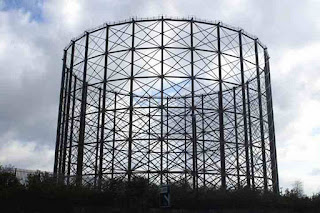
empty gas holder
The latest official estimates show that Britain will not face power cuts or gas shortages in the near future but concerns remain in the longer term.

In particular, the Government has admitted that the timetable for replacement nuclear capacity has slipped.

It is now estimating that new plant won't come online until "around 2025", following the electricity market reforms.

Only two years ago, 2020 was the official estimate.

The revelation comes in the latest Statutory Security of Supply Report (SSSR), published today by Energy Minister Charles Hendry, which has been produced jointly with Ofgem with input from National Grid.

The schedule slippage is in line with recent pull-outs by some nuclear power developers following events in Fukushima, and delays in construction of Areva's plant in Finland, the completion of which was put further back yesterday to 2014.

This Olkiluoto plant, which is of the European Pressurised Reactor type expected to be built in the UK, is now five years behind its original schedule.

Any new nuclear plant therefore could also not help the UK to meet its 2020 target for carbon emission reductions.

The Report reaffirms Ofgem's estimate last year that together the gas and electricity markets need £200 billion of investment between now and 2020 to meet the challenge of keeping the lights on while reducing emissions.

Electricity


The Report quotes National Grid projections that peak electricity demand will remain relatively stable at around 60 gigawatts (GW), although there is "a range of sensitivities around this central case".

How does this pan out? At the end of 2010, the UK as a whole had a total of 90.2 GW of electricity generating capacity of various kinds. This breaks down to:

Coal: 26%
Oil: 4%
Other Conventional Steam: 11%
Gas: 38%
Nuclear: 12%
Hydro Natural Flow: 2%
Hydro Pumped Storage: 3%
Wind: 3%
Other Renewables: 2%

About a third of generated electricity is lost in transmission, so the balance of generation capacity and supply is adequate but vulnerable to situations were a lot of capacity might be offline at once.

(It's worth putting this in context, and remembering that electricity is only 17.5% of the UK's total final consumption by fuel.)

However, the Large Combustion Plant Directive will lead to closure of around 12 GW of coal and oil-fired generation by the end of 2015 at the latest.

The Industrial Emissions Directive could also lead to further closures by 2023.

In addition, according to current timetables, up to 7.1 GW of existing nuclear generating capacity is reaching the end of its operational life and will have closed by 2020.

This means that a total of 19.1 GW of generation capacity could be lost by 2020, with further closures by 2023.

Meeting the gap


Where will the required capacity come from? The answer given in the Report is: from gas and renewables in about equal measure.

The Security of Supply Report says that in addition to the 7.3GW of renewables projects that will connect to the National Grid that are either under construction or consented, there is a further 5.7 GW of projects that have submitted planning applications.

These are predominantly offshore and onshore wind and biomass generation projects, with the majority of the capacity being over 50 MW.

That totals 13GW.

Furthermore, 4.3 GW of new gas-fired plant is already being built, and a further 8.7 GW has planning permission, also totalling 13 GW.

The total of new and consented plant is 21.5 GW. Adding the submitted renewable capacity gives a total potential of 26 GW, certainly exceeding that which is expected to be lost, without the need for new nuclear.

Gas supplies


DECC has published a risk assessment on gas security of supply, as required by the EU Regulation on Security of Gas Supply, and Chris Huhne has asked Ofgem to examine security issues "to ensure that medium to long-term gas supplies for consumers remain secure”.

The wholesale gas market in Britain has a good track record in attracting significant private investment, but Ofgem's Chief Executive, Alistair Buchanan, observes that Britain has a "growing exposure to a volatile global gas market".

"We have seen this recently where political instability in the Middle East and the impact of Fukushima have helped push up wholesale gas prices for this winter by 40%," he said.

Therefore Ofgem is considering imposing incentives on the gas industry of £20 per therm for domestic users when they fail to balance their gas supplies to and off-takes from the system, in order to improve security of supplies.

Additional measures could include forcing suppliers to store fixed amounts of gas and publish more transparently details of their holdings and supply contracts.

These proposals have been published today in a consultation and are based on modelling by Redpoint.

This shows that under current conditions the domestic market should on average only experience disruption once every 16 years, and the non-domestic market once every 122 years.

This is in line with National Grid’s Gone Green scenario that expects demand to fall beyond 2012. Net imports were 26.2% in 2008 and have declined since then.

However if new gas plant is built to meet the electricity capacity gap then this will create more demand.

However, it is estimated that up to 20% of this could be supplied from renewable sources by 2020.

Oil supply


Despite the plans to introduce more electric vehicles onto our roads, oil will continue to be the main fuel for transport.

The Security of Supply report does not envisage significant reductions in oil demand over the next 20 years.

Although the consumption of petrol in the UK is expected to fall, diesel and aviation fuel are expected to show significant growth.

The UK will therefore remain vulnerable to oil price increases, and oil will proportionately increase as a source of the country's total carbon emissions, which it will find stubbornly hard to reduce..

Tuesday, November 08, 2011

Big organisations' carbon emissions made public for the first time

The public is now able to see for the first time which companies and organisations are making a real effort to reduce their carbon emissions and which are not.

The carbon savers and the carbon slackers have all been made visible under the first Performance League Tables of the Energy Efficiency Scheme, published today by the Environment Agency.

This mandatory scheme, which was introduced in 2008, was originally touted to contain about 3,000 UK organisations whose half hourly electricity consumption totalled more than 6,000 MWh per year (equivalent to approximately £500,000 annual spend) in 2008.

In the end the table contains 2,106 businesses due to exemptions under Climate Change Agreements (CCAs) or EU Emissions Trading System (EU ETS) to prevent businesses being taxed twice.

Between them they are responsible for up to 10% of the UK’s emissions.

The tables show the relative performance of all participants in CRC against their Early Action Metric (%), which represents the average percentage of the proportion of non-mandatory CRC electricity or gas supplies measured through voluntarily installed 'automatic meter reading' meters or dynamic supply in year 1 and CRC emission coverage by the Carbon Trust Standard or equivalent.

The better an organisation performs in terms of cutting its emissions, the higher it appears in the annual performance league table.

Twenty two organisations have scored 100% in the 'early action metric', to take joint top spot, including (thankfully for them) Ofgem, DECC and Manchester United Football Club, who join British American Tobacco, Center Parcs, and several NHS foundation trusts.

At the bottom of the league come many hundreds more organisations who scored zero or close to zero.

They include some big names like Veolia waste services, Kingfisher group, IKEA, Standard Life, American Express, Bombardier, Care UK, Citibank, Coca Cola HBC Northern Ireland, CRC MANAGEMENT II LIMITED (ironically), Crown UK Holdings, Dell computers, HMRC, Kingspan insulation, and many London Boroughs.

Also shamed at the bottom are the pension schemes of National Grid and BT, many other NHS trusts, Orange Business Holdings, Pepsico, Rio Tinto, Carphone Warehouse, Thomson Reuters and the UK Atomic Energy Authority, Virgin Atlantic and many universities.

The problem with the ranking is that the reason for a zero ranking may simply be that no smart meters were installed. This is especially interesting in the case of several who have shouted very loudly about their green credentials, like IKEA.

The Carbon Trust's mantra has always been that 'what is not measured cannot be saved', and so the CRC is a definite encouragement at the very least for participants to install meters.

Errors in the data


Errors are already showing up in the data.

IKEA has complained that it entered its data imcorrectly (and this corrects our earlier version of this piece) when it input its emissions usng figures under the Carbon Trust Standard. In fact its ranking should be 381st not 1299th.

However, the EA website says that all participants were given a chance to check and verify their data until 27 September.

They say that "Since then a small number of organisations have notified us of amendments which, had they been reported before 27 September, may have changed the organisations' positions in the PLT.

"This PLT has been independently validated by AEA Technology and is fixed based on the 27 September reported data."

Their website does say that waste company Veolia's position is also wrong. Since it is able to claim Energy Generating Credits, its net emissions as defined under the CRC are negative.

But the CRC scheme design did not envisage there would be zero or negative emitters when calculating the Early Action Metric (EAM) score, and so Veolia's early actions are not properly reflected in the Performance League Table!

Where the net result is zero or negative emissions, the CRC Registry cannot calculate a score for the EAM based on the amount of emissions covered by a carbon management certification scheme regardless of actions undertaken by a participant.

Moreover, Pepsico, also ranked 1299th, became in January the first company in the world to use te Carbon Trust's Carbon Product Footprinting as a management tool to drive green growth across its supply chain.

Its activity in this and other respects should earn it some Early Action Metric points.

Also there is no credit given in the criteria for improvements companies have made as part of a Climate Change Agreement.

This means that they appear far down in terms of performance when, by definition, of being part of an agreement they have substantially improved their energy efficiency and been taking energy-saving measures since 2001.

EEF, the manufacturers organization, was quick to criticse this. It s Head of Climate & Environment, Gareth Stace, said this "does not fill us with hope that government has fully taken stakeholder views into account," and this may "not bring about the behavioral changes that government is hoping for.

"Many companies will be worried that this mis-representative data will affect their reputation in un-warranted ways.”

Scorecards


It is possible to look closely at each business' responses.

Here, you find out for example that Manchester United, despite coming joint top, gave no answer to the questions about whether it discloses carbon emission reduction targets in its annual reporting, has anyone in charge of energy management or "actively engage employees to reduce carbon emissions at work".

A spokesman for the Environment Agency, said: "The 2011 league table shows that over 60 per cent of organisations have taken action by installing smart meters and obtaining a certificate for 'good energy management' from the Carbon Trust or other accreditation scheme.

"The table also shows participants' annual carbon emissions - although they are not ranked on them this year."

As well as reducing carbon emissions, the scheme is intended to help participants save money by reducing their energy bills.

John Field, Director of Power Efficiency Carbon Management, which provides CRC compliance services to a number of major corporate and public sector clients, says the process has been a "wake-up call," and helped to "take energy management out of the plant room and into the board room". Compliance levels have been high, he says, including all the cases PECM has dealt with.

"Given the background of rising energy prices, this is a real opportunity for bodies to get to grips with managing their energy use. It's the first time they have had to make a concerted effort to create a separate budget for energy use."

Participants had to submit their first reports, describing their energy consumption from 1 April 2010 to 31 March 2011, by the end of July to the Environment Agency.

They contain a CRC Footprint Report and an Annual Report, which accounts for their energy usage from all sources across all of their sites.

The Footprint Report is important because it defines which emission sources they have to report every year over the next three years.

Crucially, it demonstrates whether at least 90% of emissions are covered by any of the EU Emissions Trading System (EU ETS), a Climate Change Agreement (CCA) or the CRC.

If this was done effectively, companies would have reduced their costs by 10%, as the pollution sources cannot be changed during this period.

Organisations are also exempted from the Carbon Reduction Commitment scheme if they have a Climate Change Agreement under the EU-ETS.

The Agency has now finished verifying and comparing these figures and published the first of its annual league tables which enable everyone to see how well, or how poorly, participants have done.

The idea is to name and shame or praise the supermarkets, universities and other bodies who are registered.

If an organisation makes mistakes, by inaccurately reporting emissions or if it submitted data beyond the deadline, it is subject to fines.

The price of allowances


From April next year, participants must surrender allowances, each one equivalent to one tonne of CO2, by buying enough credit to cover their previous emissions.

Their currently proposed price for these is £12, but the Treasury may change this as a result of the next Budget.

It is likely to be harmonised with the value of the carbon price floor, thought to be going to be £13, for the sake of simplicity.

But given that the market value of carbon now is significantly lower than £12, there are calls from participants for the value of allowances to be lower too, to minimise costs especially from heavy energy users.

However, developers with high initial capital costs, like nuclear and offshore wind, are calling for a high carbon floor price to help provide the finance they need.

The CRC is now a straightforward carbon tax, but originally, under Labour, the proceeds were supposed to be recycled back into energy efficiency.

If the value of an allowance were to be £12, then the Treasury would receive approximately £750m on initial analysis of these figures – significantly less than the £1bn it had said it expected to receive.

Monday, November 07, 2011

Ecotricity launches ‘Ecobonds’ as Government faces FITs legal challenge

Dale Vince of Ecotricity
Ecotricity, the UK's largest renewable energy company, is launching a second issue of its popular 'Ecobonds', worth £10 million.

The move comes as Friends of the Earth issue a challenge to the Government to revise its plan to change the Feed-in Tariffs (FITs) given to owners of solar photovoltaic installations.

Ecotricity's 'Ecobond Two' will enable any UK-based individuals, companies, trusts, charities and other legal entities to invest directly in building new sources of green energy in the UK, starting with a minimum of just £500 of investment.

Its first Ecobonds, issued thirteen months ago, were heavily oversubscribed, exceeding a £10 million target by 50%, and becoming the UK's largest ever private bond issue.

They funded the construction of the UK's first 1MW Solar Park at Fen Farm in Lincolnshire, a third wind turbine to power Ford's Dagenham Diesel Centre, and a wind turbine at the G24i plant in Cardiff that makes solar panels.

Director Dale Vince expects 'Ecobond Two' to be just as popular. "Our ecobonds give people the opportunity to share in the financial benefits of green energy without the needing to stick anything on their roof," he said.

"And crucially we cut out the middlemen, the banks, and pay people the same rate of interest on ecobonds that banks would charge us if we borrowed the money from them."

The capital raised will contribute towards installing 19 wind turbines, already with planning approval, and a further 78 for which it is seeking planning approval.

"This might prove an attractive option for people who want to be green and also get an attractive rate of return, but can't - or don't want to - put solar panels on their roof, especially in light of [last] week's Feed-in Tariff (FiT) rates fiasco," said Vince.
Feed-in-Tariffs

Friends of the Earth has written to Climate Change Minister Greg Barker saying that unless the Government agrees to amend its proposals by 4pm on Friday 11 November, it will apply for a judicial review of its proposal to impose lower feed-in tariff payments on installations completed after 12 December.

It has taken legal advice that says this cut-off point, two weeks before the Government's consultation ends, is unlawful and will lead to unfinished or planned projects being abandoned.

Friends of the Earth's Policy and Campaigns Director Craig Bennett said: "The Government is breaking the law with its plans to fast-track a solar industry kill-off - as well as jeopardising thousands of jobs and countless clean energy projects across the country.

"Significant time and money has been invested planning solar schemes for homes, schools and libraries - giving them just six weeks to install is completely unacceptable, and schemes have already been scrapped.

"With soaring fossil fuel bills and mounting anger about the Big Six energy firms, the Government should be encouraging people and communities to generate their own clean electricity."

High rate of return

This is precisely the aim of Ecotricity's Ecobond Two. This will provide a fixed rate of return of 6.5% for four years for existing or new Ecotricity customers. Non-customers will receive a return of 6%.

Although lower than last year's 7.5% rate, this would be above the 4.5% - 5% rate available through Feed-in-Tariffs (FITs) for solar PV installations under the revised levels likely to be introduced after December 12.

Profits at Ecotricity have dipped in the last financial year, due to increased overheads and its acquisition of 71% of local club Forest Green Rovers FC for £695,000, according to its latest accounts for the year ended 30 April 2011.

Pre-tax profit fell to £1.7m, compared with £3.8m in 2010, although turnover grew by more than 19.8% to £44.2m.

It is a 'not for dividend' company with no outside shareholders to answer to.

Its plans include building over 1,000MW of renewable electricity generation capacity and supplying over 500,000 customers in the next ten years.

Its current base is 53 wind turbines at 17 wind parks, and 55,000 clients, up 30% on the previous year.

A spokesperson added: "Since the start of May 2011, on the generation side of the business, we've opened the UK's first large-scale solar farm in Lincolnshire and installed another wind turbine to power one of the biggest manufacturers of diesel-engines.

"In addition we now have 19 windmills ready to go with with planning permission and another 78 going through planning at various sites around the country."
Investment gap

Dale Vince recently criticised the 'Big Six' energy companies, saying, "There is a big problem in the energy market, but it's not only about how much money the big six energy companies are making - it's about what they are doing with that money."

He observed that out of the £125 they each make per customer per year, only £5 is spent on building new green energy sources.

"The reason for the lack of investment is not just weak regulation but because four of the Big Six energy companies are foreign owned and their interests are not aligned with the interest of the British public," he said.

"These multinationals take bill money from customers here in Britain and spend it in Germany or France or pay out dividends to shareholders."

He said that, by contrast, Ecotricity "invests more per capita in building new sources of green energy than any other UK electricity company".

It is the only energy supplier supported by Oxfam and the Soil Association.

Ecotricity is one of a new breed of renewable energy companies that also include Good Energy, Ebico and Ovo Energy.

Ecobond Two will be issued by Ecotricity Bonds plc, a wholly-owned subsidiary of the Ecotricity Group Limited (Ecotricity), which has guaranteed the payment obligations of Ecotricity Bonds plc for Ecobond Two.

Green bonds

The popularity of these green bonds can be seen in relation to the refusal by the Treasury to let the Green Investment Bank issue state-guaranteed green bonds to pay for the development of clean energy infrastructure.

Such a move was advocated by the cross-party Environmental Audit Committee last March.

Such bonds are already issued by institutions like the World Bank, and the idea was originally proposed in June 2010 by the former chairman of Merrill Lynch in Europe Bob Wigley, leader of the Green Investment Bank Commission.

Bu the Government has rejected the idea of letting ordinary people buy such bonds as a way of raising the much-needed finance to build low carbon Britain.

Its reasons include the fact that the National Association of Pension Funds, whose members would be major customers, said they would expect to be bribed with a higher yield because the market in the bonds would be "illiquid compared to the broader sovereign market".

Additionally, some way would need to be found to ensure that the bonds did not count as UK state debt for accounting purposes.

The Treasury was also worried that green bonds could crowd out its own funding programme.

But if Ecotricity's new bonds proved to be as popular as the first issue, this would show that there is a strong public appetite, whetted by FITs, for investment in renewable energy.
Green football

Interestingly, Ecotricity intends to make its acquisition Forest Green Rovers the UK's first green football club.

Dale Vince has become chairman of the Blue Square Premier side since purchasing the club and has started greening it by ordering its grounds to be made solar powered and the creation of an organic grass pitch.

He has also stopped players eating red meat and banned the selling of all red meat products at the grounds.

Thursday, November 03, 2011

Energy intensive industries beat energy-saving targets but still want tax breaks

oil refinery
Energy intensive industries beat their energy-saving targets

Energy intensive industries are beating their energy-saving Government targets at the same time as lobbying for more tax breaks on the carbon price floor.

Companies such as Tata Steel, Rio Tinto and Ineos Group Holdings Ltd. are lobbying DECC and the Treasury to be protected from the cost implications of the carbon price floor and the EU Emissions Trading Scheme.

But the Government's negotiating arm to resist this will be strengthened by the news that these industries saved energy, and therefore carbon and cash, to the tune of 28.5 million tonnes of carbon (MtCO2/year) last year.

They even collectively exceeded their targets by 2.7MtCO2/year under the Climate Change Agreement (CCA), according to new figures for 2010 released by AEA for DECC.

The targets were voluntarily agreed because the participants obtain a 65% tax break on the Climate Change Levy (CCL).

One of the best performing of the 54 sectors in the scheme is also the one lobbying most for favourable treatment: the steel sector.

It made savings of 13.1 MtCO2/year, while its target was 4.4MtCO2/year, meaning that it beat its target by 8.7MtCO2/year.

The other sectors only beat their target by 1.7MtCO2/year, saving a total of 15.4MtCO2/year.

Well-performing sectors include chemicals, food and drink, concrete and paper.

Most sectors (38) met their targets. In a further 15 sectors all the facilities reporting had their Climate Change Levy discounts renewed.

This means that all but one per cent of the 9,634 facilities registered with the scheme had their CCL discounts renewed, making the scheme an official success.

The spirits industry, for example, was able to save about £2.6m a year on tax over and above their energy cost savings, based on an improvement in energy efficiency of 25% since 1999.

This is precisely the kind of achievement the policy is meant to stimulate.

This is the first CCA target period to cover participants in EU ETS Phase II, where there is no opt-out (as there was in Phase I), meaning that if a unit reduces emissions, then they may have a surplus of allowances for sale on EU ETS or banking for future use.

But Jeremy Nicholson, director of the Energy Intensive Users Group, which represents industries that consume large amounts of gas and power in the UK, says that they need help also because of the surge in energy prices.

The Group cites German competitors in such industries, who benefit from carbon tax rebates worth more than €5 billion a year, paying only €0.5 of the €35 tax.

MPs such as Pat McFadden (Wolverhampton South East, Labour) and Caroline Nokes (Romsey and Southampton North, Conservative) and especially Tristram Hunt (Stoke-on-Trent Central, Labour), chair of the all-party group that supports the sector, are also lobbying the Treasury on their behalf.

Mark Pawsey (Rugby, Conservative) recently pointed out that cement manufacturer CEMEX, in his constituency, faces an alleged £20 million bill for complying with carbon legislation.

There is talk of the climate change levy being widened and the rebate increased to mitigate the carbon price.

The carbon price floor will require industries to pay a top-up if the market price for carbon is below a the floor level.

It is primarily aimed at the energy sector to drive investment in low-carbon technology and generating capacity.

Due to the state of the economy, the carbon price is currently at an all time low. EU Allowance Units (EUAs) are down to €10.17 and Certified Emission Reductions (CERs) to €6.85.

The 10.17 figure is significantly below the anticipated level of the carbon price floor of £13 per tonne in 2013 and £30 in 2020, and not good news for the financing of carbon emission reduction projects.

(DECC recently revised its estimate of the future carbon price, to €33-£29 a tonne of CO2 by 2020.)

The fund resulting from the floor is meant to contribute to the £200 billion that is required over the next decade or more to build the low carbon future.

Any tax breaks for energy intensive industries will reduce the amount available for this purpose.

But will it be used for this purpose or just to fill the general Treasury coffers?

On 26 October Zac Goldsmith asked the Chancellor of the Exchequer just this question: whether he has plans for the recycling of revenue from the carbon price floor and the EU Emissions Trading Scheme into low-carbon projects.

Speaking for the Treasury, Chloe Smith gave as clear an answer as possible, saying that "In general, the Government considers that hypothecation, or "earmarking" revenues for a particular spending purpose, is an inefficient way to manage the public finances".

In other words: no it won't.

The Department for Energy and Climate Change is working with the Department of Business Innovation and Skills and HM Treasury on the development of a package of support for the energy intensive industries, and the results are expected to be announced on 29 November as part of the Electricity Market Reforms.

Win a copy of Solar Technology!

I'm giving a talk tonight and signing my new book, Solar Technology, at the Pen'rallt Bookshop, Machynlleth at 6.30 (booking required, Tel, 01654 700559). And I'm running a competition to win a copy - and offering 20% off list price at http://www.davidthorpe.info/solar-technology.htm

Tuesday, November 01, 2011

"Too Fast, Too Much" – solar PV industry in shock

Greg Barker (second from right) in May this year visiting Telscombe civic centre, which installed 54 photovoltaic solar roof panels under the FITs scheme.
The UK solar PV Industry is in shock due to the severity and speed of the Government’s proposed cuts to the Feed-in Tariff for the technology.

With talk of job losses and legal action, industry bosses are searching for a way to soften the expected impact of the sudden fall in tariffs and the timescale.

Dave Sowden, Chief Executive of the Micropower Council, said: “Within four hours of these proposals being announced, we received our first phone call of a company starting a statutory consultation with staff over impending redundancies."

Most stakeholders understand the Government's dilemma, caused by the rush of PV installations rapidly depleting the extent of the £867 million fund.

There were over 16,000 new solar PV installations in September alone – nearly double the number installed in June.

“But these proposals go much too far," Sowden warned. "Under these proposals solar panels will simply become “eco-bling” for the middle classes, paid for by all, including the fuel poor.

"Yet those on lower incomes will no longer be able to benefit from offerings such as free solar or social housing schemes, due to the financiers of these schemes pulling out.

“The speed of the changes will also leave many companies with stranded assets, a plethora of contractual disputes."

A protest by the industry and supporters is being planned at Downing Street for 23 November to lobby for more modest reductions in the tariff and a less drastic timescale.

The Cut Don't Kill campaign has warned that such deep cuts would "kill the UK solar industry stone dead".

Industry veteran Jeremy Leggett, chairman of Solarcentury, warned that 25,000 jobs could go in one of the country’s few growth industries.

“There is not even any recognition that the industry will need some time to adjust to such a change,” he said.

He said he believed that the timing of the change makes it “wide open to legal challenge and we now expect a very serious industry challenge to be mounted”.

Daniel Green, chief executive of HomeSun, an installer of 4,000 solar systems, said in despair, “There is no business left, it is finished. It just doesn’t pay for consumers to do it now.”

The Government's consultation on reducing the tariffs states that from 1 April 2012 the tariff payable to retrofitted residential solar installations will be cut from the current 43.3p/kWh to 21p/kWh.

The tariff then reduces rapidly as the size of the installation rises.

In a blow to the social sector, used by housing associations and local authorities to put panels on their stock, “aggregated” schemes such as social housing and “free solar” will have an even lower tariff – 16.8p/kWh.

However, Greg Barker did say in the House of Commons that the Government is considering "whether more could be done to enable genuine community projects to be able to fully benefit from FITs", as the current scheme cannot identify a community project.

Because the proposals make no change to tariffs for projects installed by 12 December, which will receive the current rates for 25 years, a rush has begun to finish any projects now in progress before this date.

According to the consultation the 21p tariff would yield a rate of return to private individuals of 4.5%, presently higher than most savings accounts, but perhaps not so for 25 years.

The consultation has two phases. The first relates to changes to the tariffs.

A second one is expected before the end of the year and will cover all other aspects of the scheme, including the tariffs for other FIT technologies, adding to the sense of panic felt throughout the sector.

The Government is defending its line by arguing that the cost of an average domestic PV installation has fallen by at least 30% since the start of the scheme – from around £13,000 in April 2010 to £9,000 now.

It says that at this rate, without changing the tariffs, the cost to all electricity bill payers by 2014-15 would be "£980 million a year, adding around £26 (2010 prices) to annual domestic electricity bills in 2020".

The revised tariffs would limit the cost to £250-280 million in 2014-15, making domestic electricity bills around £23 (2010 prices) higher in 2020.

The Government now wants all PV installations from 1 April 2012 to come with energy efficiency makeovers for the property concerned.

As for the level of efficiency required, the proposals are for either an Energy Performance Certificate level of C, or the taking up of all measures potentially eligible for Green Deal finance.

If the building did not meet the energy efficiency requirement the installation would receive a lower FITs rate of 9p/kWh.

Energy Minister Greg Barker said, "This new requirement will encourage the industry to make the most of their skills and expertise and work much more closely with the rapidly expanding energy efficiency market".

Some suppliers such as Sharp Solar say they are already mobilising to offer this service to customers.

In a rowdy Parliament debate yesterday, Caroline Flint, shadow energy secretary, accused the Government of delivering a “kick in the teeth for those families who wanted to do the right thing by investing in solar.

"The new proposals guarantee that lower-income households will lose out, as fewer firms offer the lifetime deals that are currently available, and that solar will be available only to the well-off."

She asked why, if costs have fallen by 30%, the tariffs are being cut by 50%, and observed that so far the UK "has installed only 3% of the solar energy installed in Germany in the past two years".

Barker defended the 12 December cut-off date by saying that otherwise "there would be a massive gold-rush, and the entire budget for feed-in tariffs would be gone" by April 2012.

DECC must tell us the truth about nuclear waste

The Encapsulated Product Store 3 (EPS3) for intermediate level waste at Sellafield
The Government must come clean now about what taxpayers will have to cough up for managing existing as well as future nuclear waste.

It's shocking but true: we are not, as I had always understood, investing in a fund to manage our current nuclear waste in the future.

We are paying lip service to it and dodging the question at the expense of future taxpayers.

Moreover, there is total confusion about what provisions are being put in place to manage any future waste from any new nuclear power stations.

Will the real DECC budget please stand up?


Last week, the Guardian published on its website figures which appeared to show that spending by the Department of Energy and Climate Change on nuclear waste management has risen by an astonishing 81%, as part of an overall budget increase from last year of over 146%.

In trying to find out whether this is true I have found out a truth worse than this, as well as an admission that any new nuclear operators are allegedly being asked to contribute to a fund not only to pay for management and disposal of the new nuclear waste which their plants will create, but also for that of existing nuclear waste!

According to the Guardian, in 2009/10 DECC's entire spend totalled £3.18bn, but in 2010/11 it is spending £8.06bn, an increase of 146.02% that is largely due to nuclear liabilities.

This spending, according to the Guardian, breaks down as follows (please scroll down - Blogger is formatting this table weirdly):


DECC spending: £ per topic and change from last year
Topic Amount % increase or decrease
Nuclear Decommissioning Authority £6.9bn +81.12%
Committee for Climate Change £4.4m +12.12%
Low carbon UK £622.7m -29.8%
International agreement on climate change £5.4m +22.42%
Promoting low carbon technologies in developing countries £278.6m +159.52%
Coal Authority £0.7m +87.02%
Professional support and infrastructure £117.7m -7.62%
Energy £87.2m +3.33%
Historic energy liabilities £104.5m -106.8%

We already knew that DECC is unique among Government departments because it has to spend almost half of its budget on dealing with existing nuclear waste.

But to see that this has risen to almost almost 86% of overall DECC spending seemed incredible.

Trying to check this figure led me on a very confusing path.

My first port of call was the Guardian itself, where its reporter Simon Rogers said that DECC's press office had told him that the increase in spending was due to increased cost of high level waste management at Sellafield.

I then had several lengthy phone conversations and email exchanges with DECC's press officers, to see whether this was true.

They themselves were clearly struggling to understand what their own departmental figures meant and had to seek clarification more than once.

Now that they have explained them, I am even more concerned that the UK's nuclear liabilities are being left for future taxpayers to pay for.

The increase in the amount allocated to the NDA in DECC's budget is in fact only a paper increase. It is not real.

A DECC spokesman said that the cash that actually went ‘out of the door’ to the NDA for its decommissioning work was £1.7bn.

This is in line with the NDA's business plan, which says that government funding in 2010/11 is £1.69bn, rising to £2.022bn in the following financial year and £2.249bn in 2012/13.

But the Government reviews every three or five years the cost of nuclear waste management over the next 100 years.

The spokesman says "obviously that figure goes down as we spend money each year".

Personally, I have never known it to go down.

In fact, as he says, "...it can also go up. That is what has just happened".

Yes, this is what we expect.

He says the estimate "has increased by £5bn [to £55bn], and Government budgeting rules mean that our expenditure tables also need to reflect that".

The real cost of dealing with existing waste


This £55bn figure is a mystery. I can't find a source for it anywhere.

I can find that the NDA's Nuclear Provision for 2010/2011 alone was just over £49 billion, and that The National Audit Office put the cost of dealing with the waste and decommissioning of the U.K.'s 19 reactors at £73bn in 2008.... a much higher figure.

What will be the real cost of dealing with existing waste? In truth, nobody really knows.

But assuming that £55bn is the figure DECC is using, the £5bn increase is just a 10% increase on the one it was using before.

Yet the Guardian says the spending has gone up 81%. What, I wanted to know, accounts for the other 71%?

Is it because the NDA has to build a new pond store at Sellafield (see last month's report by Dr. Mike Weightman, the chief nuclear inspector at the Office for Nuclear Regulation?

No.

Is it because of the inspection of our military nuclear waste which has just taken place?

No. Both of these are covered by the NDA's regular spending.

Creative accountancy


It is actually an accounting trick.

There is no money.

It is a note attached to the budget which means "we hereby observe that will have to pay out £xxx billion of cash at some point in the future".

This sounds like the kind of creative accountancy that has gotten public finances into the mess they are in right now.

To help us understand it, let's try to analogise the situation to household spending.

If I know I have to spend £100,000 to maintain my house over the next 100 years, I might choose to pay £1000 a year into an interest bearing account to accrue as future source of funding.

Is the nuclear liability money being spent this way, I asked DECC?

No.

The spokesman was very clear about this. He wrote: "You might then ask, is this extra £5bn we’ve noted money that is set aside and kept in a separate pot somewhere, (like a pension)?

"No," he answered himself. "Think of the reference to it in the accounts as a formal record of the fact that we’ve changed our estimate of the grand total of what we think will need to spent in future."

In fact the pension plan is a great analogy. If you or I don't put a regular amount in to our pension plan then we know there will be nothing there in the future when we need it.

But DECC is not actually putting money into a fund to manage our nuclear liability, it is just stating that the money needs to be there in the future.

Where will it come from?

Who knows?

Remember, this is a taxpayers' liability.

But I have discovered even more than this.

New nuclear waste


In a phone conversation with another press officer, he admitted that new nuclear operators like Horizon and EDF are being asked to contribute to a fund not only to pay for management and disposal of the new nuclear waste which their plants will create, but also for that of existing nuclear waste.

I double checked that this was what he meant.

I said, "Are you seriously saying that the Government is not putting aside cash to deal with our nuclear legacy but is asking nuclear operators to do so? What do they think of that?"

If I were a nuclear operator I would be outraged.

But the question was dodged. He was having a hard time explaining it in the first place, and merely reiterated the line that the Government is taking a responsible position.

DECC's line on new nuclear waste is "New nuclear operators will be required by law to put money aside from day one to pay for the eventual decommissioning costs and their full share of waste disposal."

The law is the Energy Act 2011, under provision for the nuclear operator’s Funded Decommissioning Programme (FDP).

The value of the FDP is calculated using a “Waste Transfer Price” of, currently, £1 billion per reactor, although this is being debated by the Nuclear Liabilities Financing Board.

But Greenpeace's economist Ian Jackson has calculated that due to the extra work needed to comply with post-Fukushima safety requirements, the estimate is out by £445 million.

If there are 10 reactors built, taxpayers will end up forking out £4.45 billion to make up the shortfall.

Furthermore, the maximum price cap on all other costs has also been underestimated, he says, and should be £11.2 billion higher.

The Nuclear Liabilities Financing Board is the quango looking at the FDP issue, setting this cap.

But who exactly is doing its work?

According to the minutes of the Board's meetings, which are held every two or three months, representatives of the consortia hoping to build new nuclear power stations, Horizon, and NNB Genco (the consortium of EDF Energy and Centrica), have regularly attended its meetings.

Not only that, they seem to be setting the agenda and terms.

The minutes for December 2010, January and April 2011 illustrate how the Board and the office for Nuclear Development are letting NNB Genco design and explain the Fund, its structure and its role.

Isn't this a case of the tail wagging the dog?

Why are the private companies which stand to benefit from obtaining the lowest cost imposition able not only to attend the meetings of those who are setting the terms for private sector liability, but actually design these terms?

Moreover, there is no mention in any of the minutes of any real detail, for the sake of transparency.

Crucially, there is also no mention of whether the operators are supposed to be liable for any decommissioning costs of existing waste, as the DECC press officer said.

The whole business is, at best completely unclear, and at worst downright irresponsible.

There are serious concerns here over the extent to which taxpayers in the future are going to have to pick up the tab for dealing with not just current but future nuclear waste.

DECC should come clean.

And no new plants should be built until we have an absolutely cast iron guarantee that taxpayers will never have to pay any more than they already do to manage this monstrous and effectively always deadly liability.