Friday, October 07, 2011

Alliance relaunches to help communities push for renewable energy

Aikengall Community Windfarm
Tony Juniper, the former Friends of the Earth Executive Director is to spearhead a new campaign to drive grassroots support for renewable energy to make sure developments don't suffer due to the Government's changes to the planning regime and its apparent back-pedalling on commitments to fight climate change, as evidenced at the Conservative Party Conference this week.

The group, called ‘Action for Renewables' (A4R), is a partnership of NGOs, trade unions, grassroots voices and industry.

Its Campaign Advisory Board consists of journalists, environmental activists and politicians from across the political spectrum.

Tony Juniper, who has been appointed Chairman, said in a statement: “The case for renewable energy is clear. The UK needs to play its part in tackling climate change, which we can achieve by harnessing our extensive natural energy resources.

"The new green industries which will achieve this will also generate tens of thousands of new jobs in some of the most deprived areas of the country.”

The group has been set up to counteract "myths and hearsay" about renewables with information, and “is about setting the record straight and encouraging people to stand up and support properly-sited renewable energy developments around the country".

“The silent majority in support of renewables needs to make its voice heard (now more than ever. Action for Renewables intends to give it the tools to achieve just that.”

The group believes that the ‘silent majority’ includes 85% of the population who ″support the use of renewable energy″, as they responded to a 2009 Department for Energy & Climate Change market research exercise called 'Renewable Energy Attitudes and Awareness'.

The same research showed that 60% strongly ″support the use of renewable energy″, and even found an increase in those aged 16 - 24 who favour wind power, with 83% in favour of its use, and the oldest age group is the one most likely to actively disagree with wind power use (but only 9%).

When asked if they would be happy to live within 5km of a wind power development, the number in support dropped to 62% - still almost two thirds.

The Labour Government ran such a survey for several years, but the Coalition Government has not, so these are the last available figures.

Renewable UK therefore thinks that the anti-wind minority has an unfair and disproportionate impact on planning decisions. At the time, in response, Renewable UK launched an earlier campaign, called Embrace Wind.

This was relaunched in 2011 to encompass all renewables, as A4R.

Adam Bell, speaking for the campaign, says that A4R already has 3000 supporters, and will be able to supply resources to campaigners to let them support a particular development in their area.

The campaign is funded by the renewables industry, particularly wind power companies, and so faces criticism that it is a front for these large companies.

In response, Bell said that the "information we provide will be as objective as possible. If it is in any way inaccurate we will soon be picked up on it, so it is in our interests to make it as authoritative as we can and to use the best available science."

Indeed, the website's blog currently contains a lively debate between pro- and anti- wind activists on the topic of noise.

Evidence shows that local people are more likely to support a wind farm development when there are direct benefits to them personally, with the developer letting them contribute to its planning and receive some kind of financial return. A better educated public will be more likely to ask a developer to involve them in this way.

The campaign intends to fight for all renewable energies, but because of its origins in Renewable UK (although the campaign is independent from it), some technologies such as solar and biomass are currently poorly represented. Bell says this will improve with time.

Bell also said that although the government's changes to the planning regime can present a threat to the development of renewables, there are "plenty of opportunities".

"The fact that the communities can propose community development orders and even that there is a provision to organise referanda on a local scale about particular issues, are positive steps for supporters of renewable energy," he said.

A4R's members include Alan Moore (ex-chair of the Renewables Advisory Board); Alan Whitehead MP; Bill Oddie; Charles Kennedy MP; Frances O’Grady (TUC Deputy General Secretary); John Sauven (Greenpeace CEO); Jonathon Porritt (former Director of the Sustainable Development Commission); Maria McCaffery (Renewable UK CEO); Peter Ainsworth (Chair of the Conservative Environmental Network); Polly Toynbee (Guardian journalist); Stan Blackley (Friends of the Earth Scotland CEO).

Tony Jupiter has recorded a video about the importance of renewable energy to support the relaunch.

Thursday, October 06, 2011

Cars are slowly getting greener and cheaper, despite manufacturers' claims

Smart cars in London
Average CO2 emissions from cars have now dropped to 140g CO2/km, and prices have fallen in real terms, with Fiat, Toyota and Peugeot-Citroen leading the pack with Europe’s cleanest fleets, and Volvo managing the largest cuts in CO2 on average in 2010 (9%).

All in all, the average car sold in Europe last year was 4% more fuel efficient, emitted 4% less CO2, and yet was 2.5% cheaper in real terms than the year before.

The news comes in the sixth report of T&E – European Federation for Transport and Environment - on the annual progress Europe’s major car manufacturers have made in reducing CO2 emissions and fuel consumption of new cars.

It criticises Honda and Mazda's new cars for actually having increased emissions. Daimler has the worst average CO2 emissions of major manufacturers, followed by Volvo – despite its efforts to improve.

The price falls and average performance improvements are contrary to earlier claims by manufacturers that costs would increase if they had to comply with EU legislation to reduce emissions.

The European Automobile Manufacturers Association (ACEA), which represents car-makers such as BMW, Daimler, Fiat, Ford and General Motors, had previously warned that being forced to meet an EU target of 130g CO2/km by 2012 would "lead to a price increase per car of up to €3,000 on average", causing European job losses, and the relocation of car plants outside the EU.

Jos Dings, director of Transport & Environment commented: “The car industry has consistently resisted fuel efficiency regulations by complaining that cars would become ‘unaffordable’. But car emissions have now dropped to 140g CO2/km and that simply hasn’t happened; prices have actually fallen in real terms.”

European car manufacturers are opening factories outside the EU, to some extent, with Volkswagen being the latest one to locate a plant in China. It will join Nissan, Daimler and other carmakers, by producing its Tantus model in Shanghai, but the market for the vehicles is said to be largely within China itself.

The venture does not necessarily mean jobs being lost in the EU, and it could even be cited as evidence that EU encouragement to manufacturers to improve environmental performance helps with their export potential and competitiveness.

The improvements in emission reductions follow a trend, from an average of 196g CO2/km in 1997 to 174g CO2/km in 2008, according to another report, Energy use and CO2 emissions, published this summer by the UK's Institute of Advanced Motoring (IAM).

And the fall in real terms of prices of fuel-efficient cars looks set to continue.

According to a recent study for the Low Carbon Vehicle Partnership (LowCVP), the total cost of owning an electric or hydrogen vehicle is likely to approach those of conventional cars within 15-20 years.

EU targets for vehicle emissions


The EU is currently committed to cutting greenhouse gas emissions 80-95% by 2050, compared with their level in 1990, which will be quite a task since latest figures from the Emissions Database for Global Atmospheric Research (EDGAR) and other sources show global carbon dioxide emissions have increased by a worrying 45% since 1990.

In order to achieve the planned reduction at the lowest cost, the EU's Roadmap for moving to a competitive low carbon economy in 2050 estimates that transport-sector emissions should be cut by 50-70% by 2050.

Current targets, set in 2009, are that from the beginning of 2012, emissions from new cars should not exceed 130g CO2/km and 120g CO2/km by 2015. There is a tentative target for 2020 of 95g CO2/km, to be confirmed in 2013, following the new consultation on reducing greenhouse gas emissions from road transport by the EC's Directorate-General for Climate Action.

The online questionnaire, which individuals and organisations can answer until 9 December, solicits opinions on Heavy Duty Vehicles and whether there should be regulations set now for after 2020.

One criticism of current regulations is that cars are classed by weight, rather than overall performance. A consequence of this is that in Germany, a new labelling scheme gives small efficient models such as the Smart and Fiat Panda a ‘D’ category, while the Audi Q7, a large SUV, gets a green ‘B’ rating.

While carbon dioxide emissions from other sectors in the EU are generally falling, those from road transport have continued to increase since 1990 and now form about a fifth of the EU's total.

The IAM research says that cars generate 14% of all CO2 emissions in the UK, compared to 10% globally.

But we can get too obsessed with small differences in the efficiency of vehicles, when other factors also contribute to emissions.

As IAM director of policy and research Neil Greig says, it's "driving style that is crucial - the best fuel-saver is a light right foot and anticipation of the road ahead.”

The benefits of electric vehicles


This applies to EVs - electric vehicles - just as much as conventional ones. The range of one of these can be increased by an average 20% using the right technique, according the the Energy Saving Trust's Smarter Driving pilot programme.

The Energy Saving Trust has published a new video guide - Living with an electric car - about the benefits and limitations of owning a vehicle like the Nissan Leaf.

Presented by Robert Llewellyn of Red Dwarf and Scrapheap Challenge fame, it looks at charging, range and especially the cost savings from going electric.

It says that driving a small family hatchback with an efficient diesel engine would cost about £4,200 +VAT in diesel at current fuel costs to drive 10,000 miles per year for 4 years.

But a similar sized electric car would cost around £960+VAT at current electricity prices; assuming half of the electricity is provided through an “economy 7” or a similar tariff.

Vehicle Excise Duty (VED) and parking and access charges are also cheaper.

Wednesday, October 05, 2011

Renewable electricity touches 10% - and hardly affects energy prices

Wind, hydro and other renewables supplied 50% more electricity than in the same period last year, and now represent almost 10% of all electricity generated.

But there have been howls of protest from energy intensive industries, echoed by Goerge Osborne at the Tory Party Conference, that the cost of all the Government policies leading to this success is pushing up energy prices.

But the Government's own documents show this is not true.

Meanwhile, there is other good news in the latest quarterly energy figures, at least in terms of carbon emissions:
  • electricity consumption was 1½% lower than in the second quarter of 2010

  • fossil fuel dependency was at a record low of 85.7 %
  • .
  • the supply from coal in the second quarter of 2011 fell 2.3%, gas decreased by 18.3% and nuclear rose by 38.3%

  • in the second quarter of 2011 renewables accounted for 9.6% of electricity supplied, whilst nuclear supply exceeded 20% for the first time since the second quarter of 2006

  • the total electricity supplied by all generators in the second quarter of 2011 was 1.7% lower than a year earlier

  • final consumption of electricity for domestic use decreased by 3.7%.


This will all have the positive consequence of having reduced overall carbon emissions in the last year.

But prices have been rising. Average industrial gas prices, including the Climate Change Levy (CCL), were 34.1% higher in current terms in Q2 2011 compared to Q2 2010, whilst prices excluding CCL were 35.4% higher.

Average industrial electricity prices including CCL were 2.7% higher, coal prices were 11.9% higher, heavy fuel oil prices were 22.1% higher and the UK retail price for petrol was ranked sixth highest in the EU, with the UK diesel price the highest in the EU.

On the domestic front, electricity prices were 4.0% higher, domestic gas 6.2% higher and the price of heating oils a whopping 28.8% higher than Q2 2010.

Yet we can take some comfort that UK prices for medium domestic gas and electricity consumers, including tax, were the lowest and third lowest in the EU 15 respectively.

The cost of promoting low carbon energy


But is it true that a significant proportion of these price rises are due to Government policies to reduce carbon emissions?

Energy and climate change policies are funded by a mixture of levies and general taxation. Levy-funded policies (such as the renewables obligation (RO), feed-in tariffs (FITs) and warm home discount (WHD)) place the obligation of financing the policies onto energy companies which is then passed onto the consumer.

Estimates of how these levies impact the public finances were published in Budget 2011, and include for 2010-11 £0.7 billion from the Climate Change Levy and £0.6 billion from other environmental taxes, matched by a similar expenditure on these taxes.

The latest figures for the cost to the public purse for the development, construction and installation of low carbon electricity generation (latest figures) are as follows:

2009-10


The Renewables Obligation: £1.1 billion
R&D grants for renewable energy technologies: £90.1 million
R&D grants for nuclear related technologies: £35 million
Total: £1.225 billion

2011-12


R&D grants for anaerobic digestion technology: £1.3 million
Capital grants for renewable energy: £30.85 million
Feed-in tariffs: £10.7 million
Total: £42.8 million
(source: Parliamentary Answer by Charles Hendry, Minister of State for Renewable Energy, Energy and Climate Change, 15 Sept. 2011)

The Treasury of course keeps a cap on levy-funded spending by DECC.

DECC estimates that the impact of energy and climate change policies on average gas and electricity prices and bills paid by large energy intensive users compared with prices and bills in the absence of policies is a 2% rise this year rising to a 4% rise in 2020 for gas, and a 12%-20% rise this year and a 17% to 52% rise in 2020 for electricity.

This sounds like a lot. But, to put this into context, average electricity prices faced by large industrial users rose by a huge 45% in just two years between 2007 and 2009, largely as a result of volatile fossil fuel prices.

In addition, the wholesale fraction of the retail gas price faced by large energy intensive users (excluding the cost of carbon) is around 90%, and around 70% - 80% of the retail electricity price paid by these users.

Wholesale gas prices are expected to continue to rise, with forward market prices trading at 76p/therm in 2016.

The truth is that fossil fuel price volatility has been, and is expected to continue to be, a bigger driver of energy price variations than the impact of energy and climate change policies.

The proposals outlined in the Electricity Market Reform White Paper are supposed to mitigate the impacts of policies on prices and bills by reducing the costs of support for low carbon generation (compared with what the cost of the Renewable Obligation would have been in the absence of the EMR), reducing them by 2% in 2020 and 8% in 2030.

DECC makes the further point that looking at the effect on prices alone is misleading - it's the bills that count.

These will be lower in fact because of the effects of policies to encourage a reduction in consumption due to energy efficiency, which is greater than the effect on the bill from the increase cost per unit of retail gas (as a result of the Climate Change Levy).

Additionally, it is hoped that the introduction of a Carbon Price Floor (CPF) starting at £16/tCO2 in 2013 and rising to £30/tCO2 in 2020 and £70/tCO2 in 2030 will increase decarbonisation of the grid, and therefore improve price stability and increase energy security.

An updated assessment of the impact of energy and climate change policies on energy prices and bills for households and businesses and bills will be published alongside the Annual Energy Statement.

Around the same time the Government has committed to publishing details of its support for energy-intensive users.

So, if you're worried about high energy bills, the people who deserve the most blame are the fossil fuel suppliers, and there is no shortage of incentives and support to reduce the bills.

Osborne exposes Tory split on low carbon investment

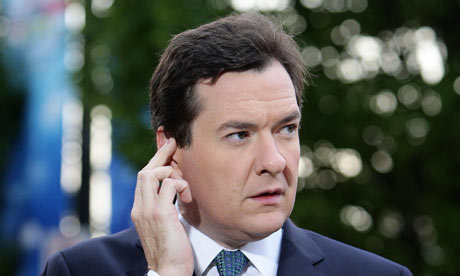
Goerge osborne at Tory Party Conference 2011
George Osborne has pledged that if he has his way in the Coalition Government, the UK will cut "carbon emissions no slower but also no faster than our fellow countries in Europe", causing dismay in the green business sector.

Yet most of his own colleagues in government disagree with him.

Speaking to the main body of the Conservative Party Conference he said "we’re not going to save the planet by putting our country out of business" and expressed his scepticism that investment in the low carbon sector could be a strong engine of recovery for the economy, arguing instead that it would thereby increase energy prices and hamper the recovery.

His reasoning is that "Britain makes up less than 2% of the world’s carbon emissions, compared to China and America’s 40%".

But this figure is wrong. In negotiations on climate emissions, the UK's responsibility is not for its current emissions alone but also for its historical emissions - as birthplace of the industrial revolution to which Osborne paid tribute in his speech and which has led to man-made global warming.

The UK's real responsibility is therefore proportionally higher than developing countries like China's current emissions: 5.11% of total global emissions up to 2005 (source: WRI, last date available).

Osborne added that "a decade of environmental laws and regulations are piling costs on the energy bills of households and companies", apparently ignoring his government's own evidence that by far the largest factor in high prices is volatility in gas and oil markets.

Events in Manchester are revealing a split in government on green policies that is more along traditional grounds than to do with differences between the Tories and their LibDem coalition partners.

At a fringe meeting about renewable energy yesterday, the Energy Minister, Charles Hendry, Conservative MP for Wealden, Sussex, said of the green revolution: "This is an incredible opportunity, and if we follow we will export jobs and import equipment."

Hendry also tried to calm worries on high energy prices by saying that the reform of the energy market, which the UK is currently planning (although it is over six months late in ratifying the EC Directive on energy market reform), will be done "at the lowest possible costs to consumers, because we never forget who pays the bills".

The Conservative Climate Minister Greg Barker also extolled DECC's policies to the audience of party faithful, talking up the Green Deal and Renewable Heat Incentive.

He called the Green Deal "world-leading" and said it will help bring down costs to consumers because "after all, the cheapest energy is the energy we don't use".

Osborne's opposition to carbon targets has been curtailed before, by David Cameron, who over-ruled him when the decision on approving the Climate Change Committee's fourth carbon budget was being made, but Osborne did manage to secure a review of the budget in 2014.

The Treasury is historically sceptical about green issues and has been criticised many times, most notably by Jonathan Porritt, former head of the Sustainable Development Commission, who has written: "The Treasury has in fact been the biggest single block on Sustainable Development in the UK, going right back to the UK’s first SD Strategy in 1994. It pursues its own agenda (regardless of who is in power), has no interest or expertise in SD, and (unless reformed) would make mincemeat of any new SD Minister."

Osborne's about-turn


But Osborne has previously expressed enormous enthusiasm for the idea of the Treasury leading the way on climate change.

Less than two years ago in this piece in the Independent Newspaper, he wrote: "I want a Conservative Treasury to lead the development of the low carbon economy and finance a green recovery."

He went on to explain in some detail how this could happen, including vowing that if government departments failed to take action to save energy, "a Conservative Treasury will simply give them less money to spend on energy bills. This isn't just good for the environment. It will save up to £300m a year. That's good for taxpayers too."

He then discussed how "a Conservative Treasury will drive green growth is by financing a green recovery" and spoke favourably about "how a Green Investment Bank can help kickstart our green recovery by providing green companies with the investment they need".

It's entirely possible that since then Osborne has been influenced by the Treasury mandarins, because in the same piece he says he will introduce "Green ISAs, a new tax-free savings product in which all the funds invested would help green our economy," an idea which was dropped under pressure from officials.

He has also been lobbied by the energy-intensive industries, such as metals and ceramics, and the CBI to reduce their costs from high energy prices.

To be fair, Osborne did argue for "investment in greener energy. And that’s why I gave the go ahead to the world’s first Green Investment Bank".

Tim Yeo, Conservative Chair of the cross-party Select Committee on Energy and Climate Change, speaking privately at the conference, also disagreed with Osborne's speech, saying, "I believe it is Britain's interests in the medium term to be a leader. Those countries will be the most competitive, not the least."

But Charles Hendry qualified his earlier enthusiasm and signified some sympathy with Osborne's view: "We should not go out on a limb," he said. "European capitals are not saying 'the Brits are doing this, so we will too'. They will rub their hands and say 'that's just making British Industry less competitive'."

However, he did say: "There is nothing in what George said today that would mean we want to pull back from a roll out of renewables."

This would be difficult, because the UK now has a legally binding commitment to rein in carbon emissions. Under the Climate Change Act 2008, there must be a reduction of at least 34% in greenhouse gas emissions by 2020 and at least 80% by 2050.

Paul Foote, the Managing Director of the Conservative Environment Network, a group within the party that argues for government policy to support private enterprise in tackling "critically important" environmental issues, said: "Osborne has betrayed a fundamental misunderstanding about how to make our recovery secure and sustainable".

DECC, a successful department which is demonstrating how LibDems and Tories can work together on a common platform, has to operate within the Treasury cap on spending and policy development.

Osborne's speech makes it clear that it has a continuing battle on its hands to fight its pitch, but it has plenty of support from within Tory ranks too.

What remains to be seen is which side David Cameron will choose to support in his next speech on the topic. Any sign of wavering on his previous commitment to be the "greenest government ever" will have clean energy investors walking away from the table to invest in other countries.

Saturday, October 01, 2011

Open letter to Ed Miliband: Don't be shy. You can do it!

Ed Miliband at the Labour Party Conference 2011
Dear Mr. Miliband

In the small amount of your speech to the Labour Party Conference that you devoted to energy, you observed that "we need investment" - with which no one would argue – and added that Labour would "build our economy not on low wages and high finance, but low carbon and high tech".

And in the following Q&A session, you said you "want my children to remember me above all for tackling climate change".

Fine words. But what exactly are the policies that might achieve this for Labour? You did not say.

Nor was there any hint from your Shadow Energy Secretary Meg Hillier in her speech, although she made a good job of lambasting the Government's record.

She reminded a fringe meeting that DECC is lampooned at Westminster for being the Treasury's poodle and listed the broken promises of the "greenest government ever":
  • "The Green Investment Bank - promised in Labour's manifesto, but hobbled under the Coalition. Delayed, and unable to borrow capital.

  • Research into bio-fuels - scrapped.

  • Zero Carbon homes - scrapped.

  • Charging points for electric cars - scrapped.

  • Low carbon businesses watching their orders disappear abroad.

  • A 'green deal' for home insulation which promises the earth, but few have even heard of."


My abiding memory of you, Miliband Junior, is from when you were Labour's Energy and Climate Change Secretary, at the COP15 Copenhagen climate summit, being interviewed by the disarming The Age of Stupid director Franny Armstrong - while standing on her head.

You were very relaxed and spoke with conviction about having ambitious goals for the climate change talks.

Around that time, you called upon anyone who cared about climate change to put pressure on the Government, because it was only when doing so that it felt it had a mandate to push for demanding more at top level negotiations such as Copenhagen.

It was a surreal moment. It was if the world – rather than Ms. Armstrong herself – had been turned upside down.

One felt that when politicians ask the people to protest - and even join them on a demonstration - it is an admission of how little power they honestly feel that they have.

It made you seem human, and indeed you were an approachable and enthusiastic Energy Secretary.

But is this what we want from prime ministers? Don't we want them actually to be superhuman - strong leaders who intuitively know what is the right thing to do, get on with it, and show us the way?

Instead, as you know, we live in an age of focus-group politics that gives the illusion of democracy but is still dominated by vested business interests.

So perhaps this is why you chose to attack "the dominance of the big energy companies" in your keynote speech.

Yet what, people listening asked themselves, would you do in government that is different either from what the Coalition is doing now or what you yourself did when in power?

Did you do anything to challenge what you called the Big Six "rigged market" then?

Actually, you did.

Remember 2009's Climate Camp at Kingsnorth power station, which campaigned against the threat of a new coal-burning plant which E.ON, one of the Big Six, wanted to build?

Just prior to this, you attended The Age of Stupid film premiere where actor Pete Postlethwaite ambushed you and threatened to return his OBE unless you refused permission for this plant.

One month later you announced that no new coal-fired power station would get government consent unless it can capture and bury 25% of the emissions it produces immediately – and 100% of emissions by 2025.

This, a DECC source told the Guardian, represented “a complete rewrite of UK energy policy” - one which has continued to this day, surviving a change of government.

That's an impressive achievement, because it was the right thing to do.

Why didn't you remind the conference of this in your speech. You might have said, "I've taken on an energy giant before, I can do it again".

The source of energy policies


Admittedly, your party is three years from a general election, and it doesn't need to have specific policies yet.

But if Labour wants to really break from the past, as well as break the dominance of the energy companies, you could do far worse than to get down to basics, throw away the rulebook, and take a long, hard, and fresh look at the evidence base upon which governments have built their energy and environment policies for the last ten years.

Only then will you be able to reconstruct a legitimate yet radical new policy that has credible foundations.

This evidence base, as it is now, rests to far too great an extent on the commissioned research of external consultants.

These well-paid and influential firms toil in the relative shadows of government and produce reports full of cost-estimates and scenarios that 'prove' the relative worth of different policy choices - for example alternative energy mixes - which subtly nudge officials and ministers into weighing down on one policy side rather than another.

I'm talking about firms like Redpoint and Trilemma, who have produced and are continuing to produce reports for DECC on topics like the reform of the Renewables Obligation and other renewables and nuclear power support schemes.

The actual bases for their figures are often shrouded in mystery, and quite possibly pulled out of thin air, as they try to guess what energy prices will be in five, ten, fifteen years time. Who really knows?

Yet the reports which are based on them are given the aura of great authority by subsequently becoming embedded in the superstructure of the Government's energy policy.

But who are these firms? They consist of a few self-selected individuals who have set themselves up as 'experts'.

If you look at the credentials and CVs of the firms' directors, you will see that their backgrounds are almost exclusively in either the fossil fuel industries or asset management or both.

And, for example, Redpoint's other clients include EDF Energy, Centrica, ESB, GE, Statoil, Vattenfall, and Shell. Are these names familiar? Remember the "rigged market"?

What a different set of energy policies do you think Labour might generate if it asked for figures and evidence from other types of experts? From independent academics, for example, from scientists or from 'the wisdom of crowds'?

Since, Mr. Miliband, you like campaigners, you might choose to study the research of NGOs such as WWF, Greenpeace, Forum for the Future and the Centre for Alternative Technology, who have all developed detailed scenarios for moving towards a zero carbon sustainable future, have no vested business interests, but instead memberships of hundreds of thousands of ordinary people.

The people who might vote for you.

Failing that, you might want to listen to the voice of Parliament's own Select Committee on Energy and Climate Change, which has taken evidence from hundreds of expert witnesses over the years.

In my opinion, this cross-party group has consistently come out with the sanest of policy advice, only to have it largely and politely ignored by the Lower House.

So, which 'expert evidence', Mr. Miliband, will form the basis for your policies? You pay your money, you take your choice.

By the way, Ed, you said in your speech that energy prices always seem to go up, not down.

In fact this isn't true.

The Department for Energy and Climate Change records average energy bills, and although these have risen in real terms over recent years, there was actually a fall between 2009 and 2010.

And who was Secretary of State for Energy and Climate Change then?

Step forward, Ed Miliband. Don't be shy.

Either you have a short memory, or you are far too modest ever to stand a chance of being Prime Minister.

You need to do more to remind people of your successes, and have the courage of your convictions.

Thursday, September 29, 2011

Exposed: The Renewable Energy Foundation is a front for biofuel and energy-intensive industries, and anti-wind campaigners

The Renewable Energy Foundation sounds like a nice green charity that serves the cause of green energy. But it is in fact a front for the interests of biofuels companies, energy-intensive industries and even oil and gas companies.

It put out a scare story last week, claiming that Britain would lose 10,000 jobs due to the Government's current green policies and 30,000 jobs if those policies are accelerated.

Together with Civitas, the right wing think tank, REF's policy director John Constable argued that "the more green technologies are subsidised by the EU, the greater the predicted net loss for British workers".

But not just any green jobs. It found figures which led it to compare the average cost of a wind power job with the wage of a public worker (not the same thing at all) as £54,000 versus £29,000. What this fails to do is show the comparable cost of that public sector job.

But what of the financial benefit of the wind power job? The report is unable to say, instead admitting "it is not yet possible to estimate the net employment impacts of such costs" but insinuating "they seem unlikely to be positive".

There have been many criticisms of the REF over the years, particularly from the rest of the renewable energy sector, such as Renewable UK and Good Energy.

Juliet Davenport, CEO of Good Energy, has said, "The problem with the Renewable Energy Foundation is that their name is misleading. It suggests they are in favour of renewables when actually the opposite is true."

The Charity Commission even investigated and cautioned them on the grounds that they were engaging in political lobbying.

The REF doesn't see it like that; they claim that they are merely providing educational data sets. Nevertheless these sets are almost exclusively biased against wind power and in favour of biofuels.

Who are the REF?


The REF is registered as a charity at the Charity Commission, which means it can claim charitable tax status. Its website lists a chairman and three trustees, all of whom have strong links to either the biofuels and/or oil and gas industries.

Links to biofuel industries


Mike Starkie


REF's secretary is Mike Starkie, formerly Group Vice President and Chief Accounting Officer of oil company BP Plc, but now he is a Non-Executive Chairman of biofuel company Clenergy.

Clenergy, its website says, has been set up to build plants to generate "500MW/h" (sic) of electricity from imported, cultivated biofuels.

It envisages importing the fuels from countries where there are serious questions about the sustainability of the forests.

It announced this month that it aims to become nothing less than the worldwide supplier of biomass feedstock through licensing agreements and joint ventures through the cultivation of energy crop plantations throughout the developing world.

These will produce not just timber but pyrolysis oil and wood pellets.

The European Union is now under severe pressure to change its policy on biofuels and biomass after evidence has emerged that their use can actually increase carbon emissions.

ActionAid, Birdlife, ClientEarth, European Environmental Bureau, Oxfam, Transport and Environment and Wetlands International all signed a letter last week addressed to the European Commission President, José Manuel Barroso, asking for the policy to be reviewed in the light of five scientific studies on the topic including one on land use by the EU's own scientific advisors.

The Renewable Energy Foundation has published no comment on this news.

If this evidence is accepted and policy changed, then support for biomass in the Renewables Obligation Order will undoubtedly have to be removed.

This is the policy shift for which Biofuelwatch, the campaign organisation that challenges the sustainability and carbon-neutral value of biofuels, is actively campaigning: for Renewable Obligation Certificates (ROCs) to be withdrawn for both biofuels and biomass.

Yet another REF trustee, Colin Davies told the House of Lords in May this year that he does not want support for renewables but instead wants a change in the Renewable Obligation banding so that biomass, not wind power is favoured.

Under present ROC support, palm oil, imported timber and other biomass energy crops used as a source of electricity earns two ROCS per megawatt-hour (MWh) - currently worth around £90.

This has led to a large number of planning applications, many of which are approved already, for biofuel and biomass (mainly wood) power stations across the UK.

One was recently approved at Anglesey. Other companies wanting to build such plants include MGT Power, Prenergy, Helius Energy and Forth Energy.

Almost all plan to import the wood fuel from industrial plantations at the expense of tropical forests, grasslands and communities in countries such as Brazil, the Republic of Congo or Ghana, according to Biofuelwatch.

With the REF lobbying for an increase in support for biomass in the RO, and scientific evidence pulling in the other direction, there is speculation that this dilemma may be a factor in the delay in publication of the Government's review of Renewables Obligation Certificate banding.

Cambell Dunford


There is a further link to biofuels companies. REF's company address, 21 John Adam Street in London, is alongside Charing Cross Station. Also registered at the address is a limited company called REF Ventures Ltd., which sounds like it could be the trading arm of the charity.

However, this is listed as 'dormant' or 'ceasing to trade' at Companies House, where the name was registered in 2006.

REF Ventures has three listed officers. One of these is Cambell Dunford.

Dunford is a director of W4B, a company with two projects that involve burning imported palm oil to generate electricity; one in Portland, Dorset, and another in Avonmouth, Bristol - despite strong local and national opposition which questioned the sustainability of the source of the oil.

One of these plants alone, when or if operational, would double the amount of imported palm oil into this country.

Palm oil is strongly implicated in the destruction of natural rainforests in countries like Indonesia, and thus actually increasing climate change and flooding, and decreasing biodiversity.

Greenpeace Canada senior campaigner Stephanie Goodwin says four percent of global greenhouse gas emissions are estimated to come from the destruction of the Indonesian rainforests alone.

Links to energy-intensive industries


REF's chairman, Guy de Selliers, has little to do with renewable energy and much to do with energy-intensive industry.

He is listed by Forbes as a Director of a Russian Food company, Wimm Bill Dann Foods, which is a leader in dairy products and children’s food of which Pepsico recently bought a 66% controlling interest.

He is a member of the board of directors of Solvay S.A., a global group of pharmaceutical and chemical companies that makes, amongst other things, plastics and cellulose acetate fibre as used in cigarette filters. It has a new energy arm, founded last year - which is involved, at least partly, in biofuels – specifically, sugar cane operations in Brazil.

He's also been a director of an energy-intensive nickel processing company.

Colin Davies


REF Trustee Colin Davies is also the President of the Aluminium Foundation. He recently complained to the House of Lords about the "the huge costs facing energy-intensive industries" like his from the "introduction of Carbon Price Support and Phase 3 of the European Union's Emissions Trading scheme".

Davies is also director of aluminium company Alcoa and in both roles frequently can be heard complaining about the risk to his company and the aluminium industry, especially the upstream, energy-intensive side of the business, of ‘carbon leakage’, and asking for Government support, and appropriate compensation, i.e., against the burden of the Emissions Trading Scheme.

Links to the oil and gas industry


Besides REF's secretary, Mike Starkie, having been Group Vice President and Chief Accounting Officer of BP, another Trustee, Dr Carol Bell, is heavily involved in the oil and gas industry.

She is a board member of Petroleum Geo-Services (PGS), which helps oil companies find oil and gas reserves offshore worldwide.

Her company profile says she has over 25 years' experience in the oil and gas sector, particularly its investment and finance and also acts as Senior Advisor on Oil & Gas to Europa Partners, a corporate finance advisory firm; non-executive director of Hardy Oil and Gas plc.; a member of the Investment Advisory Committee of Gemini Oil and Gas (a private investment fund).

None of this has anything to do with renewable energy.

Anti-windfarm activity


REF's anti-wind stance is well known. The author of the report on renewable energy and jobs, John Constable, is frequently quoted by the likes of anti-windfarm group The Countryside Alliance.

Also well known is the involvement of the DJ and TV personality Noel Edmonds. The celebrity was a founder of the REF and is listed as an officer of REF Ventures.

Edmonds is also a director of motor, helicopter and aviation companies - all of no merit in terms of sustainability, let alone renewable energy - and 38 others, none of which are anything to do with renewable energy either.

Although he resigned from the REF itself a year ago, Noel Edmonds' involvement is explained by the fact that he is a vociferous opponent of windfarms. He told the Guardian in 2004 that he helped found he REF "because of the threat near his home in Devon".

In 2008 he told Daily Mirror readers that "Politicians are promoting the wind industry as a green icon, but they are misleading the public into believing the propaganda of the wind industry. The reality is that wind power is too costly and can never meet our energy needs; but it will destroy the countryside."

Edmonds is also on record (News of the World, 14th Sept 2008) as believing that there should be a total ban on migrants coming into Britain because its energy resources are stretched.

Other donors to the charity are known anti-windfarm campaigners, including Sigrid Rausing, heiress to the Tetrapak fortune (the family is among the richest in the country and owns an estate in Sussex and another in Scotland).

The REF doesn't disclose the identities of all of its donors, but of those it does, many are clearly influential and wealthy, For the rest, we can only speculate on the interests they have in trying to discredit windpower and lobby for biofuels and the oil and gas industry.

Conclusion


All of the above represents clear evidence that the Renewable Energy Foundation has an industrial agenda aimed at skewing Government policy in favour of the industries for which it is a front.

Its pronouncements on renewable energy, jobs, and especially windpower, must therefore be taken with several pinches of salt.

Tuesday, September 27, 2011

Engineers say "Yes We Can!" and blame governments for inaction in run up to Durban climate talks

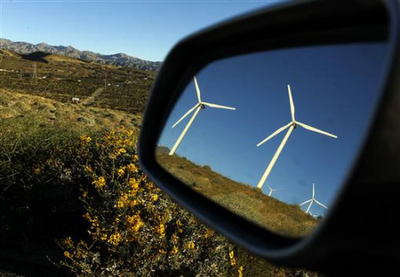
wind turbines reflected in a car mirror
The technology needed to cut the world’s greenhouse gas emissions by 85% by 2050 already exists, according to a joint statement by eleven of the world’s largest engineering organisations, including the UK's Institution of Mechanical Engineers (IMechE).

The problem lies with politicians and the consequent lack of legislation and finance needed to ramp up efforts.

The professional bodies, together representing 1.2 million engineers, submitted their opinion last Friday to the South African Deputy High Commissioner as part of preparations for the UN Framework Convention on Climate Change which is to be held in Durban from November 28 to December 9, (COP 17).

They unanimously agree that not only is climate change real, and a danger, but that we can fight it by "generating electricity from wind, waves and the sun, growing biofuels sustainably, zero emissions transport, low carbon buildings and energy efficiency technologies" which have already "all been demonstrated".

The reason why we are not doing so on a sufficient scale to match the problem, their letter says, is "a desperate need for financial and legislative support from governments around the world".

“While the world’s politicians have been locked in talks with no output, engineers across the globe have been busy developing technologies that can bring down emissions and help create a more stable future for the planet," said Dr Colin Brown, Director of Engineering at the Institution of Mechanical Engineers.

Expressing hope that the December talks will achieve what those in Cancun last year and Copenhagen the year before failed to, he said, “We are now overdue for government commitment, with ambitious, concrete emissions targets that give the right signals to industry, so they can be rolled out on a global scale”.

The statement calls for agreements at Durban to:
  • let greenhouse gas emissions peak by 2020, then substantially reduce

  • make sure that policies do not unfairly impact on one particular industry or country

  • emphasise energy efficiency first - "the best available measure to bring down emissions in the short and medium term".

  • begin an intensive training programme in deploying environmental technologies


Pessimism for Durban talks


The Durban summit will focus on the future of the Kyoto Protocol, still the world's only treaty that mandates emission cuts. Its obligations expire at the end of 2012 and its future is uncertain because China and the United States, the world's top two polluters, are not subject to its constraints.

COP17 is seen as the last chance to make new commitments before then.

But with Japan, Canada and Russia having rejected a new round of carbon-cutting commitments, and the United States and the European Union having already said there is no chance of reaching a binding emissions deal in Durban, the problem is clearly a political, not an engineering one.

Maesela John Kekana, a senior policy adviser at South Africa's national Environmental Affairs department, told a parliamentary workshop on climate change this week that instead of a binding deal, "a second scenario" might be approved in Durban.

"This would involve the provisional application of a second commitment period for nations signed up to the Kyoto Protocol to reduce their emissions – due to come into effect in January 2013, after the first commitment period now in effect expires – while non-protocol nations like the US would agree to 'comparable obligations'”.

There would then be a transitional period until a new regime had been agreed after a review in 2015.

“That to me seems to be the more realistic scenario of what can happen,” Kekana said.

South Africa's environment minister has also called on rich countries to help poor countries reduce greenhouse gas emissions, ahead of the UN climate talks.

Edna Molewa said during the meeting on Monday, "We want to come out of the COP 17 saying that we have demonstrated our commitment, the will and capacity of our country and our people, as well as corporates, to lead a change revolution against climate change".

The stakes are perilously high, but pessimism is the order of the day.

A failure to make progress at the UNFCCC (UN Framework Convention on Climate Change) talks could result in a "collapse of the system", said NJ Mxakato-Diseko, ambassador at Large for COP 17/CMP 7, Department of International Relations & Cooperation South Africa, speaking last week at a Business for the Environment Climate Summit (B4E) in London.

This summit again beseeched political leaders to act, with over 250 high-level business, NGO and civil society leaders from 26 countries signing a document containing plans for industry commitments and political demands to speed up the change to a green economy.

The document will be communicated through to the Durban summit, to demonstrate, alongside the engineers' positive view, clear industry support for change to the climate negotiators.

The engineers' joint statement came out of The Future Climate 2 conference, also held in London last week, which saw international speakers from government, academia and engineering institutions discussing the technologies needed to combat climate change. The eleven engineering institutions that signed up to the joint statement are:
  • The Institution of Mechanical Engineers (IMechE) (UK)

  • Institution of Engineers (India)

  • Association of German Engineers (VDI) (Germany)

  • Japanese Society of Mechanical Engineers (JSME) (Japan)

  • Association of Professional Engineers, Scientists and Managers (APESMA) (Australia)

  • Danish Society of Engineers (IDA) (Denmark)

  • Civil Engineer Organisation of Honduras (CICH) (Honduras)

  • Swedish Association of Graduate Engineers (Sweden)

  • Norwegian Society of Engineers (NITO) (Norway)

  • Finnish Association of Graduate Engineers (TEK) (Finland)

  • Union of Professional Engineers (UIL) (Finland)


The IMechE sees the 'green revolution' as "the lifeblood of UK manufacturing growth" and is organising a one day UK Energy Summit on Tuesday 1 November.

Thames Water makes electricity from dried poo. Is this good?

Poo granules - dried sewage
The above picture is not coffee granules. Do not add water. Do not attempt to drink.

It is dried poo, and Thames Water is using it to generate electricity.

The sewage company has installed a £1.5m sewage sludge dryer at its treatment plant in Slough and estimates that the resulting renewable fuel will be worth £300,000 and reduce its carbon emissions by over 500 tonnes a year.

Rupert Kruger, Thames Water’s head of innovation, said: “This is the first time in Britain that a waste dryer has been used to create ready-to-burn fuel from sewage sludge, rather than simply being used as a waste-reducer."

The dryer will process five tonnes of sewage sludge a day, which represents a fifth of the solid remains of the treatment process, heating it to about 180oC and stirring it with heated rotating paddles.

The fuel, which then has a calorific value similar to that of brown coal (8–10 MJ/kg), is transported to Thames Water's Crossness sewage works in Bexley, East London, and fed into a combined heat and power generator to generate renewable electricity.

The CHP plant has so far burnt 160 tonnes of ‘sludge cake’ a day. This unsavoury name refers to de-watered solids from sewage - the conventional form of post-treatment waste.

However, sludge cake is still 75% water. In order to burn this wet fuel, the generator also has to burn non-renewable gas from the grid.

But the new dried poo granules only contain 5% water, so this will help to reduce the amount of gas required, which is where the carbon savings come in.

The Slough sludge dryer is also eligible for additional Government ROC (Rewewable Obligation Certificate) support, providing extra revenue.

A further saving is achieved from a reduction in the number of truck journeys required to transport the sludge to where it was previously spread on agricultural land as fertiliser.

However, the process does mean that the nutrient value of the material is lost, leaving farmers to have to source alternative fertiliser elsewhere.

Sewage is a vital source of nutrients that have been removed from the soil in the form of food in the first place.

Traditionally, 'night soil' was always composted and used as a soil conditioner - for example in nineteenth century Paris, which was able to feed itself from the market gardens which surrounded it and which were fertilised this way.

The nutrients have to be found somewhere, and if they are burnt, where is that to be? From slurry from intensive pig farms and anaerobic digestion?

I hope so. Thames Water does not say.

The dryer at the Slough sewage works, developed by US firm Komline-Sanderson, is 98% thermally efficient, which means all but 2% of the energy used to heat the system is used.

However, the fuel created with this method is not entirely renewable because the drying process consumes 800kWh per tonne of dehydration water, which is typically supplied by fossil fuels.

A cheaper and more eco-friendly solution is practised in a plant that came online in May this year, at a sewage treatment facility in Strass, Styria. This dries the sludge using solar thermal power.

Run by the regional wastewater association of Leibnitzerfeld Süd and using a patented Wendewolf® process, this drying method requires just 30kWh of electricity for each tonne of dehydration water - a reduction of 98%.

At 126.3 metres, the solar dryer at Strass is currently the world’s longest solar sludge drying unit, and treats 1,700 tonnes of sludge a year, turning it into 460 tonnes of granules.

Back at Thames Water, Rupert Kruger insists that their new plant is part of the company's ongoing transition to turn more of its product into revenue-generating renewable fuels.

“For decades we have generated £15m a year of electricity by burning biomethane from sewage," he says, pointing out also that last year the company was the first in the UK to feed renewable gas, from sewage at a plant in Didcot, Oxfordshire, into the gas supply network.

It has also agreed plans to build Europe’s first reactor to produce phosphate-based fertiliser from sewage, also at Slough.

"The new sludge dryer is the next chapter in our quest unlock the full energy potential of waste,” he said.

Crossness is one of two Thames Water sites with sludge-powered generators. A further twenty, including the one at Slough, generate electricity and heat by burning biomethane gas from sewage, to help power the company's works.

The company claims this saves an average of £15m a year on energy bills.

Monday, September 26, 2011

An opencast mine could come to your back yard - and there is little you can do about it

Ffos-y-Fran open cast cola mine
Wales is still mourning the death of the four coal miners who were killed ten days ago at the Gleision Colliery near Cilybebyll, Swansea Valley. It's another reminder of just how dangerous this energy source is.

Welsh people puzzled over why the next Saturday's English newspapers led with the story of English rugby centre Mike Tindall, his wife Zara Phillips, and a certain blonde, rather than this tragedy, thinking that if the loss of four lives in a mining disaster had happened in England it would have received front page attention.

Be that as it may, the accident also served to highlight that coal has become more economic to mine in this country - and that opencast mining, while carrying more environmental risk, carries less risk to human life.

In terms of the number of people killed per unit of energy provided, coal mining certainly beats nuclear power, as this rather dissembling comparison made by pro-nuclear commentators established earlier this year.

So one might, then, welcome the fact that of 28 mines recently approved nationally, 14 are opencast; but the impetus for opencast mining has less to do with respect for life (health and safety regulations notwithstanding) and more to do with the economics of opencast vs. deep mines.

14 - the number that received planning permission in 2009, the last year for which statistics are available – is a lot when you consider that there were but 35 mines in production that year. Only six applications were refused, and they will probably be resubmitted, if they haven't been already.

In terms of area, these permitted developments total 367 hectares in England, 51 in Wales, topped by 623 in Scotland - a total of 1041 hectares - or about the same number of rugby pitches.

Coal is back. In England, production from opencast coal mining has started to increase again, following a peak in 1989 of over 12 million tonnes to a low of under one million in 2006.

Scottish production has never been below five million a year, while that in Wales has also increased over the last decade, now standing at over 1.5 million tonnes.

Residents who live near these mines experience terrible effects. Coal dust quickly dirties paintwork and washing, the noise of the huge trucks is constant and wearing, and the environment is devastated by being ripped up.

At Ffos-y-Fran, near Merthyr Tydfil, South Wales, homes lie as near as 36 metres from the pit, which is a huge scar on the countryside 200 metres deep and three kilometres wide.

Local residents are currently locked in a legal dispute, trying to obtain compensation from the pit's owner, Miller-Argent (South Wales) Ltd.

Undaunted, Miller-Argent is now planning another opencast mine at Nant Llesg next to Ffos-y-Fran.

Exploratory work began last month and will continue for six months in preparation for a potential planning application in Spring 2012. Work could start in 2014 and last for over 15 years.

Climate activists - like the Coal Action Network - argue that the best form of carbon sequestration is to leave the coal in the ground - and they have an excellent point.

With Drax, formerly the UK's largest coal-burning power station, converting increasingly to combustion of biomass, and no more coal-burning power stations in the planning pipeline, at least until or unless carbon capture and storage becomes realistic and economically feasible, demand for coal will one day tail off.

But until the UK is able to rely much more on low carbon generation, its part in the electricity generation mix is set to continue.

Wales and Scotland have laws requiring a 500-metre buffer zone between opencast mines and homes. The situation at Ffos-y-Fron (developed before this law was passed) could not be repeated in Wales.

But, astonishingly to some, English homes currently have no such protection.

However, a Private Members' Bill is slowly winding its way through Parliament that could require the Secretary of State to publish guidance on opencast mining policy in England and give residents living near proposed opencast mines the same protection as that enjoyed in Wales and Scotland.

Brought by North West Leicestershire Tory MP Andrew Bridgen, the Planning (Opencast Mining Separation Zones) Bill would bring England into line with its neighbours in this respect, "unless the circumstances are exceptional".

New, opencast mines are planned right across England - in the counties of Derbyshire, Yorkshire, Durham, Northumberland, Cumbria, Greater Manchester, Shropshire, Staffordshire, Warwickshire, Nottinghamshire and Leicestershire. Is there one near you? You might want to check.

Bridgen's Bill passed its first reading way back in June 2010 and was due to be have its second in February this year, but only received a partial discussion. It was scheduled again for 28 October – next month - but once more has been squeezed out for lack of Parliamentary time.

This is bad news for anyone living near the sites threatened by the new pits or an expansion of existing ones, like the mother of one of Bridgen's constituents from whom he received a letter which contained the following:

“They have just started an opencast mine in the field behind my mother’s house in Shropshire" (where protestors were evicted from a camp last month). "In weeks we expect her view of fields and The Wrekin to be replaced by a 9 metre high mound of earth 6 metres from her property. She is 84 years old and until the Shropshire Star did an article on her, the opencast company had not even bothered to visit her or contact her.

"With an opencast mine and then a landfill site she will no longer be able to open her windows or sit in her garden. What a way to spend the final years of your life. She would now like to move but this is now impossible. Nobody would buy it and the opencast company is not interested even though they own the property on either side of her.”

Surely the Localism Bill will help such people? I'm afraid not; it specifically excludes mineral policy, and will give no protection for local communities against developments such as this.

I repeat: if you hear of a mine – of any type - planned near your home, there is little you can do about it.

In Scotland, despite the exclusion zone, there is plenty of opposition to opencast mining, which shows that although a buffer zone provides some protection, it does not mean that residents living near to such mines are happy about them.

Despite the Coalition Government's localism agenda, planning law, now and into the future, allows developers to bulldoze their way through the wishes of local people.

The fact that such mines are opposed by MPs of every hue when one threatens their constituency shows that no one really wants them. And yet, presumably, we want the benefits they yield.

What can we do? At the very least, communities should be able to express an opinion on the way Mineral Planning Policy for their area could impact on their local Neighbourhood Plan, and obtain information from and petition their local Mineral Planning Authority.

There is still time to inscribe this in legislation, before the Localism Bill becomes law and the National Planning Policy Framework is adopted. But those wishing to do so must act fast.

You could also contact your MP and ask them to support Bridgen's Buffer Zone Bill by finding the time to take it further.

It's not just coal, but any mineral which is affected by this policy. You never know - some may be discovered in your back yard - as it has this month in the case of shale gas to the communities between Preston and Blackpool, Lancashire.

Friday, September 23, 2011

What's wrong with businesses that don't save money when it's so easy?

Richard Rugg, the Director of Carbon Trust Programmes,
Richard Rugg, the Director of Carbon Trust Programmes, really can't understand why more organisations are not taking advantage of the free advice available from the Trust.

Because at relatively low cost a wide range of industrial, commercial and public sector organisations can cut their energy bills by up to 25% if only they took energy management seriously. Payback periods can be as low as two months - and then it's into the profit zone.

Richard is full of examples of success stories, such as a famous confectionary company who, within two weeks of developing an energy plan, had taken action and was seeing noticeable improvements.

It had set up a team that met on a monthly basis. The end result was a reduction in the energy bill of £22,000 - plus a 22% improvement in production output.

The total cost of the projects implemented was £58,790 giving a simple payback of 2.8 years. The company was also easily able to achieve its Climate Change Agreement targets.

The Trust is reminding businesses and organisations once again that it has a free Advice Line (0800 085 2005) as a first port of call.

But it has also published a new, user-friendly guide to managing energy and is running a free webinar on 28th September, which anyone can sign up to.

“Cutting overheads is rightly high on the agenda at the moment," says Richard. But he is still observing that energy costs don't receive the attention they deserve.

"When it comes to managing energy, ignorance certainly isn't bliss," he continues. "If you don't know where to start, download our new guide, and call our advice line for your free Energy Saving Plan, to see how your organisation could start cutting its energy bills."

Energy management is the systematic use of management and technology to improve an organisation’s energy performance.

But to be fully effective, it needs to be integrated, proactive, and incorporate energy procurement, energy efficiency and renewable energy.

The new guide, Energy management – a comprehensive guide to controlling energy use, is part of the Carbon Trust's Expert in Energy series, and contrasts poor practice with good practice.

Examples of poor practice include: treating energy costs as an unquestioned overhead; having no clear or consistent chain of responsibility for energy management; a lack of awareness of energy issues; and procuring energy from the same supplier year-on-year, without a cost comparison.

Good practice would involve treating energy as a strategic issue and its management as an opportunity, with strong guidance from board level permeating through to rewarded action throughout the workforce, with adequate resources and business planning attached to it.

The guide includes an Energy Management Assessment for an organisation to test itself on how energy-aware it already is and where there is room for improvement.

It can then chart its way through a handily-designed 'energy management matrix' of options.

The guide also points readers to other sources of help from the Carbon Trust, such as a document on how to make the business case for a carbon reduction project and get senior decision-makers on board.

Many companies have already taken advantage of the Carbon Trust's support, from household names like Sainsbury's - who used appointed 'energy champions' to save 5% on energy consumption - to small companies like Guala, a manufacturer of bottle closures for the spirits industry, which was able to make energy costs savings of £117,000 per year based on annual electricity savings of 2,000 Mwh, at their plant in Kirkintilloch, Scotland.

Some measures had ridiculously short payback times, and resulted from getting a fresh eye in to examine habitual behaviour patterns and point up ways to change them that meant money wasn't being unnecessarily wasted.

For Guala, this included increasing the temperature of cooling water, which cost £500 but yielded savings of £3,800 per year - a payback period of less than two months.

The same payback period came from an outlay of £2,500 for advanced ultrasonic leak detection equipment plus £8,000 for new nozzles and valves, which eased the load on the air compressors, saving over £58,000 per year.

Many energy efficient technologies qualify under the Enhanced Capital Allowances scheme, and may be written down in the year of purchase.

Furthermore, the Carbon Trust can provide Small and Medium Enterprises or businesses that do not qualify for participation in the Carbon Reduction Commitment, with an interest free loan of up to £400,000, repayable over up to four years, for investment in energy efficiency measures.

Don't let the shale gas found in Lancashire ever be fracked

Cuadrilla's drilling operation for shale gas near Blackpool, Lancashire, UK
Enough gas has been discovered beneath the soils of Lancashire to power the UK for 66 years, according to Cuadrilla Resources, but will it ever be exploited?

Not if campaigners at a new camp have their say.

The mining company's survey claims to have found up to 5.66 trillion cubic metres of gas in the Bowland Shale area near Blackpool, the extraction of which could directly generate 1,700 jobs in the area, with more ancillary jobs resulting.

The company's chief executive Mark Miller said that between 400 and 800 wells could be dug.

This amount of gas is considerably larger than the British Geological Survey's previous estimate of the UK's total onshore shale gas resources - up to 150 billion cubic metres.

Whatever the true amount, which has yet to be independently verified, much of this gas may not be feasibly recoverable, and environmentalists have been quick to point out the problems associated with the technology used to extract it.

This is a process known as a hydraulic fracturing, or fracking, in which huge amounts of water, sand and chemicals must be injected at high pressure into deep wells to force the gas out.

In Lancashire, Cuadrilla had to suspend fracking operations pending the results of investigations to find whether it caused two earthquakes in June.

The research is being conducted by looking specifically at the geological and seismic properties of the rock strata and shale in and around Poulton-le-Fylde, and any linkages between the recent seismic tremors and hydraulic fracturing operations in the area.

The Department of Energy and Climate Change is due to receive the results of the study shortly, but the British Geological Society says that it is well known that injection of water or other fluids during processes such as oil extraction, geothermal engineering and shale gas production can result in earthquake activity.

Typically, the earthquakes are too small to be felt; however, there are a number of examples of larger earthquakes occurring.

The Hot Dry Rock Geothermal energy research project at Rosemanowes, Cornwall resulted in many thousands of induced earthquakes. However, only one, the largest with a magnitude of 2.0, was felt.

Environmental cost of fracking


Climate camp protestors began a camp last week at Hesketh Banks near Preston, one of three sites where exploratory drilling is continuing, and cite several environmental concerns that led France to become the first country to ban the process, back in July.

Local residents are anxious that drilling will not result in episodes like that which occurred in June 2010 in June 3 in Clearfield County, Pennsylvania, when a geyser of natural salt water, mud and chemicals shot out of a well called Punxsutawney Hunting Club 36, 75 feet into the air for a period of 16 hours.

In North Texas, fracking is resulting in a shortage of sand, which has to be mined and transported to the site by the gas producer EOG Resources. This has attracted local opposition because of the air and noise pollution.

Throughout North America, the increase in fracking has driven up demand and prices for the sand. "There's been a sand shortage in the U.S.," according to Mark Papa, the Chief Executive Officer of oil and gas producer EOG Resources. "And so those who have sand or have access to sand can pretty much charge what they want for that sand."

In 2009 in the U.S., the process used 6.5 million tons, a figure expected to have doubled in 2010, when statistics become available.

Elsewhere, aquifer water has been contaminated, and in New York methane has entered domestic water supplies.

Substantial amounts of water are required. Evidence given by the Tyndall Centre to the Energy and Climate Change Committee suggests that "to sustain production levels [of shale gas] equivalent to 10% of UK gas consumption in 2008 would require around 2,500-3,000 horizontal wells spread over some 140-400km2 and some 27 to 113 million tonnes of water".

For all of these reasons WWF-UK and Greenpeace are opposed to the production of shale gas in the UK.

Shale gas and climate change


There is also concern about the climate impact of fracking. This, although yet unclear, is certainly higher than that for natural gas which, when extracted conventionally, has between two-thirds and one half the global warming potential of coal.

Non-peer-reviewed reports from the U.S. quoted by the Tyndall Centre in the above paper put the extra amount of CO2 at 0.14-1.63tonnes CO2/TJ of gas energy extracted.

A more recent study by Cornell University has found that shale gas can have the same or greater impact as coal, especially when the impact is measured over two decades.

The paper concludes: "Compared to coal, the footprint of shale gas is at least 20% greater and perhaps more than twice as great on the 20-year horizon and is comparable when compared over 100 years."

The paper looks at the impact of fact that between 3.6% and 7.9% of the methane from shale-gas production escapes to the atmosphere in venting and leaks over the well's lifetime.

The researchers add that "the GHG footprint of shale gas approaches or exceeds coal even when used to generate electricity".

This conclusion has been disputed, especially by the industry itself, which claims the results are seriously exaggerated.

The paper does not include in its life cycle analysis the global warming impact of the mining and transportation of the sand, chemicals and water used in the fracking process, and so the overall impact may in fact be greater. But no study has yet been undertaken that does this.

The position of Connie Hedegaard, the European Commissioner for Climate Action, given in July, is that "it is too early to draw any firm conclusions regarding the climate and environmental impacts of possible future shale gas exploitation in Europe".

She said that the environmental and commercial viabilities of potential shale gas sources still need to be established, and that the Commission is monitoring the situation in order to minimise potential environmental and climate impacts of shale gas exploration and production.

The Government's wait-and-see approach


The British Government is also adopting a neutral position. In answer to a Parliamentary Question in July from Green MP Caroline Lucas, Charles Hendry, Minister for Energy and Climate Change, said that he had "made no assessment of the greenhouse gas emissions of shale gas related extraction: emissions from shale gas extraction processes will be determined by the design and conditions of a particular development and no development has been proposed for the UK."

Answering another question from Conservative MP Laurence Robertson, Mr. Hendry said the Government will "continue to encourage the energy industry to maximise indigenous oil and gas production and infrastructure opportunities".

In a separate debate on energy, Hendry's opinion was that the fracking fluid "is 99% water and the majority of the remainder is an inert soapy-type compound", and that he was satisfied with the environmental controls that were in place to cover the methane's extraction.

The Energy and Climate Change Committee issued the results of their investigations into shale gas in May.

MPs said that the technique does not pose a direct risk to underground water aquifers, provided that the well to be hydraulically fractured is constructed properly.

Their report also expressed satisfaction that existing environmental regulations and enforcement would prevent leaks of methane from wells or pipelines, based on advice from the Environment Agency.

But MPs did express concern that a concentration on shale gas could "divert investment away from renewable technologies like solar, wind, wave or tidal power".

They concluded that although it has less global warming impact than coal, shale gas "will not be sufficient to meet long term emissions reductions targets and avoid the worst effects of global climate disruption".

Given that Chris Huhne signalled this week that he wants to minimise the construction of more gas-burning power stations unless they also include carbon capture and storage, then this may, at least, limit the domestic market for shale gas, even if Cuadrilla overcomes local opposition and receives planning and environmental consents for further drilling.

Which locals and those campers are not going to let happen if they can help it.

Tuesday, September 20, 2011

899MW of newly approved biomass plants could increase carbon emissions

Last week DECC approved construction of a new 299MW biomass-burning plant owned by Anglesey Aluminium Metal Renewables. But new opinion from the Scientific Committee of the European Environment Agency (EEA) says plants like this will not be carbon-neutral and may even result in increased carbon emissions.

The proposed plant will employ up to 600 people during construction and around 100 full-time personnel when operational, and the company says its feedstock will be sourced from both imported and local sources - perhaps forests in Wales - with imports coming in through the Port of Holyhead.

This approach for sourcing fuel is identical to that being followed by Drax, which was given consent for 580MW of biomass-fuelled plant in the north-east six weeks ago.

Both are awaiting final go-ahead for construction when the results of the Government's review of the Renewable Obligation Certification (ROC) incentive scheme are announced, expected next month.

The EEA's report, however, says that biomass - fuels of plant origin like trees - should not be considered carbon neutral because this "fails to recognize that if bioenergy were not produced, land would typically grow plants anyway, and those plants would continue to absorb carbon and help to reduce carbon in the air".

The report calls it "double-counting to credit bioenergy for reducing carbon in the atmosphere through plant growth" because "plants would grow and absorb that carbon anyway".

The opinion derives from peer-reviewed articles published in Science magazine by a Princeton University researcher, Tim Searchinger.

The explanation for the opinion is given by a thought experiment: "imagine a hectare of cropland just abandoned and allowed to reforest. These growing plants would absorb carbon from the atmosphere into plant biomass." Some of that would be consumed and the carbon released by organisms into the atmosphere.

"Other carbon would be stored in vegetation and soils as the forest grows, and that ... would have the effect of offsetting some of the emissions of carbon by burning fossil fuels."

"However, if, instead of allowing the forest to grow, the land were used to grow energy crops which were burned in an electric power plant, their use would displace fossil fuel emissions, but the actual CO2 emitted by the power plant chimneys would not be reduced.

"Per unit of energy, the CO2 emissions would typically even be higher than those of a fossil fuel-burning power plant because biomass contains less energy per unit of carbon than petroleum products or natural gas and because biomass is usually burned with a lower efficiency than fossil fuels," the paper concludes.

In other words, using land to grow bioenergy crops sacrifices the use of the land to absorb and sequester carbon.

The CO2 released from the plant could only be counted as carbon-neutral if or when the carbon absorbed by the energy crops and burned in the power plant exceeded that which would otherwise be absorbed and sequestered by the growing forest.

This opinion has been questioned by Marlene Holzner, spokeswoman for EU Energy Commissioner Günther Oettinger, who cited another report compiled by Econometrica which says Searchinger did not compare CO2 emissions from biofuels to those from petrol.

The scientist himself has disagreed, saying,"The whole point of the analysis was to make that comparison – detail for detail. Biofuels will not reduce emissions, and may increase them."

Recent reports by the EU's Joint Research Centre JRC and the International Food Policy Research Institute (IFPRI) have also concluded that the burning of biofuels can increase CO2 output.

The EEA's opinion document does give examples of three scenarios where biofuels may reduce carbon emissions and not displace food crops:
  1. when bioenergy crops are planted on lands once covered with tropical forests that have been overrun by invasive grasses that frequently burn

  2. wastes that would otherwise be disposed of and allowed to decompose, emitting methane

  3. crop residues that would otherwise be burned. However, care must be taken to ensure that this loss of residues does not lead to reduced productivity and therefore reduced plant growth or reduced carbon sequestration in soils.


Furthermore, the document says that accounting must reflect any increases in GHG emission from fertiliser production required to replace the nutrients from the residues.

How does this affect the approved new UK biomass burning stations?

DECC's consenting letter says the plant may burn “biomass fuel feedstocks” that are defined as "fuel, excluding material which is, or is derived directly or indirectly from animal matter, which qualifies as 'biomass' under Article 4 of the Renewables Obligation Order 2009 (S.I. 2009 No. 785)".

This Article only defines biomass as material of which "at least 90 per cent of its energy content is derived...directly or indirectly from plant matter, animal matter, fungi or algae)".

This definition is incredibly broad. Therefore, in the absence of any other conditions, it is likely that timber from managed forests will be used as one of very few feedstocks that can be reliably and consistently sourced at the volume required by such large plants.

In this case, if Searchinger is right, overall carbon emissions resulting from the plants could well actually increase.

Anglesey Aluminium Metal Renewables is owned by Anglesey Aluminium Metal Ltd, which itself is jointly owned by Rio Tinto (51%) and Kaiser Aluminum & Chemical Corporation (49%).

No one from Anglesey Aluminium Metal Ltd was able to comment at this stage over the exact sources for the fuel for the proposed plants.

Anglesey Aluminium Metal used to run an aluminium smelting operation. This obtained its energy needs from the neighbouring old Wylfa Magnox nuclear power plants - two 490 MW reactors - Wales' only nuclear power plants, which are due for closure next near.

The smelting plant closed down itself on 30 September 2009 with the loss of many jobs.

But Wylfa is one of eight sites the Government considers suitable for future nuclear power stations. Horizon Nuclear Power, an E.ON and RWE joint venture, has said it intends to build about 3,000 MWe of new nuclear plant next to the old plants.

Floating turbines and car-rally suspension are part of the offshore windfarm future

As the UK announces new proposals for maintaining offshore windfarms in rough seas that could save up to £3bn, Japan is planning a floating windfarm off the coast of Fukushima to help replace its lost nuclear power generation.

The Carbon Trust has published a shortlist of 13 designs picked from 450 submissions of ideas that would help transfer engineers and equipment from boats to turbines in ocean swells of up to three metres.

Among them are a boat that uses a giant robotic arm to make the transfers to the turbine base, one with suspension inspired by Paris Dakar-winning rally cars that keeps it stable, and another which, like a seahorse, has a deep keel to provide balance.

Meanwhile, according to a government official, Japan is going one step further by looking at wind farm designs which, instead of being fixed to the seabed, are anchored to it and float on the surface.

Its energy agency is looking at siting some of these off the Pacific coast of Fukushima prefecture, where the nuclear reactors that went into meltdown six months ago are located.

The country is expecting to move towards a non-nuclear, renewables-powered future by not replacing nuclear power stations as they become redundant.

The Japanese energy agency has assigned up to 20 billion yen (£166 million) to the project, using cash intended to finance the rebuilding of the disaster-hit area, the official said.

The windfarm would consist of six floating 2MW wind turbines, and would be operational by 2015.

Britain's future 'round three' offshore windfarms will utilise much larger turbines - 10MW or more - and may be located up to 300km away from land and in deeper seas than at present - up to 80m - consisting of up to 2,500 turbines.

Maintaining them in harsh weather conditions will be a tough job, but it has economic consequences - increasing access time by just 4% could save up to £3bn.

Through its Offshore Wind Accelerator programme, the Carbon Trust is therefore coordinating eight UK wind farm developers - E.ON, DONG Energy, Mainstream Renewable Power, RWE Innogy, ScottishPower Renewables, SSE Renewables, Statkraft and Statoil – to sponsor a competition to find solutions.

The winning technologies are expected to increase the access time from the current average of 210 days a year to 300, and to help reduce the levelised cost of offshore wind by saving an extra 1.3Mt CO2 per year.

Climate Change Minister Greg Barker called the projects "some of the best ideas to overcome the challenges of working in deeper water.”

The new generation of turbines will also be specifically designed for use in these windier situations by having much larger and better adapted blades.

Each successful applicant to the competition will get up to £100,000 to support the design and development of their concept, as well as technical support from the eight developers in the Offshore Wind Accelerator.

The Trust says that the shortlisted designers include a university student as well as established offshore wind maintenance vessel operators, and come from the UK, Norway, Germany, Netherlands, Canada and Australia.

The systems, together with the shortlisted winners, include:

• Transfer systems – to transfer personnel and equipment from vessel to turbine, potentially with motion-compensation:
o Autobrow, South Boats
o MOTS, Momac GmBH
o Wind Bridge, Knud Hansen
o TAS2, BMT Nigel Gee / Houlder

• Vessels – for transporting personnel and equipment from permanent bases or mother ships to turbines, incorporating a transfer system:
o Pivoting Deck Vessel, North Sea Logistics
o Nauti-Craft, Nauti-Craft
o Fjellstrand Vessel, Fjellstrand
o SES Vessel, Umoe Mandal
o SolidSea, University of Strathclyde
o TranSPAR, Extreme Ocean Innovation

• Launch and recovery systems – fitted to the permanent bases or mother ships for launching and recovering daughter craft from the sea:
o Launch & Recovery, Offshore Kinetics
o Z Port, Z Technologies
o Launch And Recovery System, Divex.

The Carbon Trust says that the global offshore wind sector is set to grow by up to 10% per year with the UK expected to capture around a 10% share of this market, estimated to be worth up to £170bn/year by 2050, making these solutions potential future export money-spinners.

Back in Japan, the six reactors at the damaged Daiichi (number two) plant where reactors went into meltdown following the March 11 earthquake and tsunami. will be taken out of operation.

In addition, it has been announced that the four damaged reactors at the Fukushima Daini plant that have been brought to a stable state of "cold shutdown", are also unlikely to ever start up again.

Friday, September 16, 2011

The Green Deal will fail under current arrangements

The Green Deal, flagship of the Government's Energy Bill and intended to help the housing sector contribute to cutting UK carbon emissions by 80% by 2050, is likely to be underfinanced and will fail by not attracting enough support from residents.

That was the message from MPs as the House of Commons debated the Energy Bill again on Wednesday, before it moves back for the final time to the Lords.

But they were unable to obtain any guarantees from Energy Minster Charles Hendry, of the value or interest charged on loans to residents or the degree of support that may come from the Green Investment Bank, factors that will have a massive effect on the degree of take-up of the scheme.

The green deal is the “pay as you save” scheme for retrofitting energy efficiency measures to every one of the 28m homes in the country.

A new amendment was passed to force the Secretary of State submit proposals on the ways in which the Green Investment Bank could maximise its take-up and to enable the consumer to compare recommendations and estimated costs and savings.

This is in effect limited by the 'golden rule' that the cumulative cost of the rate of interest and the cost of the installation should not exceed the amount that people are currently paying on their energy bills.

The percentage game


It's the interest rate of the loan repayments that is one of the crucial factors.

The Great British Refurb campaign's survey of about 2,000 people found that whereas 56% saw the green deal as attractive, only 7% said that they would be prepared to take it up if a 6% interest rate applied; if it were set at 2% per annum, they would be “very” or “fairly” likely to take it up.

MPs said they wanted the scheme to have a single interest rate in order to provide clarity, fairness, stimulate mass demand and, crucially, force green deal providers to "compete for customers on the cost and quality of the energy efficiency measures and installation, rather than on the headline interest rate of the finance".

Green MP Caroline Lucas (this week voted MP of the Year in the Scottish Widows & Dods Women in Public Life Awards) wanted the Green Investment Bank to be able to ensure a common and low interest rate - below 2% if possible - pointing out that a (very) different scheme in Germany offers publicly subsidised interest rates of 2.65% and has achieved 100,000 residential retrofits in a year - and the Government must achieve 145,000 every month to have a hope of meeting the required targets.

But Barker said the legislation will not place restrictions on the level of interest charged, instead relying on the market to decide.

Nor could he guarantee that the Green Investment Bank could support the interest rate, although its priorities are to address market failure.

Barker said that it is up to the market to set the interest rate, however, although there will be some protection for the fuel poor, and in order to prevent subsequent owners of a property being penalised for the fact that the previous residents were not considered credit-worthy.

The Government has yet to undertake consultation on the secondary legislation that will bring in the regulations, and this is what will determine the degree of willingness of financial backers to climb on board.

Barker added that the Government's own consumer research showed that the biggest factor in their taking up the green deal would be "a desire to make their home nicer".

The Energy Company Obligation and fuel poverty


The Energy Company Obligation (ECO) for energy companies is supposed to target the needs of vulnerable consumers, and the green deal is supposed to tackle the issue of fuel poverty, but with an unprecedented 1.9 million people in arrears with their energy bills in this country and 5.5 million living in fuel poverty - both numbers rising by the day - it is unclear whether any financier is going to want to touch them.

Barker admitted as much, saying "I cannot give a universal commitment" that they will all have access to the deal.

Barker tried to provide reassurance by saying "Many of the families and individuals [in arrears or fuel poverty] will be captured by community roll-out and street-by-street roll-out of energy efficiency improvement schemes."

ECO is expected to offer insulation and home improvements to whole streets, regardless of income, to ensure improvements are made at scale - which is far more cost-effective than house-to-house, especially where external insulation is required.

But the crucial question is how much finance it will have available.

Lucas certainly doesn't believe that as things stand there will be enough cash available to make the green deal work.

"Yes, we have the ECO £1 - 2bn," she said, "but this is a small proportion of what will be required".

In fact, as MP Barry Gardiner pointed out, the Committee on Climate Change estimates that up to £17 billion of support will be required through the ECO to insulate 2.3 million solid walls alone by 2022.

Similarly, he said "we cannot keep pushing up the ECO" because of its impact on every energy bill payer.

In addition, it is unclear whether the Treasury levy cap on DECC's spending will cover the ECO, and limit the support it can give to tackle fuel poverty still further. The two departments are still locked in negotiations over that one.

All Barker would say at this point is that DECC will publish in the autumn its expectations of how DECC policies, taken together, will impact on consumers through to 2020.

Regulation


The green deal, as MP Andrea Leadsom pointed out is, essentially, a financial services product. As such it is regulated by the Office of Fair Trading, which will be expected to ensure that any mis-selling is stamped out at the outset and full compensation is paid to any victims.

However, MPs raised concerns over whether the OFT will have sufficient resources to undertake this extra work, which could be considerable.

Market research has shown that customers would welcome and are therefore more likely to trust the involvement of local authorities, community groups and third sector organisations when thinking about entering into a green deal.

The legislation will allow for this and contain "a clear enforceable framework within the green deal code of practice" to ensure impartiality of advice and prohibit high-pressure sales tactics, as used infamously by energy companies recently.

Greg Barker said, "one of the most exciting things about the green deal is its potential to give rise to new third sector involvement in delivering energy efficiency services."

DECC is now setting up a new workshop to look specifically at how the provisions can best work with older buildings and for service family accommodation, particularly older historic buildings.

Contrary to MPs demands that it makes more sense for repayments of the loans to come from a gas bill (used more for heating than electricity), Barker said it will not be possible to specify whether the instalments will be paid via the customer's electricity bill or gas bill, as this would double the cost of administering the scheme.

He also said that liability for green deal payments should sit on the balance sheet not of energy companies, but of the green deal provider, such as B & Q, Marks & Spencer or John Lewis.

The amendments include one, brought by Luciana Berger, Lab/Co-op MP for Wavertree, Liverpool, to clarify and encourage green deal installation apprenticeships to create the necessary skilled workforce.

However, there was no discussion of standards of insulation and energy efficiency that will be required. That, too, will have to wait until the secondary legislation.

With the implementation date 12 months away for the green deal, there is still plenty of work to do before stakeholders will even be able to estimate how effective it may turn out to be, but there is certainly much concern that it will not be as attractive as it needs to be.