Thursday, November 10, 2011

Defra takes on DECC over energy-from-waste

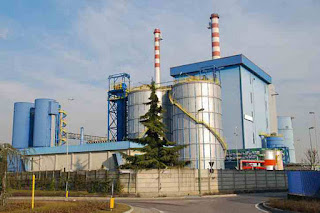
Energy-from-waste incinerator
Environment Secretary Caroline Spelman has pitched herself against Government policy on energy-from-waste (EfW) plants by withdrawing support for such a plant in Kings Lynn, Norfolk.

At the same time, DECC, in its new consultation on the Renewables Obligation, is ignoring advice from its own consultants that EfW should receive no financial support and is instead proposing plants receive half a ROC of subsidy per megawatt generated.

Mrs Spelman took the unprecedented step yesterday of withholding £169m of PFI credits from Norfolk County Council's project at Saddlebow, near King’s Lynn, saying that she wanted more information about environmental impacts, the Council's waste strategy and a greater consensus that the plan should proceed amongst the local population.

The Conservative-controlled Council has reacted with fury, accusing her of causing "chaos".

Bill Borrett, its cabinet member for environment and waste, said: "After years of carefully following the criteria laid down, this apparent late moving of the goalposts has surprised and dismayed us.

"Worse, we are concerned it may lose Norfolk people as a whole a government grant worth a staggering £169m."

In fact, a statement said they were expecting "in the region of £500 million over 25 years".

The project is already suspended pending a High Court hearing on December 5th, brought by opponents, to determine whether it should be subject to a full Judicial Review.

The winning bid for the plant's construction, out of ten initial submissions, was from a consortium of Cory and American energy-from-waste specialist Wheelabrator.

Apart from domestic waste, the proposed plant would also process commercial waste that would otherwise go to landfill.

Opposition


In her letter to the Council Mrs Spelman gives as the reason for her decision that she is not satisfied that its waste management strategy has popular support.

At the public enquiry stage, a record 2,592 responses were received, of which 2,524 (97.4%) objected to the incinerator and 27 (1%) supported it.

93 parish and town councils also responded, of which 61 (65.6%) were opposed and nine (9.7%) in favour.

Mrs Spelman's stance is supported by two local Tory MPs, Elizabeth Truss, and Henry Bellingham.

Bellingham and Kings Lynn Borough Council recently held a referendum on the topic in which 93% (65,000) voted against the proposal for economic, environmental and health reasons.

Financial support for EfW


Government waste policy is currently weighted in favour of incineration and uses PFI credits to support projects.

They have been allocated to 32 waste treatment plants (mostly, but not all, incinerators), and, although called credits, they do not have to be repaid, making them effectively grants.

The PFI credit for the proposed incinerator at King’s Lynn is worth about £40 per tonne.

A Government paper on EfW published in July notes that PFI credits worth £2.48 billion have been committed to 37 waste projects.

There are additional projects in the application process, for which it is expected a further £0.8 billion PFI credits will be awarded.

Norfolk Council also stands to benefit from landfill tax avoidance of £56 per tonne, rising by £8 per tonne for each of the next three years and an average of £110 per tonne over the incinerator's 25 year life.

Then there would be the income from a gate fee of an estimated £77/tonne and from the expected power generation from the Combined Heat and Power plant of 22MW of electricity and 20.4MW of heat, some of which will be used by a paper mill next door.

DECC rejects advice on support for EfW


DECC has received evidence from consultants Arup that EfW should receive no financial support from Renewable Obligation Certificates (ROCs), but is choosing to ignore it.

In its latest consultation on proposals for the levels of banded support under the Renewables Obligation for 2013-17, published yesterday, it says that it is rejecting this advice on the grounds of supporting renewable energy and jobs, because EfW plants have high initial capital costs.

It is proposing that the support goes from the current 1 ROC, (costing £8.7m per year from 2016/17 onwards) to 0.5 ROCs.

It also expresses hope that the level of renewable electricity generation capacity from energy from waste CHP could reach around 60-70MW by 2020, and around 100-130MW by 2030.

"This level of deployment could potentially generate in the region of 0.3-0.4TWh/y of renewable electricity by 2020 rising to around 0.6-0.8TWh/y in 2030", they say.

Critics say that such a policy locks the UK into an unsustainable route, and that such energy is not truly renewable.

By halting the Council's plans in Norfolk, it looks as though Mrs Spelman sides with these critics against DECC.

The dilemma of waste or recycle


The dilemma experienced by Norfolk is being felt in many cash-strapped councils around the country: if there is cash for EfW - why shouldn't they accept it?

410,000 tonnes of municipal rubbish is produced in Norfolk every year and the county has a recycling rate of 43%.

The incinerator would need 170,000 tonnes of waste every year for 25 years.

The Council calculates that after incineration of 170,000 tonnes, there is sufficient margin left of the 410,000 tonnes total to meet recycling targets.

But the waste hierarchy that is key to the Waste Review prioritises reduction, re-use and recycling, and it is likely that in the future ways of reducing the level of absolute rubbish will be found, making it hard to meet the national appetite for burnable waste should many of these plants be built.

Waste destroyed in an incinerator will be replaced, requiring new raw materials, manufacture, transport and packaging.

By contrast, reduction, reuse and recycling represent a win-win strategy. A number of cities in Europe have already achieved high levels (over 60%) of diversion of waste.

Moreover, Defra’s own paper on ”The Economics of Waste Policy" states that it is desirable that "waste is allocated to the various management options such that the social marginal cost of each option is equalised".

This is far from the case at the moment.

The social marginal cost includes the health and environmental cost of the plants.

Health and environmental effects


The Environmental Permitting (England and Wales) Regulations 2007 Updated October 2009 Version 2.0, lays out the monitoring and reporting criteria to operate a waste incineration facility.

It requires continuous monitoring of emissions to air but not of heavy metal, dioxin and furan emissions, which are only regulated by spot checks once or twice per year for 6-8 hours, under the Waste Incineration Directive.

Norfolk County Council has stated that "technology in today‘s modern energy from waste plants stops the formation of dioxins",

But the proposed plant does not use the latest technology which reduces dioxin production.

Opponents cite a 2008 dioxin breach from the Dundee incinerator, which they say illustrates how even a ‘modern’ energy from waste plant can still release dioxins over 100 times the legal limit.

Residents are also worried about smell, particulates (PM10 and PM2.5), and low level ozone.

The County Council has alleged that the incinerator would produce around one nine-hundredth of such emissions compared to other sources like traffic.

But this statistic is a national average, not a local observation.

Nationally, municipal EfW incinerators make a small contribution to the UK's total emissions because there aren't many of them.

And even the Environment Agency has identified bottom ash as potentially hazardous, which cannot be disposed of casually.

It seems that Caroline Spelman has found a way to make herself popular and support health and the environment.

But the prospects for energy-from-waste look entirely unclear.

Nuclear timetable slips but we don't need it to keep lights on

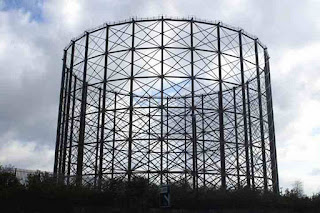
empty gas holder
The latest official estimates show that Britain will not face power cuts or gas shortages in the near future but concerns remain in the longer term.

In particular, the Government has admitted that the timetable for replacement nuclear capacity has slipped.

It is now estimating that new plant won't come online until "around 2025", following the electricity market reforms.

Only two years ago, 2020 was the official estimate.

The revelation comes in the latest Statutory Security of Supply Report (SSSR), published today by Energy Minister Charles Hendry, which has been produced jointly with Ofgem with input from National Grid.

The schedule slippage is in line with recent pull-outs by some nuclear power developers following events in Fukushima, and delays in construction of Areva's plant in Finland, the completion of which was put further back yesterday to 2014.

This Olkiluoto plant, which is of the European Pressurised Reactor type expected to be built in the UK, is now five years behind its original schedule.

Any new nuclear plant therefore could also not help the UK to meet its 2020 target for carbon emission reductions.

The Report reaffirms Ofgem's estimate last year that together the gas and electricity markets need £200 billion of investment between now and 2020 to meet the challenge of keeping the lights on while reducing emissions.

Electricity


The Report quotes National Grid projections that peak electricity demand will remain relatively stable at around 60 gigawatts (GW), although there is "a range of sensitivities around this central case".

How does this pan out? At the end of 2010, the UK as a whole had a total of 90.2 GW of electricity generating capacity of various kinds. This breaks down to:

Coal: 26%
Oil: 4%
Other Conventional Steam: 11%
Gas: 38%
Nuclear: 12%
Hydro Natural Flow: 2%
Hydro Pumped Storage: 3%
Wind: 3%
Other Renewables: 2%

About a third of generated electricity is lost in transmission, so the balance of generation capacity and supply is adequate but vulnerable to situations were a lot of capacity might be offline at once.

(It's worth putting this in context, and remembering that electricity is only 17.5% of the UK's total final consumption by fuel.)

However, the Large Combustion Plant Directive will lead to closure of around 12 GW of coal and oil-fired generation by the end of 2015 at the latest.

The Industrial Emissions Directive could also lead to further closures by 2023.

In addition, according to current timetables, up to 7.1 GW of existing nuclear generating capacity is reaching the end of its operational life and will have closed by 2020.

This means that a total of 19.1 GW of generation capacity could be lost by 2020, with further closures by 2023.

Meeting the gap


Where will the required capacity come from? The answer given in the Report is: from gas and renewables in about equal measure.

The Security of Supply Report says that in addition to the 7.3GW of renewables projects that will connect to the National Grid that are either under construction or consented, there is a further 5.7 GW of projects that have submitted planning applications.

These are predominantly offshore and onshore wind and biomass generation projects, with the majority of the capacity being over 50 MW.

That totals 13GW.

Furthermore, 4.3 GW of new gas-fired plant is already being built, and a further 8.7 GW has planning permission, also totalling 13 GW.

The total of new and consented plant is 21.5 GW. Adding the submitted renewable capacity gives a total potential of 26 GW, certainly exceeding that which is expected to be lost, without the need for new nuclear.

Gas supplies


DECC has published a risk assessment on gas security of supply, as required by the EU Regulation on Security of Gas Supply, and Chris Huhne has asked Ofgem to examine security issues "to ensure that medium to long-term gas supplies for consumers remain secure”.

The wholesale gas market in Britain has a good track record in attracting significant private investment, but Ofgem's Chief Executive, Alistair Buchanan, observes that Britain has a "growing exposure to a volatile global gas market".

"We have seen this recently where political instability in the Middle East and the impact of Fukushima have helped push up wholesale gas prices for this winter by 40%," he said.

Therefore Ofgem is considering imposing incentives on the gas industry of £20 per therm for domestic users when they fail to balance their gas supplies to and off-takes from the system, in order to improve security of supplies.

Additional measures could include forcing suppliers to store fixed amounts of gas and publish more transparently details of their holdings and supply contracts.

These proposals have been published today in a consultation and are based on modelling by Redpoint.

This shows that under current conditions the domestic market should on average only experience disruption once every 16 years, and the non-domestic market once every 122 years.

This is in line with National Grid’s Gone Green scenario that expects demand to fall beyond 2012. Net imports were 26.2% in 2008 and have declined since then.

However if new gas plant is built to meet the electricity capacity gap then this will create more demand.

However, it is estimated that up to 20% of this could be supplied from renewable sources by 2020.

Oil supply


Despite the plans to introduce more electric vehicles onto our roads, oil will continue to be the main fuel for transport.

The Security of Supply report does not envisage significant reductions in oil demand over the next 20 years.

Although the consumption of petrol in the UK is expected to fall, diesel and aviation fuel are expected to show significant growth.

The UK will therefore remain vulnerable to oil price increases, and oil will proportionately increase as a source of the country's total carbon emissions, which it will find stubbornly hard to reduce..

Tuesday, November 08, 2011

Big organisations' carbon emissions made public for the first time

The public is now able to see for the first time which companies and organisations are making a real effort to reduce their carbon emissions and which are not.

The carbon savers and the carbon slackers have all been made visible under the first Performance League Tables of the Energy Efficiency Scheme, published today by the Environment Agency.

This mandatory scheme, which was introduced in 2008, was originally touted to contain about 3,000 UK organisations whose half hourly electricity consumption totalled more than 6,000 MWh per year (equivalent to approximately £500,000 annual spend) in 2008.

In the end the table contains 2,106 businesses due to exemptions under Climate Change Agreements (CCAs) or EU Emissions Trading System (EU ETS) to prevent businesses being taxed twice.

Between them they are responsible for up to 10% of the UK’s emissions.

The tables show the relative performance of all participants in CRC against their Early Action Metric (%), which represents the average percentage of the proportion of non-mandatory CRC electricity or gas supplies measured through voluntarily installed 'automatic meter reading' meters or dynamic supply in year 1 and CRC emission coverage by the Carbon Trust Standard or equivalent.

The better an organisation performs in terms of cutting its emissions, the higher it appears in the annual performance league table.

Twenty two organisations have scored 100% in the 'early action metric', to take joint top spot, including (thankfully for them) Ofgem, DECC and Manchester United Football Club, who join British American Tobacco, Center Parcs, and several NHS foundation trusts.

At the bottom of the league come many hundreds more organisations who scored zero or close to zero.

They include some big names like Veolia waste services, Kingfisher group, IKEA, Standard Life, American Express, Bombardier, Care UK, Citibank, Coca Cola HBC Northern Ireland, CRC MANAGEMENT II LIMITED (ironically), Crown UK Holdings, Dell computers, HMRC, Kingspan insulation, and many London Boroughs.

Also shamed at the bottom are the pension schemes of National Grid and BT, many other NHS trusts, Orange Business Holdings, Pepsico, Rio Tinto, Carphone Warehouse, Thomson Reuters and the UK Atomic Energy Authority, Virgin Atlantic and many universities.

The problem with the ranking is that the reason for a zero ranking may simply be that no smart meters were installed. This is especially interesting in the case of several who have shouted very loudly about their green credentials, like IKEA.

The Carbon Trust's mantra has always been that 'what is not measured cannot be saved', and so the CRC is a definite encouragement at the very least for participants to install meters.

Errors in the data


Errors are already showing up in the data.

IKEA has complained that it entered its data imcorrectly (and this corrects our earlier version of this piece) when it input its emissions usng figures under the Carbon Trust Standard. In fact its ranking should be 381st not 1299th.

However, the EA website says that all participants were given a chance to check and verify their data until 27 September.

They say that "Since then a small number of organisations have notified us of amendments which, had they been reported before 27 September, may have changed the organisations' positions in the PLT.

"This PLT has been independently validated by AEA Technology and is fixed based on the 27 September reported data."

Their website does say that waste company Veolia's position is also wrong. Since it is able to claim Energy Generating Credits, its net emissions as defined under the CRC are negative.

But the CRC scheme design did not envisage there would be zero or negative emitters when calculating the Early Action Metric (EAM) score, and so Veolia's early actions are not properly reflected in the Performance League Table!

Where the net result is zero or negative emissions, the CRC Registry cannot calculate a score for the EAM based on the amount of emissions covered by a carbon management certification scheme regardless of actions undertaken by a participant.

Moreover, Pepsico, also ranked 1299th, became in January the first company in the world to use te Carbon Trust's Carbon Product Footprinting as a management tool to drive green growth across its supply chain.

Its activity in this and other respects should earn it some Early Action Metric points.

Also there is no credit given in the criteria for improvements companies have made as part of a Climate Change Agreement.

This means that they appear far down in terms of performance when, by definition, of being part of an agreement they have substantially improved their energy efficiency and been taking energy-saving measures since 2001.

EEF, the manufacturers organization, was quick to criticse this. It s Head of Climate & Environment, Gareth Stace, said this "does not fill us with hope that government has fully taken stakeholder views into account," and this may "not bring about the behavioral changes that government is hoping for.

"Many companies will be worried that this mis-representative data will affect their reputation in un-warranted ways.”

Scorecards


It is possible to look closely at each business' responses.

Here, you find out for example that Manchester United, despite coming joint top, gave no answer to the questions about whether it discloses carbon emission reduction targets in its annual reporting, has anyone in charge of energy management or "actively engage employees to reduce carbon emissions at work".

A spokesman for the Environment Agency, said: "The 2011 league table shows that over 60 per cent of organisations have taken action by installing smart meters and obtaining a certificate for 'good energy management' from the Carbon Trust or other accreditation scheme.

"The table also shows participants' annual carbon emissions - although they are not ranked on them this year."

As well as reducing carbon emissions, the scheme is intended to help participants save money by reducing their energy bills.

John Field, Director of Power Efficiency Carbon Management, which provides CRC compliance services to a number of major corporate and public sector clients, says the process has been a "wake-up call," and helped to "take energy management out of the plant room and into the board room". Compliance levels have been high, he says, including all the cases PECM has dealt with.

"Given the background of rising energy prices, this is a real opportunity for bodies to get to grips with managing their energy use. It's the first time they have had to make a concerted effort to create a separate budget for energy use."

Participants had to submit their first reports, describing their energy consumption from 1 April 2010 to 31 March 2011, by the end of July to the Environment Agency.

They contain a CRC Footprint Report and an Annual Report, which accounts for their energy usage from all sources across all of their sites.

The Footprint Report is important because it defines which emission sources they have to report every year over the next three years.

Crucially, it demonstrates whether at least 90% of emissions are covered by any of the EU Emissions Trading System (EU ETS), a Climate Change Agreement (CCA) or the CRC.

If this was done effectively, companies would have reduced their costs by 10%, as the pollution sources cannot be changed during this period.

Organisations are also exempted from the Carbon Reduction Commitment scheme if they have a Climate Change Agreement under the EU-ETS.

The Agency has now finished verifying and comparing these figures and published the first of its annual league tables which enable everyone to see how well, or how poorly, participants have done.

The idea is to name and shame or praise the supermarkets, universities and other bodies who are registered.

If an organisation makes mistakes, by inaccurately reporting emissions or if it submitted data beyond the deadline, it is subject to fines.

The price of allowances


From April next year, participants must surrender allowances, each one equivalent to one tonne of CO2, by buying enough credit to cover their previous emissions.

Their currently proposed price for these is £12, but the Treasury may change this as a result of the next Budget.

It is likely to be harmonised with the value of the carbon price floor, thought to be going to be £13, for the sake of simplicity.

But given that the market value of carbon now is significantly lower than £12, there are calls from participants for the value of allowances to be lower too, to minimise costs especially from heavy energy users.

However, developers with high initial capital costs, like nuclear and offshore wind, are calling for a high carbon floor price to help provide the finance they need.

The CRC is now a straightforward carbon tax, but originally, under Labour, the proceeds were supposed to be recycled back into energy efficiency.

If the value of an allowance were to be £12, then the Treasury would receive approximately £750m on initial analysis of these figures – significantly less than the £1bn it had said it expected to receive.

Monday, November 07, 2011

Ecotricity launches ‘Ecobonds’ as Government faces FITs legal challenge

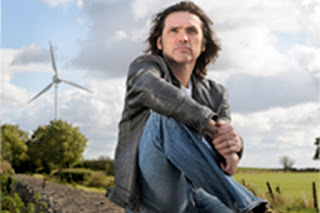
Dale Vince of Ecotricity
Ecotricity, the UK's largest renewable energy company, is launching a second issue of its popular 'Ecobonds', worth £10 million.

The move comes as Friends of the Earth issue a challenge to the Government to revise its plan to change the Feed-in Tariffs (FITs) given to owners of solar photovoltaic installations.

Ecotricity's 'Ecobond Two' will enable any UK-based individuals, companies, trusts, charities and other legal entities to invest directly in building new sources of green energy in the UK, starting with a minimum of just £500 of investment.

Its first Ecobonds, issued thirteen months ago, were heavily oversubscribed, exceeding a £10 million target by 50%, and becoming the UK's largest ever private bond issue.

They funded the construction of the UK's first 1MW Solar Park at Fen Farm in Lincolnshire, a third wind turbine to power Ford's Dagenham Diesel Centre, and a wind turbine at the G24i plant in Cardiff that makes solar panels.

Director Dale Vince expects 'Ecobond Two' to be just as popular. "Our ecobonds give people the opportunity to share in the financial benefits of green energy without the needing to stick anything on their roof," he said.

"And crucially we cut out the middlemen, the banks, and pay people the same rate of interest on ecobonds that banks would charge us if we borrowed the money from them."

The capital raised will contribute towards installing 19 wind turbines, already with planning approval, and a further 78 for which it is seeking planning approval.

"This might prove an attractive option for people who want to be green and also get an attractive rate of return, but can't - or don't want to - put solar panels on their roof, especially in light of [last] week's Feed-in Tariff (FiT) rates fiasco," said Vince.
Feed-in-Tariffs

Friends of the Earth has written to Climate Change Minister Greg Barker saying that unless the Government agrees to amend its proposals by 4pm on Friday 11 November, it will apply for a judicial review of its proposal to impose lower feed-in tariff payments on installations completed after 12 December.

It has taken legal advice that says this cut-off point, two weeks before the Government's consultation ends, is unlawful and will lead to unfinished or planned projects being abandoned.

Friends of the Earth's Policy and Campaigns Director Craig Bennett said: "The Government is breaking the law with its plans to fast-track a solar industry kill-off - as well as jeopardising thousands of jobs and countless clean energy projects across the country.

"Significant time and money has been invested planning solar schemes for homes, schools and libraries - giving them just six weeks to install is completely unacceptable, and schemes have already been scrapped.

"With soaring fossil fuel bills and mounting anger about the Big Six energy firms, the Government should be encouraging people and communities to generate their own clean electricity."

High rate of return

This is precisely the aim of Ecotricity's Ecobond Two. This will provide a fixed rate of return of 6.5% for four years for existing or new Ecotricity customers. Non-customers will receive a return of 6%.

Although lower than last year's 7.5% rate, this would be above the 4.5% - 5% rate available through Feed-in-Tariffs (FITs) for solar PV installations under the revised levels likely to be introduced after December 12.

Profits at Ecotricity have dipped in the last financial year, due to increased overheads and its acquisition of 71% of local club Forest Green Rovers FC for £695,000, according to its latest accounts for the year ended 30 April 2011.

Pre-tax profit fell to £1.7m, compared with £3.8m in 2010, although turnover grew by more than 19.8% to £44.2m.

It is a 'not for dividend' company with no outside shareholders to answer to.

Its plans include building over 1,000MW of renewable electricity generation capacity and supplying over 500,000 customers in the next ten years.

Its current base is 53 wind turbines at 17 wind parks, and 55,000 clients, up 30% on the previous year.

A spokesperson added: "Since the start of May 2011, on the generation side of the business, we've opened the UK's first large-scale solar farm in Lincolnshire and installed another wind turbine to power one of the biggest manufacturers of diesel-engines.

"In addition we now have 19 windmills ready to go with with planning permission and another 78 going through planning at various sites around the country."
Investment gap

Dale Vince recently criticised the 'Big Six' energy companies, saying, "There is a big problem in the energy market, but it's not only about how much money the big six energy companies are making - it's about what they are doing with that money."

He observed that out of the £125 they each make per customer per year, only £5 is spent on building new green energy sources.

"The reason for the lack of investment is not just weak regulation but because four of the Big Six energy companies are foreign owned and their interests are not aligned with the interest of the British public," he said.

"These multinationals take bill money from customers here in Britain and spend it in Germany or France or pay out dividends to shareholders."

He said that, by contrast, Ecotricity "invests more per capita in building new sources of green energy than any other UK electricity company".

It is the only energy supplier supported by Oxfam and the Soil Association.

Ecotricity is one of a new breed of renewable energy companies that also include Good Energy, Ebico and Ovo Energy.

Ecobond Two will be issued by Ecotricity Bonds plc, a wholly-owned subsidiary of the Ecotricity Group Limited (Ecotricity), which has guaranteed the payment obligations of Ecotricity Bonds plc for Ecobond Two.

Green bonds

The popularity of these green bonds can be seen in relation to the refusal by the Treasury to let the Green Investment Bank issue state-guaranteed green bonds to pay for the development of clean energy infrastructure.

Such a move was advocated by the cross-party Environmental Audit Committee last March.

Such bonds are already issued by institutions like the World Bank, and the idea was originally proposed in June 2010 by the former chairman of Merrill Lynch in Europe Bob Wigley, leader of the Green Investment Bank Commission.

Bu the Government has rejected the idea of letting ordinary people buy such bonds as a way of raising the much-needed finance to build low carbon Britain.

Its reasons include the fact that the National Association of Pension Funds, whose members would be major customers, said they would expect to be bribed with a higher yield because the market in the bonds would be "illiquid compared to the broader sovereign market".

Additionally, some way would need to be found to ensure that the bonds did not count as UK state debt for accounting purposes.

The Treasury was also worried that green bonds could crowd out its own funding programme.

But if Ecotricity's new bonds proved to be as popular as the first issue, this would show that there is a strong public appetite, whetted by FITs, for investment in renewable energy.
Green football

Interestingly, Ecotricity intends to make its acquisition Forest Green Rovers the UK's first green football club.

Dale Vince has become chairman of the Blue Square Premier side since purchasing the club and has started greening it by ordering its grounds to be made solar powered and the creation of an organic grass pitch.

He has also stopped players eating red meat and banned the selling of all red meat products at the grounds.

Thursday, November 03, 2011

Energy intensive industries beat energy-saving targets but still want tax breaks

oil refinery
Energy intensive industries beat their energy-saving targets

Energy intensive industries are beating their energy-saving Government targets at the same time as lobbying for more tax breaks on the carbon price floor.

Companies such as Tata Steel, Rio Tinto and Ineos Group Holdings Ltd. are lobbying DECC and the Treasury to be protected from the cost implications of the carbon price floor and the EU Emissions Trading Scheme.

But the Government's negotiating arm to resist this will be strengthened by the news that these industries saved energy, and therefore carbon and cash, to the tune of 28.5 million tonnes of carbon (MtCO2/year) last year.

They even collectively exceeded their targets by 2.7MtCO2/year under the Climate Change Agreement (CCA), according to new figures for 2010 released by AEA for DECC.

The targets were voluntarily agreed because the participants obtain a 65% tax break on the Climate Change Levy (CCL).

One of the best performing of the 54 sectors in the scheme is also the one lobbying most for favourable treatment: the steel sector.

It made savings of 13.1 MtCO2/year, while its target was 4.4MtCO2/year, meaning that it beat its target by 8.7MtCO2/year.

The other sectors only beat their target by 1.7MtCO2/year, saving a total of 15.4MtCO2/year.

Well-performing sectors include chemicals, food and drink, concrete and paper.

Most sectors (38) met their targets. In a further 15 sectors all the facilities reporting had their Climate Change Levy discounts renewed.

This means that all but one per cent of the 9,634 facilities registered with the scheme had their CCL discounts renewed, making the scheme an official success.

The spirits industry, for example, was able to save about £2.6m a year on tax over and above their energy cost savings, based on an improvement in energy efficiency of 25% since 1999.

This is precisely the kind of achievement the policy is meant to stimulate.

This is the first CCA target period to cover participants in EU ETS Phase II, where there is no opt-out (as there was in Phase I), meaning that if a unit reduces emissions, then they may have a surplus of allowances for sale on EU ETS or banking for future use.

But Jeremy Nicholson, director of the Energy Intensive Users Group, which represents industries that consume large amounts of gas and power in the UK, says that they need help also because of the surge in energy prices.

The Group cites German competitors in such industries, who benefit from carbon tax rebates worth more than €5 billion a year, paying only €0.5 of the €35 tax.

MPs such as Pat McFadden (Wolverhampton South East, Labour) and Caroline Nokes (Romsey and Southampton North, Conservative) and especially Tristram Hunt (Stoke-on-Trent Central, Labour), chair of the all-party group that supports the sector, are also lobbying the Treasury on their behalf.

Mark Pawsey (Rugby, Conservative) recently pointed out that cement manufacturer CEMEX, in his constituency, faces an alleged £20 million bill for complying with carbon legislation.

There is talk of the climate change levy being widened and the rebate increased to mitigate the carbon price.

The carbon price floor will require industries to pay a top-up if the market price for carbon is below a the floor level.

It is primarily aimed at the energy sector to drive investment in low-carbon technology and generating capacity.

Due to the state of the economy, the carbon price is currently at an all time low. EU Allowance Units (EUAs) are down to €10.17 and Certified Emission Reductions (CERs) to €6.85.

The 10.17 figure is significantly below the anticipated level of the carbon price floor of £13 per tonne in 2013 and £30 in 2020, and not good news for the financing of carbon emission reduction projects.

(DECC recently revised its estimate of the future carbon price, to €33-£29 a tonne of CO2 by 2020.)

The fund resulting from the floor is meant to contribute to the £200 billion that is required over the next decade or more to build the low carbon future.

Any tax breaks for energy intensive industries will reduce the amount available for this purpose.

But will it be used for this purpose or just to fill the general Treasury coffers?

On 26 October Zac Goldsmith asked the Chancellor of the Exchequer just this question: whether he has plans for the recycling of revenue from the carbon price floor and the EU Emissions Trading Scheme into low-carbon projects.

Speaking for the Treasury, Chloe Smith gave as clear an answer as possible, saying that "In general, the Government considers that hypothecation, or "earmarking" revenues for a particular spending purpose, is an inefficient way to manage the public finances".

In other words: no it won't.

The Department for Energy and Climate Change is working with the Department of Business Innovation and Skills and HM Treasury on the development of a package of support for the energy intensive industries, and the results are expected to be announced on 29 November as part of the Electricity Market Reforms.

Win a copy of Solar Technology!

I'm giving a talk tonight and signing my new book, Solar Technology, at the Pen'rallt Bookshop, Machynlleth at 6.30 (booking required, Tel, 01654 700559). And I'm running a competition to win a copy - and offering 20% off list price at http://www.davidthorpe.info/solar-technology.htm

Tuesday, November 01, 2011

"Too Fast, Too Much" – solar PV industry in shock

Greg Barker (second from right) in May this year visiting Telscombe civic centre, which installed 54 photovoltaic solar roof panels under the FITs scheme.
The UK solar PV Industry is in shock due to the severity and speed of the Government’s proposed cuts to the Feed-in Tariff for the technology.

With talk of job losses and legal action, industry bosses are searching for a way to soften the expected impact of the sudden fall in tariffs and the timescale.

Dave Sowden, Chief Executive of the Micropower Council, said: “Within four hours of these proposals being announced, we received our first phone call of a company starting a statutory consultation with staff over impending redundancies."

Most stakeholders understand the Government's dilemma, caused by the rush of PV installations rapidly depleting the extent of the £867 million fund.

There were over 16,000 new solar PV installations in September alone – nearly double the number installed in June.

“But these proposals go much too far," Sowden warned. "Under these proposals solar panels will simply become “eco-bling” for the middle classes, paid for by all, including the fuel poor.

"Yet those on lower incomes will no longer be able to benefit from offerings such as free solar or social housing schemes, due to the financiers of these schemes pulling out.

“The speed of the changes will also leave many companies with stranded assets, a plethora of contractual disputes."

A protest by the industry and supporters is being planned at Downing Street for 23 November to lobby for more modest reductions in the tariff and a less drastic timescale.

The Cut Don't Kill campaign has warned that such deep cuts would "kill the UK solar industry stone dead".

Industry veteran Jeremy Leggett, chairman of Solarcentury, warned that 25,000 jobs could go in one of the country’s few growth industries.

“There is not even any recognition that the industry will need some time to adjust to such a change,” he said.

He said he believed that the timing of the change makes it “wide open to legal challenge and we now expect a very serious industry challenge to be mounted”.

Daniel Green, chief executive of HomeSun, an installer of 4,000 solar systems, said in despair, “There is no business left, it is finished. It just doesn’t pay for consumers to do it now.”

The Government's consultation on reducing the tariffs states that from 1 April 2012 the tariff payable to retrofitted residential solar installations will be cut from the current 43.3p/kWh to 21p/kWh.

The tariff then reduces rapidly as the size of the installation rises.

In a blow to the social sector, used by housing associations and local authorities to put panels on their stock, “aggregated” schemes such as social housing and “free solar” will have an even lower tariff – 16.8p/kWh.

However, Greg Barker did say in the House of Commons that the Government is considering "whether more could be done to enable genuine community projects to be able to fully benefit from FITs", as the current scheme cannot identify a community project.

Because the proposals make no change to tariffs for projects installed by 12 December, which will receive the current rates for 25 years, a rush has begun to finish any projects now in progress before this date.

According to the consultation the 21p tariff would yield a rate of return to private individuals of 4.5%, presently higher than most savings accounts, but perhaps not so for 25 years.

The consultation has two phases. The first relates to changes to the tariffs.

A second one is expected before the end of the year and will cover all other aspects of the scheme, including the tariffs for other FIT technologies, adding to the sense of panic felt throughout the sector.

The Government is defending its line by arguing that the cost of an average domestic PV installation has fallen by at least 30% since the start of the scheme – from around £13,000 in April 2010 to £9,000 now.

It says that at this rate, without changing the tariffs, the cost to all electricity bill payers by 2014-15 would be "£980 million a year, adding around £26 (2010 prices) to annual domestic electricity bills in 2020".

The revised tariffs would limit the cost to £250-280 million in 2014-15, making domestic electricity bills around £23 (2010 prices) higher in 2020.

The Government now wants all PV installations from 1 April 2012 to come with energy efficiency makeovers for the property concerned.

As for the level of efficiency required, the proposals are for either an Energy Performance Certificate level of C, or the taking up of all measures potentially eligible for Green Deal finance.

If the building did not meet the energy efficiency requirement the installation would receive a lower FITs rate of 9p/kWh.

Energy Minister Greg Barker said, "This new requirement will encourage the industry to make the most of their skills and expertise and work much more closely with the rapidly expanding energy efficiency market".

Some suppliers such as Sharp Solar say they are already mobilising to offer this service to customers.

In a rowdy Parliament debate yesterday, Caroline Flint, shadow energy secretary, accused the Government of delivering a “kick in the teeth for those families who wanted to do the right thing by investing in solar.

"The new proposals guarantee that lower-income households will lose out, as fewer firms offer the lifetime deals that are currently available, and that solar will be available only to the well-off."

She asked why, if costs have fallen by 30%, the tariffs are being cut by 50%, and observed that so far the UK "has installed only 3% of the solar energy installed in Germany in the past two years".

Barker defended the 12 December cut-off date by saying that otherwise "there would be a massive gold-rush, and the entire budget for feed-in tariffs would be gone" by April 2012.

DECC must tell us the truth about nuclear waste

The Encapsulated Product Store 3 (EPS3) for intermediate level waste at Sellafield
The Government must come clean now about what taxpayers will have to cough up for managing existing as well as future nuclear waste.

It's shocking but true: we are not, as I had always understood, investing in a fund to manage our current nuclear waste in the future.

We are paying lip service to it and dodging the question at the expense of future taxpayers.

Moreover, there is total confusion about what provisions are being put in place to manage any future waste from any new nuclear power stations.

Will the real DECC budget please stand up?


Last week, the Guardian published on its website figures which appeared to show that spending by the Department of Energy and Climate Change on nuclear waste management has risen by an astonishing 81%, as part of an overall budget increase from last year of over 146%.

In trying to find out whether this is true I have found out a truth worse than this, as well as an admission that any new nuclear operators are allegedly being asked to contribute to a fund not only to pay for management and disposal of the new nuclear waste which their plants will create, but also for that of existing nuclear waste!

According to the Guardian, in 2009/10 DECC's entire spend totalled £3.18bn, but in 2010/11 it is spending £8.06bn, an increase of 146.02% that is largely due to nuclear liabilities.

This spending, according to the Guardian, breaks down as follows (please scroll down - Blogger is formatting this table weirdly):


DECC spending: £ per topic and change from last year
Topic Amount % increase or decrease
Nuclear Decommissioning Authority £6.9bn +81.12%
Committee for Climate Change £4.4m +12.12%
Low carbon UK £622.7m -29.8%
International agreement on climate change £5.4m +22.42%
Promoting low carbon technologies in developing countries £278.6m +159.52%
Coal Authority £0.7m +87.02%
Professional support and infrastructure £117.7m -7.62%
Energy £87.2m +3.33%
Historic energy liabilities £104.5m -106.8%

We already knew that DECC is unique among Government departments because it has to spend almost half of its budget on dealing with existing nuclear waste.

But to see that this has risen to almost almost 86% of overall DECC spending seemed incredible.

Trying to check this figure led me on a very confusing path.

My first port of call was the Guardian itself, where its reporter Simon Rogers said that DECC's press office had told him that the increase in spending was due to increased cost of high level waste management at Sellafield.

I then had several lengthy phone conversations and email exchanges with DECC's press officers, to see whether this was true.

They themselves were clearly struggling to understand what their own departmental figures meant and had to seek clarification more than once.

Now that they have explained them, I am even more concerned that the UK's nuclear liabilities are being left for future taxpayers to pay for.

The increase in the amount allocated to the NDA in DECC's budget is in fact only a paper increase. It is not real.

A DECC spokesman said that the cash that actually went ‘out of the door’ to the NDA for its decommissioning work was £1.7bn.

This is in line with the NDA's business plan, which says that government funding in 2010/11 is £1.69bn, rising to £2.022bn in the following financial year and £2.249bn in 2012/13.

But the Government reviews every three or five years the cost of nuclear waste management over the next 100 years.

The spokesman says "obviously that figure goes down as we spend money each year".

Personally, I have never known it to go down.

In fact, as he says, "...it can also go up. That is what has just happened".

Yes, this is what we expect.

He says the estimate "has increased by £5bn [to £55bn], and Government budgeting rules mean that our expenditure tables also need to reflect that".

The real cost of dealing with existing waste


This £55bn figure is a mystery. I can't find a source for it anywhere.

I can find that the NDA's Nuclear Provision for 2010/2011 alone was just over £49 billion, and that The National Audit Office put the cost of dealing with the waste and decommissioning of the U.K.'s 19 reactors at £73bn in 2008.... a much higher figure.

What will be the real cost of dealing with existing waste? In truth, nobody really knows.

But assuming that £55bn is the figure DECC is using, the £5bn increase is just a 10% increase on the one it was using before.

Yet the Guardian says the spending has gone up 81%. What, I wanted to know, accounts for the other 71%?

Is it because the NDA has to build a new pond store at Sellafield (see last month's report by Dr. Mike Weightman, the chief nuclear inspector at the Office for Nuclear Regulation?

No.

Is it because of the inspection of our military nuclear waste which has just taken place?

No. Both of these are covered by the NDA's regular spending.

Creative accountancy


It is actually an accounting trick.

There is no money.

It is a note attached to the budget which means "we hereby observe that will have to pay out £xxx billion of cash at some point in the future".

This sounds like the kind of creative accountancy that has gotten public finances into the mess they are in right now.

To help us understand it, let's try to analogise the situation to household spending.

If I know I have to spend £100,000 to maintain my house over the next 100 years, I might choose to pay £1000 a year into an interest bearing account to accrue as future source of funding.

Is the nuclear liability money being spent this way, I asked DECC?

No.

The spokesman was very clear about this. He wrote: "You might then ask, is this extra £5bn we’ve noted money that is set aside and kept in a separate pot somewhere, (like a pension)?

"No," he answered himself. "Think of the reference to it in the accounts as a formal record of the fact that we’ve changed our estimate of the grand total of what we think will need to spent in future."

In fact the pension plan is a great analogy. If you or I don't put a regular amount in to our pension plan then we know there will be nothing there in the future when we need it.

But DECC is not actually putting money into a fund to manage our nuclear liability, it is just stating that the money needs to be there in the future.

Where will it come from?

Who knows?

Remember, this is a taxpayers' liability.

But I have discovered even more than this.

New nuclear waste


In a phone conversation with another press officer, he admitted that new nuclear operators like Horizon and EDF are being asked to contribute to a fund not only to pay for management and disposal of the new nuclear waste which their plants will create, but also for that of existing nuclear waste.

I double checked that this was what he meant.

I said, "Are you seriously saying that the Government is not putting aside cash to deal with our nuclear legacy but is asking nuclear operators to do so? What do they think of that?"

If I were a nuclear operator I would be outraged.

But the question was dodged. He was having a hard time explaining it in the first place, and merely reiterated the line that the Government is taking a responsible position.

DECC's line on new nuclear waste is "New nuclear operators will be required by law to put money aside from day one to pay for the eventual decommissioning costs and their full share of waste disposal."

The law is the Energy Act 2011, under provision for the nuclear operator’s Funded Decommissioning Programme (FDP).

The value of the FDP is calculated using a “Waste Transfer Price” of, currently, £1 billion per reactor, although this is being debated by the Nuclear Liabilities Financing Board.

But Greenpeace's economist Ian Jackson has calculated that due to the extra work needed to comply with post-Fukushima safety requirements, the estimate is out by £445 million.

If there are 10 reactors built, taxpayers will end up forking out £4.45 billion to make up the shortfall.

Furthermore, the maximum price cap on all other costs has also been underestimated, he says, and should be £11.2 billion higher.

The Nuclear Liabilities Financing Board is the quango looking at the FDP issue, setting this cap.

But who exactly is doing its work?

According to the minutes of the Board's meetings, which are held every two or three months, representatives of the consortia hoping to build new nuclear power stations, Horizon, and NNB Genco (the consortium of EDF Energy and Centrica), have regularly attended its meetings.

Not only that, they seem to be setting the agenda and terms.

The minutes for December 2010, January and April 2011 illustrate how the Board and the office for Nuclear Development are letting NNB Genco design and explain the Fund, its structure and its role.

Isn't this a case of the tail wagging the dog?

Why are the private companies which stand to benefit from obtaining the lowest cost imposition able not only to attend the meetings of those who are setting the terms for private sector liability, but actually design these terms?

Moreover, there is no mention in any of the minutes of any real detail, for the sake of transparency.

Crucially, there is also no mention of whether the operators are supposed to be liable for any decommissioning costs of existing waste, as the DECC press officer said.

The whole business is, at best completely unclear, and at worst downright irresponsible.

There are serious concerns here over the extent to which taxpayers in the future are going to have to pick up the tab for dealing with not just current but future nuclear waste.

DECC should come clean.

And no new plants should be built until we have an absolutely cast iron guarantee that taxpayers will never have to pay any more than they already do to manage this monstrous and effectively always deadly liability.

Monday, October 31, 2011

This is the way to eliminate fuel poverty

Elderly woman in fuel poverty
Thousands of lives could be saved by giving energy bill rebates to the fuel poor that are conditional on having smart meters, advice, energy audits and eco-refits.

A recent report by Professor John Hills of the London School of Economics for the Government estimated that at least 2,700 people die every winter because they can’t afford their soaring heating bills.

This is more than the number who die on the roads each year.

Save the Children UK estimates that low-income families may pay up to £250 a year more for energy.

This is often because they do not pay by direct debit and are on pre-payment meters (although not all PPM customers are fuel poor).

But successive governments have found it hard to deal with the problem, and increased fuel prices have only served to make it worse.

Government policies to create a low carbon future are also adding around 8% to average energy bills, although in the future this means the bills won't be so vulnerable to fossil fuel price rises.

The only real solution to the problem is to help low-income householders use less energy and to improve the energy performance of their housing.

There has been no shortage of support for this idea already. Schemes include:

  • The Energy Efficiency Commitment (EEC, 2002–2008), the Carbon Emissions Reduction Target (CERT, 2008–2012) and the Energy Company Obligation (ECO) due next year to replace it. Half of CERT's budget (£1.8 billion) was targeted at households in receipt of means-tested benefits or disability-related benefits or where the householder is aged 70 or over
  • Publicly funded schemes like Warm Front in England, and related programmes in the devolved administrations, which cost £470 million in 2009/2010
  • The Decent Homes refurbishment scheme for social housing in England (and similar schemes in the devolved administrations). According to the DCLG (Department for Communities and Local Government) £4 billion was spent on heating and insulation improvements between 2000-2008, plus £2 billion between 2008/2009 and 2010/11)
  • The pilot Community Energy Saving Programme (CESP), running until December 2012 and costing £350 million, which is targeted at deprived areas and the hardest to treat housing.


This is about £1.77bn a year. But they have yet to prove that they provide effective value for money.

In fact the UK is further from eliminating fuel poverty in vulnerable households than ever.

For example, the House of Commons Public Accounts Committee, when it examined the Warm Front in 2009, found it to be poorly targeted despite using means-tested benefits, since nearly 75% of households entitled to a grant are unlikely to be in fuel poverty, yet only 35% of all those households likely to be in fuel poverty are eligible for it, partly because it only applied to private housing.

The scheme did not prioritise those with the most energy-inefficient accommodation, especially in rural areas.

How to eliminate fuel poverty


The first problem is targeting the appropriate households.

The Government is hoping to use two new ‘data frameworks’ – the Home Energy Efficiency Database (HEED) run by the Energy Saving Trust, and the National Energy Efficiency Data (NEED) framework, which is being developed by DECC.

But there are severe problems with this: HEED does not include EPC ratings from England and Wales, and anyway EPC ratings will be available only for properties that have been put up for sale, missing out most people, especially pensioners, who do not move.

Therefore much greater attention needs to be paid to gathering and matching information.

It should not be beyond the bounds of the technically possible that much of this work can be done automatically, cross-checking with data from Local Authorities, energy utilities and charities.

After all, it's the sort of thing which the marketing departments of companies like Tesco do all the time.

But why not actually harness the power of crowd sourcing and encourage the fuel poor themselves to come forward by rewarding them to do so with a reduction and a rebate on their bills?

They should be able to volunteer through a central helpline run by the Energy Saving Trust and publicised by the energy companies themselves, as part of the Energy Company Obligation (ECO), as well through local authorities and charities.

A condition for the receipt of rebates should then be that households are given, through the ECO, an energy audit, and a complete whole house eco-refit based on this audit, followed by training on how to use any equipment that has been installed.

The refurbishment should be done on a whole-home basis to achieve the maximum benefit.

Immediately on coming forward, all these households should also be automatically given smart meters.

When these are installed, the occupants should be visited and show how to use them, and given personal advice on how to achieve even greater reductions in energy bills through broader energy-saving behaviours.

This would get them off pre-payment tariffs straight away, which would reduce their costs.

It would encourage them to set and aim at specific energy usage or bill totals within a week or a month, so that they gain greater awareness and control over their energy use and budgets.

This could reduce their bills by at least 10%.

But this won't reach every home. Far more fuel poor households are in the private rented sector than are owner-occupiers.

These homes are more likely to be in a poor state.

The 2011 Energy Act will force landlords to improve the energy efficiency performance of their stock from the year 2015, using measures for which there is funding available through the Green Deal or the ECO, if a review, to be held in 2014, reveals that they have not already made voluntary improvements using the Green Deal.

In theory this approach should eradicate the worst performance (F and G SAP-rated), but it doesn’t guarantee a minimum standard, and this needs to be set in absolute terms - say the number of kWh used per square meter per year.

The Warm Home Discount is a step towards such an approach using energy bill rebates.

However, it is currently confined to a single subset of target groups and is not linked at all to any characteristic of the dwelling.

It should therefore be reformed and made conditional on a combination of the above interventions.

This approach is argued for by Paul Ekins, of the UCL Energy Institute, University College London, and Matthew Lockwood, Institute of Public Policy Research (IPPR) and Institute of Development Studies, at the University of Sussex in a new report on Tackling fuel poverty during the transition to a low-carbon economy.

They propose that any energy bill rebates would be paid to eligible recipients, from the moment they are given their smart meters, while their energy efficiency upgrading is being done, and through the follow-up advisory stage.

The cost of this could partly be paid for, they say, through a reform of the Winter Fuel Payments, which is currently also not targeted well enough.

The cost of eliminating fuel poverty


The IPPR and National Energy Action recently tried to estimate the cost of doing this through energy efficiency measures and came up with around £20–30 billion for England, or up to £64 billion for the whole of the UK.

The combined annual average spend on Warm Front, the CERT priority group and CESP is just around £1 billion for 2008–2011.

At that rate it would take 20-30 years to get around to every household in England.

Doubling the annual spend to £2 billion would end fuel poverty in England within 10–15 years as well as creating jobs.

Quadrupling it would bring the end date even nearer.

Given the huge amounts being spent on bailing out the banking system this is a small consideration that would save thousands of lives and vastly improve the quality of life for millions of people in this country.

And it is about the same amount as that spent on the measures I list above anyway - so there wouldn't be much change, it would simply be better targeted. There would just be the cost of running the helpline and administering the process.

And this sum is not much more than the £1.77bn being spent per year already on the measures listed above.

So there would be just a slight step change financially; and the money would simply be better targeted, with an additional cost for running the helpline and administering the process.

If the cost of a £2bn spend were completely to be passed on to the consumer, it would add £80, or 6%, to an average annual energy bill of £1,200, and the fuel poor would automatically be protected from this by the rebate.

Surely this is worth it?

Friday, October 28, 2011

Success for 'Lighter Later' campaign

jumping for joy in the park at sunset
The Government is to consider supporting the Daylight Savings Bill, which could save hundreds of thousands of tonnes of carbon emissions a year.

If passed, the Bill could eventually mean the advancing of time by one hour throughout the year across the country for a trial period, but only if there is UK wide consensus.

Business Minister Edward Davey said: “This is an issue which affects everyone across the country so we cannot rush head first into this.

"We would need consensus from the devolved administrations if any change were to take place. We have therefore tabled amendments to the current Bill to make sure that it addresses these concerns."

The devolution arrangements for time zones mean that they are devolved in Northern Ireland but reserved in Scotland and Wales.

Therefore, for any daylight saving trial, consultation will be needed with the devolved executives in Scotland and Wales and the consent of the executive in Northern Ireland will also be required.

The amendments would be made at the forthcoming Committee stage in the House of Commons, expected in early November.

The Government says it would not introduce a trial if there was clear opposition in any part of the UK.

Davey added: “It is only right that we at least look at what the potential economic and social benefits of any change might be.

"Lower road deaths, reduced carbon dioxide emissions and improved health have all been argued over the years as possible benefits.

"If there is strong evidence to support this then we should at least see what the possible benefits are.”

The news was welcomed by Daniel Vockins of the Lighter Later campaign, who said "We're pretty excited! There's always been strong support for lighter evenings from across the political spectrum, but with the government officially backing the bill, it's much more likely to go through."

He said that the campaign currently has "40,000 people and 86 coalition members from the FA to The AA to SAGA, to our very latest member: the Scottish branch of the Royal Society for the Prevention of Accidents who joined up today".

The latter would be especially welcome to convince Scots, who have opposed it before on safety grounds, to back the bill.

The Bill has had a slow passage through Parliament. Rebecca Harris MP introduced it as a Private Members Bill on 30 June 2010 and passed Second Reading in the House of Commons on 3 December 2010.

It would "require the Secretary of State to conduct a cross-Departmental analysis of the potential costs and benefits of advancing time by one hour for all, or for part of the year" "and to require the Secretary of State to take certain action in the light of that analysis; and for connected purposes".

The Bill will need to be passed by both Houses by the end of the first session of Parliament, which ends in April 2012.

British Summer Time (BST) is harmonised across Europe under the 9th European Commission Directive on summer time harmonised, but time zones are the responsibility of individual Member States and vary across the EU.

BST begins and ends across member states as the last Sundays in March and October respectively - which this year means this next Sunday.

How would it work?


Since days are longer in the summer it is possible to shift the clocks so that daylight hours are more in line with waking hours, when society may find them most useful.

This already happens when clocks are put forward onto BST at the end of March, putting the UK on Greenwich Mean Time plus 1 hour.

Shifting to BST gives an extra hour of daylight in the evening so it can more easily be used for work or leisure, rather than in the mornings when many people are asleep.

A range of benefits to such a change are expected:

  • fewer people killed and seriously injured on the roads (at least 80 fewer people killed each year)
  • around 0.6% reduction in energy bills over winter
  • cuts in crime
  • reduced greenhouse gas emissions (around 500,000 tonnes CO2 per year)
  • more daylight for recreation and sport activities (an average daily gain of 55 minutes of daylight in the evening)
  • increased tourism revenue (over £2 billion per year)
  • improved trade with Europe
  • general improvements to health and wellbeing, particularly for the elderly.


But there are concerns in Scotland that the sun would not rise until 09:42 in midwinter in Edinburgh, although sunset would be delayed to 16:40 from 15:40 and this could increase accidents in the mornings.

A trial period is being suggested as a way to test out the full implications of a change.

No more PV subsidy for energy inefficient buildings - Barker

Solar pv on domestic roof
Greg Barker has told the domestic solar industry that all new domestic PV sites from April 2012 must meet minimum energy efficiency standards.

Speaking at the Solar Power UK conference yesterday in Birmingham to an audience of PV installers angry at the cut in Feed-in-Tariffs for PV that has thrown their business models onto the rubbish heap, he defended the cuts but then said that there will be "no more PV subsidy for energy inefficient buildings".

Barker admitted in his speech: "It cannot be right to encourage consumers to rush to install what are still expensive electricity generating systems in their homes before they have thoroughly explored all of the sensible options for reducing their energy consumption first".

This is an official acknowledgement that the Government's three key domestic energy policies have been implemented in the wrong order.
Since it is more economical to improve the energy efficiency of a property than to install generation capacity, the first policy should have been the Green Deal, followed by the Renewable Heat Incentive, then by the Feed-in-Tariffs for renewable electricity, a reversal of the actual order.
This is because renewable heat is more efficient and practical on the domestic scale in this country than renewable electricity.
Mr Barker drew back from announcing the widely expected cuts to the subsidies for PV electricity from 43p per kWh to around 20p per kWh, and refused to take questions from delegates, who fear that the cuts will kill their industry.

Instead, he told them that he expects the successful renewable energy companies of the future will be more like Energy Service Companies (ESCOs) in the sense that they will "diversify into new sectors and join the transformation of the energy efficiency market" with the same "gusto" as they have microgeneration.

ESCOs sell the service of energy supply, and so it is inherently in their interest to do so in the most efficient way in order to maximise profit and competitiveness.

Barker said that the forthcoming Comprehensive Review of the tariffs which DECC will soon hold, will seek ways to put FITs in the context of a "whole-house approach which prioritises energy efficiency and supports the right low-carbon heat and electricity technologies".

The consultation will also ask how business premises and non-domestic sites should be treated in the future.

Barker promised that the scheme will also be streamlined to make sure it works with the minimum of bureaucracy.

In an attempt at contrition, he did confess the need for "much greater coherence right across the green agenda" to synergise the Green Deal and energy efficiency measures, Feed in Tariffs for Microgeneration and the RHI.

He said he hopes to put an end to "stop start reviews". "We owe you that much," he told the sceptical PV industry representatives listening and thinking about their job security.

He said that the lower tariffs would mean "uptake" of the FITs "could continue to grow in a sustainable way" - sustainable to the Treasury budget, that is.

"The future of solar PV in the UK needs to be one based not on subsidy but on sound underlying economics," he explained.

Solar thermal


He therefore emphasised that he wants solar thermal water heating to have an important role.

In most parts of the country this can cut gas or electric water heating requirements by around 40% over the year, and so have a much bigger impact than solar electricity on bills and carbon reduction.

Barker said he is "keen to see a much greater integration of solar thermal and PV offerings in the marketplace – providing consumers with the best advice and the right technologies for their situation".

He also said that he will shortly be announcing support for 34 renewable heat projects from social housing providers, valued at over £4m, which represents "an increase of 33% on the original budget set aside for this competition".

Reclaiming the green agenda


Both Barker and Chris Huhne have been keen this week to try and undo the perception of damage to the Government's green image caused by George Osborne's recent pronouncements.

This subject was debated in the House of Commons yesterday, where MPs discussed a composite motion suggesting that most of the Government's avowedly green policies were failing.

These include the attempts to attract global investment in environmental technologies; the Waste Review, the planning regime changes, and the 27% cut in flood defence investment. It also called on the Government to "ensure mandatory carbon emissions reporting for all large UK companies to kick-start green jobs and growth".

Defra minister Richard Benyon hotly defended the Government's record against Labour and Green Party criticism.

Voting was split exactly on party lines with the 302 Tories and LibDems voting against and the remaining 222 voting for the motion.

New source of company advice


Outside of all this political jockeying, the Carbon Trust continues its steadfast work to make it as easy as possible for companies to save energy and money.

It latest wheeze, launched yesterday, is a new limited company, Carbon Trust Implementation, which will help UK companies reduce their energy costs and install greener, more efficient technology.

It is to provide independent, objective evaluation of the most effective energy efficiency and renewable energy technologies for a company; and help them choose "trusted, accredited suppliers" to carry out the work, as well as helping customers to run competitive tenders for their projects.

In order to make up for the cuts in public funding to the Trust, the service is funded by a flat rate commission from suppliers. This also means there is no cost to the company itself in obtaining this support.

Tom Delay, chief executive at the Carbon Trust said the new business "will help unlock £9 billion of investment into energy efficient equipment".

"We are confident that our new business will catalyse organisations to take action and in turn benefit from implementing cost effective energy efficiency and renewable energy projects and help the UK capitalise on green growth,” he said.

This is because it dovetails with the flexible Energy Efficiency Financing scheme that the Carbon Trust and Siemens Financial Services Ltd (SFS) launched in April 2011.

Huhne blasts critics of renewable energy as RHI gets go-ahead

Chris Huhne and Greg Barker on Monday reiterated the Government's commitment to renewable energy, highlighting especially how many jobs it is helping to create.

Energy Secretary Chris Huhne addressed the Renewable UK annual conference in Manchester, where WWF has launched a report which demonstrates how Britain could meet between 60 and 90% of its electricity demand from renewable sources by 2030.

And in London, Energy Minister Greg Barker announced that state aid approval has been granted by the European Commission for the Renewable Heat Incentive (RHI), enabling it to be launched for commercial purposes.

The E.C. had expressed concern that the large biomass tariff was set too high.

It has now been reduced from 2.7p per KWh to 1p per KWh.

Revised regulations have been re-laid in Parliament and it's hoped the scheme will be open to applications by the end of November 2011, subject to Parliamentary approval.

9,000 new jobs in one year


Chris Huhne, in his speech, countered critics of renewable energy (members of his audience will no doubt have their own ideas on whom he means) by saying that its technologies will deliver a third industrial revolution "every bit as profound as the first two".

“We are not going to save our economy by turning our back on renewable energy," he said.

“At a time when closures and cuts dominate the news cycle, next-generation industries are providing jobs and sinking capital into Britain."

He promised that the UK "will be the largest market in Europe for offshore wind” and highlighted the £1.7billion investment in renewable energy and over 9,000 jobs created just this year.

Wind developers need to get their act together


RenewableUK yesterday published figures at the conference showing that over the first half of this year onshore wind output was up 64% from 2.97TWh to 4.86TWh, whilst offshore rose even further, up 87% from 1.13TWh to 2.11TWh.

On 30th June 2011, 5,560MW of wind capacity was operational in the UK, with 3,615MW under construction.

A further 5,437MW was consented, awaiting construction, giving a grand total of 14,612MW consented, under construction or operational.

A further 9,084MW remain in the planning system awaiting determination.

This figure is slightly down from 9,174MW in the system at the end of 2010 and 9,299MW at the end of 2009.

But whereas consents for new wind capacity is rising, that for onshore wind has almost flatlined in the last four years due to problems at the planning stage.

Approvals for projects have reached an all-time low of 42%. English planning authorities are the most restrictive, approving only 26% of applications.

Developers have been their own worst enemies in many cases, the research shows, with holdups being caused by them not ensuring the project's commercial viability (17%), not selling projects (14%), objections due to interference with civil radar (14%), and grid connection problems (14%).

Problems with projects already operational and in construction include selling the projects after consent (26%), supply line issues with sourcing turbines (21%), intractable planning conditions (13%) and access route difficulties.

All of this points to developers needing to engage communities and do their homework better.

Offshore, the figures show that the UK may struggle to fulfil new orders in four years' time as the yearly growth in UK offshore wind farms is expected to double between 2015 and 2016.

Annual offshore wind deployment will rise to 1.2 gigawatts (GW) in 2012 and exceed 2.5 GW in 2016, after a forecast drop in activity in 2013-14 due to a lack of consented projects.

Bloomberg New Energy Finance’s analysis of offshore finance suggests that a further 3.67GW of offshore wind will be commissioned over 2012-15, requiring £13.6bn in investment.

WWF's six low carbon futures


The WWF report, prepared by GL Garrad Hassan (GL GH), portrays six potential future scenarios about the sourcing of the UK’s electricity in 2030.

They all achieve the near decarbonisation of the power sector without new nuclear power but differ according to the level of electricity demand and the use of different methods for ensuring system security.

In all cases, there would be ambitious increases in electric vehicles (EVs) and electric heating.

The more ambitious scenarios require more substantial energy efficiency and behavioural change to reduce demand.

WWF says that the core scenarios show that it is perfectly feasible to develop a stable and secure electricity system where renewables deliver at least 60% of the UK’s electricity demand by 2030.

This percentage is much higher than the 40% share suggested by the Government's Committee on Climate Change in its May 2011 Renewable Energy Review, which assumes the need for new nuclear power.

Gas, including the use of carbon capture and storage (CCS), and greater interconnection provide the rest of the UK’s electricity under these core scenarios.

Reducing demand further in the more ambitious scenarios would actually make the transition cheaper by cutting the capital costs of building new generation capacity by around £40bn by 2030.

The report was welcomed by Siemens, whose director for Business Development, Sustainability and Government Affairs, Michael Rolls, said it "highlights the need for strong stable policies to drive investment, stimulating the green economy and bringing skilled manufacturing, construction and service jobs to the UK.”

Gavin Neath, Unilever's senior vice president of Sustainability, also praised the report, saying that "reaching such a goal will not just be good for business but it will be absolutely essential if we are to retard the speed of accelerating climate change".

Monday, October 24, 2011

IEA chief says scrap fossil fuel subsidies or face catastrophe

gas flaring at Saudi oil rig

As academics warn the world could exceed "safe" temperature levels in our lifetimes, the chief economist of the International Energy Agency (IEA) has urged the world to slash hundreds of billions of dollars of fossil fuel subsidies or face catastrophe.

Fatih Birol, speaking in an interview with EurActiv, says that the "$409 billion equivalent of fossil fuels subsidies in place around the world "encourage developing countries - where the bulk of the energy demand and CO2 emissions come from – [towards a] wasteful use of energy” and calls for their abolition.

He says that cutting these subsidies in major non-OECD countries is “the one single policy item” which could help decrease the rate of increase of global warming, so that it stays within "safe" limits.

These limits are estimated to be around 2 degrees Celsius above pre-industrial levels.

The likelihood of dangerous warming


Two papers, to be published in the latest edition of the journal Nature are warning that emissions could reach much higher temperatures during the lifetimes of many people alive today.

This could mean that "large parts of Eurasia, North Africa and Canada could potentially experience individual five-year average temperatures that exceed the 2 degree Celsius threshold by 2030 -- a timescale that is not so distant," one paper says.

Two degrees was the maximum limit set at the Copenhagen COP15 UNFCCC summit in 2009, and was reckoned to equate to a concentration of greenhouse gases in the atmosphere of 450 parts per million (ppm).

It is considered just about bearable, but with considerable costs.

Many consider this level itself to be dangerously risky and would prefer the limit to be 1.5 degrees Celsius, which equates to 350ppm.

The papers find that "most of the world's land surface is very likely to experience five-year average temperatures that exceed 2 degrees above pre-industrial levels by 2060" at the current rate of increase.

A 3.5 degree increase would cause “irreversible impacts”, such as the mass extinction of an estimated 40%-70% of the world’s species and rendering the equatorial belt largely uninhabitable, according to the Inter-governmental Panel on Climate Change.

The New Zealand scientists say that only if emissions are "substantially lowered", will the two degree threshold possibly be delayed by "up to several decades".

The second paper, by Zurich's Institute for Atmospheric and Climate Science, the Potsdam Institute for Climate Impact Research and the Hadley Centre of the Meteorological Office, calculates that to achieve a greater than 66% chance of limiting temperature rise by this amount, global emissions will probably need to peak before 2020 and fall to about 44 gigatonnes of carbon dioxide equivalent by 2020.

Reducing fossil fuel subsidies


This puts Birol's call into perspective.

Speaking in advance of the release of the IEA's World Energy Outlook 2011 report on 9 November, he said that it will say that cutting fossil fuel subsidies would "help renewable energies such as solar and wind power to get a bigger market share".

The IEA's analysis finds that “the door for a 2 degrees trajectory may be closing if we do not act urgently and boldly,” Birol said.

The report examines seven scenarios. "“In our central scenario, seven countries introduce some form of carbon pricing which brings us to a 3.5 degree trajectory,” he explained.

“But if we want to keep the temperature increase to 2 degrees, many more countries need to do so. The most important condition is that there’s coordinated international action in place.”

The world in 2008-10 was subsidising fossil fuels by almost 13 times more than renewable energy sources such as wind and solar power and biofuels, according to Bloomberg New Energy Finance.

Fossil fuels received $557 billion compared to $43-46 billion for renewables.

Rather than going down, fossil fuel subsidies are increasing. The IEA expects them to reach $660 billion, or 0.7% of global GDP by 2020.

Reducing the subsidy would cut energy demand by 4.1% and CO2 emissions by 1.7 gigatonnes, with consequent increases in energy efficiency and more investment available for renewables.

Most of the subsidies are actually in the less developed countries, trying to compete with the developed ones.

Green Climate Fund


The United Nation's committee responsible for designing the £100bn fund which developing countries will use to help them tackle climate change before 2020, has produced its draft proposals, but not to unanimous agreement.

This fund was agreed at the COP15 and COP16 summits in Copenhagen (2009) and Cancun, Mexico (2010) and discussion of the draft will be a highlight of this year's summit in Durban, South Africa, beginning in six weeks.

However, the United States and Saudi Arabia have reduced their support for the overall design of the fund.

The draft was welcomed by Christiana Figueres, executive secretary of the U.N. Framework Convention on Climate Change.

"The Committee ended its work by submitting for consideration and approval in Durban both a draft instrument for the Green Climate Fund and recommendations on transitional arrangements to get it launched quickly," she said.

Developing countries are generally satisfied with most of the wording, especially that the fund should have its own legal status and independent secretariat, but disagreement remains over access to the funds, including the need to minimise the involvement of the Global Environment Facility and the World Bank.

Pa Ousman Jarju, chair of the Least Developed Countries negotiating block at the UN climate change talks says: “Enhanced direct access would allow more devolved decision-making to reflect local and national concerns and it would enable countries to integrate the funding into their national plans and strategies for dealing with climate change.”

For these reasons, Trevor Manuel the former finance minister of South Africa, who co-chaired the meeting on administering the fund with Kjetil Lund of Norway, called the outcome "sub-optimal".

Germany said that the committee’s failure to formally agree a design “will likely result in not having the Green Climate Fund this year or the next”.

Former chief of the UN climate change convention Yves de Boer has also criticised the fund.

He told the UN Environment Programme Finance Initiative event in Washington, DC last Wednesday, that the GCF “is going to be governed by a bunch of climate change negotiators, rather than by a lot of people that understand economics.

“The whole debate is around grant-based finance, instead of about how you catalyse significant funding, and basically the approach is to keep the private sector out - to the extent that you can - rather than to make this a consortia of public and private financing.”

The U.S. negotiators agree with him. They want developing countries as well as developed countries to contribute to the fund and for the private sector to be able to engage more. They also questioned the section on the fund having its own juridical personality.

But developing countries are suspicious. They believe the engagement of the private sector would open the potential for funds to be diverted away from developing countries towards developed countries’ companies and financial institutions, bypassing their governments.

If finally agreed, the fund will be used only for mitigation and adaptation initially, while many developing countries also want to use it for technology and capacity building, the very tactic which the IEA's Birol is calling for.

IEA chief says scrap fossil fuel subsidies or face catastrophe

As academics warn the world could exceed "safe" levels in our lifetimes, the chief economist of the International Energy Agency (IEA) has urged the world to slash hundreds of billions of dollars of fossil fuel subsidies or face catastrophe.

Fatih Birol, speaking in an interview with EurActiv, says that the "$409 billion equivalent of fossil fuels subsidies in place around the world "encourage developing countries - where the bulk of the energy demand and CO2 emissions come from – [towards a] wasteful use of energy” and calls for the abolition.

He says that cutting these subsidies in major non-OECD countries is “the one single policy item” which could help decrease the rate of increase of global warming, so that it stays within "safe" limits.

These limits are estimated to be around 2 degrees Celsius above pre-industrial levels.

The likelihood of dangerous warming


But two papers, to be published in the latest edition of the journal Nature are warning that emissions could reach much higher temperatures during the lifetimes of many people alive today.

This could mean that "large parts of Eurasia, North Africa and Canada could potentially experience individual five-year average temperatures that exceed the 2 degree Celsius threshold by 2030 -- a timescale that is not so distant," one paper says.

Two degrees was the maximum limit set at the Copenhagen COP15 UNFCCC summit in 2009, and was reckoned to equate to a concentration of greenhouse gases in the atmosphere of 450 parts per million (ppm).

It is considered just about bearable, but with considerable costs.

Many consider this level itself to be dangerously risky and would prefer the limit to be 1.5 degrees Celsius, which equates to 350ppm.

The papers find that "most of the world's land surface is very likely to experience five-year average temperatures that exceed 2 degrees above pre-industrial levels by 2060" at the current rate of increase.

A 3.5 degree increase would cause “irreversible impacts”, such as the mass extinction of an estimated 40%-70% of the world’s species and rendering the equatorial belt largely uninhabitable, according to the Inter-governmental Panel on Climate Change.

The New Zealand scientists say that only if emissions are "substantially lowered", will the two degree threshold possibly be delayed by "up to several decades".

The second paper, by Zurich's Institute for Atmospheric and Climate Science, the Potsdam Institute for Climate Impact Research and the Hadley Centre of the Meteorological Office, calculates that to achieve a greater than 66% chance of limiting temperature rise by this amount, global emissions will probably need to peak before 2020 and fall to about 44 gigatonnes of carbon dioxide equivalent by 2020.

Reducing fossil fuel subsidies


This puts Birol's call into perspective.

Speaking in advance of the release of the IEA's World Energy Outlook 2011 report on 9 November, he said that it will say that cutting fossil fuel subsidies would "help renewable energies such as solar and wind power to get a bigger market share".

The IEA's analysis finds that “the door for a 2 degrees trajectory may be closing if we do not act urgently and boldly,” Birol said.

The report examines seven scenarios. "“In our central scenario, seven countries introduce some form of carbon pricing which brings us to a 3.5 degree trajectory,” he explained.

“But if we want to keep the temperature increase to 2 degrees, many more countries need to do so. The most important condition is that there’s coordinated international action in place.”

The world in 2008-10 was subsidising fossil fuels by almost 13 times more than renewable energy sources such as wind and solar power and biofuels, according to Bloomberg New Energy Finance.

Fossil fuels received $557 billion compared to $43-46 billion for renewables.

Rather than going down, fossil fuel subsidies are increasing. The IEA expects them to reach $660 billion, or 0.7% of global GDP by 2020.

Reducing the subsidy would cut energy demand by 4.1% and CO2 emissions by 1.7 gigatonnes, with consequent increases in energy efficiency and more investment available for renewables.

Most of the subsidies are actually in the less developed countries, trying to compete with the developed ones.

Green Climate Fund


The United Nation's committee responsible for designing the £100bn fund which developing countries will use to help them tackle climate change before 2020 has produced its draft proposals, but not to unanimous agreement.

This fund was agreed at the COP15 and COP16 summits in Copenhagen (2009) and Cancun, Mexico (2010) and the draft will be discussed at this year's summit in Durban, South Africa, beginning in six weeks.

However, the United States and Saudi Arabia have reduced their support for the overall design of the fund.

The committee tasked with the design work has met four times, and completed its work last week.

Examination of the draft will be a highlight of the Durban talks.

The draft was welcomed by Christiana Figueres, executive secretary of the U.N. Framework Convention on Climate Change.

"The Committee ended its work by submitting for consideration and approval in Durban both a draft instrument for the Green Climate Fund and recommendations on transitional arrangements to get it launched quickly," she said.

Developing countries are generally satisfied with most of the wording, especially that the fund should have its own legal status and independent secretariat, but disagreement remains over access to the funds, including the need to minimise the involvement of the Global Environment Facility and the World Bank.

Pa Ousman Jarju, chair of the Least Developed Countries negotiating block at the UN climate change talks says: “Enhanced direct access would allow more devolved decision-making to reflect local and national concerns and it would enable countries to integrate the funding into their national plans and strategies for dealing with climate change.”

For these reasons, Trevor Manuel the former finance minister of South Africa, who co-chaired the meeting on administering the fund with Kjetil Lund of Norway, called the outcome "sub-optimal".

Germany said that the committee’s failure to formally agree a design “will likely result in not having the Green Climate Fund this year or the next”.

Former chief of the UN climate change convention Yves de Boer has also criticised the fund.

He told the UN Environment Programme Finance Initiative event in Washington, DC last Wednesday, that the GCF “is going to be governed by a bunch of climate change negotiators, rather than by a lot of people that understand economics.

“The whole debate is around grant-based finance, instead of about how you catalyse significant funding, and basically the approach is to keep the private sector out - to the extent that you can - rather than to make this a consortia of public and private financing.”

The U.S. negotiators agree with him. They want developing countries as well as developed countries to contribute to the fund and for the private sector to be able to engage more. They also questioned the section on the fund having its own juridical personality.

But developing countries are suspicious. They believe the engagement of the private sector would open the potential for funds to be diverted away from developing countries towards developed countries’ companies and financial institutions, bypassing their governments.

If finally agreed, the fund will be used only for mitigation and adaptation initially, while many developing countries also want to use it for technology and capacity building, the very tactic which the IEA's Birol is calling for.