Thursday, January 16, 2014

How to make the financial case for sustainability

Barriers are often found to the implementation of sustainability measures in persuading senior management to make investments and commit to projects. These can include a lack of understanding, conflicting priorities, misaligned financial incentives, hassle cost and lack of financial backing. Managers fighting for sustainability have to master successful tactics to overcome them. Here are a couple of ways of presenting and comparing the financial case for different measures.

Marginal abatement cost curves


A marginal abatement cost curve (MACC) is a helpful, visual aid to providing an idea of the annual potential to reduce emissions and the average costs of doing so for a wide variety of technologies. We first met them in the Introduction. MACCs are a useful tool for cost-effectiveness analysis. But how are they compiled?

In Britain, the Committee on Climate Change (CCC) has produced several MACCs for energy efficiency that incorporate research generated by three other important models:


  • BREDEM (the Building Research Establishment’s Domestic Energy Model);

  • N-DEEM (the Non-Domestic buildings Energy and Emissions Model), which is based on detailed assessments of energy use in around 700 buildings, since they are extremely diverse in nature; and 

  • ENUSIM (the Industrial Energy End Use Simulation Model), originally designed to model industrial energy use by considering the take up of energy saving technologies in industry.


MACC curve


Source: CCC A marginal abatement cost curve (MACC) illustrating the technical potential for improvements in the non—domestic sector. Each column represents a particular measure. The vertical axis represents the cost per megaton of carbon dioxide saved. The horizontal axis represents megatons of carbon dioxide saved throughout the lifetime of the measure. Measures to be taken on the left of the graph with columns descending beneath the horizontal axis have a negative cost; i.e., they save money. The ones on the right with columns are sending above the horizontal axis have a net cost; i.e., they cost more than they save. The further right that a measure is positioned, the greater its lifetime cost. All energy management measures have a negative cost and save money, as do many efficient heating and cooling methods.

The MACC for the non-domestic sector is illustrated above. The CCC concludes that, for the UK as a whole, there is “a very significant contribution from improved energy management. These measures include turning monitors off at night, adjusting heating times or adding improved controls to lighting. These measures are almost entirely low cost measures with the potential to save over £800m countrywide per year for firms with very little (if any) up front expenditure. They could save over 8 MtCO2 per year. “


MACC curve for CHP


Source: CCC A marginal abatement cost curve (MACC) illustrating the potential for CHP (combined heat and power) in different sectors. It shows that even within a sector, whether is a particular project is cost-effective depends on individual conditions. This is why, for each sector, there are different instances (illustrated by columns of the same colour), some of which are above the line (net cost) and some below the line (net benefit).


Estimating payback


MACCs are arrived at by calculating the payback for various measures. Projects are usually sold to management on the basis of return on investment. This can be expressed in two ways: as an effective interest rate, based on the net present value; and as a payback period, i.e. the length of time it takes for the initial investment to be recouped by the savings earned or income generated.


Simple payback


The most basic of these is simple payback. However, it does not always illustrate the true benefits of an investment. Suppose an organisation demands a two-year payback period from any investment. Then, as the following example shows, it would miss out on the benefits of a project with a six-year payback period that actually had a better return on investment.

A project costing £60,000 which receives £30,000 in benefit per year following completion but which only lasts for three years would yield a total of £90,000. A project which costs the same amount, but only yields £22,000 per year, yet lasts for six years would give a total of £132,000. However if it were only evaluated on a two-year basis, it would lose out to the three-year project.

A project which repays its cost every three years is demonstrably better than one which promises to return the investment in three years. To help establish this, the concept of Discounted Cash Flow is introduced.


Discounted Cash Flow (DCF)


Discounted Cash Flow provides a more realistic way of establishing payback. There are three stages for estimating DCF:


  1. Estimate the resulting cash flow;

  2. Apply the discount rate;

  3. Calculate the end value (net present value).


The cash flow is taken from the estimated savings in energy cost resulting from the measure taken. This will depend upon projections of future energy cost. For example, energy prices over the last three years can be projected on a median basis into the future. But this will then need to be discounted at a discount rate to be chosen. Discount rates are a function of the rate of inflation and represent what one unit of currency will be worth in a year's or 10 years' time. An average price [P] is calculated this way for each year of the projected lifetime [L] of the project. Each of these figures is then multiplied by the amount of energy [E] expected to be saved every year.

The lifetime period chosen for the project will depend upon the expected lifetime of the technology. If it were a boiler, for example, it could be 15 years. Should it be an insulation measure, it could be 30 years. The total cost savings [S] generated by energy not used compared to not doing the project, over the lifetime of the project will then be:

S = E x [P(year 1)] + E x [P(year 2)] + E x [P(year 3)] ... E x [P(year L)]

What discount rate should be chosen? The industrial model ENUSIM uses private fuel prices and a 10% discount rate to reflect the incentives faced by firms. Some UK organisations adopt the rate used in the UK government Treasury's Green Book, that sets out the framework for the evaluation of all policies and projects, which is 3.5%. Others simply adopt the current rate of inflation, or interest rate on a loan taken out for the purpose of the measure that would need to be repaid. It is useful to run the calculation several times with different discount rates.


Net Present Value (NPV)


The figure for the total cost savings, [S], is not the final step in our calculation. We now need to deduct the cost [C] of taking the measure, which gives us a figure called the net present value [NPV] of the project. This is the value in today's money of all of the net profit that will be generated from taking this measure. It is the most useful way of comparing the value of different measures. It takes account of the full value of the project and presents it in easily comparable form. The net present value is therefore:

NPV = S - C

This is how all of the figures were arrived at that are represented in the MACC graphs above. Applying this to the two projects above, with a 10% discount rate, lets us see the following:

Project 1 yields:

£30,000 (year 1) + £27,000 (year 2) + £24,300 (year 3) = £81,300, not £90,000

Project 2 yields:

£22,000 (year 1) + £19,800 (year 2) + £17,820 (year 3) + £16,038 (year 4) + 14,434.20 (year 5) + £12,990.78 (year 6) = £103,082.98, not £132,000

Both projects cost the same, £60,000. Subtracting this from the cost savings reveals that the NPV of the first is just £21,300, while that of the second is £43,082.98, over double.


Internal rate of return (IRR)


The NPV can also let the projects be compared to what would happen to the same amount of money were it to be invested in a bank account with the same interest rate as the discount rate chosen. This is done by calculating the internal rate of return (IRR), or the interest rate on the investment, and is easily accomplished using Microsoft Excel as follows (and the figure below):


  1. The initial expenditure is typed into a cell on a spreadsheet.  This must be a negative number.  Using our original example, –60,000 would be typed into the A1 cell;

  2. The subsequent discounted cash return figures above for each year are entered into the cells directly under the first one.  Following the example in Project 1, this would mean typing 30,000 into cell A2, 27,000 into cell A3, etc.;

  3. The IRR is then revealed by typing into the next cell beneath all the values the function command "=IRR(A1:A4)" and pressing the enter key. In this case, the IRR value, 18%, is then displayed in that cell.


internal rate of return


Using Microsoft Excel to calculate the internal rate of return of an investment. The formula in the field at the top is entered into cell A5 and yields the percentage rate based on the figures above.

The IRR of the second project, calculated by the same method, is 20%, and so provides a better rate of return. It is relatively easy to set up a template in Microsoft Excel to enable the performance of a similar calculation for any capital investment project. Further costs that are unique in any given year can be added, such as figures for additional maintenance, additions or repairs, and, at the end of the project, a figure for resale of any equipment, for example its scrap value.

Earthscan Expert Guide to Energy Management in Buildings

Presenting projects in such a way to senior management will allow them to compare their value with other projects they may be considering, as well as enabling the energy manager herself or himself to prioritise projects.
This article is an extract from my new book, the Earthscan Expert Guide to Energy Management in Buildings published this month by Earthscan. This comprehensive book covers how to:


  • conduct an energy audit

  • plan a monitoring and verification strategy

  • make any energy-saving campaign successful

  • evaluate and make the financial case for energy-saving measures

  • make use of free energy for lighting and managing heat loss and gain.

Monday, January 06, 2014

Energy managers: the hidden army that toils to save the planet

The Scottish Parliament building in Edinburgh was designed to minimise energy use
The Scottish Parliament building in Edinburgh was designed to minimise energy use.


An army of secret warriors is being deployed increasingly by cities and managers of the built environment around the world. Their vital task is to make visible where energy is being wasted, saving carbon and money for everyone. 


They are energy managers are the hidden footsoldiers of the twenty-first century's war against climate change, a foremost phalanx amongst those professions that are struggling to make urban environments more sustainable.


For the most part unseen and unnoticed by the public, they toil in buildings everywhere, from hospitals to hotels, factories to data centres, from office blocks to leisure centres. After all, the energy used in buildings forms about 40% of all energy used and 36% of the world's CO2 emissions. 


Their training leads them to sense the hidden flows of energy as it courses through pipes, wires, spaces and materials. They don't perceive a static situation, such as a boiler switched on, a light glowing, the window open, a tap dripping. They see this as part of a set of processes through time, visualising it as a series of transformations from one type of energy to another, such as, to take the example of a motor, from electricity to kinetic energy to dissipated heat energy.


For them, saving energy is eternal delight, in an evolution of the visionary poet William Blake's famous aphorism, "energy is eternal delight". Consequently these heroes are constantly struggling against the limits of the second law of thermodynamics, striving to prevent useful thermal or electrical energy from being dissipated irreversibly.


Their catechism derives solely from the primum movens that "No process is possible in which the sole result is the absorption of heat from a reservoir and its complete conversion into work".


Energy efficiency


Energy efficiency is frequently described as the “low hanging fruit”. The sector is expanding at a rate of 5% per year. It is estimated that the global market value of innovative products in this sector could reach around £488 billion by 2050, and that on average, most organisations can easily save at least 28% of their energy costs with low-cost actions. 


In the UK, innovative energy saving measures in non-domestic buildings could save 18Mt CO2 by 2020 and 86 MtCO2 by 2050, depending upon the rate at which the measures can be deployed. [i]


In the USA, American Energy Manufacturing Technical Corrections Act was passed at the end of 2012, a modification of the Enabling Energy Savings Innovations Act. This promises to produce a boom in the sector. The U.S. market for energy efficiency and services topped $5.1 billion in 2011, according to Pike Research, and is now expected to reach $16 billion in sales by 2020. 


The need for energy managers

For city management, measuring sustainability, of which energy use and therefore carbon emissions form a great part, is becoming a way of measuring the quality of management overall. For a city to be truly sustainable it must totally transform the way it works, with its employees, citizens, investors and its supply chains.


This effect has yet to filter down. Nevertheless, for city executives to have appointed energy managers signifies that they have acknowledged the importance of sustainable energy use.


Then there are the tens of thousands of building managers and facility managers in urban environments, only part of whose responsibilities includes being responsible for energy management. With their labour, management often saves a considerable amount of money, more than enough to pay their salary, and reduces the risk exposure to volatile energy price increases. 


But it is not just money they save, although that may be their employer's primary motivation. They are also saving carbon, which is increasingly a quantified activity featuring in company annual reports, and as such doing their bit to challenge the advance of global warming and promote the good reputation of the company for sustainable housekeeping.


The UK Government’s 2020 Energy Efficiency Marginal Abatement Cost Curve.


The UK Government’s 2020 Energy Efficiency Marginal Abatement Cost Curve. The graph quantifies the lifetime cost-benefits of various energy efficiency measures across different sectors, and is discussed in more detail in Chapter 10. The y-axis represents the cost effectiveness of a measure, each of which is represented by an individual coloured bar. Any measure which costs more than it saves over its lifetime is represented by a bar which goes over the horizontal axis. The overall message is that the vast majority save money over their lifetime. The net present values are calculated in 2012 terms. The EE-MACC is based on an estimate of the feasible rollout of energy efficiency measures and takes into account supply constraints for energy efficient products, only including technology that is already available in the market.


Legal requirements

In the USA, there is no nationwide law governing the energy efficiency of existing buildings. Little has been done in this sector and there is huge potential for savings, despite the encouragement of the Energy Independence and Security Act of 2007 (EISA), and the American Recovery and Reinvestment Act of 2009. These have provided finance for improvements, for instance under the Energy Efficiency and Conservation Block Grant (EECBG) Program. The building sector is the largest consumer of energy in the United States, around 41% of total US energy use; the industrial sector is also responsible for 20% of energy use.


LEED  certificateThe LEED (Leadership in Energy and Environmental Design) Green Building Rating System is a voluntary standard for sustainable buildings. An example of a certificate is on the right. LEED includes a standard of measurement for defining a 'green building', and achieving LEED certification is a means of recognising environmental leadership in the building industry and raising awareness of the benefits of environmental building.


It is based on well-founded scientific standards and incorporates sustainable site development, water savings, energy efficiency, materials selection and indoor environmental quality.  Mandatory Residential and Commercial Energy Conservation Ordinances (RECOs and CECOs) have been implemented by a handful of municipalities as a way to bring the existing building stock closer in line with the energy code requirements for newer buildings.


In 2009, President Obama mandated federal agencies to make significant reductions in energy consumption, hoping that government would "lead by example" by upgrading many of its facilities. Two years later, the administration tried to jumpstart that work by setting a goal for federal agencies to enter into at least $2 billion of energy efficiency projects within two years. In President Obama's second term, this trend is likely to be accelerated.


In Europe, the EU’s Energy Efficiency Directive has a target of 20% energy savings for the EU as a whole by 2020. It mandates energy audits and energy management by large firms, and stipulates that 3% of public buildings that are owned and occupied by central government must be renovated every year.


The recast EU's Energy Performance of Buildings Directive (EPBD) was transposed into national legislation in 2012. Member States are required to set energy use at cost-optimal level, and be measured for a whole system, (such as a heating system) rather than at a product level, such as a boiler. This will have to be proven by the installer or designer.


 Display Energy CertificateIn the UK, energy performance standards are set for new buildings and benchmarks for existing buildings. 'Consequential improvements'  are required to the energy efficiency of buildings undergoing refurbishment, and all buildings must have an Energy Performance Certificate (EPC) available when offered for sale or rent. A small number of buildings are exempt (e.g. some heritage buildings). The EPCs of large buildings to which the public has access must be displayed in the form of Display Energy Certificates, pictured right.


The UK's Energy Efficiency Strategy hopes to achieve 196 TWh of energy savings in 2020, with a reduction of around 11% over the business-as-usual baseline, and a reduction in carbon emissions of 41 MtCO2. The Energy Management Alliance, a forum for the UK’s energy management companies and industry bodies, foresees a huge growth in the sector as a result. However, recent political infighting may dampen this expectation.


Barriers to energy efficiency

Changing to LED street lighting can save<br /> a lot of energy and maintenance costs.

Changing to LED street lighting can save
a lot of energy and maintenance costs.
If energy efficiency is such a good idea, why is it not practiced more widely? The UK’s Energy Efficiency Strategy has identified several barriers:


  1. Misaligned financial incentives: the person responsible for making energy efficiency improvements is not always the one who will receive the benefits of these actions;
  1. Lack of management buy-in: boards may think that energy lacks strategic importance, in comparison to other imperatives, especially if energy costs are a small proportion of overall business costs;
  1. Hassle costs: perceived disruption caused by making the improvements, for example building works or production lines halted;
  1. Lack of awareness: many people are unaware of just how much can be saved by taking even simple measures. There is a lack of access to trusted and appropriate information, especially at key decision-making times. Even when present, information may only be generic and not specific and tailored to the situation;
  1. Lack of supply: the energy efficiency market itself is under developed, with a supply chain that is still gaining maturity in some areas;
  1. Lack of financial support: often financiers fail to appreciate the benefits of investment in energy efficiency, especially if the financial argument is complex. Companies are often reluctant to invest in energy efficiency, seeking short payback times, even if a project is cost-effective at usual interest rates, or on a life-cycle basis.

This article is an extract from my new book, the Earthscan Expert Guide to Energy Management in Buildings Earthscan Expert Guide to Energy Management in Buildings, published this month by Earthscan. This comprehensive book covers how to:


  • conduct an energy audit
  • plan a monitoring and verification strategy
  • make any energy-saving campaign successful
  • evaluate and make the financial case for energy-saving measures
  • make use of free energy for lighting and managing heat loss and gain.

It also contains special chapters on:


  • ventilation, heating and cooling
  • demand management through automated systems
  • lighting
  • most requirements of industrial facilities
  • regulatory requirements in Britain, Europe and the United States
  • the use of smart meters and monitoring
  • how to achieve zero energy buildings
  • the use of renewable energy.

I wrote it to be of assistance for all professional energy, building and facilities managers, energy consultants, students, trainees and academics. It takes you from basic concepts to the latest advanced thinking, with principles applicable anywhere in the world and in any climate.


‘Provides a complete introduction to the subject of energy management, and will, I’m sure, be useful to both trainees and novices and industry veterans seeking an updating of their knowledge with the latest developments. David is a clear writer, who manages to make the most technical subjects accessible. He has a clear overview of all sectors and technologies.’ —Nick Bent, Editor of Energy Focus Magazine


[i]  UK Energy Efficiency Strategy, Department of Energy and Climate Change, November 2012


Thursday, January 02, 2014

At last: the affordable solar house that makes a profit for residents

The solar house with solar farm behind

Glen Peters is a man with a mission to show how truly sustainable and affordable housing can be a solution to the housing crisis. Having made a good profit from a solar farm in his field (seen behind the house in the picture above) he's putting it to good use and demonstrating a new model for sustainable housing.

The solar house from the frontWorking with a team of architects and designers he has produced a prototype two-storey detached three bedroomed house with a radical new take on passive house principles. Called Ty Solar (Solar House in Welsh) it is of timber frame construction and insulated with blown cellulose; and is potentially able to export more electricity to the grid than it consumes itself in a given year.

The larch used for the frame and cladding is sourced locally and assembled to specifications that are beyond those required by Building Regulations, giving it a Code for Sustainable Homes 5 rating (out of a maximum of 6). But this doesn't tell the whole story by any means.

By using recycled newsprint (the blown cellulose) as the only insulant around the entire building envelope and local timber, the house is locking up atmospheric carbon in its structure for an indefinite period, unlike buildings that use fossil fuel-based insulants that have emitted carbon during their manufacture.

Hallway of the solar house

The embodied energy of the house is therefore already very low, an important factor given that for normal buildings between 10 and 20% of their life-cycle energy consumption is used during the phase of extraction of raw materials and construction.

The final purchase price has been set at a maximum of £75,000. The principal watchword throughout the design process that has enabled this to be possible has been simplicity.

Almost heretically for passive house construction it eschews ventilation and heat recovery, and the only source of energy is solar: both passive solar through the abundance of south-facing windows and active through reliance on solar photovoltaic panels for electricity and top-up space and domestic water heating.

The demonstration house includes lithium iron batteries to store 12 kWh of power but is also grid connected to enable the export of unused electricity and the use of the grid as a backup at other times.

The battery bank is optional and really only for stand-alone houses. Glen says: “A group of 10 or more houses generating in tandem with a local smart grid could form a miniature power station and generate a considerable income, perhaps £1000 per year, for each of the households, or the power could be used to charge electric vehicles which could be shared between them."

Research commissioned by the Welsh Government estimates that over 14,000 new homes are needed every year in Wales for the next 15 years.

The hunger for affordable housing is reflected in lengthy waiting lists and increasing official homelessness figures. Wales' Minister for sustainable development has made the provision of affordable housing a high priority during his tenure.

The kitchen of the solar houseAll of this highlights the urgent need for houses of this nature. As Glen Peters says: "The bulk housing providers in the construction industry are ignoring affordable housing. They say that it doesn't work for them. I say they are missing a trick. We've proved it is perfectly possible to build low carbon housing that is truly affordable and that gives occupants zero energy bills."

With energy bills so high on the public agenda it is hard to see how local authorities and housing associations can ignore the potential that this house demonstrates.

Low embodied energy

This successful and attractive-looking house goes against the grain in terms of many of the current developments in sustainable housing.

Electric radiator for heating in solar house with simple controlsCompared to the Mark Group's demonstration house in Nottingham, BRE’s ‘Smart Home’, in Watford, and Velux’ CarbonLight demonstration home in Rothwell near Kettering, it scores very favorably on local sourcing, embodied energy, embodied carbon and simplicity of use. Above all it compares well on price.

All of these three supposedly cutting-edge demonstration homes contain extreme amounts of technology and sophisticated materials.

They represent corporate attempts to capture a high-end market in low or zero carbon housing.

The first utilizes an incredibly energy intensive over specified steel frame.

The second uses occupation sensors to control heating, lighting, ventilation, water and security, as well as heat pumps, solar thermal and PV.

The third is designed to be iconic in its extremely unusual shape and therefore expensive to reproduce. All of them make heavy use of smart electronics. And this is what puts up their price.

Simple controls for the solar house occupantsBut although they may score highly on low operational energy use this does not make them necessarily sustainable.

The real target of sustainable housing should be overall life-cycle impact. This means that in fact small homes that are zero carbon in operation, whose materials are sourced locally and are of low embodied energy, preferably built in bulk and perhaps in a compact urban terrace or block, will be inherently more sustainable than stand-alone large homes packed with different technologies and comprising a high embodied energy.

This makes Ty Solar's closest antecedent perhaps the ecological evolution of Walter Segal Method timber frame construction, as pioneered at the Centre for Alternative Technology. The Segal Method was, pointedly, devised by its architect to produce affordable homes.

Even the low pitch of the roof is designed to minimize the heated but unnecessary interior loft space and increased requirement for materials that are result of higher pitched roofs, while still permitting the solar panels which the roof supports to take advantage of solar radiation.

The larch cladding will protect the building for years to come with minimum need for maintenance. The fact that it is screwed on in panels also makes it easier to access the interior of the walls if needed.

The Passivhaus certified windows and doors are even made locally rather than in Germany.

The house sits on footings raised slightly above the ground to remove the need for unnecessary concrete in foundations.

Footings for the solar house“Gareth, Jens and I come from very different worlds but we're united in our goal to be a disruptive influence of traditional thinking about building homes. In this, manufacturing becomes a key component and we see ourselves as manufacturers rather than builders,” says Glen. “We have created a lot of goodwill in our community and hope to continue to do so as we expand, creating local jobs, sourcing locally and above all keeping things small."

The test is whether day-to-day the homes do result in their occupants reducing their energy use and bills. This depends on their habits.

To this end simple controls will be easier to manage (see picture above right).

Some developers seem to believe that the occupants need a degree in energy management in order to keep down their running energy and carbon costs. Utility rooms contain a bank of sails and buttons worthy of the cockpit of the Star Ship Enterprise.

Ty Solar, by contrast, scores highly on ease of use since ventilation is controlled just by opening windows when required, and space and water heating is controlled in the traditional way, with thermostats. There are no other controls.

Passivhaus certified windows made in WalesThe house has not been formally tested for Passivhaus criteria, nor does it mean to be. It has also yet to be independently pressure tested.

It is a trial house that will be monitored for one year. However, with two floors each of 44.16 square meters and a volume of 254 m³ it has achieved a SAP rated figure of 0.12 air changes per hour.

This compares very favorably to the Passivhaus standard of 0.6 a change as per hour or a permeability rate of 3.0 m3/m2h. Over a 200-day heating period, a typical British house with eight air changes per hour and a 100m2 floor area, heated to 20°C, will cost thirty times more to heat than an equivalent house with 0.3 air changes per hour, according to an energy calculator (SIGA). The SAP-rated space heating requirement of this house is just 32.39kWh/m²/year.

This high performance is shown by the U-values, which are as follows:

Element

Average / Highest W/m2K

Maximum permitted W/m2K

Passivhaus standard

External wall

0.13

0.30

0.25–0.16

Floor

0.13

0.25

0.18–0.12

Roof

0.14

0.20

0.13–0.09

Openings

0.90

2.00

0.85


It can therefore be seen that the house, according to the SAP ratings, compares favourably with Passivhaus.

LED lights are fitted throughout, making the annual lighting consumption just 371.49kWh. With no pumps or fans, there are no further electricity requirements over and above that which is used in day-to-day living by a family in any home – for appliances and gadgets. It is therefore predicted by the SAP rating to have a negative energy use of -3253.56kWh (minus appliance use) and negative carbon dioxide emissions of -596.92 kg/year.

All of this means that the Energy Efficiency Rating on the EPC goes off the scale at 107, with an Environmental Impact (CO2) rating of 108. In the Code for Sustainable Homes assessment it reaches Level 5. The SAP Assessment also predicts that there will be only a medium likelihood of a high internal temperature, or overheating, in July and August, which can easily be catered for by opening the windows.

"We've just bought a 400m2 cow shed to convert into our factory so we intend to minimize the impact on the land. We turned down offers of a brand new shed on a business park,” adds Glen.

Future houses could be semi-detached or terraced, and have one, two or three bedrooms, as demand dictates and housing associations or local authorities wish.

Clearly, Glen Peters is a man with an eye on the future - a sustainable future.

Tuesday, December 31, 2013

How businesses can become more sustainable and increase profits

In the drive to make industry more sustainable, when authorities attempt to pressurise the sector, squeals of "But jobs!" and "Competitiveness!" are heard.

Different sectors within industry respond to the "green-and-clean-yourself" call with varying degrees of enthusiasm. High energy users like cement and steel are notorious squealers. But all of them can benefit from not having a knee-jerk reaction and paying attention to leaders within their sectors who are heeding that call and seeing as a result a turnaround in their fortunes.

Because for an organisation to be able to survive into the future, it has to see all of its operations – its requirements in terms of materials, energy and water, its fixed assets – as equal in importance to its core activity.

Case study: Low carbon tomatoes

Low carbon tomatoes - grown on waste CO2 from a factory next door.Terra Nitrogen, a company based in Billingham in the northeast of England, produces nitrogen chemicals and methanol for industry, but as an unfortunate by-product also produces a lot of carbon dioxide emissions.

It linked up with John Bader Ltd, which now diverts carbon dioxide from the plant into 38 acres of greenhouses erected next door to grow tomatoes.

Terra Nitrogen is also supplying electricity to the greenhouses, allowing them to continue production through the winter and removing the need for the UK’s supermarkets to import so many tomatoes from Spain.

The benefits include the successful reuse of waste heat, reduction of 12,500 tonnes of carbon dioxide emissions and the creation of 65 new jobs.

Case study: Unilever

Unilever is a much larger company that is leading the way. Its CEO, Paul Polman, is the visionary behind a Sustainable Living Plan, launched in November 2010, which seeks to double sales and halve the environmental impact of its products.

It is working. He believes that this fundamental shift in the business paradigm is partly a reaction to the financial crisis, from a rules-based one back to a principles-based one, but it has financial benefits.

Procurement of new equipment

It follows that a policy like this should translate into a procurement strategy. Part of any such strategy should be to purchase equipment that is sustainable and consumes the least energy, or has the least environmental impact, over its lifetime compared to comparable products.

Lists of these products, together with standards, may be found on the website of the U.S. Energy and Efficiency and Renewable Energy office, and on the European Market Transformation Programme website, with further information on the Energy Using Products Directive website.

Standby power load should also be a choice factor in procurement. For instance, US federal agencies must purchase products with a standby power level of 1W or less. Standby power typically occurs when the product is switched off for not performing its primary purpose. The standby power data centre lists compliant products.

Sustainable procurement is a specialism in itself. Specimen framework agreements to ensure the supply of sustainable goods and services are available from the website of the UK Sustainable Procurement Centre of Excellence (currently down but may be available via the UK National Sustainable Public Procurement Programme (NSPPP)). There, you might also find a knowledge base of information on sustainable procurement, commodity areas, carbon reduction, whole life costing, legislation, toolkits, case studies and best practice.

For ICT, ENERGY STAR® is a voluntary labelling scheme for products which use less than a specified energy consumption in typical use. It was originally developed by the US Environmental Protection Agency (EPA) for common computing equipment, but is now a joint activity with the European Commission.

This means that specification of ENERGY STAR compliance in tenders is compatible with EU procurement rules. A list of compliant models is at www.euenergystar.org.

A key factor in the energy consumption of ICT is user behaviour. It is now possible to purchase software which monitors actual PC use within an enterprise. Advanced versions permit energy managers to set power policies that reflect a certain level of usage, reducing both energy consumption and carbon emissions. They reveal when users are using their PCs by monitoring key strokes and mouse movements.

Energy managers can then match the power state of each subset of PCs, by location, with the activity level of employees. They can also identify unused or underutilised PCs on the network, further eliminating the management overheads of maintaining these machines; ensure that a computer in a low-power state can be woken up and accessed on demand when a user is working remotely; and that applications which prevent a PC from being powered down can be overridden while the PC is not in use.

Supply chain optimisation

It then becomes necessary for businesses and organisations seeking to reduce their carbon footprint to turn attention to that of their products and services, and this involves looking at their supply chains.
According to the American Council for an Energy-Efficient Economy (ACEEE), supply chain optimisation can result in up to 60 per cent of energy intensity reductions. For example, in food production and distribution, much perfectly good food is wasted due to spoilage, both in the supply chain and at the retail level. This means that all of the energy embedded in the food is wasted as well.

By modelling the supply system throughout the chain, opportunities may be identified to significantly reduce waste by changing processing, handling, packaging and delivery systems. The result is frequently fresher food delivered faster and of a more consistent quality. There is less waste and greater savings.

Case study: PepsiCo

UK snack foods manufacturer Walkers, and its parent company PepsiCo, have been working with the British Carbon Trust on energy efficiency and carbon management. They have saved over 2,000 tonnes of CO2 per year, reducing energy bills by approximately £225,000 (US$350,000).

Having done this they moved on to looking at their supply chain in order to demonstrate a continuing commitment to emissions reduction. They began by looking at their raw material production, which includes potato and corn producers, sunflower oil and vegetable oil manufacturers, corrugated cardboard manufacturers and so on.

They then began to optimise the distribution of raw materials using logistics and network planning. They have already optimised the manufacture of products. The next step was product distribution, again tackled by the network strategic planning department. Finally, they wanted to make sure that redundant packaging could be recycled.

Energy Management in Industry

Energy Management in Industry: The Earthscan Expert GuideThis is an extract from my latest book, Energy Management in Industry: The Earthscan Expert Guide, which is a companion to my Energy Management in Buildings, published in November 2013.

Energy demand reduction is fast becoming a business activity for all companies and organisations because it can increase profits regardless of the nature of their core activity.

The International Energy Agency believes that industry could improve its energy efficiency and reduce carbon dioxide emissions by almost a third using the best available practices and technologies.

This guide looks at the many ways available to energy managers to achieve or even exceed this level of performance, including: base-lining consumption planning a monitoring and verification strategy metering (including smart, wireless metering) energy supply management motors and drives compressed air and process controls.

It also looks at topics covered in greater detail in its companion volume, Energy Management in Buildings: insulation, lighting, renewable heating, cooling and HVAC systems. Uniquely, it includes a whole chapter on greening data centres. Further chapters examine minimising water use and how to make the financial case, both to prioritise measures for cost effectiveness, and to get management on board.

This title is aimed at all professional energy, industry and facilities managers, energy consultants, students, trainees and academics and can be read alongside training for ISO 50001 - Energy.

'David Thorpe's book Energy Management in Industry is an easy to read book about how you can save energy in your company…He does this without [needing] to over complicate it with technical details and scientific formula. I enjoyed reading this book and would highly recommend it to energy managers and anyone who would want to reduce energy consumption.' - Kit Oung, Energy Consultant and author of Energy Management in Business, Committee Member, British Standards Institute BSI-KSA.

Selected Table of Contents

Preface. Introduction. 1. Measuring Energy Consumption 2. Metering 3. Airtightness and Insulation 4. Lighting, Daylighting and Controls 5. Heating and Cooling 6. Heating, Ventilation and Air Conditioning Systems 7. Energy Reduction Technologies 8. Motors, Drives and Compressed Air 9. Refrigeration 10. Process Controls 11. Data Centres 12. Minimising Water Use 13. Making the Financial Case Conclusion. Appendix.

Friday, September 27, 2013

The new IPCC AR5 report: How should leaders respond?

Now that we have unequivocal evidence from the eagerly awaited Fifth Assessment Report from the International Panel on Climate Change that the planet is warming and human beings are responsible, how should  political leaders respond?

At the presentation by the IPCC panel in Stockholm this morning, we heard that "Human influence on the climate system is clear: since the 1950s, many of the observed changes are unprecedented over previous decades to millennia. The atmosphere and ocean have warmed, the amounts of snow and ice have diminished, sea level has risen, and the concentrations of greenhouse gases have increased."

There has been much talk from sceptic circles that the recent hiatus in global warming means that the scientists have got it wrong.

But this hiatus was explained by the panel as being due to the oceans absorbing heat from the atmosphere. This is temporary. Thomas Stocker, one of the co-authors of the report, said that: "The ocean is taking most of the heat from the air (93%), but it is not saving us". He added that "warming will continue under every scenario available".

There are four scenarios considered in the report, depending on what action we take. They indicate a range of possible temperature increases over the rest of the century from 1.5°C to 6°C. But Stocker warned: "The low band only comes in if quick action is taken to stop carbon emissions. If no action is taken we will be in the high scenario band."

It does not mean that the danger has been averted. Quite the contrary. It is therefore vital to take action as soon as possible.

A climate sceptic in the audience who asked question, David Rose from the British Mail on Sunday newspaper, was given a lesson in basic science because the panel felt he clearly did not understand it.

He asked how long the warming hiatus would continue before the panel admitted that their models might be wrong. He was patiently told: "Your comment is based on a misunderstanding of how the models work. Just because there is temporary unpredictability it does not mean that longer trends are unpredictable. Climate models show absolute consistent agreement with all of the long-term observed trends."

2000 to 2010 saw highest temperatures of any decade in the records. According to the World Meteorological Organisation's Secretary-General Michel Jarraud, scientists are giving even more warning of extreme climate events.

The panel urged policymakers to listen because the review process for the report is as rigorous as it could possibly be. 110 governments contributed to it, with 831 authors and editors synthesising reviews of 9,200 scientific publications since 2007 and integrating 54,000 comments on these papers.

This means that the scientific consensus is overwhelming. Being certain of the global trends, scientists now need to do more research to improve predictions on local and regional levels.

So how should leaders respond?

One of the particular issues highlighted was water use. Stocker said that: "Often people focus on temperature rises but, although important, local variations and underwater cycles are also vital, which impact on the water resources".

It was emphasised at the launch that action taken now will be cheaper than action taken later when conditions have worsened. This is exactly what was urged by Lord Nicholas Stern in his 2008 report.

The Summary for Policymakers says that: "The contrast in precipitation between wet and dry regions and between wet and dry seasons will increase, although there may be regional exceptions".

This means that to be resilient, cities and regions, and the land areas from which they source the water and their food, need to be far more water efficient and to implement strategies to manage excessive rainfall.

For those cities vulnerable to sea level rise the report says that "under all scenarios this rise will very likely exceed that observed during 1971-2010".

Over the next 80 years the rise could be between 40cm and 63cm (3ft6"-5ft). Together with predicted storm surges this guarantees increased flooding unless action is taken.

Oceans will acidify as they uptake carbon from the atmosphere, affecting marine sources of food.

"Most aspects of climate change will persist for many centuries even if emissions of carbon dioxide are stopped," the summary concludes.

Cities and regional and local authorities are in a better position than national governments to show leadership and respond more quickly to the challenge. Because they have control over planning and services locally they can choose to implement adaptation measures.

They also have a vital role in communicating the urgency of the situation to their citizens with local campaigns. Responding to the threat of climate change can be a source of pride for a city or region and its inhabitants and also improve quality of life.

Besides taking action to substantially and quickly reduce emissions of climate-warming gases, cities must also take steps to protect themselves: planting trees, using carbon-absorbing concrete instead of Portland cement, planning to reduce car journeys, making buildings as energy efficient as possible and generators of renewable energy, encouraging urban horticulture, using sustainable urban drainage surfaces.

This represents a business opportunity. There is room for cities to partner with industry to meet this challenge.

Tell me what you plan to do in responding to climate change.

How do you think we should respond?

Friday, September 13, 2013

A middle class low carbon community in the UK

Hockerton Housing Project


Not far from the Minster town of Southwell, Nottinghamshire, on the edge of Sherwood Forest, a groundbreaking experiment has been going on for the last 20 years.

Five households have been forging a new way of living that is more sustainable than most in the sleepy village of Hockerton.

When I went to see Hockerton Housing Project as part of the research for a book I'm writing on One Planet Living it was a lovely late summer’s day. All of the trees and bushes were laden with fruit.

I was taken on a tour by a chap called Bill who had been living there for about seven years with his family.

We saw the orchards and fields where they grow 40% of their food and keep sheep and hands, and the pond which collects water, that is filtered for use in their washing machines, sinks and toilets.

Drinking water is collected from the glass roof of the conservatory the front of the row of houses and treated separately.

All of the effluent is purified using a beautiful reed bed at the side, and the water flows into a long lake in front of the terrace, which is stocked with carp and a haven for wildlife.

The houses are partly earth covered and made of dense concrete to hold the sun's heat captured by the south-west facing conservatories. Electricity is provided by solar panels on the roof and two wind turbines. They have more than they need and sell some for profit.

Part of their mission is to spread the about what is possible to live more lightly on the earth, and so they have regular tours and give talks and workshops.

And if you want to go live there one of the four bedroomed homes is for sale: a snip at £500,000.

"My kids love it here," says Bill. "And, after the initial suspicion, the local council and village people like us to. In fact, they are very proud of us."

More info: call (+44)(0) 1636 816902.

Friday, July 19, 2013

DECC tables plan to support independent renewable energy suppliers

Energy Minister Greg Barker.
Energy Minister Greg Barker said: “Our new reforms will create the framework for a far more dynamic and entrepreneurial market”.
The Department for Energy and Climate Change (DECC) has published plans to help independent renewable generators gain entry to the electricity market, in order to promote competition and innovation.

Energy Minister Greg Barker has tabled an amendment to the Energy Bill that will make it easier for independent generators of renewable electricity to sell their power to suppliers via Power Purchase Agreements, thereby improving their access to market.

Energy Minister Greg Barker said: “The Coalition is committed to driving much greater plurality, innovation and competition in the electricity market.

“Our new reforms will create the framework for a far more dynamic and entrepreneurial market, while still ensuring that we get the large scale investment that industry needs. Opening up the electricity market to more competition is a fundamental part of the reforms we are introducing through the Energy Bill.

“It will also allow new smaller players to gain a greater share of the exciting renewable electricity market.”

The amendment allows for the creation of an off-taker of last resort to be enabled, providing ‘back-stop’ power, providing greater certainty for renewable generators and investors.

Independent generators do not usually have a strong supply arm that sells electricity direct to consumers and have been finding it hard to enter the market, which is dominated by the ‘Big Six’ vertically integrated energy companies.

DECC says such companies "play an important role in helping to meet the country’s renewable energy targets, account for a significant chunk of the new energy infrastructure projects that are awaiting final investment decisions", and also introduce innovation and competition into the market.

The amendment would enable the Government to establish a scheme obliging suppliers to buy electricity from renewable generators under specified conditions if they were unable to agree a commercial contract. It would be used as a last resort, to strengthen routes to market and stimulate competition.

Detailed proposals will be developed and consulted on later this year.

Independent generators often sell their power to suppliers via power purchase agreements, and this is how they gain a route to market. The definition can cover a range of technologies and sizes.

Earlier this week DECC also published a draft delivery plan for Contract for Differences (CfDs) and the reliability standard of the future Capacity Market to guide how much capacity is auctioned in 2014 for delivery in 2018 to 2019.

Unveiling the plan, Secretary of State Ed Davey said it should "provide investors with further certainty of government's intent" to help incentivise up to £110 billion of funding for new electricity infrastructure by 2020.


Woodfuel conditions


DECC also issued a condition that new standalone biomass power plants will not be eligible for some subsidies unless they also generate heat, meaning many new plants could be cancelled, according to the Renewable Energy Association (REA), which represents large biomass generators. Gaynor Hartnell, its chief executive, said that combined heat and power (CHP) could not easily be retrofitted onto projects that had already been approved.

The move was welcomed by the Combined Heat and Power Association, which has lobbied in its favour. CHP is seen as much more efficient, as otherwise the heat goes to waste.

DECC also plans to restrict subsidies for biomass to 400MW per plant under the Renewables Obligation, which will operate until 2018.

The restriction does not apply to plants converting from coal-fired power, such as Drax, Britain's biggest power station. This means that large scale, controversial imports of wood pellets to Britain will continue, at least until the subsidies phase out in 2027.

On Wednesday, Mr Davey said that importing wood and burning it as biomass was not a long-term answer to the country's energy needs, leading to expectations that the government would reverse its support policy, but this has not materialised.

"This is something we already knew and does not mark a change in government policy," a Drax spokeswoman said.

DECC does believe that biomass is a transitional technology, "to be replaced by other, lower carbon forms of renewable energy in the medium to long term", it said in a statement.

Environmental groups are concerned that growth in Britain's bioenergy industry will mean the felling of virgin forests for fuel, a practice that was commonplace in Europe and North America before coal was used to power the industrial revolution. They are also worried that it takes 50 years to absorb from the atmosphere the carbon dioxide that is emitted during the burning of a tree.

Drax asserts that the woodfuel it imports has cut emissions in converted units by 80% compared with burning seaborne coal, and that it is certified as sustainable.

Last week, RWE npower said it would close a newly converted 750-megawatt biomass plant at Tilbury by July 21 because of a forecast drop in UK power prices and lack of capital from the Germany-based parent RWE.

Last year Drax also scrapped plans to build a new dedicated biomass plant on its site in North Yorkshire, due, it said, to insufficient government support.

Energy Minister Greg Barker said: “Our new reforms will create the framework for a far more dynamic and entrepreneurial market”.

Osborne gives tax boon to shale gas developers

The UK’s first shale oil site near the West Sussex village of Balcombe could soon become operational.
The Chancellor, George Osborne, has cut by around half the production tax that shale gas developers in the UK will have to pay, mesmerised by the possibility of emulating the success of fracking experienced in the USA.

Simultaneously he has stipulated that energy companies must contribute a benefit for each well drilled of £100,000 to local communities, plus up to 1% of all revenues from production.

Most British oil and gas companies pay 62% reduction tax. Shale gas producers would pay just 30%, a tax break that would apply to a proportion of their income to be determined following a consultation.

George Osborne announced today that shale gas has "huge potential" to diversify energy supplies in Britain, create jobs, improve energy security and keep bills low.

“Shale gas is a resource with huge potential to broaden the UK’s energy mix,” he said. “We want to create the right conditions for industry to explore and unlock that potential in a way that allows communities to share in the benefits.”

Energy Minister Michael Fallon gave a rigorous defence of shale gas in Parliament on 18 July in which he made reference to the shale gas industry’s "community engagement charter" and the environmental protection already in place for the industry.

He added: "The industry has said that we can expect about 20 to 40 exploration wells to be drilled here in the next couple of years, but I am clear… that success will come only if development is done in true partnership with communities."

He also told Green MP Caroline Lucas that planning applications will be dealt with by the local minerals planning authority "in the normal way" and not at the national level.

Friends of the Earth's Andrew Pendleton immediately slammed the move. "Promising tax hand-outs to polluting energy firms that threaten our communities and environment, when everyone else is being told to tighten their belts, is a disgrace," he said.

"Ministers should be encouraging investors to develop the nation's huge renewable energy potential. This would create tens of thousands of jobs and wean the nation off its increasingly expensive fossil fuel dependency," he continued.

A recent report from the British Geological Survey estimated there may be 1,300 trillion cubic feet present in the north of England alone, much of it in the Bowland Basin beneath Lancashire.

Fracking has many passionate opponents. Amongst them is the high street chain Lush Cosmetics, which this week has given their 105 UK and Irish shops – their windows, their staff and their online channels – to grassroots activist group Frack Off to publicise their ‘Don’t Frack our Future’ campaign that has been devised by Frack Off and campaigners at Lush Cosmetics.

During the ten days of this campaign the UK’s first shale oil site near the West Sussex village of Balcombe could become operational. The preparatory work for a 914 metre shale well has been started.

Activists from Frack Off have hosted training sessions for all Lush staff. Tamsin Omond, head of global campaigns at Lush Cosmetics, said: “This campaign will educate tens of thousands of people about the threat of fracking to their communities. With the success of community-led activism in France, Bulgaria, Australia, the United States and all around the world, I have no doubt that we will keep the frackers from our land.”

Andi Walsh from Frack Off added: “Balcombe joins communities at Airth near Falkirk fighting coal bed methane, residents in Lancashire fighting shale gas and towns and village along the north east coast from Alnwick to Sunderland fighting underground coal gasification.

“When it comes to issues like fracking, where human health and our shared environment are under threat, we have to question whether those in power are even capable of putting the interests of the general public first.”

Mr Fallon told Parliament this week: "The Environment Agency will require disclosure of all substances proposed for injection into groundwater that might affect the water, and it will only approve the use of those chemicals if they are assessed as harmless in that context".

Shadow energy Minister Tom Greatrex warned that there was no proof that any shale oil bonanza would reduce gas prices. “Suggestions there is going to be cheap gas to extrapolate the US experience doesn’t stand up to much scrutiny, given the way gas is traded,” he said.

The impact of shale gas upon climate change is estimated to be greater than the use of conventional natural gas because of the risk of so-called fugitive emissions escaping through geological strata.

Picture: Frack Off campaign


Thursday, July 18, 2013

Community bribes to host nuclear are one fifth those for wind farms

Ecotricity founder Dale Vince
Ecotricity founder Dale Vince said: “This is a further move by the Government to rig the energy market against renewables in favour of nuclear and gas". 
The Government is rigging the energy market after its announced nuclear power would pay five times less than wind energy in community benefit.

Ministers announced yesterday that communities around eight sites (Hinkley Point, Sizewell, Wylfa, Oldbury, Sellafield, Bradwell, Heysham, and Hartlepool) in England and Wales could be in line to receive benefits - otherwise known as bribes - worth up to £1000/MW over 40 years from when and if nuclear power stations sited there begin operating. 

The founder of leading renewable energy supplier Ecotricity, Dale Vince, said: “This is a further move by the Government to rig the energy market against renewables in favour of nuclear and gas. Nuclear power is already being fast-tracked through the planning system and today they’ve announced nuclear will pay a fraction of the community benefit paid by wind power.”

On July 6 the Government announced that onshore wind farms should pay £5,000/MW in community benefit – an increase of five fold. At that time Mr Vince said: “Will we see the same logic being applied to the new generation of gas plants and nuclear power stations? This is a slippery slope.”

Dr Doug Parr, Chief Scientist at Greenpeace UK, commented: “Whilst wind farms and even shale gas developers have to pay community benefits, only nuclear stations will get a fat taxpayer subsidy to fund them. 

"Our entire energy policy is now absurdly distorted by the desperation to prop up EDF’s faltering Hinkley C project, with the government piling the costs onto the taxpayer to avoid the embarrassment of admitting they backed the wrong technology. We can’t go on like this.”

Dale Vince added: “This shows the Government’s approach to energy policy. Firstly, to fast-track planning for nuclear and gas; secondly, allowing nuclear to pay community benefit that’s one fifth the cost burden of wind power; and thirdly, the new mechanism of financial support (Contracts for Difference), which it’s widely believed will be two to three times higher for nuclear when compared to onshore wind.

“When you put those three parts together it shows an energy market being rigged. The Government shouldn’t be picking winners in the energy industry, they should be providing a level playing field for competition. Are they really saying the impact of nuclear power in one fifth that of wind power?

“After 25 years, windmills are removed and the land returned to nature. The impact of nuclear power remains for hundreds of years and those sites will stay radioactive and never be safe."

The Government is clearly only thinking short term. What happens after 40 years is up and the site is radioactive?

Its motivation is the expected creation of employment, which it estimates as "up to 40,000 jobs in the sector" but crucially "at its peak", ie during the construction phase.  

Its nuclear industrial strategy sets out the basis for a long-term partnership between government and industry to exploit those opportunities.

But communities hosting nuclear sites will be left with the toxic legacy long after these benefits have been forgotten.

German heavy energy users to be exempt from ETS costs

cement factory
The UK Government is currently consulting on its proposals for compensating heavy industry from costs incurred by Contracts for Difference.

Energy-intensive industries such as steel and cement makers in Germany will be compensated for higher electricity costs due to the EU Emissions Trading Scheme (ETS), following a decision by the European Commission yesterday.

The decision paves the way for similar one on state aid proposed by the Treasury for costs generated by Contracts for Difference under Electricity Market Reform proposals.

Heavy energy users have been lobbying furiously for such support in order to prevent what is called 'carbon leakage', or the transfer of the same industrial activities to less regulated parts of the world as a result of the higher costs of operating in Europe due to the ETS.

A statement from the European Commission said: "The Commission's investigation found that the scheme... would effectively prevent carbon leakage while keeping competition distortions to a minimum".

A proposal for a separate €40 million compensation scheme for non-ferrous metal producers in Germany, which that nation introduced unilaterally in 2009, was rejected by the EU executive.

It argued that the German government had not provided sufficient evidence to support a case that carbon leakage had occurred and that "would favour very selectively only eleven German beneficiaries to the detriment of competitors in the internal market".

The approved scheme is back-dateable to January 2013 and also relates to support offered in Germany.

The Commission's investigation found that the scheme, "in applying the harmonised methodology of the ETS guidelines, would effectively prevent carbon leakage while keeping competition distortions to a minimum".

In May 2012, the Commission adopted guidelines on how Member States can support industry in the context of the Emissions Trading Scheme (ETS).

British proposals for a similar scheme to exempt energy-intensive industries from the costs of Contracts for Difference (CfD) are contained in an amendment to the EMR bill, currently out for consultation.

Under this Government-regulated scheme, energy suppliers would not add the costs of CfDs to the charges made for the supply of electricity to high energy users, and has been constructed using five principles. It would:

be targeted at companies that are both electricity intensive and trade intensive

minimise distortions within the UK economy;

avoid perverse incentives, e.g. discouraging take-up of energy efficiency measures;

minimise the administrative burden for all parties;

minimise the costs to consumers outside of the scope of the exemption (both business and household) whilst meeting the policy objective.

The Government has already set out the eligibility for compensation from the indirect costs of the EU Emissions Trading Scheme (EU ETS), based on European Commission guidelines.

It is also lobbying Brussels for urgent structural reform of the ETS, arguing that the best way to address carbon leakage would be an ambitious international climate agreement. This would create a level playing field for industry inside and outside the EU.

However, the Government meanwhile supports the allocation of free allowances under the ETS, in the absence of a global climate agreement, as it "gives relief to sectors at significant risk of direct carbon leakage, without raising barriers to international trade".

Image from thinkstock

Caption: The Government is currently consulting on its proposals for compensating heavy industry from costs incurred by Contracts for Difference.

Tuesday, July 16, 2013

Severn Trent goes self-sufficient in renewable gas

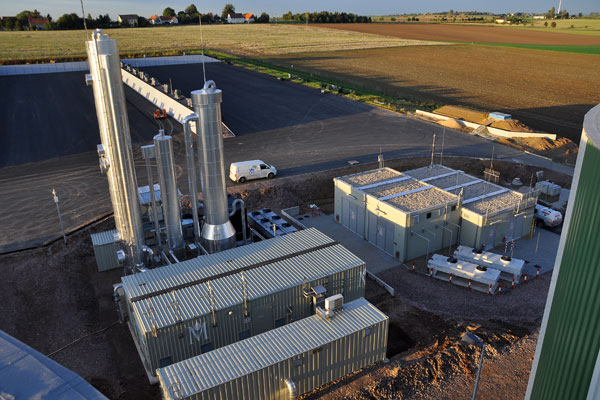
An example of Malmberg’s double container COMPACT plant, which is used in the upgrading of biogas to biomethane through the ‘water washing process’.

Work will soon start on the largest fully commercial gas-to-grid plant to be built in the UK to date, which will purify sewage gas on behalf of Severn Trent Water.

When completed, it will process up to 1500m3 per hour of renewable biogas to a state at which it can be safely injected into the national gas grid and make the water company self-sufficient in gas.

Imtech Waste, Water and Energy (Imtech) has been awarded the contract, worth an estimated £6.4 million, by Severn Trent Water to construct the Minworth Gas-to-Grid plant. The project will run for 60 weeks.

This project has only been made financially viable following the recent introduction of the Government’s Renewable Heat Incentive scheme.

Its award has resulted in job creation at Imtech, with a number of new team members employed specifically for this high profile project, including project management, QS and engineering positions, as well as several general site staff jobs.

Commented Nick Small, operations manager at Imtech: “We are extremely pleased to have been awarded such a high profile contract, which represents a significant step change for the waste industry in the UK.

"Severn Trent is already the UK’s largest producer of electricity from sewage gas producing 192GWh in 2012/13, and with the help of Imtech this will enable Severn Trent to become totally self sufficient in gas demand."

The project represents another key milestone in the development of the Waste and Energy business at Imtech, after it recently began work on a prestigious contract to develop the Wakefield AD biogas plant with Shanks Waste Management. This is part of a wider agreed plan to reduce the landfill diversion rate of Wakefield district waste by 90%.

The production of grid-quality biogas from sewage is not without technical problems, but a partial solution to these has been found at Cranfield University, which, earlier this month, received an award for its research in this area.

The research was recognised by the Worshipful Company of Engineers for excellence in engineering that benefits the environment.

It was awarded for looking at the most effective methods for removing chemicals called siloxanes from the process. Siloxanes end up in sewage because they are widely used to soften, smooth, and moisten, in products such as shampoos and moisturisers.

But they do not decompose in the sewage system, and so find their way into the waste matter that remains following the sewage treatment process. They then turn into silicon dioxide, or sand, during the process of burning this waste for biogas and ‘green energy’, which can block engines and cause costly damage.

PhD student Caroline Hepburn, whose research is funded by Severn Trent Water, was presented with the Hawley Award and a cheque for £5,000 at the Worshipful Company of Engineers’ Annual Awards Dinner, on 9 July by Sir George Cox, Board Member of NYSE-Euronext and Director of Shorts, the aerospace company.

Pic from Imtech

An example of Malmberg’s double container COMPACT plant, which is used in the upgrading of biogas to biomethane through the ‘water washing process’.

New report plots way to zero carbon Britain

Tobi Kellner, Zero Carbon Britain's energy modeller, said:
Tobi Kellner, Zero Carbon Britain's energy modeller, said: "A lot of people say it can't be done but, actually, we looked into it, we did the research very thoroughly, and we say it is possible".
Leading environmental charity, the Centre for Alternative Technology (CAT), has released an update of its Zero Carbon Britain scenario called Rethinking the Future, in which it attempts to show that it's possible for the UK to decarbonise rapidly using the current level of technological development.

The Zero Carbon Britain modelling suggests that the variability of solar and wind energy sources can be accommodated by using carbon-neutral synthetic gas as a back-up, but achieving zero greenhouse gas emissions requires a shift in the nation's diet and transport habits.

The researchers claim that this will also be healthier and enhance biodiversity while cutting emissions from land use and agriculture, and that these proposed changes will generate over a million new jobs.

Speaking at the launch during the final sitting of the All Party Parliamentary Climate Change Group this morning, its chair, Joan Walley, said: “by setting out what a low carbon world would look like this report shows that the solutions to our problems do exist and all that is needed is the political will to implement them”.

Paul Allen, Project Co-ordinator, added that: “The fact that we can demonstrate that rapid decarbonisation is possible with current technology, and without significant lifestyle changes, should be a major call to action”.

Zero Carbon Britain: Rethinking the Future synthesises cutting-edge research across multiple disciplines to map a comprehensive and technically realistic scenario for the UK.

The model suggests a 60% cut in energy demand is feasible, with over half of the remaining annual energy supplied from the wind; the rest is produced from a suite of renewable resources suitable for the UK, including liquid fuels derived from biomass grown in the UK.

UK hourly weather data from the last ten years (87,648 hours) was used to model electricity demand and renewable energy supplies. Even though both demand and supply are highly variable, over the ten years modelled, electricity demand is satisfied directly over 80% of the time.

The rest of the time, back-up generation can be provided using surplus electricity and biomass from UK grown second-generation energy crops to produce carbon neutral synthetic gas, which can then be burned as and when necessary in gas power stations. The flexibility of this back-up generation is considered to be important, since making baseload power available only leads to a costly overproduction of energy at times when demand is already met.

In the modelling, this back-up provides only 3% of the total annual electricity required by the UK, but is crucial to ‘keep the lights on’ at all times.

On agriculture and diet, the report finds that "By reducing the amount and altering the balance of foods we eat to be in line with UK government health recommendations (fewer foods high in saturated fats, sugar, and salt (HFSS foods), and decreasing meat and dairy consumption, and by reducing food waste, greenhouse gas emissions from agriculture can be cut by almost 75%", reducing the amount of agricultural land required.

Alice Hooker-Stroud, Research Co-ordinator, said: "The fact that a healthy diet is also lower in greenhouse gas emissions, and uses less land is a win-win-win situation that should be supported throughout society".

Paul Allen, also director of the Centre for Alternative Technology, told me that current energy policy doesn't account for the external costs of burning fossil fuels.

"We must also bear in mind that 'business as usual' has not calculated the cost of taking [World average temperatures] above 2 degrees [the value agreed by 200 nations at climate change talks to be dangerous]. The adaptation costs would be very high indeed, also we would have to deal with higher global temperatures under conditions of post peak oil prices," he said.

When asked whether the proposed developments had been costed out, he said this would be the subject of the next round of research, using data generated by the New Economics Foundation. "But as an approximation, we are confident that if fossil fuel energy embraces all the costs currently externalised by the market systems, and if we include the economies of scale, ZCB will prove an effective investment, especially as, once the systems are in place, the energy supply costs are not volatile like oil and gas."

He continued: "A lot of Britain's energy infrastructure is coming to the end of its design life. We need to replace it and we do not want to lock ourselves into the wrong energy path. Now is the time to have that critical debate about what are our energy sources and the means of using energy that we will need for the 21st Century."

Regarding the modelling used, he added that "The purpose of this iteration has really been to answer the question "what happens if the UK is becalmed at minus 17 degrees under peak load" So we have vastly increased the detail in the energy model to be able to answer this question fully. We have used 10 years of hourly real meteorological data to model shits in demand and we have scaled up real output from offshore wind farms, again driven by the same data."

Picture from Zero Carbon Britain